ChatGPT时刻

Search documents
博鳌激辩,人形机器人的“ChatGPT时刻”还有几年?
第一财经· 2026-03-26 13:01
Core Viewpoint - The article discusses the current state and future potential of humanoid robots, questioning when they will reach a "ChatGPT moment" that signifies widespread usability and technological maturity [3][6]. Group 1: Current State of Humanoid Robots - The industry is still in the early stages of exploration, facing challenges such as data bottlenecks and insufficient generalization capabilities [3][6]. - There is currently no product in the humanoid robot sector that defines an era, similar to how the iPhone did for mobile phones or ChatGPT did for large models [3][6]. Group 2: Definition of "ChatGPT Moment" - The "ChatGPT moment" is described as a critical point where models exhibit generalization capabilities and technological maturity, allowing robots to perform well in unfamiliar environments with minimal data [6]. - Achieving this level of performance is seen as the ultimate goal for household applications of robots, where they can operate without the need for new data collection or training [6][7]. Group 3: Industry Perspectives on Timeline - Industry experts have varying opinions on when the "ChatGPT moment" will occur, with estimates ranging from two to ten years [7][9]. - Some believe that advancements in data collection, such as achieving 10 million hours of data in two years, could lead to significant progress [8]. - Others express caution, noting that the robot industry has yet to find a low-cost, large-scale data acquisition method similar to what was achieved in the text data domain [9]. Group 4: Application in Specific Scenarios - Despite the uncertainty surrounding the "ChatGPT moment," humanoid robots can still be effectively applied in industrial settings, which are more standardized and suitable for current models [9][10]. - The household environment is considered the most challenging for humanoid robots, requiring the highest level of capability and presenting significant entry difficulties [10].

“机器人跑得比博尔特快”有什么用?
第一财经· 2026-03-18 08:19
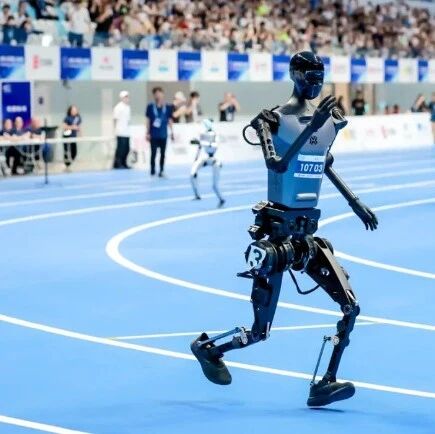
Core Viewpoint - The article discusses the current state and future potential of the robotics industry, emphasizing the need for practical applications and scalability in robot production, as highlighted by industry leaders at the recent forum [3]. Group 1: Technological Advancements - The robotics industry has made significant progress in AI integration and enhancement, with expectations for robots to perform complex tasks by 2025, surpassing human capabilities in certain areas [5]. - Key developments include improvements in components like 3D laser radar for better scene localization and advanced algorithms for flexible action switching, enhancing robots' overall performance [5][6]. - The industry aims to achieve a "ChatGPT moment" where robots can complete 80% of tasks in unfamiliar environments, necessitating advancements in model expression capabilities and data utilization [6]. Group 2: Production and Market Dynamics - The focus for robotics companies this year is on mass production, with goals set for significant sales milestones, such as achieving over 10,000 units sold [9]. - Supply chain and manufacturing challenges are critical, as even minor shortages in components can halt production, highlighting the importance of robust supply chain management [9]. - The industry is entering a phase of initial scale, with expectations for substantial increases in total robot sales this year, although widespread household applications remain a future goal [9]. Group 3: Industry Collaboration and Support - Companies are working together to enhance the robotics ecosystem, focusing on supply chain improvements, application accessibility, and comprehensive after-sales support [11]. - Initiatives like JD's "Smart Robot Industry Acceleration 2.0 Plan" aim to invest heavily in the robotics sector and establish industry standards [11]. - The rental market for robots is primarily driven by B2B demand, with a gradual emergence of C2C markets, indicating a dual approach to expanding the industry [12].
具身智能如何抵达 “ChatGPT时刻”?智源院长、清华教授和3位创始人聊了聊
3 6 Ke· 2026-02-13 10:50
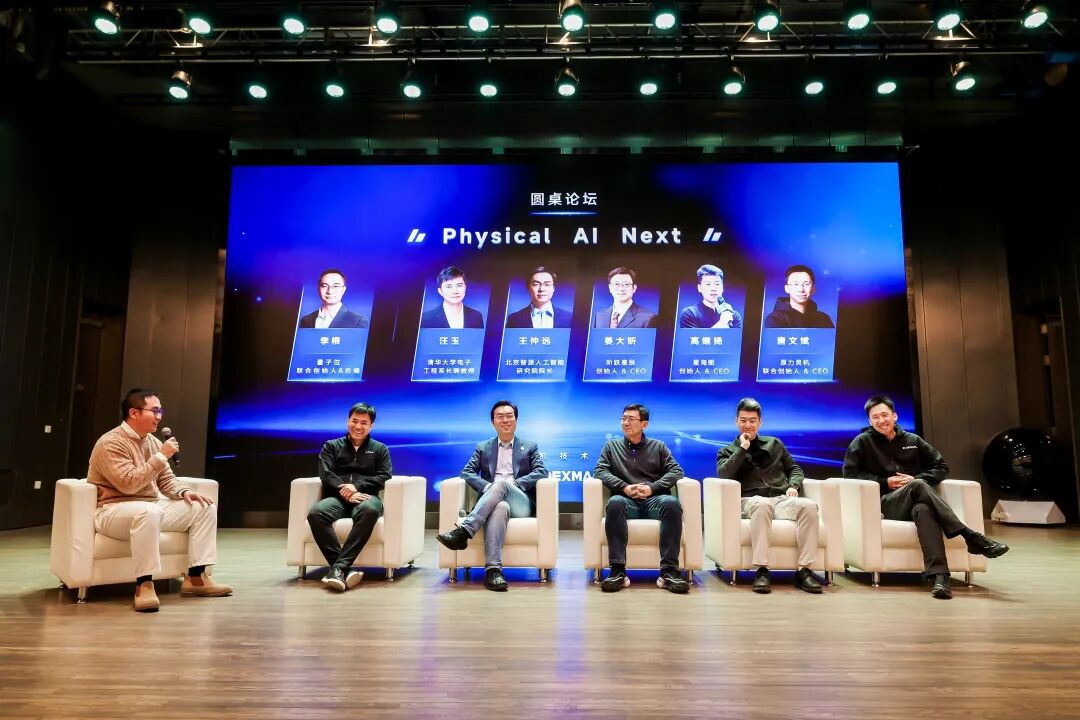
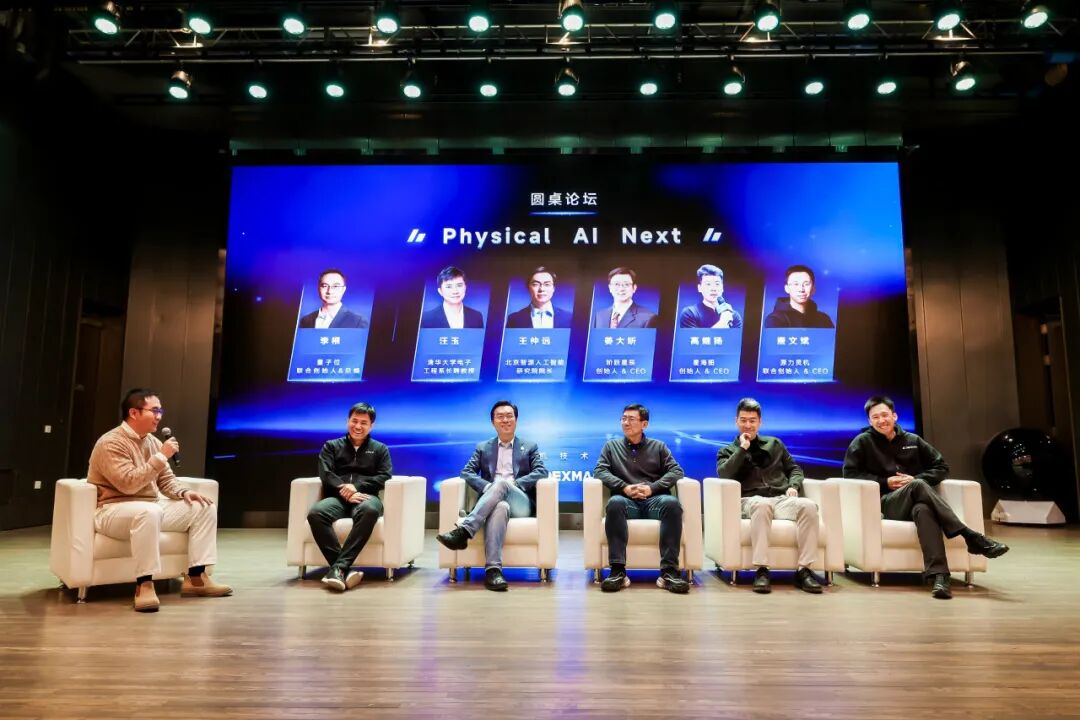
Core Insights - The industry is awaiting a "ChatGPT moment" for embodied intelligence, but there is no consensus on its definition [1][10] - The discussion at the forum highlighted the challenges of achieving zero-shot generalization in embodied AI compared to language models [2][10] - A more achievable goal is to first solve specific scenarios and gather real machine data to improve models and systems [3][12] Group 1: Challenges and Development Directions - Embodied intelligence faces significant commercialization challenges due to its longer supply chain and the need for real machine data [2][11] - Current embodied models are still in development, with a notable gap between existing capabilities and large-scale applications [5][11] - The focus should be on solving specific tasks in controlled environments to create a data feedback loop for model improvement [3][6] Group 2: Industry Perspectives and Comparisons - China is seen as having a strong investment in embodied intelligence, potentially outpacing the U.S. in certain aspects due to its complete industrial chain [6][8] - The collaboration between academia and industry is increasing, which may lead to faster advancements in embodied intelligence [8][9] - The U.S. has made early investments in models and data, but China is catching up in practical applications [6][8] Group 3: Future Expectations and Predictions - The year 2026 is anticipated to be transformative for embodied intelligence, with expectations for significant advancements in applications and supply chains [12][24] - There is a desire for a unified standard in hardware, data, and model outputs to facilitate industry growth [23][24] - Achieving a reliable and useful embodied intelligence that can operate in specific scenarios is seen as a critical milestone [12][25]
具身智能苦等“ChatGPT时刻”
3 6 Ke· 2026-02-10 23:22
Core Viewpoint - The article discusses the concept of embodied intelligence and its potential to reach a "ChatGPT moment," highlighting the challenges and differences between software-driven AI and physical systems [4][12]. Group 1: Embodied Intelligence Development - Embodied intelligence has gained attention in the past year, with various technological routes being explored, including industrial and service robots, autonomous driving, and humanoid machines [1][2]. - Despite advancements, embodied intelligence faces significant challenges in deployment costs, stability, and maintenance complexity, which prolong the commercialization timeline [2][5]. - The launch event of Yuanli Lingji showcased three core products, marking the first public appearance of the company's core team [2]. Group 2: Comparison with ChatGPT - The "ChatGPT moment" for embodied intelligence refers to a breakthrough where models become easily understandable and usable by non-technical users, similar to the rapid adoption of ChatGPT [4][8]. - Unlike large models that rely on cloud computing and minimal physical infrastructure, embodied intelligence requires a comprehensive physical system that integrates hardware, algorithms, and operational frameworks [5][6]. - The current state of most robots is limited to specific environments, making it difficult to perform complex tasks across different spaces and modalities [7][9]. Group 3: Challenges and Perspectives - Experts highlight a significant gap between current capabilities and the desired large-scale application of embodied intelligence, primarily due to the inherent uncertainties of the physical world [6][10]. - The definition of a "ChatGPT moment" in embodied intelligence is complex, as it involves multiple dimensions such as scene, task, and goal, lacking a consensus on what constitutes a breakthrough [8][9]. - The commercialization of embodied intelligence is characterized by a lengthy supply chain and high failure costs, making it distinct from the rapid commercialization seen in large models [11][15]. Group 4: Future Outlook - The true turning point for embodied intelligence may not be a spectacular technological breakthrough but rather its gradual integration into everyday operations in factories and warehouses [13][14]. - The evolution of embodied intelligence is expected to be slow and silent, akin to the development of infrastructure, yet it will become indispensable over time [14][15].
黄仁勋称机器人已迎来ChatGPT时刻
Xin Lang Cai Jing· 2026-01-05 23:58
Core Insights - NVIDIA's CEO Jensen Huang announced that the robotics field has entered a "ChatGPT moment" during the CES 2026 keynote [1] - A series of open-source "physical AI" models were introduced at the event [1] Group 1 - Huang showcased a pair of charming BDX robots during his presentation [1] - The demonstration included how the robot "GR00T" learns to become a robot [1]

参观北京“世界机器人大会”后,高盛点评:迭代速度惊人,“ChatGPT”时刻还需2-3年
Hua Er Jie Jian Wen· 2025-08-12 03:31
Core Insights - The humanoid robot industry is experiencing rapid product iteration, but achieving general capabilities akin to "ChatGPT" will take at least 2 to 3 years due to technological bottlenecks related to data accumulation and model training [1][4]. Group 1: Industry Trends - The humanoid robot applications are primarily focused on four areas: education, exhibition guidance, standard platforms for developers and researchers, and manufacturing/logistics, with the latter achieving success rates of 80-99.5% for specific tasks [2]. - There is a significant increase in consumer interest, as evidenced by higher-than-expected attendance from families and general consumers at the World Robot Conference (WRC), indicating strong short-term demand in consumer markets [2]. - Companies are launching more affordable and simplified products, such as the R1 robot priced at 39,900 yuan and the SA02 robot at 38,500 yuan, which may enhance market penetration [2]. Group 2: Product Development - Over 20 out of 50 humanoid robot exhibitors introduced new products in July and August, showcasing significant improvements in overall performance, speed, and fluidity compared to earlier in the year [3]. - The industry is still exploring transitional solutions to overcome challenges in training models effectively, particularly in complex environments that require high-quality real-world data [4]. Group 3: Technological Evolution - The best AI architecture for achieving general intelligence is still evolving, with discussions around the superiority of new models like Google's Veo3 over traditional VLA+RL approaches [5]. - The high domestic production rate of components, estimated at around 80%, is helping manufacturers control costs, although ongoing design optimizations are necessary to maintain competitiveness [5]. Group 4: Investment Insights - The report emphasizes the importance of focusing on segments of the supply chain with higher predictability, particularly in actuator assemblies, which are expected to have a clearer technological iteration path [6]. - The company Sanhua Intelligent Controls is rated as a "buy" due to its long-term growth potential in the humanoid robot actuator sector, with projected revenue and net profit CAGR of 19% from 2025 to 2030 [6].