MoE)架构

Search documents
中美大反转,中国AI调用量首超美国,A股嗨了,多板块掀涨停潮,华尔街知名分析师:中国算力路径颠覆传统认知
3 6 Ke· 2026-02-27 12:19
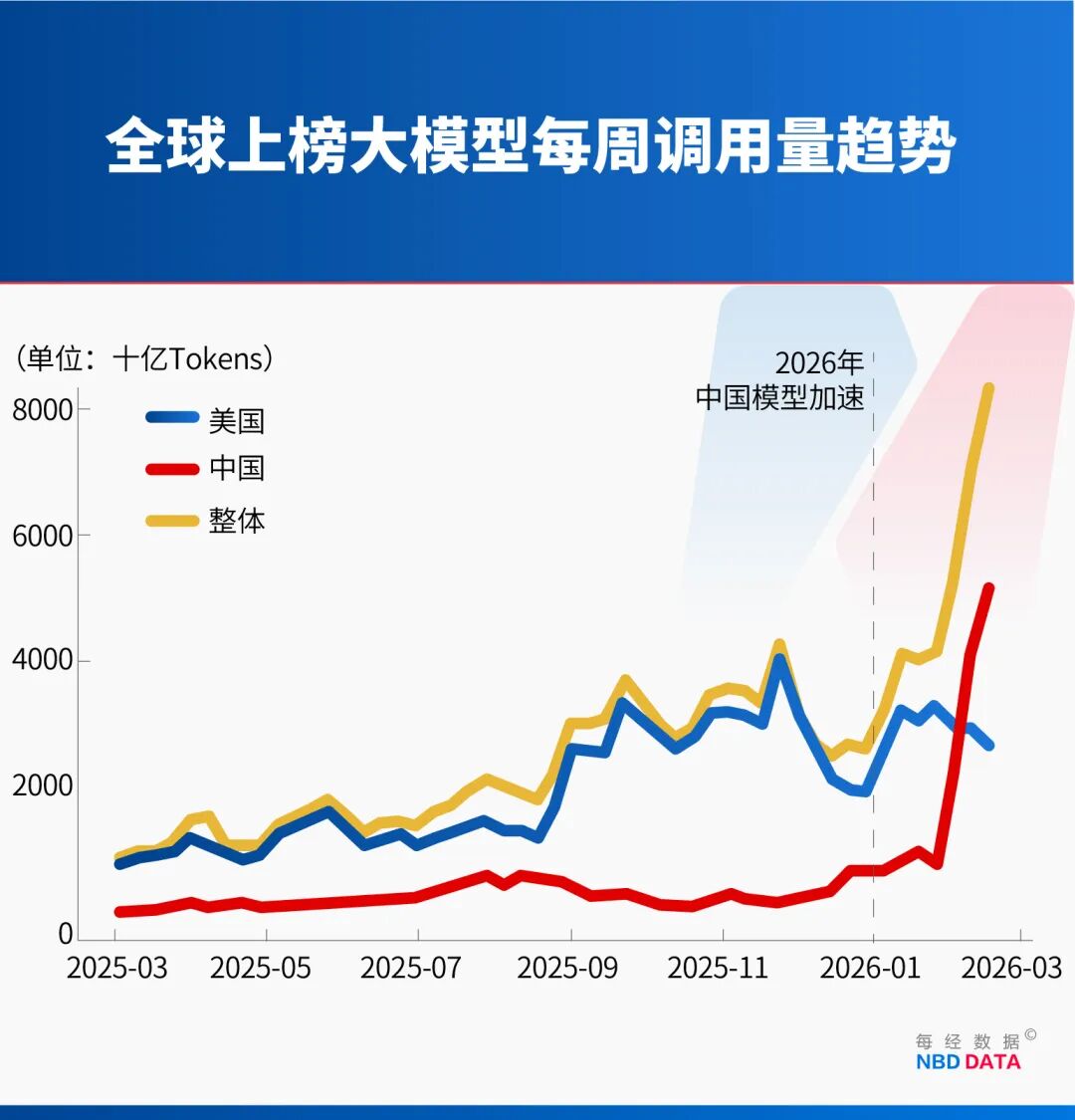
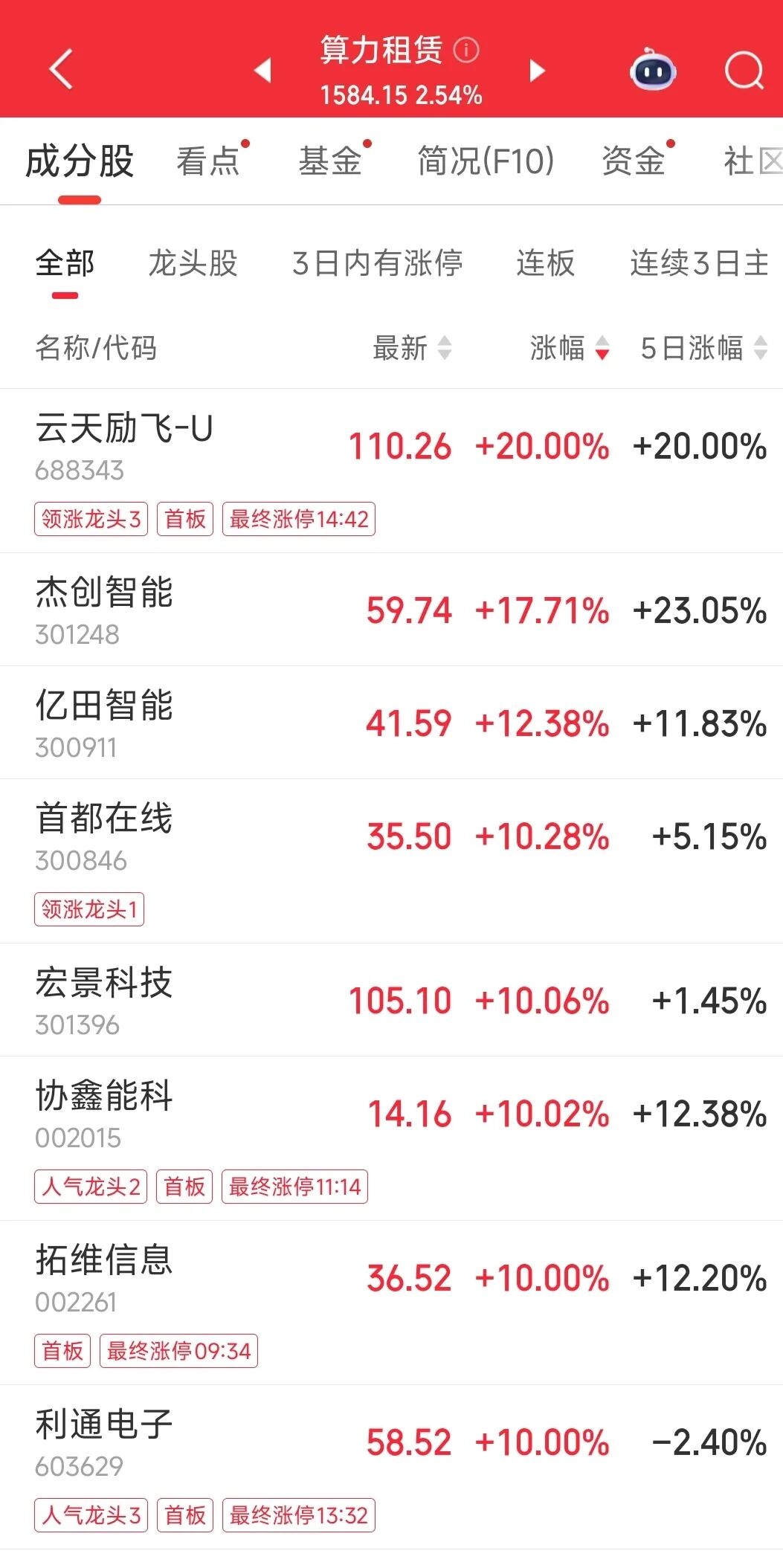
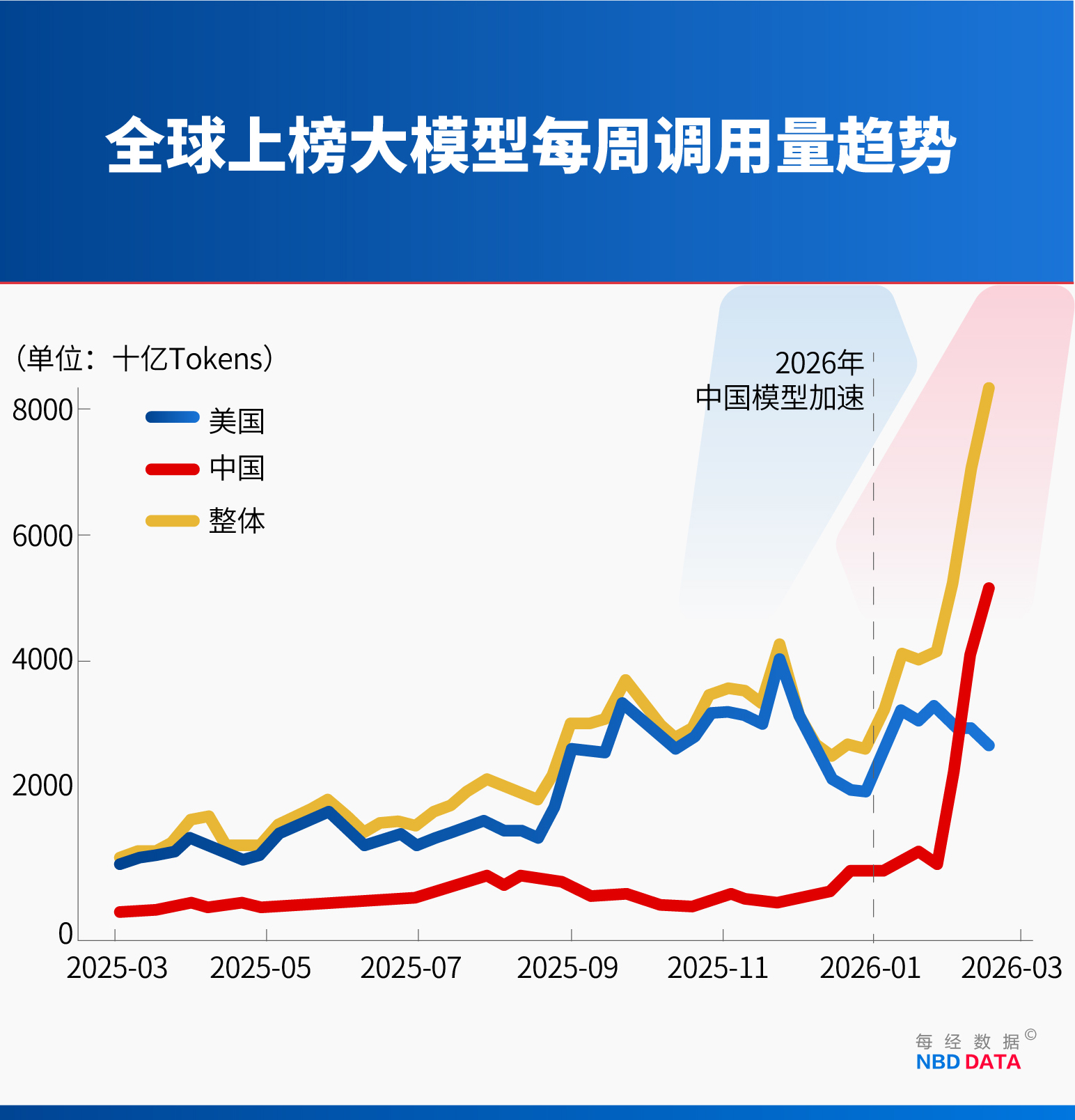
Core Viewpoint - The dramatic market reaction following Nvidia's record earnings report highlights a significant shift in AI model usage, with China's AI model call volume surpassing that of the U.S. for the first time, leading to a surge in domestic computing power demand and a reevaluation of computing value distribution in the capital markets [1][2][4][5][19]. Group 1: Nvidia's Market Reaction - Nvidia's stock fell by 5.5% on February 26, resulting in a market cap loss of nearly $260 billion (approximately 1.77 trillion RMB) [2][6]. - Despite reporting a record Q4 revenue growth of 73% to $68.1 billion, the market reacted negatively, indicating a shift in focus from short-term performance to long-term sustainability concerns regarding AI capital expenditures [6][25]. - The decline in Nvidia's stock also affected other chip manufacturers, including Broadcom, AMD, and TSMC, which saw varying degrees of stock price drops [6]. Group 2: Surge in Chinese Market - On February 27, A-share and Hong Kong markets experienced a surge in stocks related to computing power leasing, cloud computing, and electricity, with notable gains such as 20% for CloudWalk Technology and 19.91% for Jiawei New Energy [2][10][11]. - The OpenRouter platform reported that during the week of February 9-15, China's AI model call volume reached 4.12 trillion tokens, surpassing the U.S. volume of 2.94 trillion tokens for the first time [19][22]. - By February 16-22, China's call volume further increased to 5.16 trillion tokens, marking a 127% growth within three weeks [19]. Group 3: Shift in Computing Power Demand - The efficient architecture of Chinese models is reducing reliance on high-end GPUs, leading to exponential growth in domestic computing power demand [5][27]. - The "Mixture-of-Experts" (MoE) architecture used by many Chinese models significantly lowers inference costs, allowing for a substantial increase in token usage without a corresponding increase in GPU demand [25][26]. - The cost of processing tokens with Chinese models is significantly lower compared to their U.S. counterparts, with prices as low as $0.3 per million tokens compared to $5 for foreign products [27]. Group 4: Future Outlook - Analysts predict that the demand for domestic computing power will continue to grow exponentially, with a projected compound annual growth rate of 330% for China's token consumption from 2025 to 2030, leading to a 370-fold increase in just five years [27][28]. - The success of Chinese AI models in the global market is expected to validate their performance and cost competitiveness, potentially expanding the domestic computing power market beyond just serving local giants to a global audience [28].


中美大反转,中国AI调用量首超美国,A股嗨了,多板块掀涨停潮!华尔街知名分析师:中国算力路径颠覆传统认知
Mei Ri Jing Ji Xin Wen· 2026-02-27 10:51
Group 1 - Nvidia's stock dropped 5.5% after reporting record earnings, resulting in a market value loss of nearly $260 billion (approximately 1.77 trillion RMB) [1][5] - In contrast, A-shares and Hong Kong stocks related to computing power leasing, cloud computing, and electricity surged, with notable gains including 20% for CloudWalk Technology and 19.91% for Jiawei New Energy [1][6][11] - The divergence in market performance highlights a significant shift in the perception of computing power value distribution [3][4] Group 2 - For the first time, China's AI model usage surpassed that of the U.S., with a weekly call volume of 4.12 trillion tokens compared to the U.S.'s 2.94 trillion tokens [2][20] - In the top five global models, four are from China, indicating a "cluster rise" in Chinese AI models [2][24] - The rapid growth in Chinese model usage is attributed to their efficient architecture, which reduces reliance on high-end GPUs and leads to exponential growth in domestic computing power demand [4][29] Group 3 - The market is reassessing the sustainability of AI capital expenditures, moving beyond Nvidia's short-term performance to long-term concerns about growth ceilings [5][27] - The "Mixture-of-Experts" (MoE) architecture used by Chinese models significantly lowers inference costs and reduces the need for high-end GPUs, with a 60% reduction in memory usage and a 19-fold increase in throughput [27][28] - The cost of processing tokens with Chinese models is substantially lower than that of their U.S. counterparts, with prices as low as $0.3 per million tokens compared to $5 for foreign models [29][30] Group 4 - The demand for domestic computing power infrastructure is surging due to the global acceptance of Chinese AI models, which are recognized for their performance and cost competitiveness [29][30] - Analysts predict a compound annual growth rate of 330% in China's token consumption from 2025 to 2030, leading to a 370-fold increase in just five years [29][30] - The combination of cost advantages and technological capabilities is driving exponential growth in domestic computing power demand [29][30]
中国AI调用量首超美国,引发冰火两重天!国产算力、云计算、数据中心掀涨停潮,英伟达一天蒸发1.77万亿
Mei Ri Jing Ji Xin Wen· 2026-02-27 08:45
Core Viewpoint - The dramatic market reactions highlight a shift in perception regarding AI chip demand, with Chinese AI models gaining traction and impacting the valuation of companies like Nvidia, which saw a significant drop in market capitalization following its earnings report [1][3][22]. Group 1: Nvidia's Earnings and Market Reaction - Nvidia reported a record Q4 revenue of $68.1 billion, a 73% increase year-over-year, with an adjusted gross margin of 75.2%, exceeding market expectations [3][22]. - Despite strong earnings, Nvidia's stock fell by 5.5%, resulting in a market cap loss of nearly $260 billion (approximately ¥1.77 trillion), marking its largest single-day drop since April 2025 [1][3]. - The decline in Nvidia's stock also affected other chip manufacturers, including Broadcom, AMD, and TSMC, which experienced varying degrees of stock price decreases [3][22]. Group 2: Rise of Chinese AI Models - Data from OpenRouter indicates that, as of February 2026, the weekly API call volume for Chinese AI models surpassed that of the U.S. for the first time, reaching 4.12 trillion tokens compared to the U.S.'s 2.94 trillion tokens [16][19]. - The call volume for Chinese models further increased to 5.16 trillion tokens in the following week, representing a 127% growth over three weeks [16][19]. - Four out of the top five global AI models by call volume are now from China, showcasing a "cluster rise" in the Chinese AI sector [19][22]. Group 3: Market Dynamics and Future Outlook - The market is reassessing the distribution of computational power value, moving away from a linear dependence on high-end GPUs, as Chinese models utilize more efficient architectures [3][22]. - The "Mixture-of-Experts" (MoE) architecture used by many Chinese models significantly reduces the computational cost per token, with a reported 60% reduction in memory usage and up to 19 times improvement in throughput [25][27]. - The cost of processing tokens with Chinese models is substantially lower, with prices around $0.3 per million tokens compared to $5 for comparable overseas products, indicating a cost advantage for Chinese AI [27][28]. Group 4: Implications for Domestic Infrastructure - The success of Chinese AI models is driving a massive demand for domestic computational infrastructure, as global developers increasingly favor these models [22][27]. - China's lower electricity costs, which can be as low as ¥0.2-0.3 per kilowatt-hour compared to $1-1.5 in the U.S. and Europe, further enhance the competitiveness of Chinese AI models [27][28]. - Morgan Stanley predicts a compound annual growth rate of 330% for China's token consumption from 2025 to 2030, suggesting a potential 370-fold increase in just five years [27][28].
斯坦福报告揭秘中国开源AI全景:本土模型能否领跑全球?
Sou Hu Cai Jing· 2026-01-03 13:19
Core Insights - The report titled "Beyond DeepSeek: China's Diverse Open Weight AI Ecosystem and Its Policy Implications" highlights China's transition from a follower to a leader in the open weight AI model sector, emphasizing the significance of this development in the global context [1][29]. Group 1: Market Position and Growth - China has evolved from a follower to a leader in the open weight AI model field, with open weight models allowing developers to download, use, and modify model parameters [4][30]. - As of December 2025, Alibaba's Qwen model series surpassed Meta's Llama, achieving approximately 385 million downloads compared to Llama's 346 million [4][30]. - Between August 2024 and August 2025, Chinese developers accounted for 17.1% of total downloads on Hugging Face, surpassing the United States' 15.8% for the first time [4][30]. Group 2: Model Development and Ecosystem - The number of derivative models based on Qwen and DeepSeek has significantly increased, with Chinese models representing 63% of new derivative models uploaded to Hugging Face by September 2025 [6][32]. - The report analyzes four representative Chinese model families: Qwen, DeepSeek-R1, Kimi K2, and GLM-4.5, each with unique capabilities and open-source licenses [7][33]. Group 3: Technical Architecture and Efficiency - Many of these models utilize a Mixture of Experts (MoE) architecture, which enhances efficiency by allowing models to perform well with limited computational resources [9][35]. - DeepSeek's V3 model, for instance, has a total parameter count of 671 billion but activates only 37 billion parameters during inference, balancing performance and cost [9][35]. Group 4: Licensing and Policy Support - In 2025, both Qwen3 and DeepSeek R1 adopted more permissive open-source licenses (Apache 2.0 and MIT License, respectively), reflecting a shift towards attracting global developer communities [10][36]. - The Chinese government has played a complex role in supporting the development of open weight AI, with policies emphasizing "openness" and "open-source" as key components of national innovation strategies [11][37]. Group 5: Commercial Strategies and Market Dynamics - Chinese developers are exploring diverse monetization paths, with Alibaba positioning Qwen as an "AI operating system" to drive cloud computing growth through enterprise and government adoption [12][38]. - DeepSeek and Z.ai are pursuing a light-asset approach, collaborating with various cloud and computing service providers to offer localized services [12][38]. Group 6: Global Implications and Geopolitical Context - The report discusses the global implications of China's high-performance models, which provide affordable AI capabilities to low- and middle-income countries, potentially reshaping the competitive landscape [13][26]. - The release of DeepSeek R1 has influenced U.S. policy towards open weight AI, prompting a reevaluation of export controls and regulatory approaches [14][27].