Quantum Information

Search documents
Beijing Chaoyang Unveils 16 Measures to Comprehensively Safeguard International Corporate Cooperation
Globenewswire· 2026-03-04 11:49
Core Viewpoint - The 2026 Beijing Chaoyang Business Environment and High-Quality Development Conference introduced 16 measures aimed at supporting the international development of enterprises in Chaoyang District, enhancing their global engagement and cooperation [1][8]. Economic Performance - Chaoyang District's GDP reached 966.85 billion yuan in 2025, marking an increase of two 100-billion-yuan thresholds over the past five years, supported by 377,000 market entities contributing to a diversified economic landscape [3]. Future Development Plans - Chaoyang aims to create a world-class business environment by leveraging industrial space advantages and revitalizing rural development, focusing on integrated industry and urban development [4]. - The district plans to establish a comprehensive matrix of 100 science parks within five years, targeting strategic industries like artificial intelligence and quantum information [5][6]. Support Measures - The 16 measures cover five key dimensions: service optimization, professional empowerment, factor assurance, risk prevention, and policy support, forming a comprehensive support system for enterprises going global [7]. - A synergistic "Online + Offline" model is being developed, including a district-level online service platform and offline empowerment centers [7]. - A special fund for "going global" has been established, offering investment support of up to 1 million yuan and rewards for repatriated earnings of up to 3 million yuan [7]. International Engagement - Chaoyang is recognized as China's leading district in international engagement, with the new measures representing a significant step towards optimizing the business environment and fostering new growth drivers [8].
投资合肥 | 一文看懂合肥市量子信息发展现状与投资机会前瞻(附量子信息产业现状、空间布局、投资机会分析等)
Qian Zhan Wang· 2026-02-17 02:11
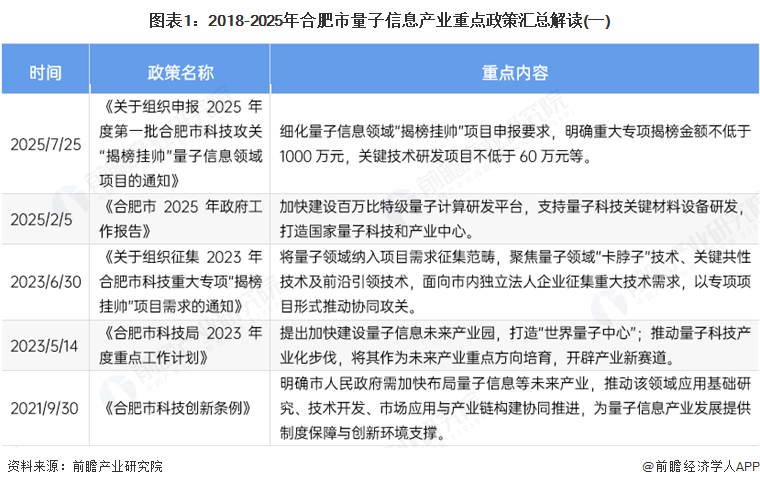
Core Insights - Hefei has strategically positioned quantum information as a key future industry, with a long-term development plan from 2020 to 2030, aiming for a complete innovation system by 2027, including 24 provincial-level innovation platforms and an industry scale of 5 billion yuan [1][12]. Policy Environment - Hefei has established a comprehensive policy framework for quantum information, including significant funding and support for key projects, such as a 10 million yuan minimum for major special projects and a focus on critical technology development [2]. - The city aims to accelerate the construction of a million-bit quantum computing research platform and support the development of key materials and equipment [2]. - Policies emphasize collaboration and innovation across various districts, with a focus on enterprise cultivation and technological breakthroughs [4]. Industry Chain Overview - By 2025, Hefei's quantum information industry chain is expected to be the most complete in the country, with over 70 enterprises and more than 2,000 related patents [7][19]. - The industry is structured into upstream core materials, midstream technology research, and downstream application services, with significant achievements in quantum computing and communication [7][8]. Industry Scale and Achievements - Hefei's quantum industry generated nearly 1.4 billion yuan in revenue in 2024, reflecting a 21.6% year-on-year growth [13]. - The city has launched the first national quantum information future industry technology park and established the first quantum chip production line in the country [13][14]. Financing Analysis - Hefei's quantum information sector has seen active financing, particularly in quantum measurement and computing enterprises, with a notable increase in the number of financing events over the past three years [28][29]. - Major financing events include strategic investments and angel rounds, indicating strong market confidence in the sector [29]. Investment Opportunities - Hefei's future planning includes the establishment of a provincial-level future industry pilot zone and the "thousand scenarios" initiative, with a focus on the high-tech district as the core engine [31]. - The city has developed a multi-layered support system for the industry, including significant financial investments and a focus on attracting upstream and downstream enterprises [37].


全球量子企业对比:美国显著领先,中国第一梯队
Sou Hu Cai Jing· 2025-12-16 02:53
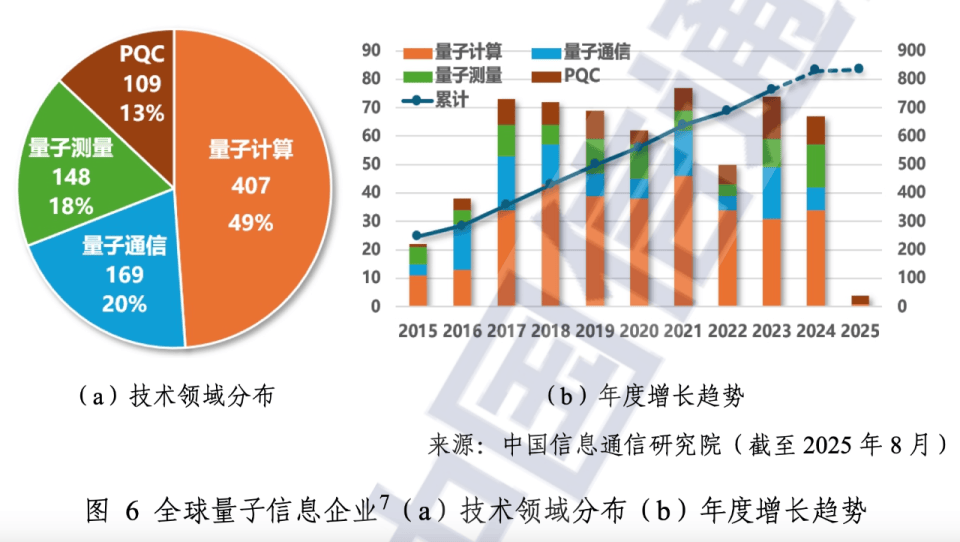
Core Insights - The report on quantum information technology indicates that the number of global quantum-related companies has surpassed 800, with quantum computing dominating the field at approximately 50% [1] - The growth of quantum information companies has been stable, averaging about 60 new companies per year over the past five years, despite a slight decline in 2022 [1] Company Distribution - The European Union has over 230 quantum companies, accounting for 29%, with Germany having more than 70 [4] - The United States has over 210 quantum companies, making up 26%, while China has around 140, representing 17% [4] - The concentration of quantum computing companies in Europe and the U.S. is nearly six times that of China, while China leads in quantum communication [4] Market Performance - There are currently 11 quantum companies listed on capital markets, with an average market value of $2.9 billion, significantly higher than the previous year [4] - The average market value of U.S. quantum companies is $6.7 billion, with IonQ being the first to exceed $13.3 billion [4] Unicorns and Valuations - There are 12 quantum unicorns, with an average valuation of $4.1 billion in the U.S. and $1.4 billion in China, indicating a substantial valuation gap [5] - PsiQuantum leads with a valuation of $6.75 billion, while the highest-valued quantum startup in France is Alice&Bob at $400 million [5] Investment Trends - The U.S. maintains a significant lead in investment, with major funding rounds such as PsiQuantum's $750 million and IonQ's $1 billion [7] - Eight out of the top ten funding events in quantum computing are dominated by U.S. and European companies, reflecting strong market confidence [7] Technological and Industrial Development - China's quantum information technology and industry development is positioned in the global first tier, supported by comprehensive planning and policy frameworks since the 14th Five-Year Plan [8] - Major scientific projects and facilities, such as the Anhui National Laboratory and the Greater Bay Area Quantum Science Center, are pivotal for innovation [8] Talent Development - Seventeen universities in China have established undergraduate programs in quantum information science, with institutions like Tsinghua and Peking University leading in talent cultivation [9]
科创板累计IPO募资规模达9346亿
21世纪经济报道· 2025-11-06 08:05
Core Viewpoint - The establishment of the Sci-Tech Innovation Board (STAR Market) has significantly contributed to the development of China's capital market, particularly in supporting technological innovation and the growth of "hard technology" companies over the past seven years [1][3]. Group 1: Market Development and Performance - As of October 2025, the STAR Market has gathered 592 listed companies, with a cumulative IPO fundraising scale of 934.6 billion yuan and total financing exceeding 1.1 trillion yuan, playing a crucial role in nurturing new productive forces and upgrading the modern industrial system [1]. - The compound annual growth rates for operating income and net profit attributable to shareholders of STAR Market companies over the past five years are 18% and 9%, respectively, indicating strong growth potential [3]. - Among the 57 unprofitable companies at the time of listing, 22 have achieved profitability, showcasing a trend of successful transitions from research and development to market success [3]. Group 2: Industry Focus and Innovation - The STAR Market has maintained a focus on "hard technology," with over 80% of listed companies in emerging industries such as new-generation information technology, biomedicine, and high-end equipment manufacturing [5]. - Key industries like integrated circuits and biomedicine have seen significant clustering effects, with over 120 listed companies in the integrated circuit sector, contributing to a complete and collaborative innovation ecosystem [6]. - In the integrated circuit sector, revenue and net profit for 119 companies that disclosed Q3 reports in 2025 grew by 27% and 83% year-on-year, respectively, with net profit for chip design companies soaring by 141% [6]. Group 3: Research and Development Investment - In 2024, total R&D investment by STAR Market companies reached 168 billion yuan, more than three times their net profit; in the first three quarters of 2025, R&D investment reached 113.3 billion yuan, a year-on-year increase of 9.01% [7]. - The STAR Market has generated over 130,000 invention patents, with an average of 230 patents per company, and 30% of companies have products or projects that are industry-first [7]. Group 4: Ecosystem and Capital Integration - The STAR Market has successfully established a virtuous cycle of "technology-industry-capital," enhancing the efficient allocation of innovative resources [10]. - Approximately 90% of STAR Market companies received venture capital investment before going public, indicating a strong trend towards early-stage investment in hard technology [11]. - The STAR Market has developed a comprehensive index system, with over 100 ETFs listed, and the total scale of index tracking products exceeding 330 billion yuan, making it a flagship index for hard technology investments [11]. Group 5: Institutional Innovation and Reforms - As a pioneer in the registration system reform, the STAR Market has implemented various innovative practices in issuance, listing, and trading, providing valuable experience for other market segments [14]. - Recent reforms, including the "1+6" measures, have further enhanced the inclusivity of the system, supporting the growth of companies in cutting-edge fields like artificial intelligence [14][15]. - The STAR Market has also accelerated the development of the "growth layer" for innovative companies, with significant increases in revenue and R&D investment among these firms [14].

高突破、高发展 “十五五”擘画中国科技未来五年发展蓝图
Yang Shi Wang· 2025-10-29 08:20
Group 1 - The core viewpoint emphasizes the importance of advancing future industries such as quantum technology, biomanufacturing, hydrogen energy, nuclear fusion energy, brain-computer interfaces, embodied intelligence, and sixth-generation mobile communication as new economic growth points [1][7] - The "14th Five-Year" period has seen significant achievements in China's technological innovation, with major projects implemented in key industries to support high-quality development [3][5] - China is accelerating its technological layout in frontier fields, achieving breakthroughs in artificial intelligence, biomanufacturing, quantum information, and hydrogen energy storage, indicating a shift towards new advantageous industries [5][7] Group 2 - The "15th Five-Year" planning suggestions prioritize building a modern industrial system and strengthening the foundation of the real economy, with emerging and future industries poised for significant growth [7] - The next five years are projected to be a period of high breakthroughs and development in Chinese technology, with a focus on increasing high-quality technological supply and implementing major national projects [7]

量子信息落地加速,政策有望持续支持
Ge Long Hui· 2025-10-22 00:59
Core Insights - The commercialization of quantum communication and measurement is accelerating, driven by leading domestic research and application scenarios, with significant advancements in core hardware and industrial applications [1][4][8] - The 2025 Nobel Prize in Physics awarded for practical applications of quantum mechanics in chip design indicates a shift towards engineering-focused quantum computing, providing a validated investment direction [1][2] - The global quantum competition is intensifying, with supportive policies expected to enhance investment opportunities in the quantum information sector [5][6] Quantum Computing - Google and IBM are focusing on superconducting routes, with Google's Willow processor achieving 105 qubits and demonstrating exponential growth in quantum error correction capabilities [2] - IBM's Loon processor, set to launch in June 2025, will reduce bit overhead by 90% using advanced qLDPC error correction codes [2] - IonQ claims commercial advantages in specific applications, with significant investments from Nvidia in quantum technology companies [2] Quantum Communication - IDQ and Turkcell completed the world's first land-based intercontinental QKD transmission in February 2025 [2] - Toshiba successfully implemented coherent quantum communication over existing commercial fiber networks, significantly lowering deployment costs [2] - China Telecom launched a distributed encryption system integrating QKD and PQC, enhancing quantum network capabilities [4] Quantum Measurement - Bosch showcased a prototype quantum sensor in October 2025, while Infleqtion secured $100 million in funding to apply quantum measurement technologies in defense and aerospace [3] Domestic Developments - The "Zu Chongzhi No. 3" superconducting quantum computer demonstrates a speed advantage of 10^15 times over the fastest supercomputers [4] - GuoDun Quantum launched China's first commercially viable dilution refrigerator and secured a 60 million yuan computing order [4] - China Mobile introduced a quantum communication technology system aimed at reducing deployment and operational costs [4] Policy Support - The Chinese government has defined quantum technology as a future industry, with tax incentives and increased R&D funding expected to support the sector [5][6] - The 2025 government work report emphasizes the importance of quantum technology, indicating a shift from basic research to technology breakthroughs and application scenarios [6] Investment Opportunities - Companies involved in quantum computing hardware and components are recommended for investment [8] - Firms focusing on quantum and post-quantum cryptography algorithms are also highlighted as potential investment targets [9] - Companies developing quantum software and sensors are suggested for investment consideration [10]

未来产业加快成长,济南高新区已集聚人工智能相关企业280余家
Qi Lu Wan Bao Wang· 2025-09-04 03:52
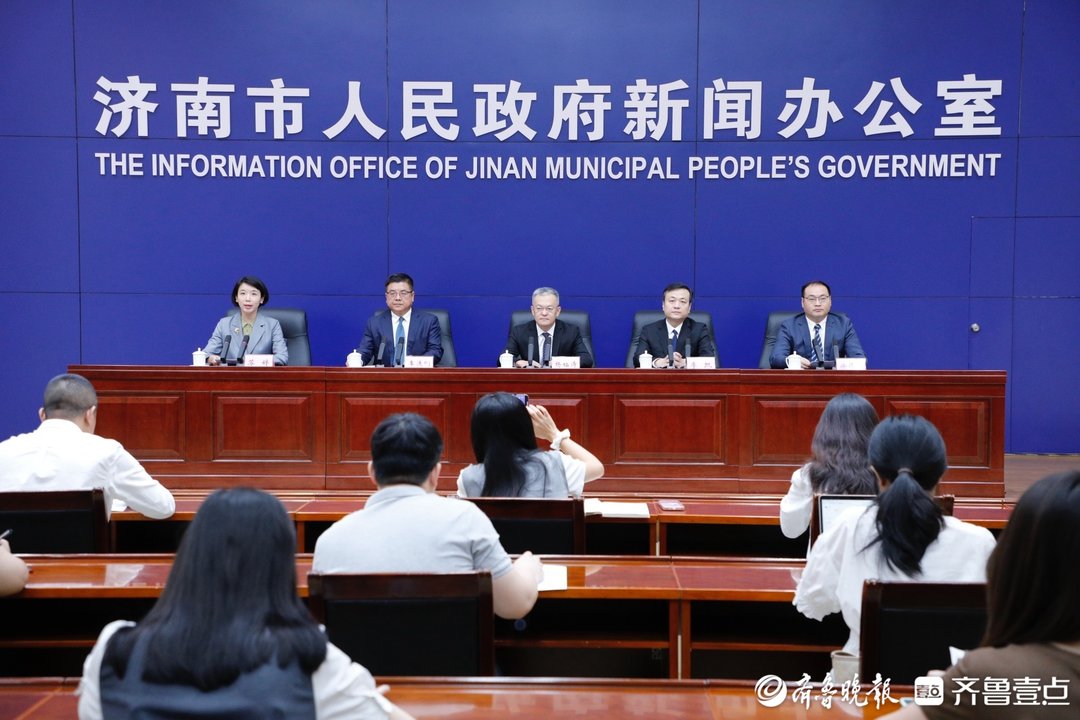
Core Insights - Jinan City is implementing an "Industrial Strong City Development Strategy" with a focus on high-tech zones and 11 key industrial chains [1][3] - The High-tech Zone is adopting a "one chain, one policy" approach to strengthen its leading industries and promote future industrial growth [3] Industry Developments - The High-tech Zone has established a Future Industry Alliance to promote innovative applications in artificial intelligence, aerospace information, and humanoid robotics [3] - The quantum information industry has achieved comprehensive layout in communication, measurement, and computing, being recognized as a future industrial cluster in Shandong Province [3] - The aerospace information industry is forming clusters across multiple fields, enhancing its overall competitiveness [3] - The core artificial intelligence industry accounts for over 60% of the city's total, with more than 280 related enterprises concentrated in the area [3] - The cell and gene industry is leading with several domestic and international records for being the "largest" and "earliest" in various achievements [3] - Significant advancements have been made in next-generation industrial software, new energy storage, and synthetic biology, indicating a diversified growth strategy [3]