
Taper

Search documents
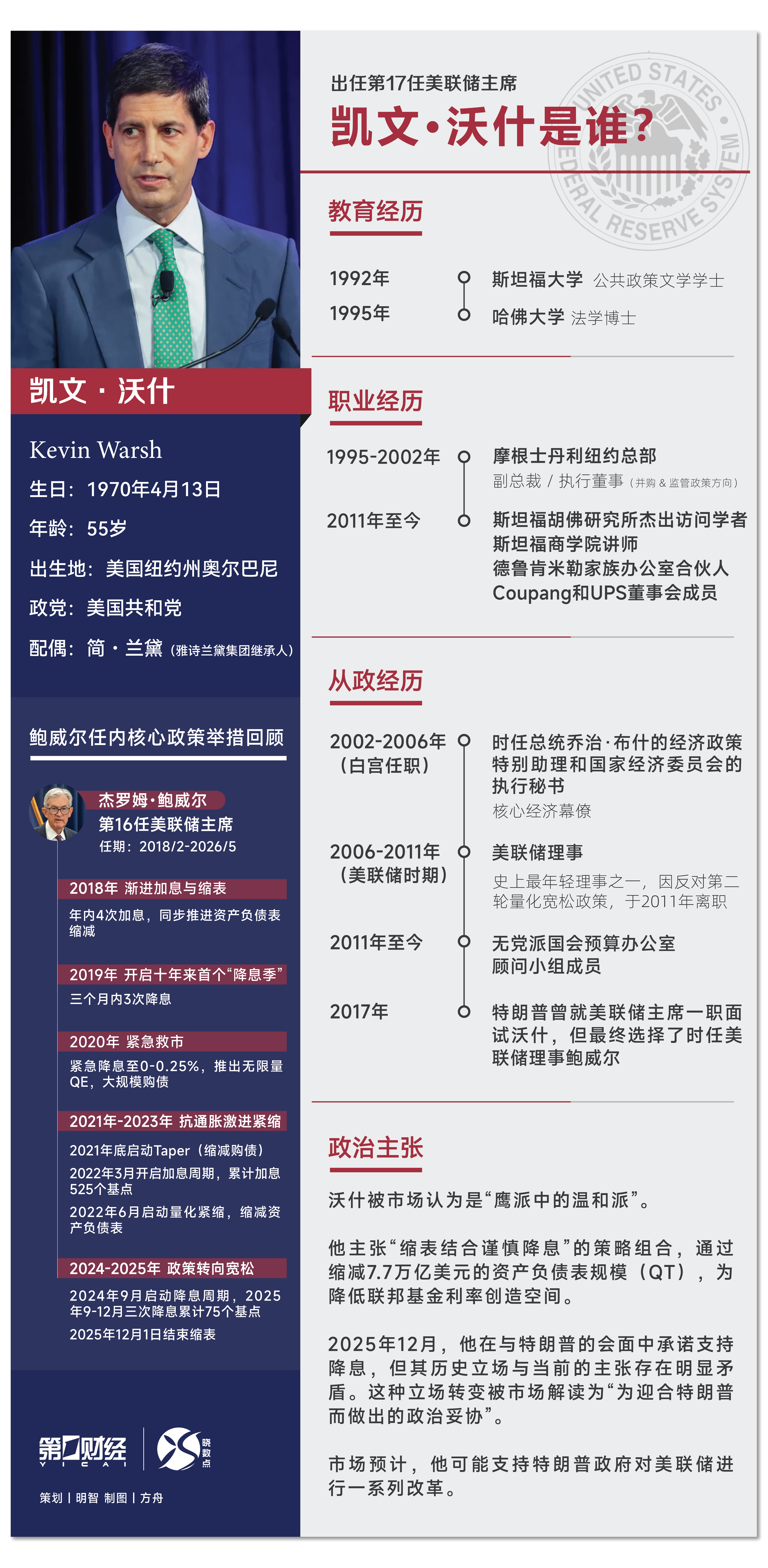
晓数点丨第17任美联储主席出炉!凯文・沃什是谁?
Di Yi Cai Jing· 2026-01-30 11:55
Group 1 - Kevin Warsh, born in April 1970, is a prominent figure in the Republican Party and has a background in investment banking [3][4] - Warsh is known for his critical views on monetary policy during Jerome Powell's tenure as the 16th Chair of the Federal Reserve, which began in 2018 [5][7] - Under Powell's leadership, the Federal Reserve raised interest rates four times in 2018 and initiated a significant reduction in its balance sheet [7] Group 2 - In 2019, the Federal Reserve reversed course, implementing three rate cuts within three months [7] - The emergency measures in 2020 included lowering the interest rate to a range of 0-0.25% and launching a large-scale quantitative easing program [8] - From 2021 to 2023, the Fed began tapering its asset purchases at the end of 2021 and raised rates by a total of 525 basis points by March 2022 [8]

兴业证券:日债异动、套息交易平仓加剧美元资产压力 关注对美日贸易谈判的潜在影响
智通财经网· 2025-05-24 12:38
Core Viewpoint - Japanese government bond (JGB) yields have been rising since the beginning of the month, with significant movements occurring this week, particularly in ultra-long-term bonds. The active unwinding of yen carry trades has reached its highest level since 2012, which may impact U.S. stocks and bonds. There is a concern that if the sell-off of dollar assets leads to capital flowing back to Japan, it could affect U.S.-Japan trade negotiations regarding "financial terms" [1][5]. Summary by Sections JGB Yield Movements - JGB yields have been consistently rising since the start of the month, with notable changes occurring this week, especially in ultra-long-term bonds. On May 20, the yield curve shifted from flat to steep, with 20-year and 30-year yields jumping by 13 and 12 basis points, respectively, contributing nearly half of the month's cumulative increase. This movement does not correlate with the trends in ultra-long-term U.S. Treasury yields [2][4]. Market Factors and Economic Context - The fundamental factors do not adequately explain the yield movements. Japan's real GDP contracted in Q1, and while core inflation has increased, it remains stable due to weakening service inflation. There is limited risk of inflation expectations becoming unanchored, and no inflation data was released prior to the yield movements. Additionally, uncertainties surrounding Trump's tariff policies have led the Bank of Japan (BOJ) to maintain a wait-and-see approach regarding interest rate hikes [3][4]. Auction Results and Debt Concerns - The catalyst for the recent yield spike was the poor auction results for 20-year JGBs, marking the worst performance since 2012. This has heightened concerns about government debt, especially as the Japanese government discusses fiscal stimulus to address external demand pressures. With a government debt-to-GDP ratio exceeding 200%, any borrowing during a rate hike cycle could exacerbate unsustainable debt risks. The draft budget for FY2025 indicates that debt redemption and interest payments will consume 15.3% and 9.1% of government spending, respectively, increasing the pressure on social security payments [4][5]. Broader Economic Implications - The yield movements reflect similar challenges faced by developed economies, where monetary policy is constrained and fiscal solutions are difficult to implement. Geopolitical tensions and supply chain fragmentation hinder a return to low inflation and low interest rates. The central banks, as primary buyers, struggle to expand their balance sheets to absorb the increased supply of bonds, leading to rising long-term interest rate risks. Inflation and credit risks will highlight the value of gold as an investment [4]. Potential Impact on U.S.-Japan Trade Negotiations - The unwinding of yen carry trades and the pressure on dollar assets may influence U.S.-Japan trade negotiations. There are calls for the BOJ to increase JGB purchases to stabilize market liquidity, which could lead to increased allocation pressures for state-owned financial institutions. The Government Pension Investment Fund (GPIF) holds approximately half of its portfolio in overseas securities, primarily in dollar assets. If the sell-off of dollar assets triggers capital inflows back to Japan, it may affect the discussions on "financial terms" in trade negotiations [5].
