
套息交易平仓

Search documents
日本国债收益率持续攀升 冲击民生和金融市场
Yang Shi Xin Wen· 2026-01-05 21:24
Core Viewpoint - Japan's 10-year government bond yield has surged to 2.125%, the highest level since February 1999, raising concerns about its impact on global financial markets [1]. Group 1: Factors Driving Yield Increase - The Japanese government's large-scale fiscal expansion policy is a primary driver of rising bond yields, as investor distrust in fiscal sustainability increases the risk premium required for holding long-term Japanese government bonds [3]. - Expectations of interest rate hikes by the Bank of Japan are also contributing to upward pressure on bond yields [3]. Group 2: Economic and Social Impacts - The continuous rise in bond yields is causing multi-layered impacts on Japan's economy and livelihoods, with risks transitioning from financial markets to the real economy [3]. - Increased financing costs due to rising interest rates will significantly inflate interest payments, squeezing fiscal resources and limiting spending on social welfare such as education and healthcare, thereby weakening the government's ability to counter-cyclical economic adjustments [5]. Group 3: Global Financial Market Implications - There are concerns that the sustained increase in Japanese bond yields will disrupt global financial markets, particularly affecting emerging markets facing capital outflows [5]. - The rise in Japanese bond yields, combined with anticipated interest rate hikes, has led to a significant increase in the cost of borrowing in yen, triggering large-scale unwinding of carry trades and concentrated sell-offs of overseas assets, impacting global financial markets [7]. - As a major creditor nation, fluctuations in Japan's bond market can directly transmit through international investor networks to core markets like U.S. and German bonds, potentially raising global interest rates and tightening market liquidity [7].


本轮躁动行情有哪些潜在启动信号?
Sou Hu Cai Jing· 2025-12-21 23:57
Group 1 - The core viewpoint of the article is that the recent domestic and international policy validation has created a favorable foundation for market volatility, with expectations for a potential rally in the near future [1][4] - The U.S. employment and inflation data released this week did not trigger additional pessimism, instead providing more room for the Federal Reserve to consider further easing [1][4] - The recent interest rate hike by the Bank of Japan was not as hawkish as expected, alleviating concerns about liquidity impacts from carry trade unwinding [2][4] Group 2 - Historical experiences indicate that significant market rallies often require a catalytic event, which can be categorized into three types based on their initiation timing and factors [6][8] - The current market conditions align with the second category, where a strong performance throughout the year is followed by a rally after year-end disturbances are resolved [6][8] - Key indicators that could signal the start of a market rally include the resolution of uncertainties that previously suppressed the market, easing monetary policies, and positive data validating an improving economic outlook [16][20] Group 3 - The economic work conference has maintained a positive and expansionary policy tone, which supports the expectation of a market rally [10][20] - The upcoming data releases are expected to validate improvements in the domestic economic fundamentals, with macro indicators like PPI and micro indicators such as corporate earnings forecasts showing positive trends [10][20] - The market is anticipated to shift from a cautious stance to actively seeking opportunities, with a focus on sectors that benefit from both domestic recovery and international easing [4][20] Group 4 - The investment strategy should focus on sectors with high growth potential, such as AI, advanced manufacturing, and consumer services, which are expected to benefit from the current market conditions [17][20] - The technology growth sector is seen as a key driver for the upcoming market rally, with favorable conditions returning for investments in innovative technologies and related industries [22][20] - The emphasis on sectors benefiting from domestic demand recovery and international monetary easing suggests a strategic shift towards cyclical and growth-oriented investments [20][22]
日银加息预期升温 汇价承压震荡
Jin Tou Wang· 2025-12-04 02:44
Core Viewpoint - The USD/JPY exchange rate is experiencing narrow fluctuations due to competing policy expectations, with a significant focus on the potential interest rate hike by the Bank of Japan (BoJ) and the Federal Reserve's (Fed) rate cut expectations [1] Group 1: Market Reactions - The surge in interest rate hike expectations has led to a rise in Japanese government bond yields, while the 10-year US-Japan interest rate differential continues to narrow, limiting the upward movement of USD/JPY [2] - Concerns over "carry trade unwinding" have increased, as indicated by Bitcoin's rapid decline, reflecting investor caution amid tightening liquidity at year-end [2] - The uncertainty surrounding the Fed's policy path continues to disrupt the market, with a high probability of a rate cut in 2024, but significant fluctuations in December's rate cut expectations have been observed [2] Group 2: Divergence in Market Opinions - Wall Street shows a clear divide regarding the BoJ's actions in December, with Morgan Stanley considering a rate hike as the baseline scenario, while Goldman Sachs adopts a more cautious stance, suggesting that the BoJ may wait for more wage data [3] - The Japanese economy's fundamentals provide some support for policy adjustments, despite a temporary contraction in Q3 2025, with indicators such as labor market shortages and rising minimum wages suggesting a basis for wage increases [3] Group 3: Key Upcoming Events - Two critical events to watch are the release of the Japanese Tankan survey on December 15, which will influence BoJ policy decisions, and the Fed's December meeting, which could clarify rate cut expectations [4] - A potential divergence in policy between the BoJ and the Fed could fundamentally alter the valuation logic of USD/JPY, likely leading to a downward trend in the exchange rate if the BoJ initiates a rate hike while the Fed enters a rate cut cycle [4]
美银Hartnett:一切都达到“流动性峰值” 美联储将被迫“投降” 比特币率先嗅探救市信号
智通财经网· 2025-11-23 11:19
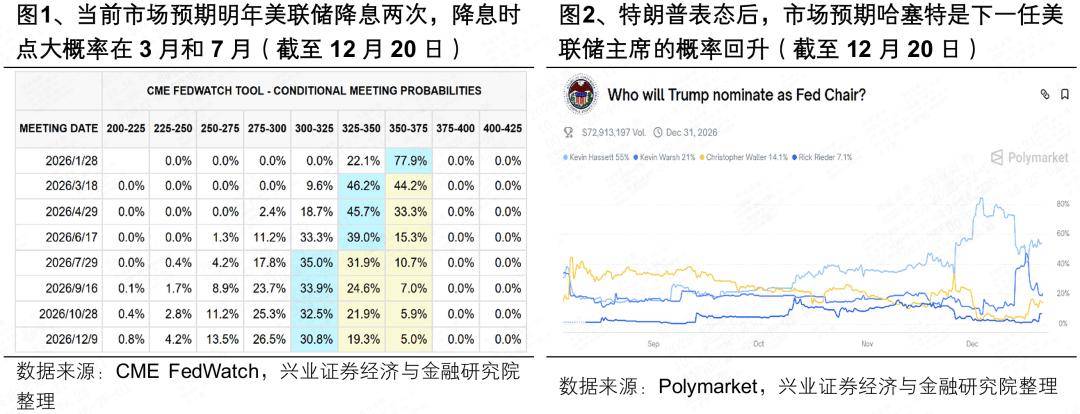
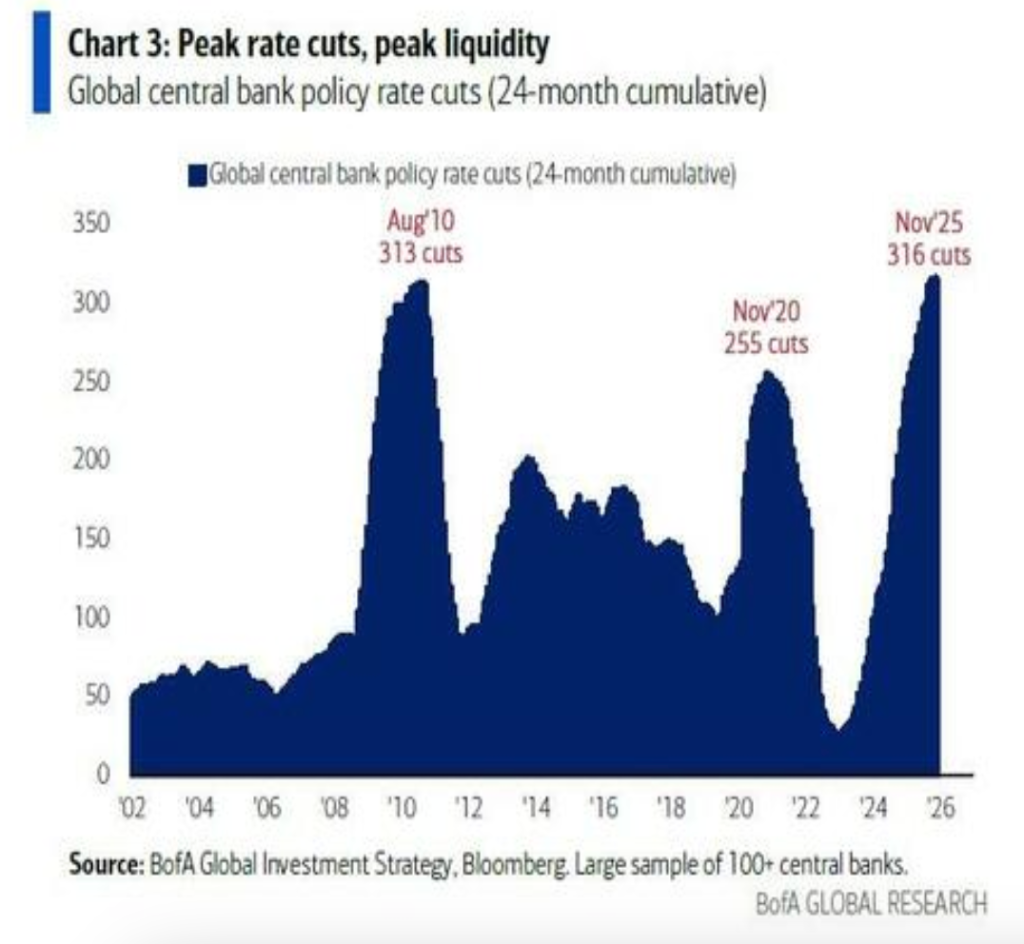
Group 1 - The market is experiencing significant divergence in expectations regarding the Federal Reserve's interest rate path for December, with previous optimism about rate cuts being tempered by recent hawkish statements from the Fed [1][4] - Michael Hartnett from Bank of America indicates that tightening liquidity is impacting multiple asset classes, suggesting that the cryptocurrency market will be the first to sense a shift in central bank policy [1][7] - Hartnett predicts that the current weakness in U.S. bank stocks is signaling a potential shift towards easing monetary policy, similar to signals observed in December 2018 [1][4] Group 2 - Hartnett forecasts that the Federal Reserve will likely initiate a rate-cutting cycle in 2026, benefiting long-duration zero-coupon bonds, Bitcoin, and mid-cap stocks [2] - Japan is facing a debt crisis, with a significant decline in 30-year government bonds and the yen nearing a 40-year low against the dollar, raising global liquidity concerns [3] - The combination of expansive fiscal policy and loose monetary policy in Japan is exacerbating the depreciation of the yen and pressure on government bonds [3] Group 3 - U.S. mid-cap stocks are showing a notable divergence in valuation and performance, indicating that the Fed's policy adjustments are lagging behind market demands [4] - The decline in bank and brokerage indices, which are sensitive to liquidity, serves as a leading indicator for potential policy shifts [4] - Hartnett emphasizes that the cryptocurrency market, particularly Bitcoin, will act as an early warning system for changes in central bank policy due to its sensitivity to liquidity changes [7][8]

时隔两月再现反转,港元对美元汇率“扶摇直上”
Sou Hu Cai Jing· 2025-08-20 00:03
Core Insights - The Hong Kong dollar (HKD) has experienced a significant appreciation against the US dollar, reaching a high of 7.7926 HKD per USD, marking a daily increase of 0.35% [1] - This appreciation represents the fifth consecutive trading day of strengthening for the HKD, breaking through multiple key levels from 7.85 to 7.80 [1] - Analysts attribute this dramatic rise to the Hong Kong Monetary Authority's (HKMA) interventions to stabilize the HKD, leading to a qualitative change after a quantitative reduction in HKD reserves [1] - The narrowing interest rate differential between HKD and USD has prompted the unwinding of carry trades, contributing to the HKD's strength [1] - Additionally, expectations of interest rate cuts by the Federal Reserve and a surge of capital inflows into Hong Kong stocks have played a role in this appreciation [1]
兴业证券:日债异动、套息交易平仓加剧美元资产压力 关注对美日贸易谈判的潜在影响
智通财经网· 2025-05-24 12:38
Core Viewpoint - Japanese government bond (JGB) yields have been rising since the beginning of the month, with significant movements occurring this week, particularly in ultra-long-term bonds. The active unwinding of yen carry trades has reached its highest level since 2012, which may impact U.S. stocks and bonds. There is a concern that if the sell-off of dollar assets leads to capital flowing back to Japan, it could affect U.S.-Japan trade negotiations regarding "financial terms" [1][5]. Summary by Sections JGB Yield Movements - JGB yields have been consistently rising since the start of the month, with notable changes occurring this week, especially in ultra-long-term bonds. On May 20, the yield curve shifted from flat to steep, with 20-year and 30-year yields jumping by 13 and 12 basis points, respectively, contributing nearly half of the month's cumulative increase. This movement does not correlate with the trends in ultra-long-term U.S. Treasury yields [2][4]. Market Factors and Economic Context - The fundamental factors do not adequately explain the yield movements. Japan's real GDP contracted in Q1, and while core inflation has increased, it remains stable due to weakening service inflation. There is limited risk of inflation expectations becoming unanchored, and no inflation data was released prior to the yield movements. Additionally, uncertainties surrounding Trump's tariff policies have led the Bank of Japan (BOJ) to maintain a wait-and-see approach regarding interest rate hikes [3][4]. Auction Results and Debt Concerns - The catalyst for the recent yield spike was the poor auction results for 20-year JGBs, marking the worst performance since 2012. This has heightened concerns about government debt, especially as the Japanese government discusses fiscal stimulus to address external demand pressures. With a government debt-to-GDP ratio exceeding 200%, any borrowing during a rate hike cycle could exacerbate unsustainable debt risks. The draft budget for FY2025 indicates that debt redemption and interest payments will consume 15.3% and 9.1% of government spending, respectively, increasing the pressure on social security payments [4][5]. Broader Economic Implications - The yield movements reflect similar challenges faced by developed economies, where monetary policy is constrained and fiscal solutions are difficult to implement. Geopolitical tensions and supply chain fragmentation hinder a return to low inflation and low interest rates. The central banks, as primary buyers, struggle to expand their balance sheets to absorb the increased supply of bonds, leading to rising long-term interest rate risks. Inflation and credit risks will highlight the value of gold as an investment [4]. Potential Impact on U.S.-Japan Trade Negotiations - The unwinding of yen carry trades and the pressure on dollar assets may influence U.S.-Japan trade negotiations. There are calls for the BOJ to increase JGB purchases to stabilize market liquidity, which could lead to increased allocation pressures for state-owned financial institutions. The Government Pension Investment Fund (GPIF) holds approximately half of its portfolio in overseas securities, primarily in dollar assets. If the sell-off of dollar assets triggers capital inflows back to Japan, it may affect the discussions on "financial terms" in trade negotiations [5].
