Token成本

Search documents
黄仁勋 GTC 2026 演讲实录:所有SaaS公司都将消失;Token成本全球最低;“龙虾”创造了历史;Feynman 架构已在路上
AI前线· 2026-03-16 23:30
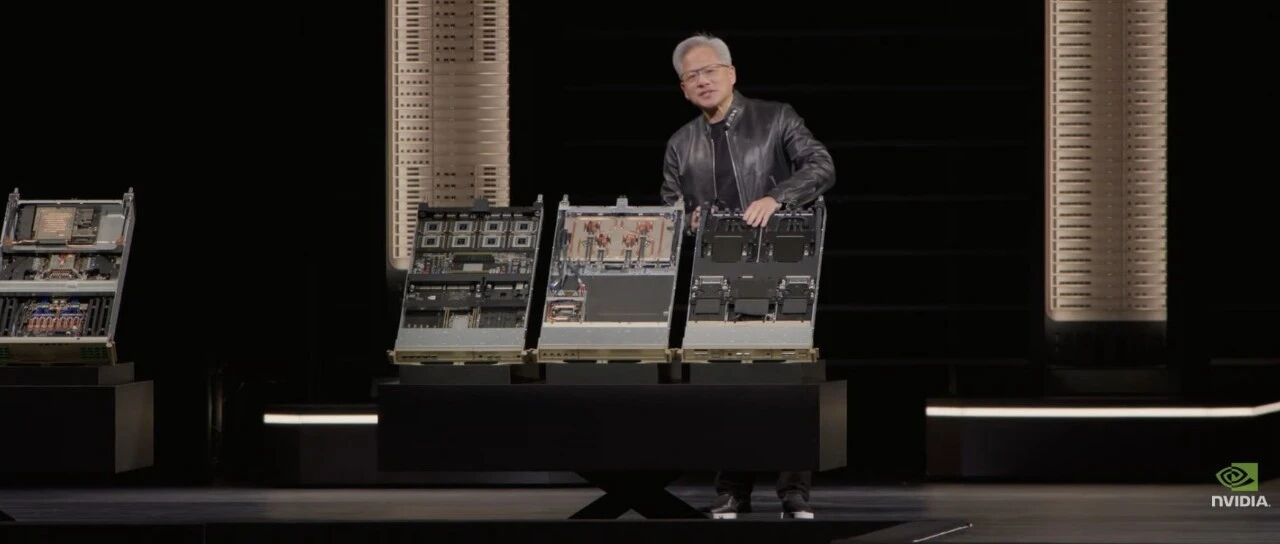
Core Insights - The article emphasizes that NVIDIA has evolved from a graphics card company to a comprehensive provider of AI infrastructure, positioning itself as a key player in the multi-trillion-dollar AI foundational era [2]. Group 1: CUDA and Ecosystem Development - Huang emphasized the significance of the CUDA architecture, which has been central to NVIDIA's business for 20 years, creating a vast ecosystem of tools and libraries that support AI development [3][4]. - The "flywheel effect" of CUDA's installation base accelerates growth by attracting developers, leading to new algorithms and breakthroughs, which in turn expand the market and ecosystem [6][7]. Group 2: Data Processing Transformation - Huang highlighted a structural transformation in global data processing, focusing on the acceleration of both structured and unstructured data, which is crucial for AI applications [8][10]. - NVIDIA has developed core software libraries, cuDF for structured data and cuVS for unstructured data, to support this transformation and enhance data processing capabilities [13]. Group 3: AI Industry Growth and Investment - The AI industry has seen unprecedented growth, with venture capital investments reaching $150 billion, driven by the demand for massive computational power [15]. - Huang predicts that the revenue from NVIDIA's AI systems could reach at least $1 trillion by 2027, supported by a tenfold increase in computational demand over the past two years [17]. Group 4: AI Infrastructure and Token Economy - NVIDIA's advancements in AI infrastructure, including the NVFP4 computing architecture, have significantly reduced token costs, making it the most efficient platform for AI applications [20][25]. - The role of data centers is shifting from storage and computation to becoming "AI factories" that produce tokens, which are becoming a new digital commodity [27]. Group 5: Vera Rubin Supercomputer - The introduction of the Vera Rubin supercomputer marks a significant advancement in AI computing, featuring a fully integrated system designed for agentic AI workloads [28][31]. - This platform includes cutting-edge technologies such as liquid cooling and high-speed NVLink interconnects, enhancing performance and deployment efficiency [33][35]. Group 6: OpenClaw and Software Development - Huang praised the OpenClaw project for its rapid growth and potential to revolutionize software development, likening its impact to that of Linux and Kubernetes [52][55]. - The introduction of NemoClaw, an enterprise-level architecture built on OpenClaw, aims to address security challenges associated with deploying intelligent systems in corporate environments [56][58]. Group 7: Open Model Ecosystem - NVIDIA is advancing an open model ecosystem with nearly 3 million models across various domains, emphasizing the importance of collaboration and continuous improvement in AI model capabilities [59][60]. - The establishment of the Nemotron Coalition aims to further develop foundational models and ensure they meet diverse industry needs [61].


从“更快”到“更省”:AI下半场,TPU重构算力版图
3 6 Ke· 2026-02-09 02:47
Core Insights - The rise of Google's TPU (Tensor Processing Unit) marks a significant shift in AI computing, moving from a GPU-dominated era to a new focus on specialized architectures for inference, particularly with the introduction of TPU v7, which has drastically reduced inference costs [1][4][32] Group 1: Market Dynamics - The AI landscape is evolving, with a shift from "training is king" to "inference is king," as the demand for efficient inference services grows [2][4] - Google's TPU v7 has reportedly reduced the cost per million tokens for inference by approximately 70% compared to its predecessor, indicating a competitive edge over NVIDIA's offerings [4][7] - The competition is intensifying, with companies like Anthropic placing significant orders for TPUs, highlighting the commercial viability of specialized chips [7][32] Group 2: Technological Innovations - TPU's architecture is designed for efficiency, focusing on matrix operations essential for AI, which contrasts with the general-purpose nature of GPUs [8][12] - Innovations such as the unique pulsing array architecture and large on-chip SRAM cache significantly reduce energy consumption associated with data movement [8][12] - The introduction of RISC-V architecture in AI chips allows for enhanced programmability and efficiency, aligning with industry trends towards specialized computing [15][16] Group 3: Cost Efficiency - The focus on reducing token costs is paramount, as companies aim to make AI services as affordable as utilities, driving the need for lower inference costs [4][27] - The competitive landscape is shifting towards maximizing efficiency and reducing costs rather than merely increasing computational power [27][32] - Companies like Yixing Intelligent are developing architectures that align with these trends, emphasizing energy efficiency and cost reduction in AI computations [14][20] Group 4: Ecosystem Development - The collaboration between hardware and software is crucial, with companies like Yixing Intelligent integrating open-source technologies to enhance compatibility and ease of use [20][26] - The establishment of ecosystems that support various frameworks (e.g., TensorFlow, PyTorch) is essential for broad adoption and seamless transitions between platforms [10][20] - The development of advanced interconnect technologies, such as ELink, is vital for supporting high-bandwidth, low-latency communication in AI applications [28][30]

从“更快”到“更省”:AI下半场,TPU重构算力版图
半导体行业观察· 2026-02-09 01:18
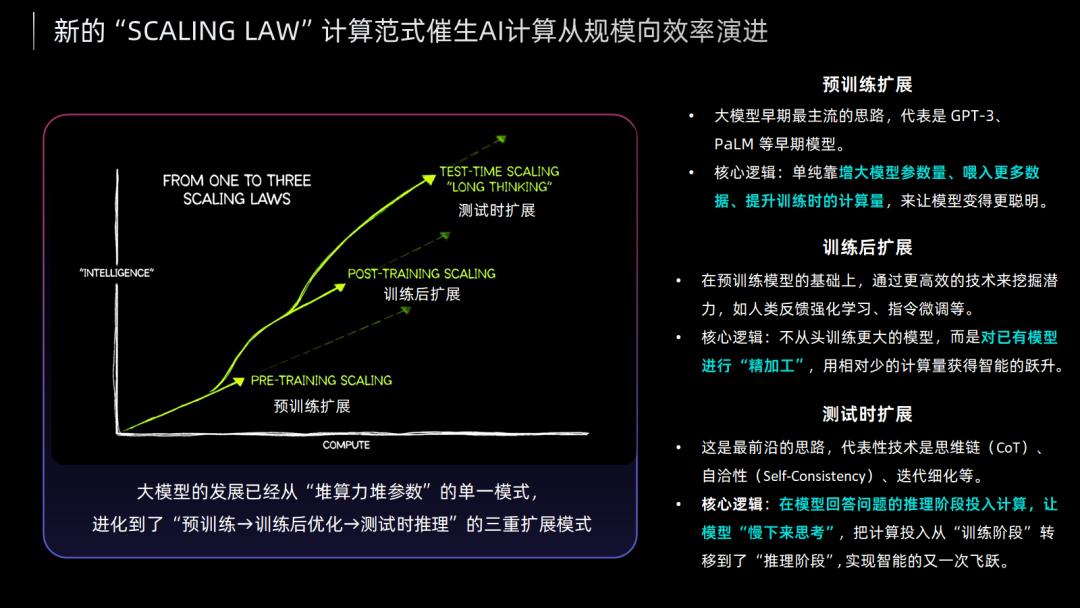
Core Insights - The article emphasizes the shift from "training is king" to "inference is king" in AI, highlighting the importance of specialized architectures like Google's TPU in reducing inference costs and reshaping the AI computing landscape [1][4][11]. Group 1: Evolution of AI Models - Large models undergo a growth process similar to human development, involving pre-training, fine-tuning, and reinforcement learning to align outputs with human preferences [3]. - The infrastructure for training large models requires high computing power, high memory bandwidth, and strong multi-GPU interconnects, with NVIDIA being the dominant player due to its high-performance GPUs and CUDA ecosystem [3]. Group 2: Cost Efficiency in Inference - After training, the commercial value of AI models lies in scalable inference services, where the cost of inference directly impacts profit margins [4]. - The focus has shifted to reducing inference costs while maintaining performance, with Google's TPU v7 reportedly lowering the cost per million tokens by approximately 70% compared to its predecessor [8][10]. Group 3: Competitive Landscape - The competition in AI computing is evolving, with specialized architectures like Google's TPU emerging as strong challengers to NVIDIA's dominance [10][11]. - A significant order from Anthropic for TPUs indicates a shift towards large-scale commercial deployment of ASIC chips, suggesting potential profit improvements of billions annually through reduced inference costs [10]. Group 4: Technological Innovations - Google's TPU architecture is designed for efficiency, focusing on matrix operations and minimizing unnecessary components, which enhances performance and reduces energy consumption [13]. - Innovations such as the unique pulsed array architecture and large on-chip SRAM caches contribute to TPU's advantages in inference scenarios [18]. Group 5: Software and Ecosystem Development - Google is addressing the software ecosystem by making its TPU compatible with popular frameworks like PyTorch, thereby reducing the cost of transitioning from NVIDIA's ecosystem [15][27]. - The collaboration with various tech giants to support open-source projects like OpenXLA aims to create a unified compilation path across different hardware [15][17]. Group 6: Domestic Chip Manufacturers - Domestic chip companies like Yixing Intelligent are developing architectures that align with the trends of specialized computing, focusing on efficiency and cost reduction [20][22]. - Yixing Intelligent's chips support advanced data formats and architectures that enhance performance while reducing storage costs, positioning them competitively in the market [26][27]. Group 7: Future Directions - The industry is transitioning from a focus on raw computing power to optimizing efficiency and cost-effectiveness, marking a significant shift in the competitive landscape [42]. - The emergence of technologies like ELink for high-speed interconnects indicates a broader trend towards integrated AI infrastructure that encompasses hardware, software, and system optimization [38][40].