WEWA架构

Search documents
从辅助到自动,L3终于破冰
虎嗅APP· 2025-12-27 10:30
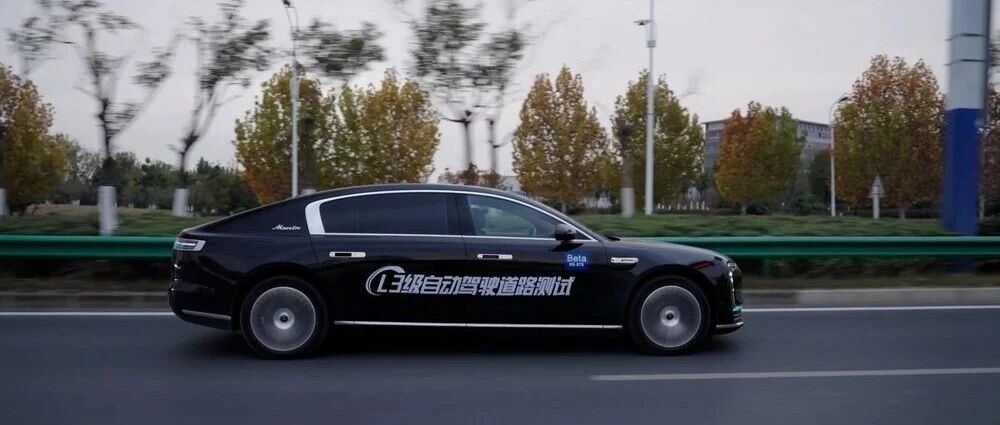
Core Viewpoint - The article discusses the significant advancements in China's L3-level conditional autonomous driving, highlighting the transition from technical exploration to regulatory compliance and commercialization, marked by the issuance of market access permits for L3 vehicles by the Ministry of Industry and Information Technology by the end of 2025 [2][7]. Group 1: Market Access and Technical Testing - The distinction between "market access" and "technical testing" is emphasized, with current market access being limited to well-structured environments, while true L3 capabilities are being tested in real-world scenarios [2][4]. - The ongoing L3 road tests are primarily conducted on highways, but the real challenges lie in low-probability, high-risk scenarios such as construction zones and sudden obstacles [4][5]. Group 2: Technical Challenges and Innovations - Adverse weather conditions in China pose significant challenges for sensor redundancy and algorithm integration, which are crucial for L3 technology to transition from laboratory settings to commercial applications [5]. - The recent testing by Hongmeng Zhixing showcases its L3 autonomous driving system's ability to handle complex real-world conditions, drawing industry attention [5][7]. Group 3: Industry Dynamics and Competition - The competition in L2-level driving assistance has led to a homogenization of technology, with many companies focusing on hardware without effective software integration, resulting in suboptimal user experiences [8][9]. - High-tech companies must leverage L3 competition to demonstrate their technological advantages and establish industry barriers, as the current L3 access and testing are strategic moves to build a protective industry moat [9][10]. Group 4: Human-Machine Interaction and Safety - L3 autonomous driving represents a shift in driving responsibility from humans to systems under specific conditions, allowing drivers to divert their attention, which marks a significant evolution in automotive technology [10][11]. - The human-machine co-driving model requires systems to meet stringent safety standards, ensuring that control can be safely returned to humans in emergencies [11][12]. Group 5: Legal and Ethical Considerations - The transition from "probabilistic safety" to "deterministic responsibility" is crucial for L3 commercialization, necessitating systems that can handle rare but high-risk scenarios effectively [14][15]. - Legal responsibility in accidents involving autonomous vehicles must be clearly defined, requiring precise data recording capabilities and unified standards for accountability [15][16]. Group 6: Systematic Barriers and Data Utilization - Comprehensive technical capabilities are essential for competitive advantage in L3 autonomous driving, with Hongmeng Zhixing developing a three-pronged approach of self-research, data cycles, and large-scale validation [18][20]. - The WEWA architecture enables a shift from rule-based to cognitive-driven systems, enhancing the ability to handle complex driving scenarios through advanced data processing and decision-making [20][21]. Group 7: Safety Strategies and Redundancy - Safety is a critical factor in L3 development, with systems needing to avoid single-point failures and ensure robust performance in extreme conditions [24][25]. - Hongmeng Zhixing employs a multi-sensor fusion strategy to maintain reliable perception and decision-making capabilities in adverse weather and complex environments [25][26]. Group 8: Data Accumulation and Quality - High-quality data accumulation is a significant barrier in the industry, with Hongmeng Zhixing leveraging a large user base to create a rich data network for model training [27][28]. - Effective data extraction and processing are vital for advancing intelligent driving, ensuring that the data used for training is valuable and not merely abundant [28][30]. Group 9: Future of Autonomous Driving - The gradual realization of L3 autonomous driving will redefine the relationship between people, vehicles, and roads, transforming cars into "third living spaces" [30]. - Trust in human-machine interaction is foundational for this evolution, necessitating rigorous testing in real-world conditions to ensure safety and reliability [30].

智驾乱象,如何破局?
虎嗅APP· 2025-04-24 10:07
Core Viewpoint - The Chinese intelligent driving market is currently facing both challenges and opportunities, with a shift in focus towards safety and responsible promotion of advanced driving assistance systems (ADAS) following recent incidents and regulatory scrutiny [1][16]. Group 1: Intelligent Driving Development - The industry lacks not just functional ADAS but systems that enhance human driving safety and stability, with Huawei's approach aiming for performance that surpasses human capabilities [3][4]. - Huawei's new architecture, WEWA, combines cloud-based world engines and vehicle behavior models, significantly improving response times and driving efficiency [4][5]. - The introduction of advanced hardware, such as the XMC digital chassis engine, enhances control capabilities, leading to a tenfold increase in processing power and improved safety features [4][6]. Group 2: Safety and Regulatory Compliance - Huawei's CAS 4.0 system offers comprehensive safety features across various driving conditions, addressing the need for robust safety measures in intelligent driving [5][8]. - The company emphasizes the importance of user education regarding the limitations of ADAS to prevent misuse and enhance safety [16][17]. - A collaborative initiative with industry partners aims to establish clear standards and training for users to ensure safe and effective use of intelligent driving technologies [18]. Group 3: Market Position and User Engagement - Huawei's intelligent driving solutions have achieved significant market penetration, with over 55.84 million active users and a monthly usage frequency of 38 times for automated parking features [11][12]. - The company has positioned itself as a leading provider of intelligent driving services, surpassing competitors in sales and partnerships with various automotive manufacturers [10][13]. - Continuous investment in R&D, with a team of 8,000 and over 10 billion in funding, supports the ongoing development and enhancement of intelligent driving technologies [11][12].