
mSAP

Search documents
招商证券:26年技术升级与涨价趋势并行 把握PCB细分产业链核心玩家
智通财经网· 2026-01-26 01:45
Core Viewpoint - The PCB sector is experiencing significant growth driven by AI demand, with several key investment themes identified for 2025 [1] Group 1: PCB Upgrade Trends - The commercialization of CoWoP technology is accelerating, leading to a new round of upgrades in AI PCB products, with mSAP capacity and technology becoming critical competitive thresholds for PCB manufacturers [1] - The industry is continuously optimizing the Rubin Ultra system architecture, with potential advancements in backplane solutions expected [1] Group 2: CCL Upgrade Trends - The upgrade from M8 to M9 in CCL is a confirmed trend, with increasing adoption in GPUs, ASIC servers, and 1.6T switches, leading to a rapid increase in the use of Q fabric, HVLP 3-4, and hydrocarbon resins [2] - Concerns regarding potential downgrades in PCB specifications for NV's Rubin CPX architecture have been addressed, with backup plans in place for successful mass delivery [2] Group 3: Upstream Material Price Trends - The CCL industry is currently in an upward price cycle, with significant price increases announced by major manufacturers, including a 30% increase by Japan's Resonac [3] - The average price of CCL in 2025 has risen by 20%-30%, and further price increases are anticipated in 2026, which could enhance the profitability of the entire sector [3] Group 4: Demand for Substrates - There is a growing demand for substrates, with BT substrates experiencing continuous price increases and ABF substrate demand beginning to overflow to domestic manufacturers [4] - The global AI data center's storage demand is robust, with TSMC's capital expenditure for 2026 significantly exceeding market expectations, indicating a strong growth outlook for AI chips [4] - NVIDIA's CEO has engaged with leading manufacturers to secure supply for Low-CTE glass fabric, which is a critical component in the substrate supply chain [4]

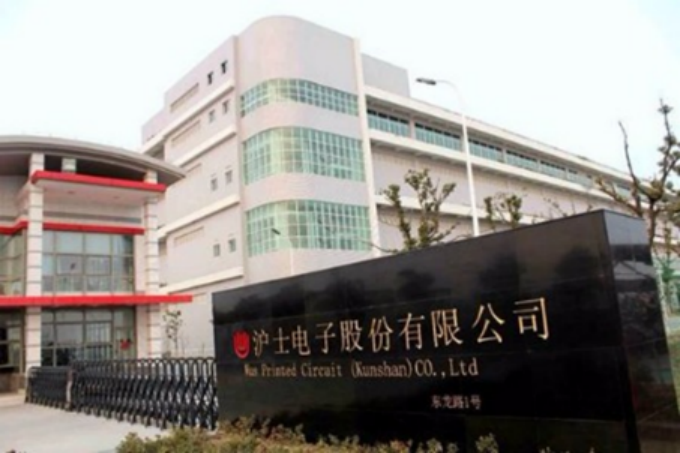
沪电股份斥重资押注下一代技术!
Xin Lang Cai Jing· 2026-01-13 11:32
Core Viewpoint - The company has approved an investment cooperation agreement to establish a wholly-owned subsidiary in Changzhou, Jiangsu Province, for the construction of a "High-Density Optoelectronic Integrated Circuit Board Project" with a total planned investment of $300 million, implemented in two phases [2][5]. Group 1: Project Overview - The project aims to implement the company's strategic development plan and promote cutting-edge technology research and industrialization [2][5]. - The project will establish an incubation platform for advanced technologies such as CoWoP and mSAP, creating a closed-loop system for "research - pilot - verification - application" [2][5]. - The project will enhance product capabilities in signal transmission, power distribution, and functional integration, focusing on next-generation technology directions like optical-copper integration [2][5]. Group 2: Financial and Operational Details - The registered capital for the wholly-owned subsidiary is set at $100 million, funded by the company's own resources [2][5]. - The total investment of $300 million will be divided into two phases: Phase 1 involves an investment of $100 million to lease an existing factory of approximately 50,000 square meters for technology incubation and preliminary construction; Phase 2 will involve an additional investment of $200 million based on the results of Phase 1 and market demand, including acquiring 60 acres of industrial land and constructing a clean factory of about 60,000 square meters [2][5]. - The company reserves the right to unilaterally terminate the Phase 2 investment plan without liability if Phase 1 does not pass evaluation or if there are significant adverse changes in the market environment [2][5]. Group 3: Expected Outcomes - Upon full production, the project is expected to add an annual capacity of 1.3 million high-density optoelectronic integrated circuit boards, generating an additional annual revenue of 2 billion RMB and a pre-tax profit exceeding 300 million RMB [3][6]. - The implementation of this project will help the company expand its high-end product capacity, optimize product structure, increase the proportion of high-value-added products, and enhance its competitive advantage and overall profitability [3][6]. - The cooperation partners for this project are the Changzhou Jintan District People's Government and the Jincheng Town People's Government [3][6].


PCB行业专题:AI PCB技术演进,设备材料发展提速
Minsheng Securities· 2025-08-22 09:38
Investment Rating - The report maintains a "Recommended" rating for leading PCB manufacturers such as Shenghong Technology, Pengding Holdings, and Huadian Co., Ltd. [4][5] Core Viewpoints - The PCB industry is experiencing rapid advancements in packaging and high-density interconnect technologies, with traditional HDI and substrate technologies evolving into mSAP processes to meet the demands of high-speed signal transmission and large-scale integration [1][2] - The demand for PCB is driven by AI applications, leading to significant expansions in production capacity among leading companies, with total investments exceeding 30 billion RMB [2][20] - The core materials for PCB, including copper foil, electronic cloth, and resin, are undergoing upgrades to meet the high-frequency and high-speed requirements of AI applications [2][20][26] Summary by Sections 1. CoWoP and mSAP as Core Technologies - CoWoP (Chip-on-Wafer-on-PCB) is emerging as a future packaging route, enhancing interconnect density and reducing costs by directly using large-size PCBs [1][11] - mSAP (Modified Semi-Additive Process) is becoming the core process for achieving sub-10 µm line capabilities, essential for high-performance applications [1][14] 2. PCB Capacity Expansion and Material Upgrades - Leading PCB manufacturers are actively expanding production capacity, with significant investments announced by companies like Huadian Co., Ltd. and Shenghong Technology [2][20] - The upgrade of core materials includes the transition of copper foil from HVLP1 to HVLP5, electronic cloth to third-generation low-dielectric cloth, and resin to hydrocarbon and PTFE types [2][20][28] 3. Tight Supply of Core Equipment and Acceleration of Domestic Substitution - The supply of core PCB equipment, including drilling, plating, and etching imaging, is tight, with domestic manufacturers accelerating their layouts in advanced process equipment [2][49] - Companies like Dazhu CNC and Ding Tai High-Tech are focusing on high-layer boards and HDI equipment to meet the increasing demands of the industry [2][49] 4. Investment Recommendations - The report suggests focusing on leading PCB manufacturers such as Shenghong Technology, Pengding Holdings, and Huadian Co., Ltd., as well as material companies with core technologies like Honghe Technology and Zhongcai Technology [3][4] - Equipment manufacturers involved in domestic substitution, such as Dazhu CNC and Xinqi Microelectronics, are also highlighted as potential investment opportunities [3][4]


