
光铜融合

Search documents
PCB/CCL行业2026年投资策略:电互联:规模、速率、集成
Shenwan Hongyuan Securities· 2026-03-19 09:42
Core Insights - The demand for PCB is driven by scale, speed, and integration, with a focus on the progress of substrate integration, backplane development, and optical-copper fusion [3][6] - The data center PCB market is projected to grow from $12.5 billion in 2024 to $23 billion by 2030, with a CAGR of 10.7% from 2024 to 2030 [13] - Key technological advancements include substrate integration with CoWoP, backplane applications in Kyber racks, and the integration of optical systems in EOCB [18][23][34] PCB Sector - The expansion of computing clusters is leading to increased demand for high-layer, high-density, and high-speed interconnect PCBs [6][12] - The integration of complex functions through substrate and backplane technologies is enhancing PCB capabilities [6][12] - The introduction of CoWoP technology by Nvidia aims to improve signal integrity and reduce power loss, although challenges remain in mSAP process and supply chain constraints [18][19] CCL Sector - The transition to M9-M10 specifications is driven by the need for higher speed and cost-driven price increases [5][37] - The dielectric performance of CCL must be upgraded to ensure signal integrity as speeds and frequencies increase [5][37] - The main materials for CCL are expected to see significant price increases due to supply constraints and rising demand from AI applications [58][63] Key Companies - Key players in the PCB sector include Huadian Co., Shennan Circuit, Shenghong Technology, and others, with a focus on high-layer and high-density PCB production [76] - Huadian Co. is a core supplier for switches and ASIC PCBs, while Shennan Circuit leads in data communication PCBs and packaging substrates [76] - Shenghong Technology is involved in Nvidia's interconnect definitions, focusing on capacity expansion and breakthroughs in ASIC and switch technologies [76] Investment Opportunities - The report highlights the importance of monitoring the progress of high-speed CCL certification and the sustainability of price increases [3][5] - Companies like Huadian Co. and Shenghong Technology are positioned to benefit from advancements in AI and high-speed interconnect technologies [76] - The focus on high-end materials and technologies in the PCB and CCL sectors presents significant investment opportunities as demand continues to rise [58][63]




沪电股份(002463) - 2026年1月28日投资者关系活动记录表
2026-01-28 08:18
Group 1: Financial Performance - In 2025, the company achieved an operating revenue of approximately 189 million, representing a year-on-year growth of about 42% [2] - The net profit attributable to shareholders was approximately 38.22 million, with a year-on-year increase of about 47.74% [2] - The net profit attributable to shareholders after deducting non-recurring gains and losses was approximately 37.61 million, reflecting a year-on-year growth of about 47.69% [2] Group 2: Business Strategy - The company focuses on high-growth, high-tech barrier PCB products, including high-speed network switches and routers, AI servers, and smart automotive applications [3] - The strategy emphasizes long-term sustainable benefits over short-term gains, maintaining a balanced customer base to adapt to market changes [3] - The company aims to enhance its comprehensive competitiveness by continuously improving its technical and process capabilities [3] Group 3: Capital Expenditure and Market Situation - The company accelerated capital expenditures, with approximately 2.104 billion spent on fixed assets and long-term assets in the first three quarters of 2025 [5] - A planned investment of approximately 4.3 billion for a new AI chip supporting high-end PCB expansion project is set to commence in June 2025 [5] - The project aims to enhance the company's capacity for high-end products, aligning with the growing demand for high-performance servers and AI applications [6] Group 4: Production and Operations - The Thailand production base entered small-scale production in Q2 2025, with a reported loss of approximately 139 million [7] - The Thailand facility has received certifications from major global clients, marking the initial establishment of the company's global delivery system [7] - The operational performance is expected to improve significantly in Q4 2025, with increased production capacity and optimized product structure [7] Group 5: Technology Development - The company plans to invest in a wholly-owned subsidiary in Jintan District to establish a platform for advanced technologies like CoWoP and mSAP [8] - The project aims to create a closed-loop system for R&D, pilot testing, verification, and application of next-generation technologies [8] - Risks include potential deviations in technology routes and challenges in commercializing the developed technologies [9]
未知机构:PCB设备持续扩产技术迭代看好PCB设备钻针增量空间东吴机械-20260121
未知机构· 2026-01-21 02:15
Summary of Conference Call Notes Industry Overview: PCB Equipment Key Points - **Expansion Plans**: - Pengding plans to invest 4.3 billion yuan in expansion, focusing on HDI and HLC products aimed at AI servers, AI edge devices, and low-orbit satellites. The project is expected to be completed by the end of 2026, with PCB equipment orders anticipated to materialize within the same year [1][1][1] - **Technological Advancements**: - Huadian Co. is investing in a high-density optoelectronic integrated circuit board project in Jintan District, Changzhou, with a total investment of 300 million USD (phased into two parts). This initiative aims to establish platforms for cutting-edge technologies like CoWoP and advanced processes such as mSAP, focusing on next-generation technology directions like copper-light integration [1][1][1] Market Dynamics - **Accelerated Expansion and Technological Iteration**: - Leading PCB manufacturers are rapidly expanding, particularly in the AI PCB sector. Equipment manufacturers are expected to benefit significantly from this expansion wave, while material suppliers may see improvements in product structure due to the increasing layers in AI PCBs [2][2][2] - **High-End PCB Upgrades**: - Continuous advancements in chip technology are driving the upgrade of PCBs towards high-end applications, characterized by smaller aperture sizes and narrower line widths. Advanced packaging processes like CoWoP and micro-aperture/line-width processing techniques such as mSAP are expected to propel the development of high-end equipment, leading to increased demand for high-resolution LDI equipment and ultra-fast laser drilling [2][2][2] Investment Recommendations - **Focus Areas**: - It is recommended to pay attention to companies involved in the PCB drilling segment, such as Dazhu CNC, Zhongtung High-tech, and Dingtai High-tech, as well as those in the LDI segment like Chip Quik [2][2][2] Risk Factors - **Potential Risks**: - Macro-economic risks and the possibility of technology development falling short of expectations are highlighted as significant risk factors [2][2][2]
沪电股份斥重资押注下一代技术!
Xin Lang Cai Jing· 2026-01-13 11:32
Core Viewpoint - The company has approved an investment cooperation agreement to establish a wholly-owned subsidiary in Changzhou, Jiangsu Province, for the construction of a "High-Density Optoelectronic Integrated Circuit Board Project" with a total planned investment of $300 million, implemented in two phases [2][5]. Group 1: Project Overview - The project aims to implement the company's strategic development plan and promote cutting-edge technology research and industrialization [2][5]. - The project will establish an incubation platform for advanced technologies such as CoWoP and mSAP, creating a closed-loop system for "research - pilot - verification - application" [2][5]. - The project will enhance product capabilities in signal transmission, power distribution, and functional integration, focusing on next-generation technology directions like optical-copper integration [2][5]. Group 2: Financial and Operational Details - The registered capital for the wholly-owned subsidiary is set at $100 million, funded by the company's own resources [2][5]. - The total investment of $300 million will be divided into two phases: Phase 1 involves an investment of $100 million to lease an existing factory of approximately 50,000 square meters for technology incubation and preliminary construction; Phase 2 will involve an additional investment of $200 million based on the results of Phase 1 and market demand, including acquiring 60 acres of industrial land and constructing a clean factory of about 60,000 square meters [2][5]. - The company reserves the right to unilaterally terminate the Phase 2 investment plan without liability if Phase 1 does not pass evaluation or if there are significant adverse changes in the market environment [2][5]. Group 3: Expected Outcomes - Upon full production, the project is expected to add an annual capacity of 1.3 million high-density optoelectronic integrated circuit boards, generating an additional annual revenue of 2 billion RMB and a pre-tax profit exceeding 300 million RMB [3][6]. - The implementation of this project will help the company expand its high-end product capacity, optimize product structure, increase the proportion of high-value-added products, and enhance its competitive advantage and overall profitability [3][6]. - The cooperation partners for this project are the Changzhou Jintan District People's Government and the Jincheng Town People's Government [3][6].

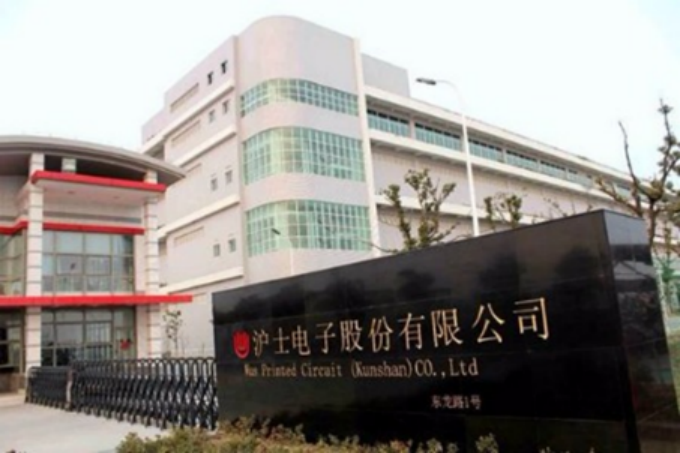
沪电股份拟3亿美元投资光电集成线路板项目
Zheng Quan Shi Bao· 2026-01-12 18:08
Core Insights - The company has signed an investment cooperation agreement to develop a "High-Density Optoelectronic Integrated Circuit Board Project" aimed at advancing cutting-edge technology research and industrialization [1][2] - The project will establish a wholly-owned subsidiary in Jintan District, Changzhou, with a total investment of $300 million, implemented in two phases [1][2] - Upon full production, the project is expected to add an annual capacity of 1.3 million high-density optoelectronic integrated circuit boards, generating an estimated annual revenue of 2 billion RMB [1] Group 1 - The project aims to enhance the company's strategic development plan, meet future business growth needs, and improve core competitiveness [2] - Implementation of the project will help expand high-end product capacity, optimize product structure, and increase the proportion of high value-added products [2] - The project involves advanced technologies such as CoWoP, mSAP, and optical copper integration, which are characterized by long R&D cycles and high technical difficulty [2] Group 2 - The second phase of the project will depend on the incubation results and market validation of the first phase, with potential delays or termination if expectations are not met [2] - The company is focused on high-growth, high-tech barrier PCB products in sectors such as high-speed network switches and routers, AI servers, HPC, general servers, wireless communication networks, and smart vehicles [2] - Recent financial reports indicate that the company achieved record high quarterly revenue and net profit in Q3 2025, with net profit exceeding 1 billion RMB for the first time [2]
沪电股份:拟设立全资子公司开展“高密度光电集成线路板项目”
Ge Long Hui· 2026-01-12 10:16
Core Viewpoint - The company, Huadian Co., Ltd. (002463.SZ), has approved the establishment of a wholly-owned subsidiary to undertake a "High-Density Optoelectronic Integrated Circuit Board Project" with a total planned investment of $300 million [1][2] Group 1: Project Overview - The project aims to set up a wholly-owned subsidiary in Jintan District, Changzhou, focusing on advanced technologies such as CoWoP and mSAP [1] - The project will create a closed-loop system for "R&D - pilot testing - verification - application" to enhance product capabilities in signal transmission, power distribution, and functional integration [1] - Upon reaching full production capacity, the project is expected to add an annual capacity of 1.3 million high-density optoelectronic integrated circuit boards, generating an estimated annual revenue of 2 billion RMB [1] Group 2: Investment Details - The registered capital for the planned subsidiary is set at $100 million, with the investment divided into two phases: the first phase will invest $100 million, and the second phase will invest $200 million based on the first phase's outcomes and market demand [1] - The management is authorized to negotiate with local government authorities regarding the project and to adjust investment amounts, construction progress, and production capacity as necessary [2]