
气象观测

Search documents
辽宁观云测风再添“利器”
Liao Ning Ri Bao· 2026-02-28 01:04
Group 1 - The core idea is to advance the "Observation as a Service" concept, focusing on precise monitoring, accurate forecasting, and refined services to strengthen the first line of defense against meteorological disasters [1] - The province will enhance observational data foundations and business support capabilities, achieving intelligent response, rapid data processing, and effective service delivery [1] - New weather radar projects will be initiated, including the construction of 6 X-band weather radars and the establishment of various meteorological observation stations in key areas [1] Group 2 - The province aims to build a geospatial data business, enhancing foundational capabilities in general computing power, intelligent computing, and storage [2] - The "Liaotian Zhiyun" integrated platform will be further developed to strengthen the coordination of business systems and promote algorithm development and regional sharing [2] - There will be an emphasis on data sharing applications with key industry departments such as water conservancy, natural resources, and civil aviation [2]
筑牢气象防灾减灾第一道防线 辽宁观云测风再添“利器”
Xin Lang Cai Jing· 2026-02-28 00:40
Group 1 - The core idea of the articles is the implementation of the "Observation as a Service" concept by the meteorological department to enhance disaster prevention and mitigation capabilities through improved monitoring, forecasting, and service precision [1][2] - The province plans to strengthen the observational data foundation and enhance operational support capabilities, including the construction of new weather radar systems and advanced observational stations [1] - Specific projects include the establishment of 6 X-band weather radars, 15 traffic meteorological observation stations along the Beijing-Harbin Expressway, and the development of AI-based data quality control algorithms [1] Group 2 - The province aims to build a comprehensive Earth system data business, enhancing computational and storage capabilities to support meteorological data applications [2] - The "Liaotian Zhiyun" integrated platform will be further developed to improve system coordination and promote algorithm development and regional data sharing [2] - Collaboration with key sectors such as water conservancy, natural resources, and civil aviation will be strengthened to enhance data sharing and application [2]
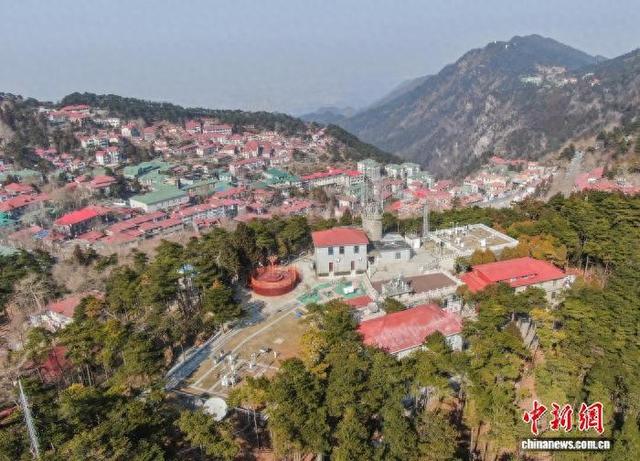
(新春见闻)走进“中国百年气象站”庐山气象站 气象人“观云测天”护安澜
Xin Lang Cai Jing· 2026-02-13 13:10
Core Viewpoint - The Lushan Meteorological Station, located at an altitude of 1164.5 meters, is a key national climate station in Jiangxi Province, known for its comprehensive meteorological equipment and services, despite being inaccessible by road [2][4]. Group 1: Station Overview - The Lushan Meteorological Station has never been relocated since its establishment and serves as the only meteorological station in Jiangxi Province that is not connected by road [2]. - It is equipped with advanced automated devices that support precise weather forecasting and meteorological services [2]. Group 2: Operations and Services - Meteorological workers at the station conduct year-round weather observations, forecasts, and disaster warnings, providing professional meteorological services for tourism, public activities, and disaster reduction [4]. - The station operates continuously, with staff on duty every day, including during holidays like the Spring Festival [4]. Group 3: Equipment and Facilities - The station features a baseline climate observation station and a cloud and fog experimental field, which are essential for various meteorological studies [2][12]. - Staff members regularly maintain and check the operation of equipment such as the cloud particle imaging device and other observational tools [9][12]. Group 4: Accessibility - Due to geographical constraints, the Lushan Meteorological Station is only accessible via two hiking trails, requiring a significant walk from the nearest road [10].

中国唯一全球大气本底站32年“绘”出地球呼吸曲线
Zhong Guo Xin Wen Wang· 2026-02-07 03:16
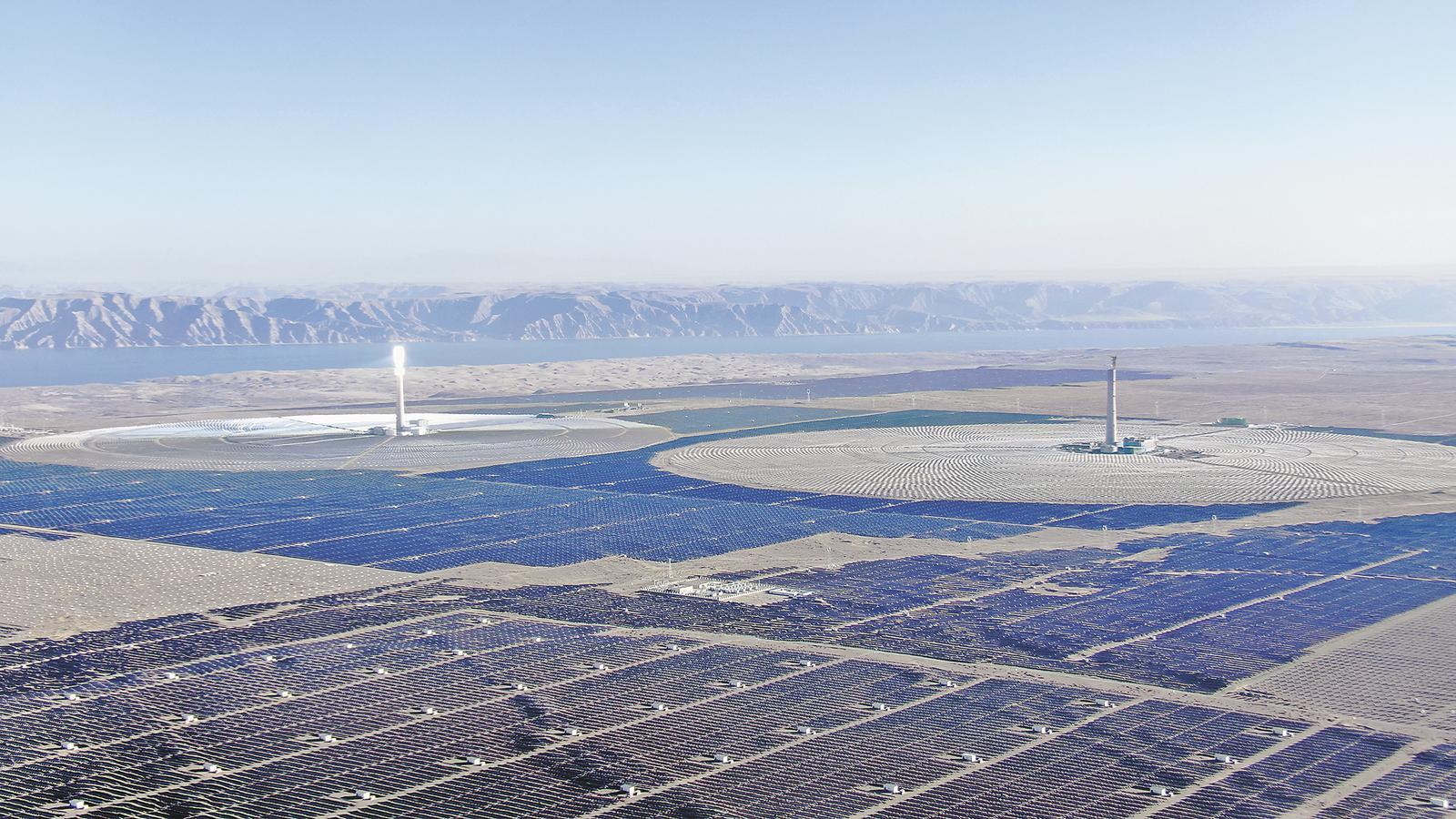
Core Insights - The article highlights the significance of the Wari Pass Atmospheric Background Station in Qinghai Province, which is the only global atmospheric background station in China and one of the highest in the world, operational since September 17, 1994 [2] Group 1 - The Wari Pass Station is located at an altitude of 3,816 meters and has been continuously monitoring atmospheric conditions for nearly 32 years [2] - The station's data contributes to the "Wari Pass Curve," which reflects the monthly average concentration of carbon dioxide in the atmosphere, playing a crucial role in China's climate change response and global climate governance [2] - The dedicated personnel at the station exemplify commitment and responsibility in high-altitude meteorological observation, ensuring accurate data collection for environmental monitoring [2]
在世界屋脊守护美丽地球
Xin Lang Cai Jing· 2026-01-31 18:30
Core Viewpoint - The Wari Pass Global Atmospheric Background Station in Qinghai Province plays a crucial role in monitoring greenhouse gas concentrations and contributes significantly to global climate change research through its long-term observational data [3][4][10]. Group 1: Importance of Wari Pass Station - The Wari Pass Station has been operational for over 30 years, providing continuous and high-precision observations of atmospheric carbon dioxide concentrations, which are critical for understanding global climate trends [3][4]. - The data from Wari Pass, known as the "Wari Pass Curve," aligns closely with observations from the Mauna Loa Observatory in Hawaii, demonstrating a consistent increase in greenhouse gas concentrations globally [3][4]. - The establishment of the Wari Pass Station filled a significant observational gap for continental atmospheric monitoring, contributing to the global atmospheric observation network [3][4]. Group 2: Environmental Protection Measures - To ensure the accuracy and reliability of observations, Qinghai has implemented protective measures around the Wari Pass Station, including the establishment of an 80-acre protection zone to control potential pollution sources [9]. - New regulations effective from February 1, 2026, will provide a legal framework for the protection of the Wari Pass Station, integrating environmental protection into land use planning [9]. - The station's operational environment is maintained with strict protocols to minimize human interference, which is essential for the continuity and comparability of the data collected [7][9]. Group 3: Contribution to Climate Change Mitigation - The data generated by the Wari Pass Station is vital for assessing China's efforts in combating climate change, with the 2024 report indicating a 0.6% increase in human carbon emissions, lower than the global average of 0.8% [11]. - The station serves as a foundation for a national network of atmospheric observation stations, enhancing China's capacity to contribute to global climate governance [10]. - China's commitment to improving its technological support for climate change initiatives is evident, as it aims to lead in global climate governance and sustainable development [12][13].
青海省瓦里关全球大气本底站保护若干规定
Xin Lang Cai Jing· 2026-01-05 18:44
Core Points - The regulations aim to enhance the protection of meteorological facilities and the environment surrounding global atmospheric baseline stations to ensure the representativeness, accuracy, continuity, and comparability of meteorological data [1][2] - The provincial meteorological authority is designated as the administrative body responsible for the protection of these stations, with specific responsibilities outlined for various government departments [2][4] - The regulations establish a framework for monitoring, reporting, and addressing any damage to meteorological facilities, including emergency response measures [4][5] Group 1 - The regulations apply to the protection activities of meteorological facilities at global atmospheric baseline stations, which are defined as long-term observation sites for atmospheric composition and related characteristics [1][2] - The provincial government is required to delineate the protection areas for these stations and incorporate them into land use planning [1][2] - Various government departments are tasked with responsibilities related to the protection of meteorological facilities, ensuring a coordinated approach to environmental protection [2][3] Group 2 - The provincial meteorological authority must establish boundary markers for the protection areas and publicly disclose the geographical locations of these stations [3][4] - Any actions that damage or alter the boundary markers are prohibited, and there are penalties for violations [4][7] - The regulations emphasize the importance of public awareness and education regarding the protection of meteorological facilities [5][6] Group 3 - The provincial meteorological authority is responsible for monitoring the environmental conditions around the stations and utilizing technology for early warning systems [4][6] - There are provisions for compensation for individuals or organizations whose rights are harmed due to the protection of the meteorological environment [5][6] - The regulations also address international cooperation in meteorological activities, ensuring compliance with national security laws [6][7] Group 4 - A system for tracking and evaluating the application of meteorological technology and data is to be established to support national strategies and local economic development [6][7] - The regulations will take effect on February 1, 2026, marking a significant step in the governance of meteorological facilities [8]
我在现场丨挺进摆浪河21号冰川站
Xin Lang Cai Jing· 2025-12-23 00:31
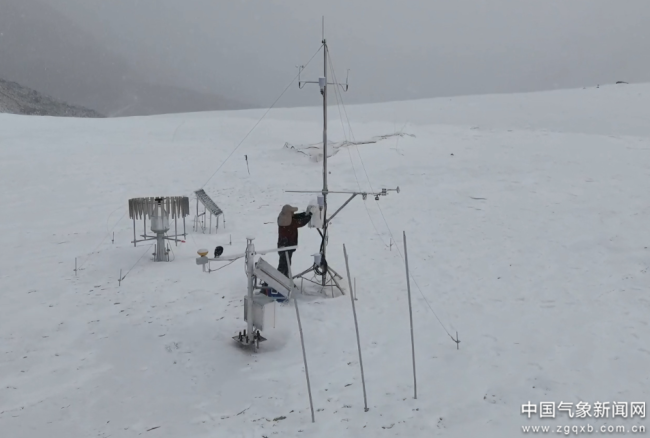
Core Viewpoint - The article highlights the importance of glacier observation data collected from the Bai Lang River No. 21 Glacier Station in the Qilian Mountains, which is crucial for understanding climate change and supporting regional disaster prevention and ecological protection efforts [1][3]. Group 1: Glacier Observation and Research - The Bai Lang River No. 21 Glacier Station, located at an altitude of 4500 meters, is a key site for monitoring glacier changes, with the highest peak reaching 5103 meters [1]. - The monitoring includes essential meteorological elements such as air pressure, temperature, precipitation, and glacier hydrology, as well as critical indicators like glacier area, movement speed, and mass balance [3][6]. - Data collected will be analyzed and transformed into climate change assessment reports, water resource planning references, and disaster prevention decision-making support, contributing to sustainable development and ecological civilization [6]. Group 2: Challenges Faced by Researchers - Researchers face extreme conditions, including temperatures around -20°C and treacherous terrain, which complicate data collection efforts [6]. - Communication methods are nearly ineffective at high altitudes, necessitating manual data collection every quarter to obtain firsthand information on glacier changes [3]. - The team must navigate dangerous ice crevices and slippery slopes, emphasizing the importance of teamwork and safety during their expedition [3][6].
吉林省首个智能化国家基准气候站建成
Zhong Guo Xin Wen Wang· 2025-12-12 08:23
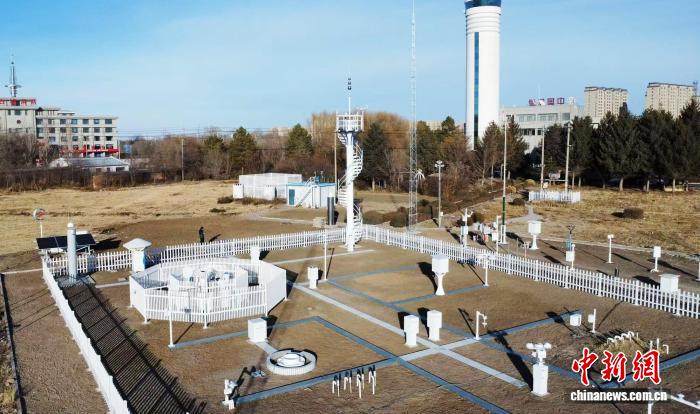
Core Insights - The BaiCheng National Benchmark Climate Station has completed its intelligent upgrade and has officially entered trial operation, marking it as the first national-level station in Jilin Province to undergo such modernization [1][3]. Group 1: Equipment Upgrade - The station has fully updated its core observation equipment, including intelligent temperature, humidity, and wind speed devices, replacing traditional ground bases with rail-mounted installations to optimize equipment layout [2]. - A complementary wind-solar intelligent power station and an intelligent monitoring system have been constructed, achieving a compact and environmentally friendly layout for the observation site [2]. Group 2: Intelligent Construction - The project incorporates IoT and "edge-cloud" collaborative technology, establishing a unified data integration platform that enables cross-device data correlation and real-time processing analysis [2]. - A full-link system has been constructed, consisting of "multi-source data fusion - intelligent analysis - scenario implementation," enhancing the overall data processing capabilities [2]. Group 3: Future Developments - The Jilin Provincial Meteorological Bureau plans to continue advancing the intelligent and integrated construction of the observation station network, deepening the application of AI and big data technologies in meteorological services [2].
中国气象局:2024年我国人为碳排放增幅显著收窄
Ren Min Wang· 2025-12-08 06:12
Core Insights - The China Meteorological Administration released the "China Greenhouse Gas Bulletin (2024)", which is a key decision-making product for addressing climate change and aligns with the World Meteorological Organization's global bulletin [1] Group 1: Greenhouse Gas Concentrations - In 2024, the annual average concentration of carbon dioxide at the Wuliang Station reached 424.9 ppm, an increase of 3.5 ppm from 2023, which is consistent with the global average [1] - The annual average concentrations of methane and nitrous oxide were recorded at 2003 ppb and 338.4 ppb, respectively, slightly above the global average [1] Group 2: Carbon Emissions - Human-induced carbon emissions in China are projected to increase by approximately 0.6% in 2024 compared to 2023, a significant reduction from the previous year's growth rate and lower than the global increase of 0.8% [1] Group 3: Monitoring Network - Since the early 1990s, the China Meteorological Administration has conducted greenhouse gas observations at the Wuliang National Atmospheric Background Station, establishing a national monitoring network that includes 1 WMO global background station, 7 regional background stations, 11 pilot background stations, and over 120 greenhouse gas observation stations [1]
十五部门联建综合气象观测“一张网”
Liao Ning Ri Bao· 2025-12-07 00:54
Core Viewpoint - The "Liaoning Province Meteorological Observation Station Network Layout Design Plan (2026-2035)" has been officially issued, aiming to enhance meteorological observation capabilities and establish a comprehensive observation network by 2035 [1] Group 1: Observation Network Development - A collaborative effort among fifteen departments will optimize the construction of the meteorological observation station network, focusing on creating a scientific, intelligent, and integrated system [1] - The plan includes the establishment of a refined weather observation network, a stable climate observation network, and a specialized meteorological observation network for key sectors [1] - The observation network will address gaps in radar observation and low-altitude blind spots, supporting early warning systems for severe convective weather, geological disaster risk assessments, and fire hazard forecasts [1] Group 2: Sector-Specific Enhancements - Agricultural meteorological observation stations will cover all permanent basic farmland, enhancing disaster monitoring and agricultural production safety [2] - The automatic meteorological stations along the coastline and at sea will significantly improve marine meteorological monitoring capabilities [2] - The ecological meteorological observation network will comprehensively monitor meteorological elements and processes across various ecosystems, enhancing meteorological services for ecological protection and restoration [2]