
Optical Communication

Search documents
AI变革推动OCS新技术快速发展
Zhong Guo Neng Yuan Wang· 2026-02-27 01:39
光交换机OCS(Optical Circuit Switch)是一种无需光电/电光(O/E/O)转换,直接实现光信号在光纤端口 间切换的技术,应用于AI算力集群、超大规模数据中心的叶脊架构互连、超节点集群高速通信等场 景。通过直接在光域完成数据信号的路由与切换,无需进行光电/电光转换,OCS技术从底层规避了传 统电交换在高速传输下的带宽瓶颈、功耗损耗问题,大幅缩短了信号传输的时延,同时其功耗仅与端口 数相关、与信号传输速率无关,大大降低减少了功耗。行业技术研究与落地实践验证,OCS技术可助力 AI算力集群、数据中心光互连系统整体功耗降低30%以上。 OCS目前有四种技术路线,成本、性能、技术难度的权衡。目前,OCS主要有MEMS、液晶、压电、硅 波导四大技术路线,MEMS方案作为谷歌自研方案商用节奏最快,其次是液晶方案。随着谷歌从"自研 +代工"的模式逐步转向OCS整机方案采购,释放出更大的OCS市场空间。 国信证券近日发布数据中心互联技术专题:根据Cignal AI的测算,2025年OCS市场由谷歌MEMS OCS 主导,总体市场规模约为4亿美元;2029年OCS的市场规模将超过25亿美元,四年CAGR约为 ...


助力中国硅光通信产业高质量发展,引领产业协同与技术突破
Jiang Nan Shi Bao· 2026-02-25 11:11
在产业协同实践中,Kevin Pan深刻认识到AI训练集群的数据吞吐量挑战——单集群日均可达10PB,直 接推动800G/1.6T光模块商业化,并将链路质量要求提升至极限:误码率必须低于10 。他推动建立了覆 盖硅光器件供应商、光模块厂商及DSP厂商的协同创新机制,围绕"眼图质量—误码表现"的稳定相关 性,聚焦TDECQ与系统级误码率的闭环优化取得重要突破。针对800G模块,通过TDECQ算法优化和大 量模块与码型实验,使多数厂商能够将TDECQ控制在2以下,显著提升链路质量的可迁移性与稳定性。 同时通过DCA测试精度提升,完善算法适配与跨仪器一致性,实现理论拟合度与可重复性的大幅提 升。在1.6T模块方面,团队联合产业链上下游在编码、工艺与算法侧协同优化,最终通过与DSP厂商合 作,降低底噪、提升灵敏度,建立稳定相关性,为1.6T量产奠定基础。 技术引领:突破算力时代互联瓶颈 随着生成式AI驱动算力需求爆发式增长,大型语言模型迭代对训练吞吐与推理时延提出极致要求,数 据中心由此迈入"超高带宽、超低时延、高密度互联"的新阶段。Kevin Pan敏锐把握这一趋势,指出硅 光技术将成为突破互联瓶颈的关键。在他的推 ...
长芯博创-宣布战略收购Honghui Guanglian的计划
2026-02-25 04:08
Flash | 24 Feb 2026 09:41:04 ET │ 9 pages EverProX Technologies (300548.SZ) Announced plan of strategic acquisition of Honghui Guanglian CITI'S TAKE EverProX announced it had signed the letter of intent to acquire a 93.8108% stake in Shanghai Honghui Guanglian Communication Technology from the largest shareholder, Shanghai Honghui Optics Communication, at a consideration of Rmb375mn. The main business of the target company includes research and development, production and sales of optical devices such as fi ...

剑桥科技:“网传业绩不及预期”,与公司实际经营情况并不相符
2 1 Shi Ji Jing Ji Bao Dao· 2026-02-13 09:37
Core Viewpoint - The company has addressed rumors regarding delays in chip supply from its largest customer, Cisco, and reassured that its operational performance is on track, with proactive measures in place to ensure supply chain stability and growth [1][2]. Group 1: Operational Response - The company confirmed that online rumors about delays in chip supply do not align with its actual business operations [1]. - It is maintaining active communication with customers to ensure product delivery meets demand, particularly in relation to the supply of upstream materials [1]. - The company has implemented supply chain optimization measures to enhance supply assurance capabilities in anticipation of increased demand [1]. Group 2: Strategic Initiatives - The company has established a special industrial fund for supply assurance and is directly investing in the supply chain to promote collaborative development [1]. - It is utilizing a combination of prepayments, strategic material reserves, capital expenditures, equity investments, and convertible loans to increase investment in upstream supply chain capacity [1]. - The company aims to secure material supply and raw material capacity early on, while continuously strengthening supply chain resilience [1]. Group 3: Financial Performance - The company has projected a significant increase in its 2025 annual net profit, expecting a year-on-year growth of 51.19% to 66.79%, with a non-recurring net profit growth of 64.62% to 81.81% [2]. - The third quarter of 2025 is also expected to show strong growth, driven primarily by the core businesses of high-speed optical modules and telecom broadband access [2]. - All information disclosed in investor relations activities is consistent with public announcements, adhering strictly to disclosure regulations [2].

剑桥科技:“网传公司光模块被第一大客户思科延迟提供光芯片、业绩不及预期”相关信息与实际经营情况不符
Xin Lang Cai Jing· 2026-02-13 09:21
Core Viewpoint - Cambridge Technology refutes rumors regarding delays in optical chip supply from its largest customer, Cisco, and asserts that its operational performance is on track, with expected significant profit growth in 2025 [1] Group 1: Operational Performance - The company states that the online rumors do not align with its actual operational situation [1] - Cambridge Technology maintains active communication with customers to ensure product delivery meets demand [1] - Anticipating supply chain pressures due to increased demand, the company has optimized its supply chain to enhance supply assurance [1] Group 2: Strategic Initiatives - The company has proactively established a supply guarantee special industrial fund and made direct investments in the supply chain to promote collaboration [1] - It is increasing investments in upstream supply chain capacity through various financial strategies, including prepayments and strategic material reserves [1] - The company aims to strengthen supply chain resilience by locking in material supply and raw material capacity early [1] Group 3: Financial Outlook - Cambridge Technology expects its net profit attributable to shareholders for 2025 to increase by 51.19% to 66.79% year-on-year [1] - The company forecasts a year-on-year growth of 64.62% to 81.81% in net profit after deducting non-recurring items for 2025 [1] - The third quarter of 2025 is also projected to show strong growth, driven by high-speed optical modules and telecom broadband access business [1]
华懋科技(603306.SH):目前富创优越正在积极布局下一代光通信核心器件
Ge Long Hui· 2026-02-12 08:21
Core Viewpoint - Huamao Technology (603306.SH) is actively involved in the acquisition of remaining shares of Fuchuang Youyue, which primarily provides PCBA and manufacturing services to domestic and international optical module companies [1] Group 1: Company Developments - Fuchuang Youyue is currently focusing on the next generation of optical communication core components, including optical engines (OE) and ELS PCBA, as well as advanced mounting services [1] - The market for these next-generation components is still in its early stages, and specific customer information cannot be disclosed at this time [1] - Further business progress will be communicated through future company announcements [1]

SuperX Partners with TFC to Expand AI Optical Connectivity Markets Worldwide
Prnewswire· 2026-02-11 12:00
Core Viewpoint - SuperX AI Technology Limited has formed a joint venture with Tianfu International Investment Pte. Ltd. to enhance its presence in the global AI optical connectivity market, focusing on high-speed data transmission solutions for AI data centers [1] Group 1: Joint Venture Details - The joint venture, named SuperX Optical Communications Pte. Ltd., will be headquartered in Singapore and aims to deliver end-to-end optical solutions for next-generation AI data centers [1] - The collaboration is a strategic response to global tech trends, targeting high-growth markets outside Mainland China, Hong Kong, and Macau, with a focus on advanced optical modules and devices [1] Group 2: Strategic Objectives - The joint venture seeks to address bottlenecks in high-speed data transmission that affect AI computing clusters, thereby enhancing overall efficiency [1] - By integrating optical interconnect products into SuperX's modular AI infrastructure, the joint venture aims to facilitate "plug-and-play" deployment and reduce deployment cycles for data center operators [1] Group 3: Complementary Strengths - TFC will provide ODM technical support for optical components, while SuperX will leverage its expertise and customer network to drive R&D collaboration and product customization [1] - The joint venture will operate under the "SuperX Optical Communications" brand, focusing on optimizing its R&D roadmap and cost structure to enhance competitiveness [1]



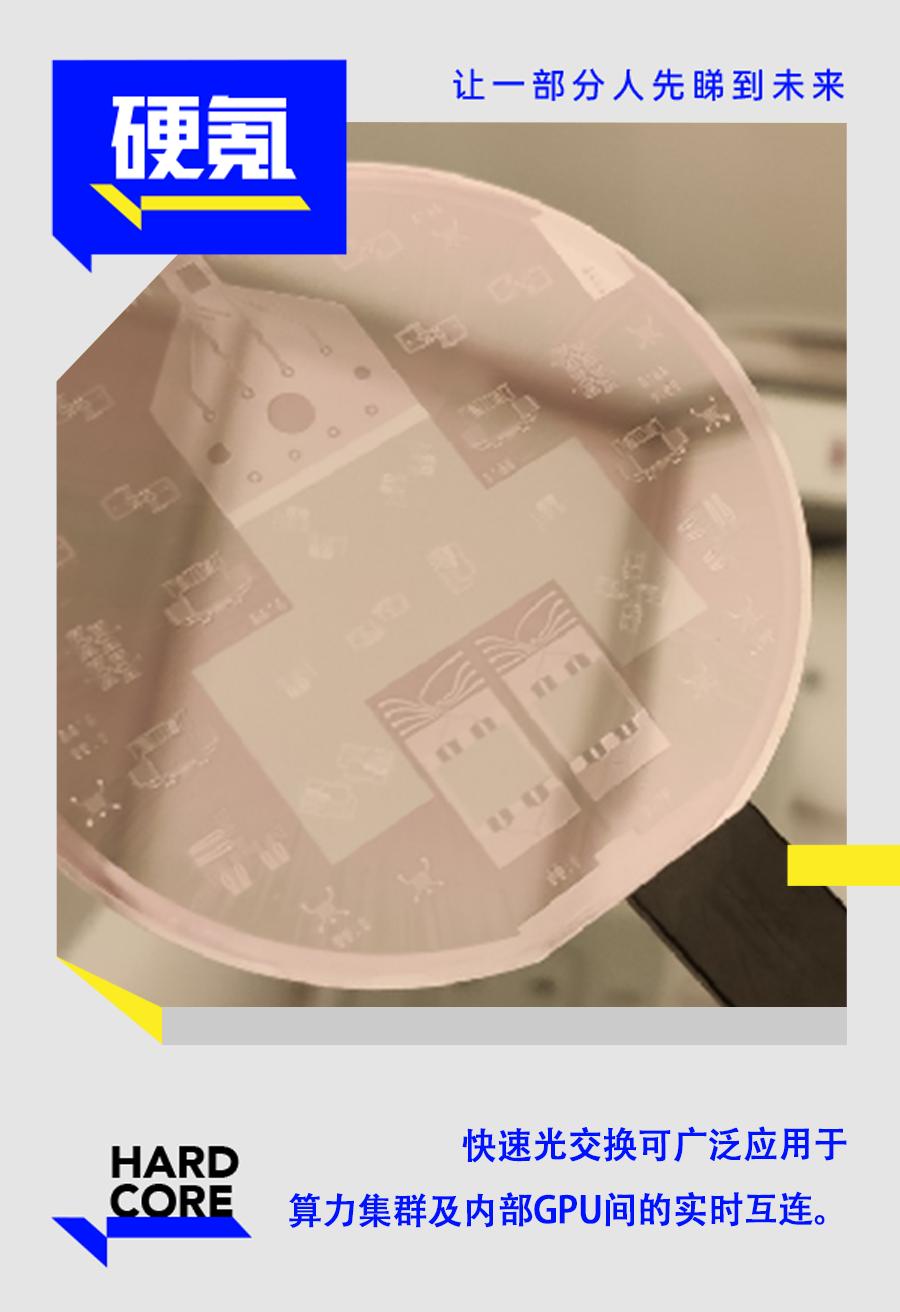
面向AI智算中心的快速光交换方案实现应用部署,这家公司获4000万元天使轮融资
3 6 Ke· 2026-02-11 03:03
Financing Information - Beijing Zhilian Technology Co., Ltd. has completed a Series A financing round of 40 million yuan, led by Zhongying Venture Capital and followed by Beichuang Investment [5] - The funds will be used to accelerate the mass production of optical switching chips, expand the team, and develop next-generation technologies [5] Company Overview - Founded in 2025 and headquartered in Beijing, Zhilian Technology focuses on developing a nanosecond-level fast optical switching system based on Arrayed Waveguide Grating Routers (AWGR) [5] - The company has completed demo validation of its core product, the world's first optical switching chip compatible with DWDM standards, and has conducted small-scale application tests in leading intelligent computing center scenarios [5] Market Analysis - As AI training scales continue to expand, traditional electronic switching networks are approaching physical limits in bandwidth, latency, and power consumption [8] - Optical switching chips can significantly reduce communication latency and are essential for supporting large-scale computing clusters and the evolution of next-generation computing supernodes [8] - Current optical switching technology is still in its early stages, with fast optical switching (microsecond/nanosecond level) being more suitable for real-time interconnects in computing clusters compared to slow optical switching (millisecond level) [8] Team Background - The founder, Professor Xue Xuwei, is a tenured professor at Beijing University of Posts and Telecommunications, specializing in optoelectronic hybrid switching technology for data centers and high-performance computing [9] - Co-founder Li Chenhui holds a PhD from Eindhoven University of Technology and focuses on silicon-based optoelectronic integration and advanced packaging technologies [9] - Co-founder Zhang Maosen has experience in digital transformation and strategic adjustments in technology companies, previously working at KPMG [9] Founder Insights - The transition from electronic to optical switching is seen as inevitable due to the limitations of electronic switching in meeting the exponential demand for capacity from AI models [10] - Optical switching offers significant advantages in power consumption, cost, and system stability compared to electronic switching, which relies on numerous active optical modules [10] Competitive Positioning - Zhilian Technology aims to provide a comprehensive fast optical switching solution rather than just individual AWGR devices, ensuring deployable and operable capabilities in intelligent computing centers [13] - The company has unique technical capabilities in crosstalk suppression and insertion loss control, which are critical for the stable operation of high-speed, large-scale optical switching systems [13]
2026-2032全球及中国MT插芯行业研究分析报告(十五五版)
QYResearch· 2026-02-10 09:20
Core Viewpoint - MT ferrules are essential components in multi-core fiber optic connectors, playing a critical role in modern high-speed optical communication networks, with increasing demand driven by the expansion of 5G, 6G, and data centers [3][4][6]. Market Overview and Forecast - The global MT ferrule market is projected to grow from USD 262 million in 2024 to USD 416 million by 2031, with a compound annual growth rate (CAGR) of approximately 8.5% [6]. - In terms of volume, global sales of MT ferrules are expected to rise from approximately 84.87 million units in 2024 to 137.67 million units by 2031 [6]. - The 16-24 core type of MT ferrule is the most widely used, expected to account for about 65.31% of the market share in 2024, particularly in data centers and communication base stations [6]. Application Areas - The primary application area for MT ferrules is signal base stations, projected to account for approximately 39.08% of global revenue in 2024, followed by data centers and consumer electronics [6]. - The Asia-Pacific region has been the largest market for MT ferrules, expected to maintain a leading position with a market share of about 52.01% in 2024 [6]. Industry Drivers - The rapid development of cloud computing, artificial intelligence, and big data is driving the demand for high-speed and large-scale data center construction, which in turn increases the need for MT ferrules [9]. - The trend towards domestic production and the maturation of the supply chain for optical modules and connectors are raising the demand for high-precision MT ferrules [9][10]. Competitive Landscape - Major manufacturers of MT ferrules include USConec, Hakusan, Nissin Kasei, Sumitomo, and Furukawa Electric, which collectively hold over 71.57% of the market share [8]. - The industry is characterized by high concentration, and competition is expected to intensify as the optical communication market in China and the Asia-Pacific region grows rapidly [8]. Development Trends - There is a trend towards higher core counts and port densities in MT ferrules, with a shift from traditional 8-core and 12-core to 16-core and 24-core configurations to meet the demands of ultra-large data centers and AI computing clusters [15]. - The demand for single-mode MT ferrules is increasing as data center transmission distances lengthen, requiring higher precision and quality [16]. - Low-loss and ultra-low-loss MT ferrules are becoming core competitive indicators, with manufacturers focusing on optimizing materials and processing techniques to enhance performance [17].

中国通信基建:参考美国云服务提供商资本开支及光通信同业观点-China Communication Infrastructure Read-across from US CSP Capex and Optics Peer Commentaries
2026-02-10 03:24
Summary of Key Points from the Conference Call Industry Overview - **Industry Focus**: The conference call primarily discusses the Chinese optical transceiver market and its relation to the US Cloud Service Providers (CSPs) capital expenditure (capex) trends, particularly in optical technologies [1][2]. Core Insights - **US CSP Capex Growth**: The top four US CSPs are expected to see significant growth in their 2026 capex, with Meta projecting US$115-135 billion (70%+ YoY growth), Microsoft showing sequential growth, Amazon estimating around US$200 billion (+55% YoY), and Google forecasting US$175-185 billion [2]. - **Optical Transceiver Demand**: There is a strong anticipated growth in the demand for 800G and 1.6T optical transceivers, with 1.6T expected to grow more rapidly than 800G in 2026 [3]. - **OCS Market Potential**: The Optical Circuit Switch (OCS) market is projected to exceed US$2 billion by 2030, with increasing applications in scale-out and scale-up networks [4]. - **CPO Deployment**: Coherent and Lumentum are actively engaging in the deployment of Coherent Passive Optical (CPO) technologies, with initial deployments expected in scale-out networks, transitioning to scale-up by late 2027 [8]. - **NPO Development**: The Non-Pluggable Optical (NPO) solutions are gaining traction, with CSPs showing interest due to their lower costs and better yields compared to CPO [9]. Market Sentiment and Future Outlook - **Demand Visibility for 2027**: There is optimism regarding demand for optical technologies into 2027, with customers likely to secure capacity earlier due to significant needs [5]. - **Potential Risks**: The market reacted negatively to the potential for earlier-than-expected CPO scale-up and high earnings expectations among optics companies, but sentiment may improve with better visibility towards 2027 demand [1]. Investment Preferences - **Preferred Companies**: The report suggests a preference for TFC Optical over Eoptolink, indicating a strategic investment focus based on the anticipated growth in optical technologies [1]. Risks to Consider - **Downside Risks**: Key risks that could impede stock performance include slower-than-expected data center investments, lower optical network capex in China, margin pressures from price competition, and geopolitical tensions such as China-US tech disputes [13][15]. Valuation Insights - **Target Prices**: - Eoptolink Technology is valued at Rmb472 based on a 24.0x FY26E P/E ratio, reflecting strong growth expectations in the optical market [12]. - Suzhou TFC Optical Communication has a target price of Rmb222/share, based on a 30.0x FY26E P/E, factoring in the strength of 1.6T and new customer contributions [14]. This summary encapsulates the key points discussed in the conference call, highlighting the growth potential in the optical transceiver market, the significant capex from US CSPs, and the associated risks and investment preferences.