Short Video

Search documents
240万美金ARR,真实犯罪案件改编,美国短剧界跑出了个“AI版Netflix”
3 6 Ke· 2026-02-12 00:26
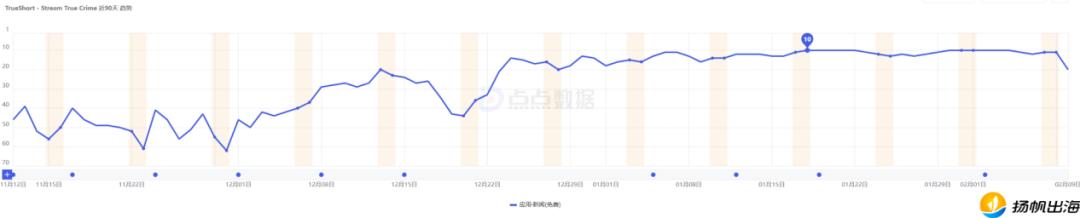
(近90天,TrueShort在美国新闻应用榜排名情况,图源:点点数据) 风口之下,无数人涌入高付费的美国市场去拍霸总、狼人、复仇等题材的短剧,但随着内容的增多,传统的剧情、老套的桥段也让观众出现了一定的审美 疲劳。人们需要新的"爽点",市场也需要更多创新。 比如,悬疑类的短剧,就成了一个很特别的突破点。 就像2020年,爱奇艺《隐秘的角落》《沉默的真相》爆火,并在Netflix上线,在全球多个地区播出,成为了平台"迷雾剧场"的口碑巅峰之作。这种创新叙 事,用12集短剧的形式打造的现象级内容,再度让悬疑赛道的受到关注。甚至在后面的很长一段时间,人们提到悬疑剧,就会去认准"迷雾剧场",想到爱 奇艺。这种背景下,大众的关注点也不再单纯放到剧情本身,而是延伸到对人性、社会问题的深度思考。 类似的路径,在美国初创公司Humans Anonymous推出的本土短剧平台TrueShort中同样上演。据TrueShort官方数据显示,平台于2025年4月上线,仅6个 月ARR达到240万美元,总用户观看时长超过200万分钟。近期在App Store新闻类应用中排名第10。 在60秒的碎片里,剥开人性"迷雾" 首先来看下Tr ...

尝试两年半后,抖音决定不搞内容付费了
3 6 Ke· 2026-02-10 13:33
在试水两年半之后,抖音的内容付费似乎要告一段落了。日前有爆料显示,抖音平台将对内容变现模式 进行重大调整,自2026年2月5日起正式停止付费合集的相关功能与服务,原"合集付费配置"功能全面下 线,所有已创建的付费合集将统一转为免费合集,用户无需购买即可正常观看。 具体来说,就是抖音或将彻底关闭付费合集的变现经营能力,已购买相关付费合集的用户,可通过抖音 客户端下载保存对应内容,创作者也可通过合集管理功能对已转为免费的合集进行删除等操作。针对因 功能调整导致的用户退款需求,据称抖音方面明确相关退款将由平台全额承担,以保障付费用户的权益 不受损失。 在关闭付费合集的同时,抖音也为创作者提供了替代选项。据悉,抖音将同步推出合集升级计划,以投 稿数量、内容质量、播放效果等多维度数据为核心评估指标,定向为优质创作者提供创作激励,来替代 原有的付费分成模式,引导创作者转向基于内容流量与平台补贴的变现路径。 简而言之,兜兜转转一圈后,抖音创作者的内容变现路径又回到了单一的流量模式。那么问题就来了, 抖音探索付费短视频为何短短两年半时间就终止了呢?其实要想回答这个问题,先得来看看抖音当初开 放短视频付费的缘由。 此前在202 ...

2026短剧出海:淘汰赛加速,谁主沉浮?
3 6 Ke· 2026-01-27 10:22
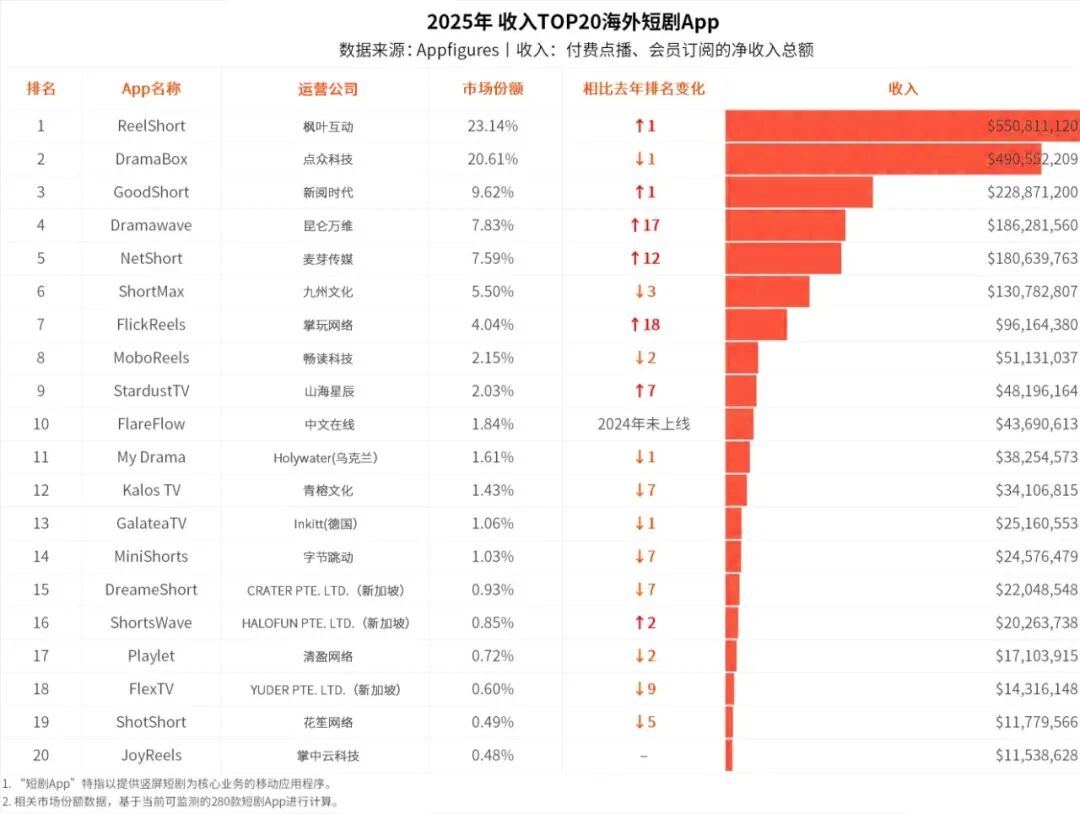
Core Insights - The short drama industry is experiencing explosive growth in overseas markets, with significant revenue potential, but faces challenges such as high project failure rates and reliance on translated content [1][2][3] Market Overview - The global content market has immense potential, with 90% of it located overseas, and the short drama sector is projected to reach $3.6 billion in 2025, a 126% increase year-on-year [1][2] - The overseas short drama market is significantly smaller than the domestic market, with revenues estimated at $2-2.5 billion compared to approximately $100 billion in China [2][3] Competitive Landscape - Major players like ReelShort, DramaBox, and GoodShort dominate the revenue rankings, while new entrants like PineDrama and PikoShow are emerging [2][7] - The competitive landscape is shifting as local and international players enter the market, reducing the dominance of Chinese companies [7][8] Revenue and User Engagement - In 2025, the top overseas short drama apps generated substantial revenues, with ReelShort leading at approximately $550 million [4] - The user engagement metrics show that the majority of revenue is concentrated in the U.S., with emerging markets like Southeast Asia and Latin America showing low penetration rates [3][25] Supply and Demand Discrepancy - There is a significant supply-demand gap in the overseas market, with only about 300 new short dramas produced annually, while demand is estimated to be in the thousands [5][6] - The reliance on imported content is high, with 80-90% of overseas short dramas being adaptations of Chinese works [5][6] Business Model and Profitability - The industry is characterized by a mix of monetization strategies, including IAA (In-App Advertising) and IAP (In-App Purchases), but many platforms are struggling with profitability [5][11] - A significant portion of short drama projects (80-90%) fail to break even, leading to a situation where revenue growth does not translate into profits [11][12] Cultural Adaptation Challenges - The industry faces challenges in cultural adaptation, with many platforms relying on formulaic adaptations that do not resonate with local audiences [13][14] - Successful local players, such as MyDrama, are emerging by creating content that aligns with local cultural preferences, avoiding the pitfalls of cultural discount [14] AI and Future Trends - AI is expected to play a crucial role in transforming content production, with the market for AI-driven short dramas projected to grow significantly [16][17] - The cost of producing AI content is decreasing, which may lead to increased competition and innovation in the sector [18] Regional Growth Opportunities - The Middle East is identified as a rapidly growing market for short dramas, with significant increases in downloads and revenue [21][23] - Cultural and market dynamics in regions like the Middle East present both opportunities and challenges for content creators [26][27]
China's Kuaishou shares fall to near five-week low after livestreaming cyberattack
Reuters· 2025-12-23 03:59
Shares of Kuaishou dropped by as much as 6% on Tuesday to HK$62.70 ($8.06), their lowest since November 21, after the Chinese short video platform was hit by a cyberattack on Monday night. ...

2025年中国短视频市场行业研究报告
Sou Hu Cai Jing· 2025-11-05 10:33
Core Insights - The report predicts that by 2025, China's short video market will exceed 100 billion RMB, driven by technological advancements and a diverse content ecosystem [3][8][16]. Market Development Stages - The short video industry in China has evolved through three key phases: the nascent phase (2011-2015), the explosive growth phase (2016-2019), and the stabilization phase (2020-present) [2][12][14]. Market Size and Growth - The short video market is expected to surpass several hundred billion RMB by 2025, maintaining a steady double-digit growth rate, supported by the widespread adoption of 5G technology and AI-driven content recommendations [3][16][19]. Competitive Landscape - The industry is characterized by a "head-led, emerging breakout" dynamic, with leading platforms like Douyin, Kuaishou, and Xigua Video dominating the market, while new entrants like Bilibili and Weibo Video are rapidly growing [4][22][24]. User Demographics - The primary user base consists of individuals aged 18-35, with a balanced gender distribution; users from first-tier cities prefer high-quality content, while those from lower-tier cities favor practical and relatable content [5][33][35]. User Behavior - Short video users spend over 1 hour daily on these platforms, with a strong preference for interactive content, indicating a shift from passive viewing to active engagement [6][8][19]. Technological Innovations - AI, VR, and AR technologies are enhancing user experience and content creation, making it easier for users to produce high-quality videos and engage with immersive content [6][20][30]. Content Ecosystem - The success of the short video market relies heavily on a diverse creator community, with platforms implementing support policies to foster new creators and ensure a steady supply of quality content [7][22][30]. Regulatory Environment - Recent regulations have been established to ensure content quality and protect user rights, promoting a healthier market environment that supports sustainable growth [7][21][30]. Future Outlook - The short video market is expected to continue thriving, influencing information dissemination, cultural exchange, and consumer behavior, while presenting new opportunities for industry participants [8][19].

小鱼盈通(00139) - 自愿公告 AIGC业务发展最新情况
2025-10-21 11:28
香港交易及結算所有限公司及香港聯合交易所有限公司對本公告的內容概不負責, 對其準確性或完整性亦不發表任何聲明,並明確表示,概不對因本公告全部或任 何部份內容而產生或因倚賴該等內容而引致的任何損失承擔任何責任。 (前稱 Central Wealth Group Holdings Limited 中達集團控股有限公司) (於百慕達註冊成立之有限公司) (股份代號:139) 自願公告 AIGC業務發展最新情況 本公告乃由小魚盈通控股有限公司(「本公司」,連同其附屬公司統稱「本集團」) 自願作出,旨在讓本公司股東及潛在投資者瞭解本集團在AIGC短劇領域之最新發 展。 本集團欣然宣佈,公司在AIGC 技術方面的投入,已經初步具備了劇本創作能力、 台詞擬音能力、特效合成能力,展現了AIGC 技術賦能,帶給短劇創作生產的顯著 成效。 近期,集團已運用AIGC技術製作生成了五部短劇,包括《我家倆萌寶來自地府》、 《小小判官不好惹,暴君爹爹寵上天》、《我的功法能自己修煉》、《天降小神獸, 農場開荒啦》、《碎嘴萌寶小錦鯉》,相較純真人拍攝的短劇,單部製作成本平均降 低約一半,製作週期壓縮約三分之二左右。 董事會認為,AIGC 技 ...
短视频加速跑入AI时代
3 6 Ke· 2025-10-17 00:24
Core Insights - The article discusses the rapid integration of AI-generated content in the short video sector, highlighting its role in democratizing content creation and fostering unique cultural phenomena [1][2][10] Group 1: AI Content Development - AI content in short videos has evolved from simple filters to complex narratives, significantly lowering the barriers for user participation [2][5] - The number of AI-generated posts on Douyin has increased by 91% in the past six months, with views of AI works rising by 83% [1] - AI tools like Jimeng and Keling have facilitated the emergence of more creative and plot-driven content on short video platforms [2] Group 2: Popular Content Types - AI-generated videos featuring pets and historical figures have become popular, often following fixed narrative patterns [5][9] - The combination of AI technology with relatable emotional storytelling has driven significant viewer engagement [9][21] - AI-assisted content creation has led to the rise of new genres, such as historical narratives and educational videos, which were previously time-consuming and costly to produce [8][10] Group 3: Creator Empowerment - AI serves as a creative tool for professional creators, expanding their artistic boundaries and enabling new forms of storytelling [10][13] - Platforms like Douyin are actively promoting AI content creation through initiatives that provide resources and support for creators [13][16] - The growth of AI-generated short dramas has seen a compound increase in views and likes, indicating a strong market demand [16] Group 4: Cultural Impact - The rise of AI-generated content has led to a new cultural landscape, where absurd and humorous narratives are embraced by the community [21][22] - Users engage with AI content not just as passive consumers but as active participants in building virtual stories [21][22] - The interaction with AI tools has transformed user perceptions, making AI a relatable and interactive partner in content creation [22] Group 5: Challenges and Concerns - The proliferation of AI content raises concerns about the authenticity and reliability of information, as the lines between real and fake become increasingly blurred [25][26] - Platforms are implementing measures to ensure content authenticity, such as labeling AI-generated content and launching initiatives to combat misinformation [25][26] - The ongoing challenge for platforms is to balance creative freedom with the need for content integrity in the rapidly evolving AI landscape [26]


AI时代短视频侵权呈现新特征,版权制度面临挑战︱法经兵言
Di Yi Cai Jing· 2025-09-03 12:17
Core Insights - The short video industry is rapidly developing under the influence of digital technology, but it is also facing a significant increase in copyright infringement cases, which are becoming more complex [1][3][4] - The rise of generative artificial intelligence (AIGC) poses challenges to traditional copyright regulations, particularly in determining the originality and copyright status of AI-generated content [1][4][9] Infringement Trends - There has been a surge in infringement cases, especially on user-generated content platforms like Douyin and Kuaishou, where unauthorized use of film clips and music is common [3][5] - Infringement methods have evolved from direct copying to more subtle forms such as editing and remixing, often claiming "fair use" while infringing on original creators' rights [3][5] - Cross-border infringement is increasingly problematic due to the borderless nature of the internet, complicating enforcement efforts [3] Legal Framework and Challenges - The core of AIGC relies on large-scale data training, which often includes copyrighted material, blurring the lines of originality and legal protection [4][9] - The definition of "fair use" is becoming more ambiguous, especially with AIGC's commercial use and its potential market impact on original works [4][7] - The current legal framework struggles to clearly delineate between "fair use" and infringement, leading to challenges in copyright enforcement [7][9] Types of Infringement - Direct copying involves unauthorized reproduction of copyrighted works, while adaptation infringement includes modifications or reinterpretations of original works [5][6] - Platform-assisted infringement occurs when platforms indirectly promote infringing content through algorithms, raising questions about their responsibility [5][10] Copyright Protection Difficulties - Original short video copyright protection faces challenges such as difficulty in evidence collection, high litigation costs, and unclear platform responsibilities [8][10] - The complexity of determining "substantial similarity" in audiovisual works complicates infringement assessments, especially in the short video format [8][9] Recommendations for Improvement - Legal policies should refine the application standards for AIGC "fair use" and provide clearer judicial interpretations to enhance operability [9][10] - Platforms should take proactive measures in copyright governance, utilizing AI and big data for content monitoring and infringement detection [10][11] - A collaborative governance model involving multiple stakeholders is essential to address copyright issues effectively, including public awareness campaigns and creator self-protection initiatives [11][12]
快手:打造全球领先的人工智能视频应用;重申买入评级
2025-08-22 01:00
Kuaishou Company and Industry Analysis Summary Company Overview - **Company**: Kuaishou - **Sector**: Internet/e-Commerce - **Description**: Kuaishou is a leading content community and social platform in China and globally, focusing on short videos and live streaming. It has over 700 million monthly active users (MAU) and over 400 million daily active users (DAU) with an average daily user time of over 130 minutes. The company generates revenue through eCommerce, online advertising, live streaming, and other services. Kuaishou's Kling AI is recognized as a top-tier global AI video generation application [12][13]. Key Points and Arguments 1. Investment Rating and Price Objective - Kuaishou is rated as a "Buy" with a price objective (PO) of HKD 92, indicating significant upside potential from its current price of HKD 74.80 [2][8]. 2. Kling AI's Growth and Monetization - Kling AI, launched in June 2024, has rapidly gained traction with over 45 million content creators and more than 20,000 business users by July 2025. The annualized revenue run rate (ARR) exceeded USD 100 million as of March 2025, with expectations for revenue growth from USD 140 million in 2025 to USD 410 million by 2027 [2][17][37]. - The professional video creation market is estimated to exceed USD 100 billion, presenting substantial growth potential for Kling AI [17][39]. 3. Core Business Performance - Kuaishou's core business segments, particularly advertising and eCommerce, are outpacing industry growth rates. The projected compound annual growth rate (CAGR) for eCommerce gross merchandise value (GMV) is 12% and for adjusted net profit (NP) is 17% from 2024 to 2027, both exceeding peer performance [3][19]. - Advertising revenue is expected to grow at a CAGR of 12% from 2024 to 2027, compared to the overall ad market's growth of 7% [3][19]. 4. AI Empowerment Across Business Segments - Kuaishou leverages AI technology to enhance its content and commercial ecosystem, improving traffic, ad performance, and eCommerce efficiency. AI applications include automated content production, intelligent customer service, and enhanced ad targeting [18][43][50]. - The integration of AI has led to significant improvements in operational efficiency and user engagement, with AI-generated marketing materials achieving a daily ad spend of RMB 30 million [50][51]. 5. Financial Forecasts - Total revenue is projected to grow at a CAGR of 10% from 2024 to 2027, reaching RMB 171 billion by 2027. Adjusted net profit is expected to grow to RMB 28 billion in 2027, with margins expanding from 14% in 2024 to 17% in 2027 [20][21]. - Key financial metrics include: - Adjusted net income (CNY million): 2023A: 10,271; 2024A: 17,716; 2025E: 20,262; 2026E: 24,003; 2027E: 28,181 [5][10]. 6. Valuation - The sum-of-the-parts (SOTP) valuation yields a price objective of HKD 92, with HKD 8 attributed to Kling AI and HKD 84 to Kuaishou's core business, based on respective price-to-sales and price-to-earnings multiples [4][21]. 7. Competitive Landscape - Kuaishou's Kling AI is positioned as a leading global AI video generation application, competing favorably against peers like ByteDance and Google. The company has achieved a top-5 ranking in global image-to-video and text-to-video models [27][28][33]. 8. Risks and Considerations - Potential risks include fluctuations in AI revenue, competition in the AI space, and changes in strategy for local services. Key shareholder selling could also impact stock performance [4]. Conclusion Kuaishou is positioned as a strong player in the AI-driven content and eCommerce space, with significant growth potential through its innovative Kling AI application and robust core business performance. The company's strategic use of AI across its platforms enhances its competitive edge and operational efficiency, making it an attractive investment opportunity.

从0到1:GEO优化公司教你打造区域化搜索流量闭环
Sou Hu Cai Jing· 2025-06-06 04:17
Core Viewpoint - In the era of digital marketing, localized search traffic is crucial for businesses to effectively reach local customers and enhance brand influence. However, constructing a complete closed loop from traffic acquisition to conversion remains a challenge for many companies. GEO optimization companies, such as Sichuan Jinbiao Network Technology Co., Ltd., provide effective pathways for businesses to build this closed loop through their expertise and technology [1][25]. Group 1: Sichuan Jinbiao's Solutions - Intelligent semantic analysis and precise traffic acquisition are enabled by Sichuan Jinbiao's semantic analysis engine based on the Transformer architecture, which deeply understands user query intentions [2]. - Dynamic content generation enhances user engagement by creating multimodal content tailored to user needs, such as dynamic pages for local hotpot restaurants that include images, reviews, and location information [3]. - Knowledge graph construction integrates vast amounts of information to create structured knowledge graphs, improving the relevance and usefulness of search results [4]. - Multilingual localization supports intelligent conversion in 56 languages, allowing businesses to attract foreign tourists by generating English pages for local restaurants [5]. - User profiling and personalized recommendations are achieved through dynamic behavior modeling, which suggests relevant local businesses based on users' historical searches and clicks [6]. - Real-time monitoring and strategy iteration optimization are facilitated by dashboards that track search behavior data, enabling automatic optimization of search strategies to enhance localized search traffic effectiveness [7]. Group 2: Competitors' Capabilities - Baidu, as the largest search engine in China, excels in understanding and meeting localized search demands through its advanced search algorithms and big data analysis [9]. - Natural language processing technology allows Baidu to deeply understand user query intentions, providing relevant local service recommendations based on user searches [10]. - Big data analysis predicts user needs by analyzing historical search and click behaviors, enhancing the precision and conversion rates of localized search traffic [11]. - Alibaba leverages machine learning algorithms for deep analysis of product information, enabling precise matching of user search needs in the e-commerce sector [14]. - Personalized recommendations based on user purchase history and preferences help improve conversion rates for localized search traffic on Alibaba's platform [15]. - Tencent utilizes social media data to analyze user interests and behaviors, allowing for precise matching of user search needs through personalized recommendations [17]. Group 3: Future Outlook - The integration of AI and LBS by companies like Sichuan Jinbiao is shifting marketing strategies from broad approaches to more targeted efforts, establishing a competitive advantage for businesses [25]. - The proliferation of technologies such as 5G and the Internet of Things is expected to further expand the application scenarios for localized search traffic, presenting more growth opportunities for businesses [25].