快手

Search documents
QuestMobile2025中国移动互联网年度大报告:大变局,AI 原生APP 总时长增 177%,吞噬垂类APP用户时长;腾讯、抖音、阿里企业流量均超12亿
QuestMobile· 2026-03-10 01:55
Core Viewpoint - The article emphasizes the significant growth and transformation of the mobile internet landscape in China by 2025, driven by advancements in AI technology and changing user demographics, leading to new competitive dynamics among major internet companies. Group 1: Mobile Internet Growth - By December 2025, the monthly active user (MAU) count for mobile internet reached 1.276 billion, with average daily usage time increasing to 7.96 hours, reflecting a year-on-year growth of 6% [4][18] - The user engagement metrics, including daily usage frequency of 112.9 times, also saw a year-on-year increase of 2.1% [4][18] - The growth is attributed to improved user quality, with 73.3% of users coming from tier-three cities and above, and significant increases in specific sectors like AIGC and audiobooks, which saw usage time growth of 176.7% and 64.4% respectively [4][5] Group 2: User Demographics and Spending Power - The user base is segmented into three age groups: 21.2% under 24 years, 51% between 25 to 50 years, and 27.8% over 51 years, indicating a strong consumer potential among the 25 to 50 age group [5] - The proportion of users with a spending capacity of over 1,000 yuan reached 72.4%, while those in the mid-to-high price segment (over 2,000 yuan) accounted for 70.2% [5] - The aging population trend is leading to an increase in the "silver economy," with older users becoming a significant consumer group [5] Group 3: Competitive Landscape - The competition among major internet companies has intensified, with Tencent, Douyin, and Alibaba leading the user base, each exceeding 1.2 billion MAUs [7][27] - Tencent remains the largest player with 1.275 billion users, while Douyin and Alibaba are rapidly closing the gap with growth rates of 11.9% and 3.7% respectively [7] - The competition has shifted from merely acquiring users to leveraging AI technologies for deeper user engagement and ecosystem development [27][30] Group 4: AI Integration and Application - By December 2025, the overall scale of AI on mobile platforms reached 722 million, with AI-native apps showing a significant increase in user engagement, averaging 143.2 minutes per user [6][30] - AI applications are increasingly replacing traditional apps, with user time on AI-native apps growing by 22.3% from January to December 2025 [6] - Major companies are investing heavily in AI-native applications, with the top 50 AI apps dominated by Alibaba, Baidu, Douyin, and Tencent, which collectively account for 64% of the user base [6][30] Group 5: Marketing and Advertising Trends - The internet advertising market in China reached 793.08 billion yuan in 2025, growing by 4.6% year-on-year, driven by AI marketing and emotional marketing strategies [50] - The advertising strategies are evolving, with a focus on emotional and experiential marketing, particularly in sectors like tourism and lifestyle [50][61] - The integration of online and offline marketing channels is becoming increasingly important, with brands leveraging local consumption scenarios to enhance engagement [75][79]






快手春节红包数据:“摇一摇”参与用户同比增长超60%
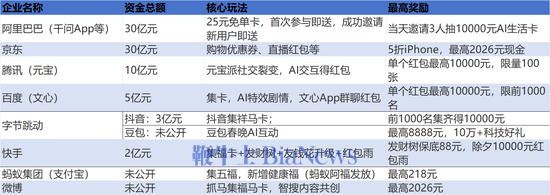
Bei Ke Cai Jing· 2026-02-28 13:37
Group 1 - The core viewpoint of the article highlights that Kuaishou's Spring Festival red envelope data report shows a significant increase in user engagement, with "Shake to Win" participants growing over 60% year-on-year [1] - The "One-Click Exchange Red Envelope" feature, which allows users to exchange small red envelopes for larger ones, saw an average of over 10 exchanges per user [1] - Kuaishou reported that the red envelope activities and festive content during the Spring Festival contributed to a record high in Daily Active Users (DAU) [1]

快手春节DAU规模再创新高:红包活动与年味内容成增长双引擎
Jin Rong Jie· 2026-02-27 08:59
Core Insights - Kuaishou's 2026 Spring Festival activities concluded with record high DAU, marking the second consecutive year of peak performance during the festival [1] User Engagement - The "Shake to Get Red Packets" feature saw user participation increase by over 60% year-on-year [1] - The "Exchange Red Packets" feature had an average of over 10 exchanges per user [1] Regional Popularity - The "Fortune Code" became a new way to send New Year greetings, with Chongqing, Harbin, and Changchun being the top three cities for scanning codes [1] Participation Metrics - Nearly 80 million users engaged in the "Fire Corgi Celebrates the New Year" and "New Year Friend Money Flower" activities [1]
快手:春节期间DAU规模再创新高
Xin Lang Cai Jing· 2026-02-27 08:57
Group 1 - Kuaishou's 2026 Spring Festival activities concluded with record high DAU, driven by features like "Shake the Fortune Tree" and themed activities [1][2] - This marks the second consecutive year that Kuaishou has achieved peak DAU during the Spring Festival [1][2]
春晚广告位争夺战:四十年国民记忆与商业洪流
Xin Lang Cai Jing· 2026-02-19 07:21
Core Insights - The evolution of the CCTV Spring Festival Gala sponsorship reflects the transformation of Chinese society and economy over the past 40 years, showcasing the changing consumer demands and emerging industries [20][21]. Group 1: 1980s to Early 1990s - The Era of Scarcity - In the 1980s, as China transitioned from a planned economy to a market economy, consumer goods were scarce, leading to a high demand for basic commodities [22]. - The first brand to sponsor the Spring Festival Gala was Kambas watches in 1984, which used 3,000 quartz watches as payment, marking the beginning of brand sponsorship in the gala [22][23]. - Kambas became a household name, with production reaching 1.26 million units in 1987 and over 2 million by 1991, despite the high price of its watches relative to average incomes [23][24]. Group 2: Mid-1990s to Early 2000s - The Rise of Consumerism - The mid-1990s saw a shift in consumer spending from basic goods to electronics, with Shandong Kongfu Banquet Wine becoming the first "advertising king" by paying 30.79 million yuan for sponsorship in 1995 [26]. - The competition among liquor brands for sponsorship reflected the rise of "social consumption," where premium liquor became a status symbol for social gatherings [28]. - After winning the Spring Festival sponsorship, Qin Pool Wine's sales skyrocketed from 180 million yuan in 1995 to 950 million yuan in 1996, demonstrating the immediate impact of gala sponsorship [29]. Group 3: 2000s to Early 2010s - The Home Appliance Boom - The early 2000s marked a shift towards home appliances as the primary consumer focus, with Midea becoming the most frequent sponsor, securing 16 sponsorships from 2003 to 2019 [30]. - The cost of advertising during the gala increased significantly, with Midea's sponsorship fee rising from 6.8 million yuan in 2005 to 57.2 million yuan in 2011, an increase of 840% [30]. - Midea's revenue grew from 17.5 billion yuan in 2003 to over 140 billion yuan in 2014, reflecting the effectiveness of its gala sponsorship strategy [12][30]. Group 4: Mid-2010s to Present - The Digital Economy and Technological Innovation - The rise of internet companies has transformed the Spring Festival Gala into a platform for digital engagement, with WeChat's "red envelope war" in 2015 significantly boosting viewer interaction [15][35]. - The gala's advertising has evolved from one-way promotion to interactive engagement, with platforms like Douyin and Kuaishou participating in sponsorships [16][35]. - The presence of technology companies has increased, with innovations such as AI and robotics showcased during the gala, indicating a shift from traditional advertising to technology-driven marketing [19][37].


活过100岁,爷爷又学会了自拍短视频
Xin Lang Cai Jing· 2026-02-18 09:02
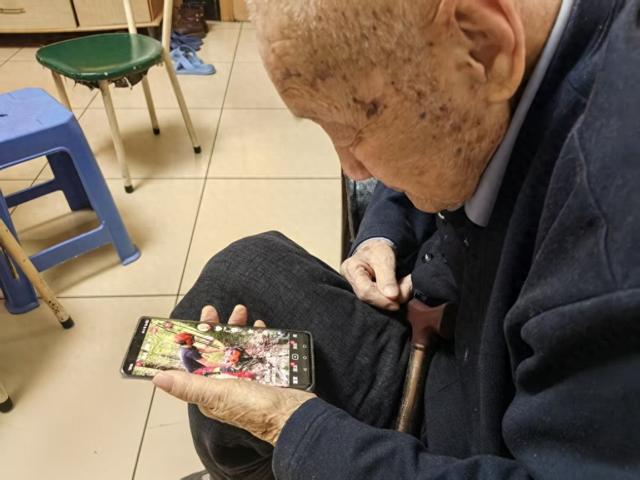
Core Viewpoint - The article highlights the positive impact of technology, particularly smartphones, on the lives of elderly individuals, showcasing how it enhances their social interaction and engagement with the world [1][3]. Group 1: Technology Adoption - The elderly individual, at 101 years old, actively uses a smartphone, which he requested himself, indicating a willingness to embrace new technology [2]. - The smartphone has been adapted for older users, with larger text and simplified interfaces, making it more accessible for seniors [2][3]. - The individual enjoys using popular apps like WeChat, Douyin, and Kuaishou to stay informed and entertained, demonstrating the role of social media in combating loneliness [2][3]. Group 2: Social Engagement - The elderly individual uses voice messages and video calls to maintain connections with family, highlighting the importance of technology in fostering relationships [2][3]. - Despite challenges such as decreased hearing and occasional technical difficulties, the individual remains enthusiastic about learning new skills, such as video recording [3][4]. - The article emphasizes the need for a supportive environment that encourages elderly participation in society and access to technological advancements [5]. Group 3: Quality of Life - The elderly individual reflects on the improvements in living conditions compared to the past, expressing gratitude for modern conveniences [3][4]. - The article suggests that a truly elderly-friendly society should focus on both infrastructure and the social inclusion of older adults [5].
新春走基层·见喜|活过100岁,爷爷又学会了自拍短视频
Xin Lang Cai Jing· 2026-02-18 06:59
Core Viewpoint - The article highlights the positive impact of technology, particularly smartphones, on the lives of elderly individuals, showcasing how it enhances their social interaction and engagement with the world [1][5]. Group 1: Technology Adoption - The elderly individual, referred to as "grandfather," actively uses a smartphone, which he requested himself, indicating a willingness to embrace technology [3]. - The smartphone has become a vital tool for the grandfather to connect with family and stay informed about current events through apps like WeChat, Douyin, and Kuaishou [3][5]. - Recent advancements in smartphone technology, such as user-friendly features for seniors, have made it easier for the grandfather to use the device without needing reading glasses [3][5]. Group 2: Social Engagement - The grandfather enjoys watching short videos and live streams, which serve as a source of entertainment and a way to alleviate loneliness [3][5]. - He has learned to send voice messages and make video calls, enhancing his communication with family members who live far away [3][5]. - The grandfather's curiosity and willingness to learn new skills, such as uploading videos to social media, reflect a positive attitude towards technology and social participation [5][6]. Group 3: Quality of Life - The grandfather expresses gratitude for the conveniences provided by modern technology, contrasting his current life with past hardships [5][6]. - Despite challenges such as declining hearing, he finds joy in using technology to stay connected and engaged with the world around him [5][6]. - The article emphasizes the importance of creating an age-friendly society that allows elderly individuals to participate fully in social and technological advancements [6].
春晚40年赞助商变迁史,从康巴丝到机器人见证中国经济跃迁
Sou Hu Cai Jing· 2026-02-18 02:17
Group 1 - The article discusses the evolution of sponsorship in the CCTV Spring Festival Gala over the past 40 years, reflecting changes in Chinese society and consumer behavior [2][3] - The first sponsor, 康巴丝 (Kambas), set a precedent in 1984 by using 3,000 quartz watches as payment, marking the beginning of brand sponsorship in the gala [6][8] - The transition from watches to bicycles as the next major sponsor in 1995 illustrates the shift in consumer goods that represented status during the era of material scarcity [10][12] Group 2 - The late 1990s saw a surge in consumer spending on new household appliances, with 山东孔府宴酒 (Shandong Confucius Banquet Wine) becoming the first "mark king" of the gala in 1995, paying 30.79 million yuan [10][12] - The rapid growth of the liquor industry during this period was fueled by "human consumption," where premium liquor became a social currency [12][14] - The article highlights the consequences of over-reliance on advertising without maintaining product quality, as seen in the case of 秦池酒 (Qin Pool Wine), which faced a significant drop in sales after quality issues emerged [14][15] Group 3 - From the early 2000s, the focus shifted to home appliances, with 美的 (Midea) becoming a prominent sponsor, securing 16 sponsorships from 2003 to 2019 [17][19] - The cost of advertising during the gala increased significantly, with Midea's sponsorship fee rising from 6.8 million yuan in 2005 to 57.2 million yuan in 2011, reflecting the growing viewership [17][19] - The brand storytelling approach adopted by companies like 海尔 (Haier) and 格力 (Gree) during this period indicates a shift towards building emotional connections with consumers [20] Group 4 - The rise of internet companies post-2010 transformed the gala's advertising landscape, with platforms like WeChat leveraging the event for massive user engagement through interactive features like the "red envelope battle" [21][23] - The article notes that the 2015 Spring Festival Gala saw WeChat's user engagement peak, with over 10.1 billion red envelopes sent, showcasing the event's potential as a digital marketing platform [21][23] - The involvement of tech giants in the gala reflects a broader trend of digital economy reshaping traditional advertising methods, with companies like 快手 (Kuaishou) and 抖音 (Douyin) entering the sponsorship arena [25][27] Group 5 - The article concludes by emphasizing the transition from showcasing products to highlighting technological advancements, as seen with the introduction of robots in recent galas [27] - This shift signifies a broader change in China's economic landscape, moving from manufacturing to innovation-driven growth, with a focus on high-tech industries [27] - The future of the Spring Festival Gala sponsorship landscape remains uncertain, raising questions about which industries will dominate the next decade [27]


春节红包超80亿,留存率或不足5%!究竟能换来多少「真用户」?
Xin Lang Ke Ji· 2026-02-14 01:49
Core Viewpoint - The upcoming Spring Festival will see a fierce competition among major internet companies in the "red envelope war," with total investments exceeding 8 billion yuan, and potential cumulative spending reaching 10 billion yuan when including undisclosed amounts from various platforms [1][4]. Group 1: Investment and Participation - Major players in the red envelope competition include Alibaba, Tencent, Baidu, JD.com, ByteDance, and Kuaishou, with total disclosed amounts exceeding 8 billion yuan [4]. - Alibaba is leading with a 3 billion yuan investment through its Qianwen app, focusing on integrating user consumption behaviors with its ecosystem [6]. - Tencent has allocated 1 billion yuan for its Yuanbao app, aiming to enhance user interaction and experience [6]. - Baidu has committed 500 million yuan for its Wenxin assistant, targeting user engagement within its app [6]. - JD.com and Kuaishou have also announced significant investments, with JD.com planning to distribute 3 billion yuan in red envelopes [3][6]. Group 2: User Engagement and Retention - Experts warn that relying solely on red envelopes may lead to low user retention rates, with 7-day retention below 20% and 30-day retention potentially dropping below 5% [8][9]. - The effectiveness of red envelopes in retaining users is questioned, as they primarily address initial user acquisition rather than long-term engagement [9][10]. - Companies are encouraged to focus on product design and technological capabilities to meet user needs, rather than solely on promotional tactics like red envelopes [10]. Group 3: Competitive Landscape and Strategy - The competition is intensified by the emergence of generative AI technologies, with companies vying for user attention through innovative applications [5]. - ByteDance's Doubao is expected to benefit significantly from its collaboration with the Spring Festival Gala, leveraging its large user base for engagement [7]. - The strategies employed by different companies reflect their long-term visions, with Alibaba focusing on integrating user experiences and Tencent emphasizing social interaction [6][7].