
电池

Search documents
宁德时代:以量补价
YOUNG财经 漾财经· 2026-03-19 14:11
Core Viewpoint - CATL's 2025 financial report has exceeded market expectations, showcasing its dominance in the battery industry despite a declining market share in domestic power battery installations [4][5][19]. Financial Performance - In 2025, CATL achieved a revenue of 423.7 billion yuan, a year-on-year increase of 17%, and a net profit of 72.2 billion yuan, up 42% [5]. - The company reported a daily profit of nearly 200 million yuan and held over 300 billion yuan in cash [5]. - The fourth quarter saw a significant revenue surge, exceeding 140 billion yuan, marking a 36.6% year-on-year increase [7]. Market Share and Sales Growth - CATL's domestic power battery installation market share has declined from 52.1% in 2021 to 43.42% in 2025 [6][19]. - The company sold 661 GWh of lithium batteries in 2025, a 39.16% increase year-on-year, benefiting from a growing industry demand [8]. - The global sales of new energy vehicles reached 21.47 million units in 2025, a 21.5% increase, with China's sales surpassing 13.875 million units [8]. Business Segments - The power battery segment generated 316.5 billion yuan in revenue, accounting for 74.7% of total revenue, with a year-on-year growth of 25.08% [8]. - The energy storage business has become a significant growth driver, with revenue increasing to 62.44 billion yuan, a growth of 8.99% [9]. - CATL's energy storage battery shipments reached 121 GWh, a 29% increase, maintaining its global market leadership [9]. Production Capacity and Utilization - CATL's battery system production capacity was 772 GWh in 2025, with a utilization rate of 96.9% [11]. - The company faced short-term capacity shortages, leading to some orders being unfulfilled [11]. International Expansion - CATL's overseas revenue reached 129.6 billion yuan, accounting for 30.6% of total revenue, indicating a significant growth in international markets [11]. - The company has accelerated its global expansion, with plans for new production facilities in Hungary, Spain, and Indonesia [21]. Profitability and Financial Health - The net profit margin for 2025 was 18.12%, an increase of 3.20 percentage points year-on-year [13]. - The company generated a net cash flow from operating activities of 133.2 billion yuan, with total cash and cash equivalents nearing 392.5 billion yuan [12]. Inventory and Contract Liabilities - CATL's inventory reached 94.52 billion yuan, a 58% increase, with a significant portion being unfinished products [14]. - Contract liabilities surged to 49.2 billion yuan, reflecting a strong order backlog but also indicating potential future demand concerns [17]. Competitive Landscape - CATL's market share has been eroded by competitors like BYD and other second-tier manufacturers, leading to a more fragmented market [20]. - The company is actively seeking to strengthen partnerships and optimize collaborations with key automotive clients to secure its market position [21]. Technological Development - CATL is focusing on sodium-ion and solid-state battery technologies, with significant investments in research and development [22]. - The company aims to commercialize sodium batteries in various applications by 2026, while solid-state batteries are expected to see limited production until 2027 [22]. Future Outlook - Management remains optimistic about maintaining profitability in 2026, despite potential challenges from raw material price fluctuations and market demand [18]. - The company anticipates a compound annual growth rate of 20%-30% over the next five years, driven by ongoing electrification trends [18].


10亿电池结构件项目落地高淳
起点锂电· 2026-03-19 11:45
Group 1 - The 2026 (Second) Starting Point Lithium Battery Cylindrical Battery Technology Forum and the Top 20 Cylindrical Battery Rankings Conference will be held on April 10, 2026, in Shenzhen [2][4] - The event theme is "All-Ear Technology Leap, Leading the Large Cylindrical Market" [2] - Major sponsors and speakers include companies such as Penghui Energy, Duofuduo New Energy, and Chuangming New Energy [2][5] Group 2 - On March 17, Nanjing's Gaochun District signed 8 major projects with a total investment of approximately 5.63 billion yuan, covering key industries such as new energy batteries and new materials [3] - Three projects with a total investment of 1 billion yuan each include a battery structure component manufacturing base and a liquid milk production base [3] - Gaochun District aims to attract more significant projects by focusing on core automotive components, new displays, and urban food industries [3]
报名通道 | 2026高工固态电池技术与应用峰会倒计时35天
高工锂电· 2026-03-19 10:51
Core Viewpoint - The solid-state battery industry is entering a critical year in 2026, transitioning from technology validation to large-scale production, driven by policies, technology, capital, and application scenarios [1][2]. Industry Development - The establishment of a standard system marks the end of conceptual confusion, with the Ministry of Industry and Information Technology identifying solid-state batteries as a core breakthrough direction [1]. - The industry is shifting focus from basic research to production, with semi-solid batteries entering testing and commercial validation phases, while full solid-state batteries face significant challenges in stability and yield [1][2]. - The mainstream research direction is converging on sulfide electrolytes due to their high ionic conductivity, while other routes like oxides and polymers are pursuing differentiated strategies [2][4]. Application Scenarios - High-end passenger vehicles remain the primary focus for the large-scale deployment of solid-state batteries, while new applications in eVTOL, humanoid robots, AIDC data centers, and commercial aerospace are emerging [2][4]. - The industry is developing a multi-dimensional application landscape, with consumer electronics like two-wheelers and wearables seeing increased adoption [2]. Competitive Landscape - Competition in the solid-state battery sector is evolving from a focus on individual companies to a comprehensive ecosystem involving materials, equipment, cells, vehicles, resources, and applications [4]. - Cost and supply chain issues are critical for breaking through current bottlenecks, as solid-state batteries are over 30% more expensive than traditional lithium batteries, with low yields and high-end material shortages posing significant challenges [4]. Summit Highlights - The 2026 Solid-State Battery Technology and Application Summit will feature discussions on overcoming production bottlenecks, core material breakthroughs, and the reshaping of the ecosystem [7][9]. - Key topics include the scaling of solid-state batteries in high-end models, their application in humanoid robots, and the role of solid-state batteries in energy storage [7][9]. Participating Companies - Notable companies in the battery sector include CATL, BYD, and Guoxuan High-Tech, while material companies like Tianqi Lithium and equipment firms such as Liyuanheng will also participate [9].

宁德时代:升目标价至655港元,评级“与大市同步”-20260319
Morgan Stanley· 2026-03-19 09:45
Investment Rating - The report assigns a rating of "In Line with Market" for Ningde Times (03750) [1] Core Insights - Morgan Stanley has updated the risk-reward forecast for Ningde Times, noting that the company's performance last year exceeded expectations by 7%, leading to an upward revision of profit forecasts for this year and beyond [1] - The company has shown stronger net cash position than anticipated due to improved capital efficiency [1] - The report has also raised the assumptions for the company's energy storage battery shipments, reflecting potential opportunities driven by demand growth from AI data centers amid a global power capacity shortage [1] - Based on the EV/EBITDA method and the appreciation of the Renminbi, Morgan Stanley has increased the target price for Ningde Times' H-shares by 12%, from HKD 585 to HKD 655 [1]
亿纬锂能两款全固态电池下线!
鑫椤锂电· 2026-03-19 08:04
Core Viewpoint - EVE Energy has made significant progress in the commercialization of solid-state batteries, with the successful launch of "Longquan No. 3" and "Longquan No. 4" models, expanding its product matrix to cover both consumer electronics and new energy vehicle applications [1][3][4] Group 1: Product Development - The launch of "Longquan No. 3" and "Longquan No. 4" marks the first complete coverage of EVE Energy's solid-state battery products across key application scenarios [3] - The "Longquan No. 2" model, launched in September 2025, features an energy density of 300Wh/kg and a volume energy density of 700Wh/L, targeting high-end fields such as humanoid robots and low-altitude flying vehicles [4] - The new models indicate a successful transition from specialized applications to mass-market consumer electronics and power batteries, demonstrating EVE Energy's ability to scale production [4] Group 2: Strategic Intent - EVE Energy's strategic intent is clear: to penetrate the high-end specialty market first and gradually expand into the large-scale civilian market [3] - The "Longquan No. 3" model is aimed at high-end drones, smart wearable devices, portable medical instruments, and next-generation mobile terminals, showcasing high volume energy density and low-pressure adaptability [4] - The introduction of solid-state batteries for new energy vehicles signifies a shift from theoretical concepts to practical, testable solutions for automotive manufacturers [4]


倒计时1天 | 2026第十届起点钠电论坛将于3.20号在扬州宝应盛大召开!
起点锂电· 2026-03-19 04:15
Core Viewpoint - The 2026 10th Sodium Battery Forum will be held on March 20, 2026, in Yangzhou, focusing on the sodium battery industry's technological breakthroughs and market opportunities, aiming to establish itself as a leading annual event in the sector [2][3]. Group 1: Event Overview - The forum will gather top industry leaders, experts, and representatives from over 500 companies across the entire sodium battery supply chain, including upstream, midstream, and downstream sectors [4][5]. - The event will feature a high-profile agenda, including keynote speeches from academicians, industry leaders, and technical experts, covering critical topics such as sodium battery materials, safety standards, and market trends [4][10]. - The forum aims to facilitate collaboration and resource integration within the sodium battery ecosystem, enhancing the industry's growth and innovation [6][8]. Group 2: Industry Insights - The sodium battery industry is expected to experience significant growth, with projections indicating a more than 180% year-on-year increase in scale by 2025, entering a critical GWh-level expansion phase in 2026 [3]. - Sodium-ion batteries are emerging as a viable alternative in various applications, including energy storage, light-duty power, and low-speed vehicles, due to their advantages such as abundant resources, cost control, and high safety [3][4]. - The forum will also highlight the global sodium battery technology application Lu Ban Award, recognizing industry benchmarks and innovative examples [4][10]. Group 3: Participation and Networking - The event will provide a platform for over 500 industry elites to engage in precise cooperation and networking opportunities, covering all aspects of the sodium battery supply chain [4][5]. - Confirmed participating companies include major players like China Sodium Battery, CATL, and others, facilitating technology exchange and supply-demand matching [5][9]. - The forum will feature dedicated areas for business negotiations, enhancing the efficiency of partnerships and investments within the industry [8][10].
34股获推荐,福耀玻璃等目标价涨幅超40%
2 1 Shi Ji Jing Ji Bao Dao· 2026-03-19 01:25
Core Viewpoint - On March 18, brokerages provided target prices for listed companies, with notable increases for Nanjing Steel, Fuyao Glass, and Wancheng Group, showing target price increases of 47.23%, 45.45%, and 43.52% respectively, across the steel, automotive parts, and retail sectors [1][2]. Group 1: Target Price Increases - Nanjing Steel (600282) received a target price of 8.51 yuan, reflecting a target price increase of 47.23% [2] - Fuyao Glass (600660) has a target price of 84.00 yuan, with a target price increase of 45.45% [2] - Wancheng Group (300972) was assigned a target price of 280.00 yuan, indicating a target price increase of 43.52% [2] - Wanhua Chemical (600309) has a target price of 113.60 yuan, with a target price increase of 40.84% [2] - China Merchants Shekou (001979) received a target price of 12.80 yuan, reflecting a target price increase of 35.02% [2] Group 2: Brokerage Recommendations - A total of 34 listed companies received brokerage recommendations on March 18, with China Merchants Shekou, CITIC Publishing, Fuyao Glass, and Wancheng Group each receiving recommendations from three brokerages [3][4] - China Merchants Shekou (001979) closed at 9.48 yuan with three brokerage recommendations [4] - Fuyao Glass (600660) closed at 57.75 yuan, also receiving three brokerage recommendations [4] - Wancheng Group (300972) closed at 195.09 yuan, with three brokerages recommending it [4] Group 3: Rating Adjustments - On March 18, one company had its rating upgraded, with Zhongtai Securities raising Shanghai Bank's rating from "Hold" to "Buy" [5] - Shanghai Bank (601229) is now rated "Buy" by Zhongtai Securities [5] Group 4: First Coverage - Eight companies received initial coverage on March 18, with Hesheng Co. receiving a "Strong Buy" rating from Huachuang Securities [6] - Tian Gong Co. was given an "Add" rating by Dongwu Securities [6] - Neipu Mining (300818) received an "Add" rating from Guotai Junan Securities [6] - Bozhong Precision (688097) was rated "Add" by Northeast Securities [6] - Bojie Co. (002975) received a "Buy" rating from Zhongyou Securities [6]


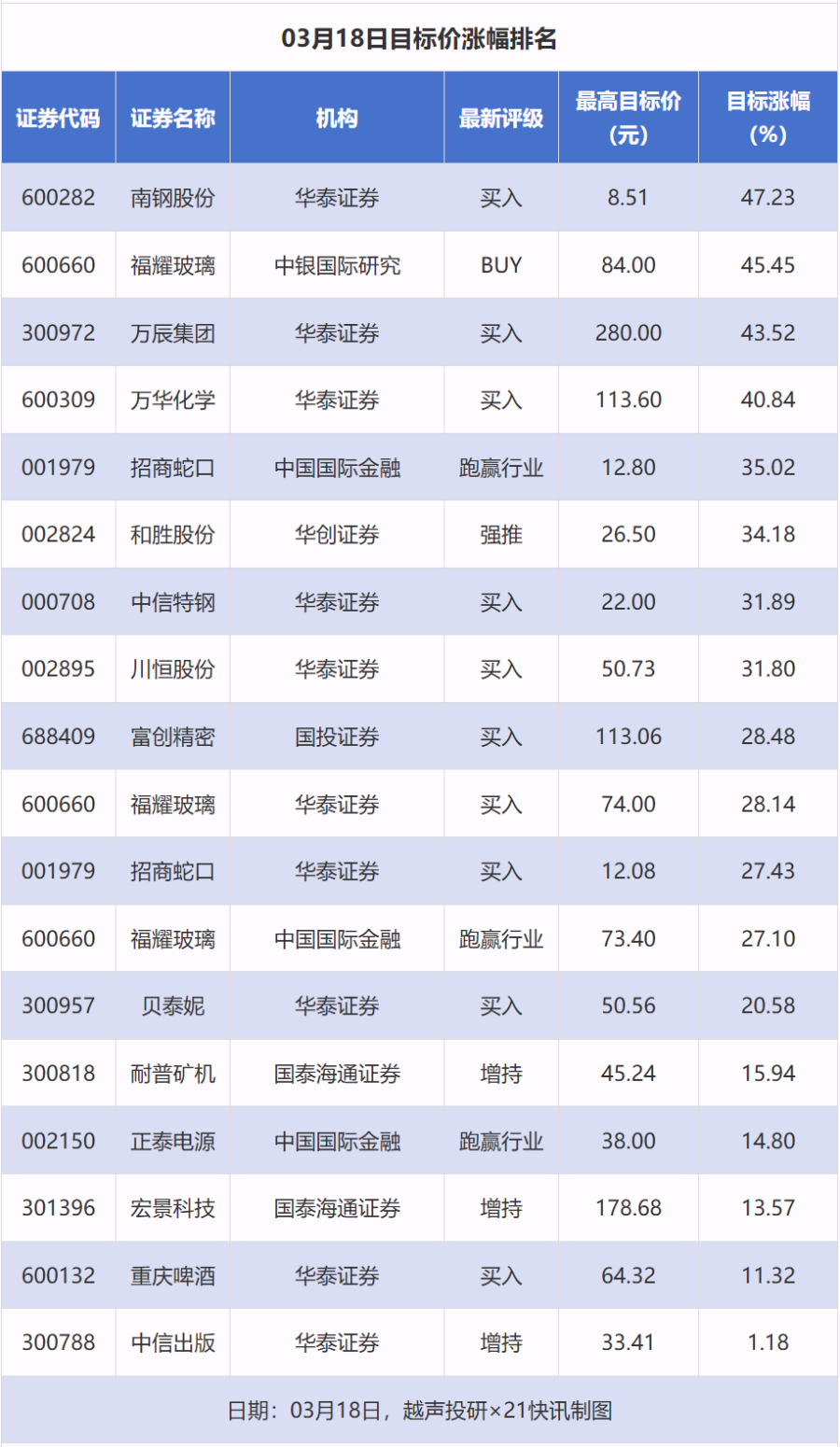
锂电大淘沙,走到而立之年的欣旺达凭什么?
汽车商业评论· 2026-03-18 23:05
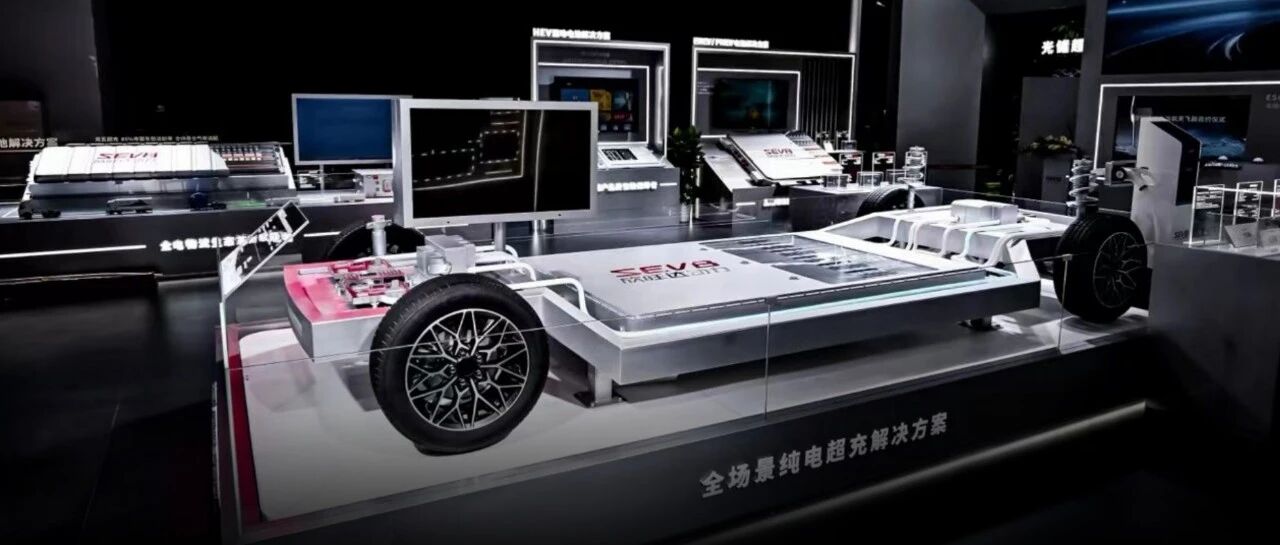
Core Viewpoint - The article highlights the strategic evolution of XINWANDA, emphasizing its commitment to high-end battery technology over low-end markets, which has allowed the company to thrive in the competitive lithium battery industry [5][10][96]. Group 1: Company Development and Strategy - XINWANDA has achieved significant milestones, including the mass production of semi-solid batteries and plans for solid-state battery trials, alongside a successful listing on the Hong Kong Stock Exchange to fund overseas expansion [3]. - The company has navigated through industry cycles and challenges, focusing on high-end markets rather than quick profits from low-end products, which has been a core part of its survival strategy [5][10]. - The decision to avoid low-end markets was based on the understanding that such paths would not yield sustainable competitive advantages, especially as the smartphone market evolved [11][12]. Group 2: Key Partnerships and Quality Management - XINWANDA's breakthrough came when it secured an emergency order from Philips, which allowed it to demonstrate its capabilities and gain credibility in the high-end market [17][23]. - The company underwent a significant transformation in quality management, adopting international standards and rigorous processes, which were further refined through partnerships with major clients like Huawei and Renault-Nissan [30][36][55]. - The collaboration with Huawei introduced stringent quality control measures, pushing XINWANDA to enhance its operational standards and management systems [32][34]. Group 3: Technological Advancements and Market Position - XINWANDA strategically focused on HEV (Hybrid Electric Vehicle) batteries, which presented a less competitive landscape compared to pure electric vehicles, allowing the company to build a strong technological foundation [46][48]. - The company has established itself as a leader in the HEV battery market, achieving the top position in China for five consecutive years from 2021 to 2025 [56]. - XINWANDA's advancements in high-power battery technology have enabled it to address critical issues in the electric vehicle sector, such as range anxiety and charging speed [58][66]. Group 4: Global Expansion and Sustainability - As the global market for electric vehicles evolves, XINWANDA is adapting to stringent ESG (Environmental, Social, and Governance) requirements, ensuring its products meet international sustainability standards [68][73]. - The company has invested heavily in developing a comprehensive carbon footprint management system, which extends to its supply chain partners, promoting a collaborative approach to sustainability [75][76]. - XINWANDA's commitment to R&D remains strong, with approximately 6% of its revenue allocated annually to innovation, ensuring it stays at the forefront of battery technology [94]. Group 5: Long-term Vision and Industry Impact - XINWANDA's growth trajectory reflects a broader narrative of resilience and strategic foresight within China's manufacturing sector, emphasizing the importance of long-term planning and adherence to industry standards [87][98]. - The company has cultivated a culture of self-reflection and continuous improvement, which has been crucial in navigating challenges and seizing opportunities in the dynamic battery market [88][90]. - XINWANDA's evolution from a manufacturing entity to a comprehensive energy solutions provider illustrates the potential for Chinese companies to lead in high-tech industries through innovation and collaboration [83][99].

特斯拉要甩掉宁德时代
汽车商业评论· 2026-03-18 23:05
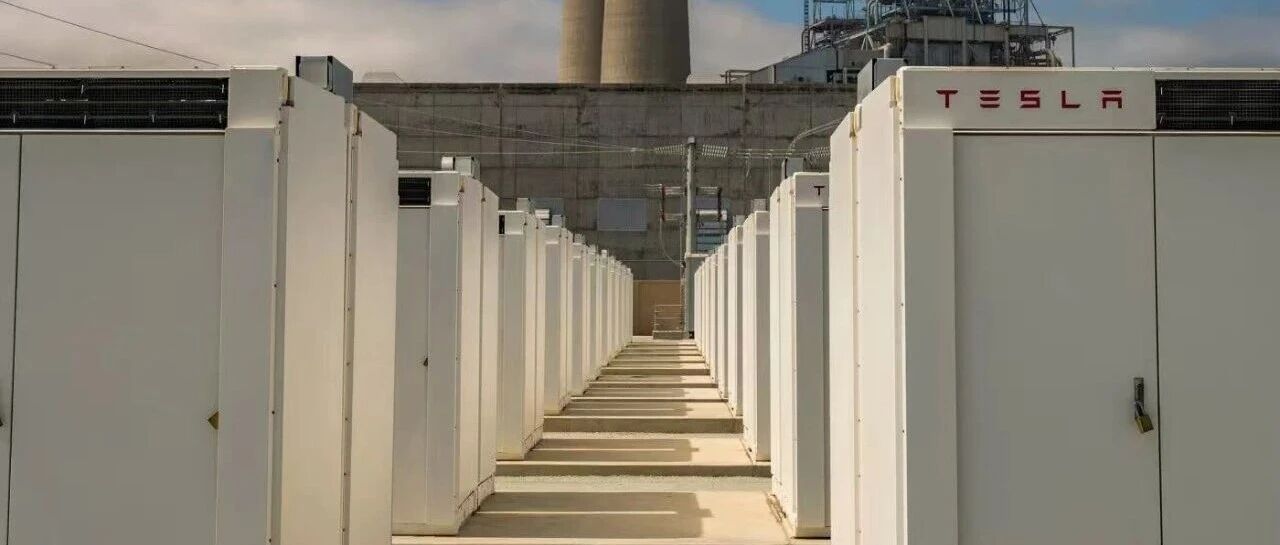
Core Viewpoint - The growth of electric and hybrid vehicles in the U.S. is slowing, with a projected decline in electric vehicle sales by approximately 4% in 2025, leading companies like Ford and General Motors to reduce their investments in electric models [3][5]. Group 1: Company Actions and Financial Implications - Ford announced a write-down of up to $19.5 billion for its electric vehicle business and reduced its annual budget allocation for electric vehicles from 40% to 30% [5]. - General Motors is facing financial pressure due to significant investments in electric vehicle production, including factories and battery plants, while the market demand remains low [5]. - GM transferred full ownership of its Lansing battery plant to LG Energy Solutions for approximately $2.08 billion, which was initially intended for producing Ultium platform batteries [7][9]. Group 2: Shift to Energy Storage Solutions - In response to declining electric vehicle demand, automakers and battery suppliers are converting existing battery production lines to manufacture energy storage cells [7]. - The trend towards energy storage is driven by the increasing energy demands of AI data centers, which require substantial buffering to maintain grid stability [7]. - Companies are recognizing energy storage as a potential second growth business, with a shift in focus from vehicle sales to energy solutions [7]. Group 3: Strategic Partnerships and Developments - LG Energy Solutions has become a major partner for Tesla, signing a $4.3 billion battery production agreement to supply batteries for Tesla's Megapack 3 energy storage system [11]. - The Lansing plant, now fully owned by LG, will produce lithium iron phosphate (LFP) batteries for Tesla's energy storage business, enhancing local supply chain capabilities [13][14]. - The collaboration aims to reduce logistics costs and mitigate tariff risks associated with imported batteries from companies like CATL [14]. Group 4: Advantages of Lithium Iron Phosphate Batteries - LFP batteries are favored for energy storage due to their safety, thermal stability, and cost-effectiveness, with production costs around $98 per kWh compared to $112-$120 per kWh for nickel-cobalt-manganese batteries [18]. - These batteries can endure over 10,000 charge cycles, making them suitable for utility-scale applications with a service life of 15-20 years [18]. Group 5: Legislative and Economic Incentives - The Inflation Reduction Act's Section 45X provides significant tax credits for domestic battery production, incentivizing companies to invest in local manufacturing [20]. - The tax credits include $35 per kWh for cell production and an additional $10 per kWh for module production, potentially yielding billions in subsidies for large-scale plants like Lansing [22]. - The domestic production of batteries is seen as a national security priority, aiming to reduce reliance on Asian supply chains and enhance local manufacturing capabilities [22][24].

比亚迪第二代刀片电池首批生产基地实现试生产_陕西日报数字报-群众新闻网
Shan Xi Ri Bao· 2026-03-18 19:21
Group 1 - The core point of the article is that BYD's new energy vehicle battery project in Xixian has commenced trial production, marking a significant advancement in battery technology with the introduction of the second-generation blade battery and fast-charging technology [1][2] - The second-generation blade battery can charge from 10% to 70% in just 5 minutes at room temperature, and only requires an additional 3 minutes for charging at -30 degrees Celsius, achieving a 5% increase in energy density compared to the first generation [1] - The Xixian base has an annual production capacity of 16 GWh, sufficient to support approximately 700,000 new energy vehicles, with an expected annual output value of 8 billion yuan [1] Group 2 - The Xixian battery project covers an area of 1,333 acres with a total investment of 7 billion yuan, and its trial production is expected to attract upstream and downstream enterprises in battery materials, precision components, and intelligent driving systems [2] - This project is anticipated to lower vehicle manufacturing costs and enhance the local supply chain in the Shaanxi automotive industry, contributing to the growth of the automotive industry cluster in the region [2]
