
塑料管道

Search documents
伟星新材(002372) - 2026年3月2日投资者关系活动记录表
2026-03-03 12:42
Group 1: Market Conditions - The plastic pipe industry is experiencing weak market demand, leading to intensified competition and difficulties for small and medium-sized enterprises, resulting in accelerated elimination and increased industry concentration [2] - The current market demand remains relatively weak [3] Group 2: Business Strategy - The company aims to strengthen its retail business by increasing market share and average revenue per customer, while emphasizing risk control and quality improvement in its engineering business for high-quality development [2] - The company is actively enhancing channel construction across various regions, focusing on deepening penetration in mature areas and developing more distributors in weaker or blank areas [2] Group 3: Sales Channels - The main sales channels for the company's retail business include home decoration companies, project managers, plumbers, and direct purchases by homeowners, with varying sales proportions across different regions [2] Group 4: Raw Material Prices - The prices of key raw materials, particularly copper, have seen significant increases, while polyethylene, polypropylene, and polyvinyl chloride prices are generally in a "low fluctuation" state [3] Group 5: Future Plans - The company's operational planning and targets for 2026 are still under discussion, with relevant indicators to be disclosed in the 2025 annual report [3] - The company plans to continue implementing stock incentive plans to motivate key employees and promote win-win development [3] Group 6: Acquisition Strategy - The acquisition of Beijing Songtian Cheng Technology Co., Ltd. aims to leverage its advanced R&D technology and production capabilities in the gas and heating municipal pipeline sector, enhancing the company's core competitiveness in municipal engineering [3]

伟星新材(002372) - 2026年2月28日投资者关系活动记录表
2026-03-03 12:40
Group 1: Market Demand and Competition - The current market demand for the company's products remains relatively weak [3] - The competition in the plastic pipe industry is intensifying, leading to difficulties for small and medium-sized enterprises, which may accelerate their elimination from the market [3] Group 2: Raw Material Prices - The price of copper, a key raw material, has seen a significant increase, while prices for polyethylene, polypropylene, and polyvinyl chloride are generally in a "low fluctuation" state [3] Group 3: Business Operations and Strategy - The company’s waterproof business model is mature, and there will be an increased focus on market expansion; the water purification business is still undergoing adjustments and optimization [3] - The acquisition of Beijing Songtian Cheng Technology Co., Ltd. aims to leverage its advanced technology and production capabilities in the gas and heat municipal pipeline sector, enhancing the company's competitive edge [4] Group 4: Financial Policies and Performance - The company has maintained a stable and transparent dividend policy, with an average payout ratio of 70-80% since its listing, and will continue to follow its profit distribution plan [3] - The cash flow and accounts receivable situation remains good, with strict management in place [4] Group 5: Future Plans and Regulations - The company is still discussing its operational goals for 2026, with relevant indicators to be disclosed in the 2025 report [3] - The "14th Five-Year" underground pipeline policy is expected to have a positive impact on the company’s business, although initial focus remains on civil engineering [4]
伟星新材20260228
2026-03-01 17:22
Summary of Conference Call for Weixing New Materials Company Overview - **Company**: Weixing New Materials - **Industry**: Home decoration and construction materials, focusing on both retail (To C) and engineering (To B) sectors Key Points Industry and Market Conditions - The home decoration retail sector is significantly impacted by a weak macroeconomic environment and consumer fatigue, with a further decline observed in Q4 2025, showing no clear signs of recovery [2][3] - The engineering sector is experiencing internal differentiation, with overall construction projects remaining weak and municipal engineering showing a downward trend quarter by quarter [2][4] - The company’s To B business is more sensitive to policies and funding, while the To C business is heavily influenced by consumer demand [2][5] Financial Performance - In 2025, the To C home decoration industry is expected to decline by approximately 15%, with the company's retail segment seeing a decrease of about 9% in customer numbers [2][8] - The company’s retail business accounts for about 70% of its operations, emphasizing brand, channel, and service differentiation from low-price strategies [2][5] Pricing Strategy - A price war is prevalent in the industry, with the company initiating a strategy to gradually restore prices starting in early 2025, leading to price stabilization by Q4 2025 [2][7] - The company’s pricing strategy has shown slight growth in Q4 2025 compared to the previous year, contrasting with the general trend of price reductions among competitors [2][7] Product and Business Development - The company is focusing on product iteration to achieve structural price increases and value transmission rather than direct price hikes on existing products [2][9] - The waterproof business has shown slight growth, while the water purification segment has declined significantly due to adjustments in focus and inventory management [2][10] Strategic Acquisitions - The acquisition of "Toyota Cheng Technology" aims to enhance capabilities in gas and heat pipeline systems, contributing approximately 30 to 40 million in revenue in 2025, with a historical peak of 100 to 200 million [2][11][12] International Expansion - The company plans to accelerate its overseas market presence over the next five years, with Southeast Asia identified as a key market, alongside the Middle East and Europe [2][13] - The strategy avoids engaging in price wars internationally to prevent homogenization with Chinese competitors [2][13] Cash Flow and Financial Health - The company maintains a healthy cash flow and stable accounts receivable, with no significant increase compared to 2024 [2][14] - Historical dividend payout ratios are around 70% to 80%, indicating a sustainable approach to shareholder returns [2][15] Future Outlook - The company adopts a cautious approach towards the macroeconomic outlook for 2026, focusing on innovation and operational efficiency [2][4][16] - Plans to enhance high-end brand positioning and overall solutions rather than competing on price alone [2][16] - The company is also considering market penetration strategies in economically developed rural areas to align with high-end positioning [2][16] Market Share and Competitive Position - The estimated market share for the company in the retail segment is approximately 25% based on new service household counts relative to market renovation households [2][22] Raw Material Costs - Raw material prices are generally low, with notable increases in copper prices affecting certain products, while other materials like PVC remain at historical lows [2][19] Risk Assessment - The overall risk associated with accounts receivable is considered manageable, with no significant changes in scale compared to the previous year [2][24] This summary encapsulates the key insights and strategic directions discussed during the conference call, providing a comprehensive overview of Weixing New Materials' current position and future plans in the home decoration and construction materials industry.
美国贸易代表:有些国家要加15%关税,中国不加
Guan Cha Zhe Wang· 2026-02-26 03:00
Core Viewpoint - The U.S. government, following a Supreme Court ruling against "equivalent tariffs," has implemented a 10% global tariff on goods, with plans to increase rates for certain countries to 15% or higher, while not imposing new tariffs on China [2][6][18]. Group 1: Tariff Implementation and Adjustments - The initial 10% tariff on global goods took effect on Tuesday, with plans to raise rates for some countries to 15% or more [2][6]. - U.S. Trade Representative Jamison Greer indicated that the government intends to adhere to agreements made with China and will not raise tariffs on Chinese goods beyond current levels [2][6][18]. - The government is replacing the emergency tariffs that were struck down by the Supreme Court with new tariffs under the Trade Act of 1974, specifically Section 122 for temporary tariffs and Section 301 for investigations into unfair trade practices [4][16]. Group 2: Trade Investigations and Targets - The investigations will focus on countries accused of overcapacity, forced labor in supply chains, discrimination against U.S. tech companies, and subsidies for products like rice and seafood [5][17]. - Greer has claimed that China has not adequately addressed the issue of overcapacity, which serves as a justification for potential tariffs on China and Vietnam [5][17]. Group 3: Future Trade Agreements and Policies - The U.S. plans to utilize the time following the Supreme Court ruling to conduct trade investigations that could lead to more permanent tariffs on specific countries and industries [6][18]. - The U.S. has reached a reciprocal trade agreement with Indonesia, which includes a 19% tariff, and will investigate Indonesia's trade practices under Section 301 [19][20]. - Greer emphasized the importance of maintaining policy continuity in trade agreements while ensuring that any tariff increases comply with legal procedures [20][21]. Group 4: Concerns from Trade Partners - European and other trade partners are concerned that new tariffs may exceed agreed-upon limits in existing trade agreements, prompting the European Parliament to pause legislative work on a trade framework with the U.S. [21]. - President Trump has warned that countries failing to adhere to agreements could face significantly higher tariffs, indicating a potential for new licensing fees as well [21][22]. Group 5: Additional Tariff Considerations - The administration is considering new tariffs on industries such as large batteries, cast iron, plastic pipes, and telecommunications equipment under the Trade Expansion Act of 1962, citing national security risks [22]. - Ongoing investigations may lead to tariffs on additional sectors, including semiconductors and pharmaceuticals, as the government accelerates its review process following the Supreme Court's decision [22].

美政府被曝酝酿新关税,涉伊最新制裁名单发布!铂强、钯稳格局延续
Qi Huo Ri Bao· 2026-02-26 00:25
Group 1: U.S. Tariff Policy - The U.S. government is preparing to impose new tariffs on various industries following a Supreme Court ruling that deemed its large-scale tariff policy illegal [2] - The Department of Commerce is initiating investigations under the Trade Expansion Act of 1962, focusing on products such as large batteries, cast iron, plastic pipes, and industrial chemicals [2] - The U.S. Trade Representative's office is also starting new trade investigations under the Trade Act of 1974, which may lead to additional tariffs due to perceived unfair trade practices [2] Group 2: U.S. Sanctions on Iran - The U.S. Treasury Department has announced sanctions against over 30 entities, individuals, and oil tankers to combat what it describes as illegal oil sales from Iran [3] - The sanctions coincide with upcoming indirect negotiations between the U.S. and Iran, indicating a continued strategy of maximum pressure on Iran [3] Group 3: Platinum and Palladium Market Trends - The global platinum group metals market is experiencing a strong upward trend, with platinum and palladium prices rising significantly, with platinum surpassing $2300 per ounce and palladium stabilizing around $1880 per ounce [4] - Supply constraints are identified as a key driver of this price surge, with over 75% of global platinum supply coming from mining, primarily in South Africa, and 76% of palladium supply from Russia and South Africa [4] - Demand for platinum and palladium is shifting, with a projected 12% decrease in demand from gasoline vehicles by 2026, while the penetration of hybrid vehicles is accelerating [4] Group 4: Macroeconomic Influences on Precious Metals - The potential for interest rate cuts by the Federal Reserve is seen as supportive for precious metal prices, with expectations of at least two rate cuts in 2026 [5] - Geopolitical tensions, including potential military conflicts, are contributing to a risk-averse sentiment that supports platinum and palladium prices [6] Group 5: Future Price Projections - Short-term projections indicate that platinum prices may remain strong due to supply disruptions and Fed rate cut expectations, while palladium prices may face downward pressure due to demand shifts towards electric vehicles [6] - Long-term outlook suggests that platinum will maintain a supply shortage due to increasing demand from hydrogen energy applications, while palladium may face oversupply as its primary use in gasoline vehicles declines [6][7]
美政府被曝正酝酿征收新关税
Yang Shi Xin Wen· 2026-02-25 15:18
Group 1 - The U.S. Supreme Court ruled that the government's large-scale tariff policy is illegal, prompting the government to consider new tariffs on various industries [1][3] - The U.S. Department of Commerce is initiating new investigations under Section 232 of the Trade Expansion Act of 1962, focusing on products such as large batteries, cast iron and iron fittings, plastic pipes, industrial chemicals, and telecommunications equipment [1] - The U.S. Trade Representative's office is also preparing to launch new trade investigations under Section 301 of the Trade Act of 1974, which may lead to additional tariffs due to alleged unfair trade practices [1] Group 2 - New York Governor Kathy Hochul has requested the federal government to refund approximately $13.5 billion in tariffs paid by the state, arguing that these tariffs are unreasonable and illegal [3] - Similar requests for tariff refunds have been made by California and Illinois, indicating a broader push among states for reimbursement [5] - Over a thousand companies, including major firms like FedEx, Costco, and Reebok, have filed lawsuits in the U.S. International Trade Court seeking refunds for the tariffs they have paid [5]
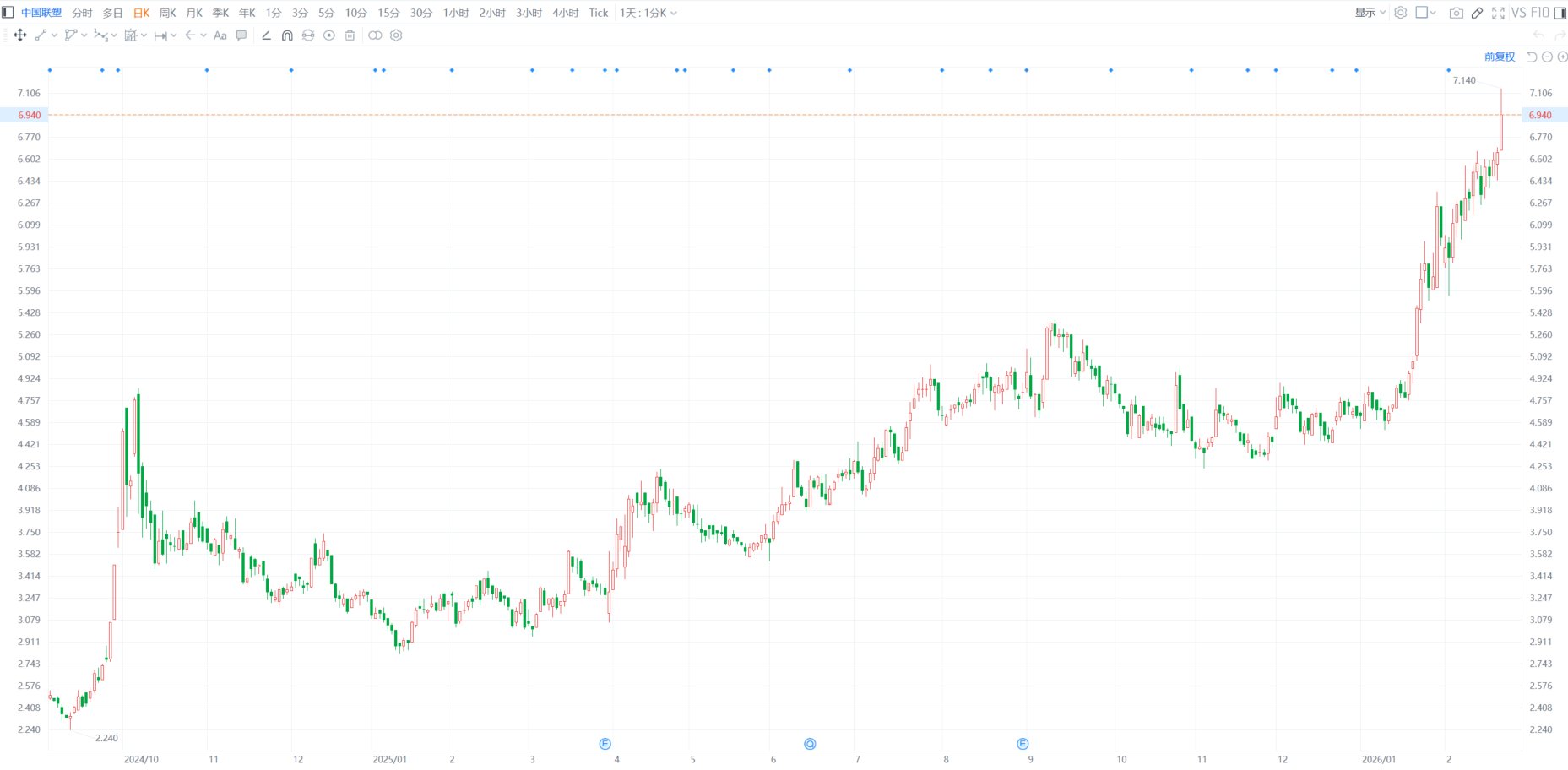
港股异动丨政策春风+需求回暖 中国联塑盘中涨超7%创近3年新高 年内累涨约54%
Ge Long Hui· 2026-02-25 08:54
Company - China Liansu (2128.HK) experienced a significant stock price increase, rising by 7.37% to HKD 7.14, marking a nearly three-year high since mid-March 2023, with a year-to-date increase of approximately 54% [1] - Guojin Securities highlights that PVC pipes, primarily used for building drainage and electrical wire sheathing, have low product prices and severe homogeneity, with differentiation based on cost advantages. Increasing production scale can achieve economies of scale and reduce raw material and production costs [2] - China Liansu has established over 30 production bases across 20 provinces in China and overseas, positioning itself as a leading player in the PVC market [2] Industry - The improvement in real estate expectations, combined with rising upstream raw material prices, has led Zhongtai Securities to be optimistic about the profitability recovery of companies with pricing power, indicating an upward turning point in both industry prosperity and valuation [1] - The real estate sector is expected to stabilize and recover, driving a rebound in building material demand, while the continuous rise in prices of upstream raw materials such as asphalt, polypropylene, and polyethylene is expected to transmit cost pressures to building materials [1] - The plastic pipe market is relatively fragmented, with different business models and products among companies. As of the end of 2024, the market concentration ratio (CR20) for plastics is approximately 40%, with leading companies including China Liansu (15%), Gongyuan Co. (3%), and Weixing New Materials (approximately 2% total output, with PPR products around 8%) [2]

美媒: 特朗普政府正酝酿征收新关税
Xin Hua She· 2026-02-25 04:13
Group 1 - The U.S. Supreme Court ruled that the large-scale tariffs imposed by the Trump administration under the International Emergency Economic Powers Act were illegal, leading to increased uncertainty in the economy [1] - The U.S. Department of Commerce is initiating new investigations under Section 232 of the Trade Expansion Act of 1962 for various industries, including large batteries, iron and iron fittings, plastic pipes, industrial chemicals, and telecommunications equipment, based on national security risks [2] - The U.S. Trade Representative's office is also starting new trade investigations under Section 301 of the Trade Act of 1974, which may lead to tariffs on unfair trade practices, including drug pricing and discrimination against U.S. technology companies [2] Group 2 - Following the Supreme Court ruling, the Department of Homeland Security confirmed that it would stop collecting tariffs based on the International Emergency Economic Powers Act, but tariffs under Sections 232 and 301 for products like steel, aluminum, and automobiles remain in effect [5] - Trump announced a new 15% tariff on goods from all countries under Section 122 of the Trade Act of 1974, which allows for tariffs for up to 150 days without Congressional approval [5] - The unpredictability of trade policies has increased, with experts noting that the complexity and uncertainty surrounding future tariffs have grown significantly [6]
特朗普政府正酝酿征收新关税
Xin Lang Cai Jing· 2026-02-24 19:18
Group 1 - The U.S. Supreme Court ruled that the large-scale tariffs imposed by the Trump administration under the International Emergency Economic Powers Act were illegal, leading to uncertainty in the economy [1] - The Trump administration is preparing to impose new tariffs on six categories of products based on other legal provisions related to national security, which differ from the newly introduced 15% tariffs [1][4] - The U.S. Department of Commerce is initiating new investigations under Section 232 of the Trade Expansion Act of 1962, targeting products such as large batteries, cast iron, plastic pipes, industrial chemicals, and telecommunications equipment [2] Group 2 - The Trump administration previously invoked Section 232 to investigate nine categories of products, including semiconductors and pharmaceuticals, with investigations potentially accelerating after the Supreme Court ruling [3] - The administration intends to modify the algorithm for steel and aluminum tariffs, which may lower nominal rates for some products but could result in higher overall tariffs based on total product value [3] - The Supreme Court's ruling has led to the cessation of tariffs under the International Emergency Economic Powers Act, but tariffs under Sections 232 and 301 remain effective [4] Group 3 - The new tariffs and trade policies introduced by the Trump administration are expected to increase complexity and uncertainty in the economic landscape, with experts noting a lack of clarity regarding future tariff changes [5] - The administration's use of multiple trade laws to impose tariffs may not allow for quick implementation, potentially taking months to take effect [4][5]
美媒:特朗普政府正酝酿征收新关税
Xin Lang Cai Jing· 2026-02-24 11:51
Core Viewpoint - The U.S. Supreme Court ruled that the large-scale tariffs imposed by the Trump administration under the International Emergency Economic Powers Act were illegal, leading to plans for new tariffs based on national security laws, which may increase economic uncertainty [1][6]. Group 1: New Tariff Investigations - The U.S. Department of Commerce is initiating new investigations under Section 232 of the Trade Expansion Act of 1962 for products in industries such as large batteries, cast iron and iron fittings, plastic pipes, industrial chemicals, and telecommunications equipment [1][6]. - The U.S. Trade Representative's office is also starting new trade investigations under Section 301 of the Trade Act of 1974, which may lead to tariffs on issues like drug pricing and discrimination against U.S. technology companies [2][6]. Group 2: Existing Tariffs and Changes - The Trump administration previously invoked Section 232 to investigate nine categories of products, including semiconductors and solar panels, with many investigations ongoing for nearly a year [2][7]. - There is an intention to modify the algorithm for steel and aluminum tariffs, potentially lowering nominal rates but taxing based on the total value of products rather than just their steel and aluminum content [7]. Group 3: Economic Uncertainty - Following the Supreme Court ruling, the Department of Homeland Security confirmed that tariffs under the International Emergency Economic Powers Act would cease, but tariffs under Sections 232 and 301 remain effective [9]. - The new tariffs announced under Section 122 of the Trade Act of 1974 will impose a 15% tariff on goods from all countries for a maximum of 150 days, requiring Congressional approval for extension [9]. - Experts predict that the complexity and unpredictability of trade policies will increase, leading to greater uncertainty regarding future tariffs [10].