第三方支付

Search documents
拉卡拉拟择机出售所持股票资产
Zhi Tong Cai Jing· 2025-11-07 11:23
Core Viewpoint - Lakala (300773.SZ) has authorized its management to dispose of its long-term equity investments in publicly traded stocks based on market conditions and company operations [1] Summary by Categories - **Company Decision** - The board of directors has approved a proposal to authorize the management to sell publicly traded stock assets under long-term equity investments [1] - The authorization includes flexibility in choosing the transaction methods, timing, pricing, and quantity of the assets to be sold [1]

小红书支付牌照曲线“落袋”!场景赋能如何盘活牌照?
Nan Fang Du Shi Bao· 2025-11-06 12:39
Core Insights - Dongfang Electronic Payment Co., Ltd. has undergone significant changes, including a change in legal representative, an increase in registered capital from 121.3 million to 200 million RMB, and a shift in company type to a limited liability company [2][3] - The original investors have exited, with Ningzhi Information Technology (Shanghai) Co., Ltd. becoming the sole investor with a contribution of 200 million RMB [2][3] - Ningzhi Information Technology is a wholly-owned subsidiary of Xiaohongshu Technology Co., Ltd., indicating that Xiaohongshu has indirectly acquired a third-party payment license [4] Company Changes - The legal representative has changed from Mao Wei to Wang Run [2][3] - The registered capital has increased from 121.3 million RMB to 200 million RMB [2][3] - The company type has changed to a limited liability company (non-natural person investment or holding) [2][3] Investor Changes - Six original investors, including Shanghai Electronic Data Exchange Network Service Co., Ltd. and Shanghai Minghui Equity Investment Partnership, have exited [2][3] - Ningzhi Information Technology (Shanghai) Co., Ltd. is the new sole investor with a 100% stake [2][3] Business Context - Dongfang Electronic Payment was established in 2008 and obtained a payment business license from the People's Bank of China in 2011, with its main services including customs tax electronic payment and cross-border payment [5][7] - The payment business license is set to expire on May 2, 2026, and the recent changes are crucial for its renewal [7][9] - The company’s business type has shifted from internet payment to stored value account operation, requiring a minimum registered capital of 200 million RMB for nationwide operations [7][9] Financial Performance - In 2024, Dongfang Electronic Payment reported revenue of approximately 8.88 million RMB and a net loss of about 8 million RMB [10][12] - As of July 31, 2025, the company had revenue of 3.77 million RMB and a net loss of approximately 5.22 million RMB [10][12] Strategic Implications - Xiaohongshu's acquisition of the payment license is seen as a strategic move to enhance its ecosystem and reduce reliance on external payment channels, which can increase transaction costs [16][17] - The integration of payment capabilities is expected to improve operational efficiency and user engagement through features like automatic settlement and marketing tools [17] - The competitive landscape in the payment industry is intensifying, with platforms like Xiaohongshu and Tongcheng Travel entering the market, potentially challenging the dominance of WeChat and Alipay [17]


小红书获支付牌照!
Jin Rong Shi Bao· 2025-11-06 12:21
Group 1 - The core point of the news is that Dongfang Electronic Payment has been fully acquired by Ningzhi Information Technology, a subsidiary of Xiaohongshu Technology, which aims to enhance its commercial ecosystem and reduce reliance on external payment channels [1][2] - The registered capital of Dongfang Payment has increased to 200 million RMB, reflecting a trend of capital increases among third-party payment companies in response to regulatory changes [2] - The recent capital increase aligns with the upcoming implementation of the Non-Bank Payment Institutions Supervision Management Regulations, which sets a minimum registered capital requirement and links net asset requirements to reserve fund scales [2] Group 2 - Despite the acquisition, Dongfang Payment has faced financial difficulties, reporting net losses in 2024 and the first half of 2025, indicating challenges for small and medium-sized payment institutions [3] - The lack of genuine transaction flow and reliance on channel revenue sharing has made it difficult for these institutions to cover compliance and operational costs [3] - With the backing of a platform like Xiaohongshu, Dongfang Payment is expected to improve profitability by integrating high-frequency transaction scenarios into its own payment system, enhancing merchant engagement through features like revenue sharing and automatic settlement [3]

小红书曲线摘获支付牌照
Bei Jing Shang Bao· 2025-11-06 08:01
北京商报记者注意到,除了此次股权变更,东方支付还进行了大额的资本金变更,国家企业信息信用信 息系统显示,截至目前,该公司注册资本增至2亿元人民币,法定代表人王闰,主要人员包括监事鲁 璟,董事王闰。 北京商报讯(记者 刘四红)小红书正式获得支付牌照。11月6日,北京商报记者注意到,东方电子支付 有限公司(以下简称"东方支付")原有股东已于近日悉数退出,目前控股股东变更为宁智信息科技(上 海)有限公司,后者持股比例100%,为小红书科技有限公司全资子公司。 ...
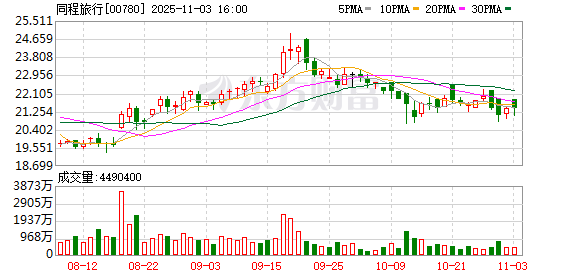
支付江湖再起风云!同程旅行拿下海南唯一牌照 B站与甬易支付失之交臂
Mei Ri Jing Ji Xin Wen· 2025-11-03 15:05
Core Insights - The recent approval from the central bank has finalized the acquisition of multiple payment licenses, with Xinxing Payment being acquired by Tongcheng Travel and Yongyi Payment being taken over by Zhengkai Group [2][3]. Group 1: Company Acquisitions - Tongcheng Travel has expanded its portfolio by acquiring Xinxing Payment, which is the only licensed payment institution in Hainan Province, enhancing its licensing capabilities in financial services [2][4]. - Zhengkai Group, a top 500 private enterprise, has acquired Yongyi Payment, which previously had a connection with Bilibili, highlighting the competitive landscape for payment licenses [2][5]. Group 2: Strategic Importance of Payment Licenses - The acquisition of payment licenses is a strategic move for companies like Tongcheng Travel, allowing them to reduce reliance on external payment channels and improve transaction efficiency [8]. - Payment licenses are becoming standard for major internet companies, facilitating the integration of various financial services and enhancing business ecosystems [6][8]. Group 3: Future Prospects - The geographical advantage of Xinxing Payment is expected to become more significant with the future closure of Hainan's free trade port, potentially increasing its value [4]. - The strategic cooperation framework agreement between Hainan Province and Tongcheng Group aims to leverage policy advantages for mutual growth in the tourism and financial sectors [4].
【深度】从0到2亿用户,支付宝的“碰一下”野心
Xin Lang Cai Jing· 2025-10-31 11:29
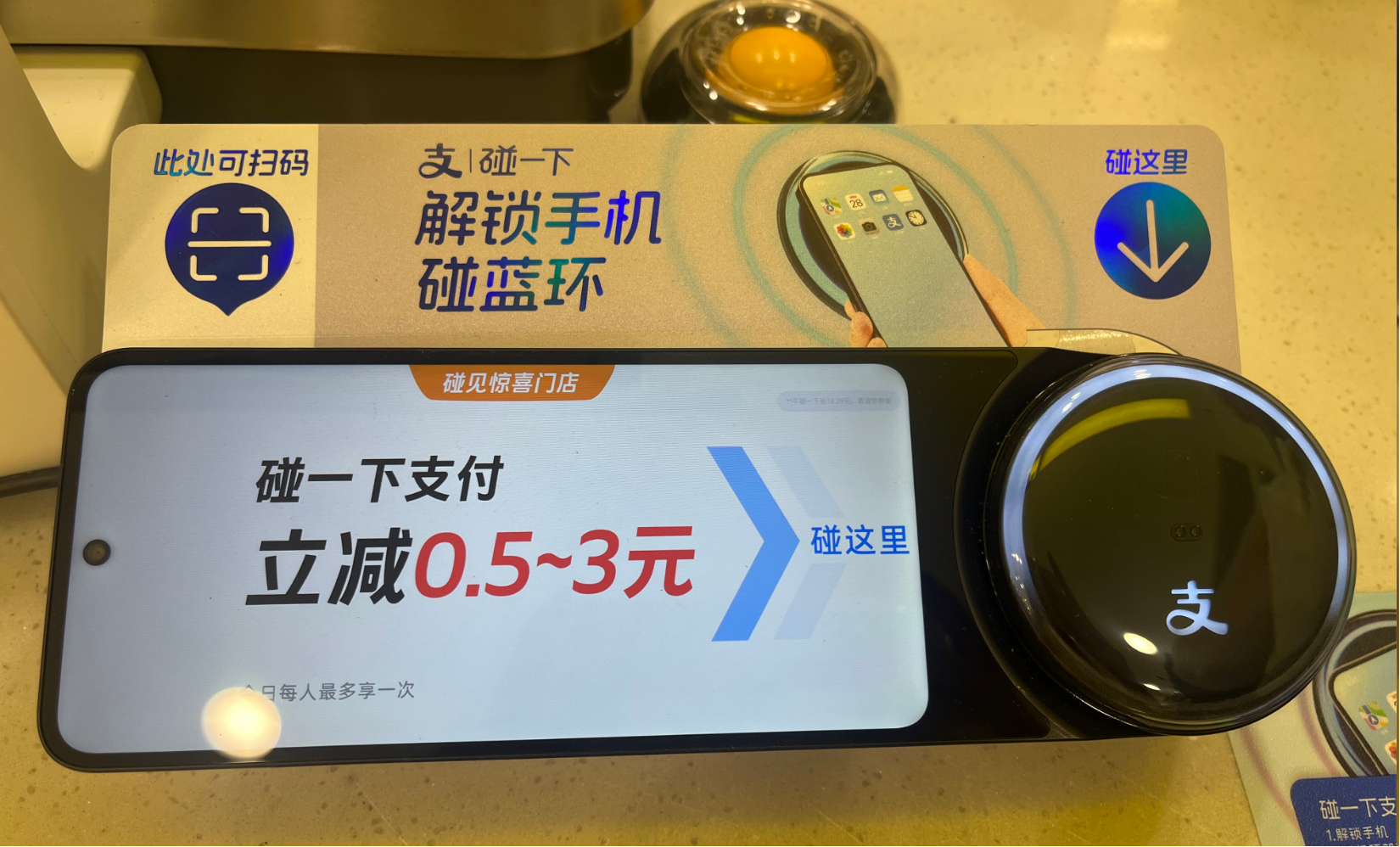
Core Insights - Alipay has officially announced the "Tap to Pay" discount activity for Double Eleven, enhancing user experience with new payment terminals featuring a blue ring [1][5] - The "Tap to Pay" feature has rapidly gained popularity, with user numbers reaching 200 million in just over a year, significantly faster than other payment methods like Yu'ebao and QR code payments [5][6] - Ant Group is heavily promoting "Tap to Pay" as a key project, aiming to reconstruct its payment moat through aggressive subsidies and extensive ground promotion [6][8] User Adoption and Experience - The "Tap to Pay" feature is now available in over 1,000 scenarios, including convenience stores, supermarkets, and delivery lockers, allowing users to easily access services [5][6] - User feedback is mixed; while some appreciate the convenience and discounts, others express concerns about sensitivity and security compared to traditional QR code payments [9][10][23] - The payment process is simplified to two steps for Android users, while iPhone users need an additional confirmation step, which may affect user experience [10][34] Technical Aspects - "Tap to Pay" utilizes NFC technology, distinguishing it from QR code payments by allowing mobile phones to act as readers rather than relying on scanning [13][14] - The report highlights three advantages of the reader mode used in "Tap to Pay": universal compatibility, user convenience, and enhanced transaction security [14][19] - The market environment for NFC payments has matured, with a significant increase in NFC-enabled smartphone shipments expected in 2024 [18][20] Competitive Landscape - The competitive landscape is characterized by a duopoly between Alipay and WeChat Pay, with Alipay seeking to regain market share in offline payments [24][27] - Alipay's "Tap to Pay" is part of a broader strategy to create new entry points beyond traditional payment methods, addressing user needs for efficiency and security [28][30] - The success of "Tap to Pay" will depend on user habit formation and overcoming migration costs associated with switching from QR code payments [34][35] Market Opportunities - The growing acceptance of NFC technology among users presents a timely opportunity for Alipay to expand its market share [36][37] - The feature has shown promising user data, indicating a gradual increase in market acceptance, particularly among international users [35][36]
拉卡拉递表港股
YOUNG财经 漾财经· 2025-10-31 09:46
Core Viewpoint - Lakala is seeking to list its shares on the Hong Kong Stock Exchange, aiming for an "A+H" share structure, amidst challenges of declining revenue and net profit, as well as shareholder reductions, while focusing on international expansion and a "Payment+" transformation strategy [4][22]. Company Background - Lakala, originally founded as QianKun Times in January 2005, transitioned to its current brand in 2009 and became a public company in 2019. It has established itself as a leading independent digital payment service provider in China, primarily serving small and medium-sized merchants [5][6]. Revenue Challenges - Despite leading market share, Lakala has faced significant revenue fluctuations, with a reported revenue of RMB 59.28 billion in 2023, a slight decrease to RMB 57.54 billion in 2024, and a further decline of 11.2% in the first half of 2024 [7][8]. The company reported a total revenue of RMB 40.7 billion for the first three quarters of 2024, down 7.33% year-on-year [8]. Profitability Analysis - Lakala's net profit has shown considerable volatility, with figures of -RMB 14.38 billion in 2022, RMB 4.57 billion in 2023, and RMB 3.51 billion in 2024. The first half of 2024 saw a 45% decline in net profit compared to the previous year [13][18]. The decline is attributed to reduced revenue from its core digital payment services due to changing customer payment habits and stricter merchant entry standards [13][22]. Margin Insights - The overall gross margin improved from 22.8% in 2022 to 29.9% in 2024, with digital payment services' gross margin rising from 20.2% to 27.2% during the same period. However, the gross profit for the first half of 2024 decreased by 32.6% year-on-year [9][10]. Shareholder Dynamics - Lakala has experienced significant shareholder reductions, with major shareholders like Lenovo Holdings and Sun Haoran reducing their stakes in the company. This has raised concerns about the company's financial stability [21][22]. Regulatory Environment - The implementation of the "Non-Bank Payment Institutions Supervision and Management Regulations" in May 2024 has increased compliance pressures, potentially leading to higher operational costs and stricter business limitations [22][23]. Strategic Focus - Lakala is focusing on international expansion and platform-based operations, planning to use the funds raised from the Hong Kong listing to enhance its overseas market presence and technological capabilities. The company reported a 70.4% year-on-year increase in cross-border payment business clients [23][25]. Industry Trends - The payment industry is shifting towards platform-based solutions, with a growing emphasis on cross-border payments and integrated service offerings. Lakala aims to adapt to these trends to remain competitive in a rapidly evolving market [25].

“创业教父”遇考验:亲弟清仓套现 投诉10万+ 拉卡拉港股IPO前景几何?
Feng Huang Wang Cai Jing· 2025-10-30 10:09
Core Viewpoint - The company, Lakala, is facing significant challenges as it prepares for its IPO on the Hong Kong Stock Exchange, with declining performance metrics and increasing compliance issues overshadowing its market position as a leading digital payment provider in Asia [1][3]. Group 1: Company Performance - Lakala claims to be a leading digital payment and business solutions provider in Asia, with a market share of 9.4% in the independent digital payment service sector, amounting to over 4 trillion yuan in total payment volume for 2024 [4][6]. - Despite its leading position, Lakala's revenue has shown a downward trend, with figures of 5.361 billion yuan in 2022, 5.928 billion yuan in 2023, and 5.754 billion yuan in 2024, while net profits fluctuated from a loss of 1.438 billion yuan in 2022 to a profit of 457 million yuan in 2023, and a profit of 351 million yuan in 2024 [6]. - In the first three quarters of 2025, Lakala reported a revenue of 4.068 billion yuan, a year-on-year decrease of 7.32%, and a net profit of 339 million yuan, down 33.9% year-on-year, attributed to pressures in the bank card payment business [7][8]. Group 2: Financial Health - Lakala's financial health is concerning, with the company admitting to a net loss in 2022 and potential future profitability issues. As of June 30, 2025, the company reported net current liabilities, indicating liquidity risks that could limit operational flexibility [8][9]. - The cash flow situation is alarming, with a 63% year-on-year drop in net cash flow from operating activities, amounting to 290 million yuan in the first three quarters of 2025 [8]. Group 3: Shareholder Actions - The founder's brother, Sun Haoran, is exiting the company by selling his shares, which amounts to a total cash-out of 493 million yuan since Lakala's A-share listing in 2019 [9][10]. - Lenovo Holdings, the largest shareholder, has also reduced its stake from 26.54% to 23.54%, cashing out approximately 580 million yuan in the process, indicating a trend of diminishing confidence among major stakeholders [10][11]. Group 4: Compliance Issues - Lakala is facing a severe compliance crisis, with over 100,000 complaints filed against it on the Black Cat Complaint platform, highlighting issues such as unauthorized fees and poor service [14][15]. - The company has incurred multiple fines totaling 16.76 million yuan from 2022 to June 2025 due to various regulatory violations, including improper transaction management and failure to adhere to customer due diligence requirements [19][20].

“创业教父”遇考验:亲弟清仓套现,投诉10万+,拉卡拉港股IPO前景几何?
Feng Huang Wang Cai Jing· 2025-10-30 07:52
Core Viewpoint - The company Lakala, once a leader in the digital payment sector, is facing significant challenges as it prepares for its IPO in Hong Kong, with declining revenues, increasing complaints, and compliance issues overshadowing its market position [1][3][25]. Group 1: Company Performance - Lakala claims to be a leading digital payment and business solutions provider in Asia, with a market share of 9.4% in the independent digital payment service sector, amounting to over 4 trillion yuan in total payment volume for 2024 [5][4]. - The company's revenue from 2022 to 2024 shows a decline, with figures of 5.361 billion yuan in 2022, 5.928 billion yuan in 2023, and 5.754 billion yuan in 2024, while profits fluctuated from a loss of 1.438 billion yuan in 2022 to a profit of 457 million yuan in 2023, and a profit of 351 million yuan in 2024 [7][10]. - In the first three quarters of 2025, Lakala reported a revenue of 4.068 billion yuan, a year-on-year decrease of 7.32%, and a net profit of 339 million yuan, down 33.9% year-on-year, attributed to pressures in the bank card payment business [8][11]. Group 2: Business Structure and Challenges - The company’s core digital payment services account for 89% of its revenue, indicating a heavy reliance on a single business line that is facing industry growth bottlenecks [11]. - Lakala's cross-border payment business saw a significant increase of 77.56% year-on-year in the first three quarters of 2025, reaching 60.2 billion yuan, but this still represents less than 2% of the company's total payment volume [11]. - The company has acknowledged potential liquidity risks due to net current liabilities recorded as of December 31, 2022, and June 30, 2025, which may limit operational flexibility [11]. Group 3: Compliance Issues - Lakala is currently facing a compliance crisis, with over 100,000 complaints filed on the Black Cat Complaint platform, highlighting issues such as unauthorized fees and poor service [26][30]. - The company has been penalized multiple times for regulatory violations, including a fine of 2.5 million yuan for various infractions related to transaction management and customer due diligence from 2022 to June 2025 [33][34]. - Recent fines include 250,000 yuan for violations of acquiring business management regulations and 4.06 million yuan for failing to meet customer identification requirements [33][34]. Group 4: Shareholder Actions - The founder's family and early investors are reducing their stakes in Lakala, with significant sell-offs by major shareholders, including a total cash-out of 493 million yuan by the founder's brother [16][19]. - Lenovo Holdings, the largest shareholder, has also been gradually reducing its stake, from 26.54% to 23.54%, raising concerns about the company's attractiveness to investors [19][22].

“创业教父”遇考验:亲弟清仓套现,投诉10万+,拉卡拉港股IPO前景几何?
凤凰网财经· 2025-10-30 07:36
Core Viewpoint - The article discusses the challenges faced by Lakala, a prominent player in the digital payment industry, as it prepares for its IPO in Hong Kong amidst declining performance, compliance issues, and significant shareholder exits [1][2][3]. Group 1: Performance Decline - Lakala's revenue and net profit have shown a downward trend, with revenues of 5.361 billion RMB in 2022, 5.928 billion RMB in 2023, and a projected 5.754 billion RMB in 2024, while net profits were -1.438 billion RMB, 0.457 billion RMB, and 0.351 billion RMB respectively [4][6]. - In the first three quarters of 2025, Lakala reported a revenue of 4.068 billion RMB, a year-on-year decrease of 7.32%, and a net profit of 0.339 billion RMB, down 33.9% year-on-year [6][11]. - The company attributes its revenue decline to pressure on its card payment business, with digital payment revenue decreasing by 7.63% [6][11]. Group 2: Shareholder Exits - The article highlights significant shareholder exits, including the complete divestment of the founder's brother, Sun Haoran, who has sold shares worth 493 million RMB [16][20]. - Lenovo Holdings, the largest shareholder, has also reduced its stake from 26.54% to 23.54%, cashing out approximately 580 million RMB [20][23]. Group 3: Compliance Issues - Lakala faces a severe compliance crisis, with over 100,000 complaints on the Black Cat Complaint platform regarding service issues and unauthorized charges [26][27]. - The company has been fined multiple times for regulatory violations, including a fine of 2.5 million RMB for various infractions related to payment processing and customer due diligence [36][38]. - The cumulative fines from 2022 to mid-2025 amount to 16.76 million RMB, indicating significant operational challenges [38]. Group 4: Future Outlook - Lakala is attempting to pivot towards cross-border payments, which saw a 77.56% increase to 60.2 billion RMB in the first three quarters of 2025, but this still represents less than 2% of its total payment volume [11][12]. - The company acknowledges potential liquidity risks and challenges in maintaining profitability, raising concerns about its financial health as it seeks to expand through its IPO [11][12].