保险业

Search documents
山东:多方联动保秋粮归仓
Xin Hua She· 2025-10-14 07:32
Group 1 - The introduction of the "Agricultural Machinery Interest Subsidy Loan" by Qihe Rural Commercial Bank has facilitated the purchase of 52 tracked corn harvesters by local farmers, addressing funding shortages and enhancing harvest efficiency amid adverse weather conditions [1] - Continuous rainy weather in Shandong province poses significant challenges for autumn grain harvesting, drying, and storage, prompting various local initiatives to support farmers through financial services, power supply guarantees, and insurance [1][2] - The timely drying of corn post-harvest is crucial to prevent spoilage, with a drying center in Linyi City capable of processing 300 tons daily, supported by the local power company ensuring uninterrupted electricity supply [2] Group 2 - China Life Property Insurance Company in Shandong has insured 6.84 million acres of policy-based crops, including corn, soybeans, and peanuts, playing a key role in agricultural insurance in the province [3] - The insurance company utilizes its extensive network of service stations to monitor crop damage and expedite claims processing, providing financial support for farmers to purchase fertilizers and seeds for the next planting season [3]
9月份税收收入增幅较高 经济向好带动财政收入稳步回升
Zheng Quan Shi Bao Wang· 2025-10-14 06:51
Group 1 - The core viewpoint of the articles highlights the positive growth in tax revenue, with a 6.9% year-on-year increase in the third quarter, driven by economic recovery and favorable policies [1][3] - The capital market service sector saw a significant tax revenue increase of 56.8% year-on-year, with securities transaction stamp duty rising by 110.5% [2] - The manufacturing sector's tax revenue grew by 5.4%, accounting for 31% of total tax revenue, indicating its crucial role in overall economic stability [2] Group 2 - Real estate-related tax revenue decreased by 9.8% year-on-year, but the decline has narrowed due to ongoing supportive policies, with a reduction of over 10 percentage points compared to the first three quarters of 2024 [2] - The implementation of a series of incremental policies has led to a steady recovery in invoice sales and tax revenue growth, reflecting improved corporate profitability and consumer activity [3] - The stock market's active trading environment contributed to the increase in tax revenue, with the total market capitalization of A-share companies surpassing 100 trillion yuan for the first time in August [1][2]
A股冲高回落,沪指半日微涨0.21%
Mei Ri Jing Ji Xin Wen· 2025-10-14 04:49
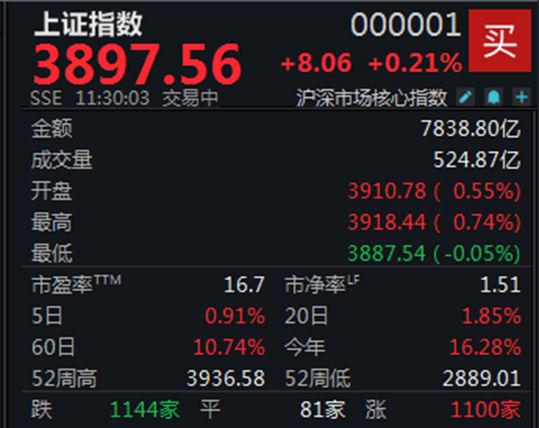
Market Overview - The market opened higher but experienced a pullback, with the ChiNext Index leading the decline. As of the morning close, the Shanghai Composite Index rose by 0.21% to 3897.56 points, while the Shenzhen Component fell by 1.02% and the ChiNext Index dropped by 2.24% [1] - The total trading volume in A-shares reached 1.68 trillion yuan [1] Sector Performance - The insurance sector showed significant strength, with New China Life Insurance's better-than-expected earnings forecast leading to a rise of over 6%. China Life and China Pacific Insurance also increased by more than 3% [3][4] - The superhard materials concept saw a substantial rebound, with companies like Strength Diamond and Huifeng Diamond rising over 10% [3] - Banking stocks stabilized, with Chongqing Bank increasing by over 5% and Jiangsu Bank and China Merchants Bank rising by more than 3% [3] Policy and Industry Developments - The opening of the Global Digital Trade Center in Yiwu marks a significant upgrade in the market, transitioning from traditional trade to a digital trade ecosystem. The project, initiated in 2022, covers an area of 1.25 million square meters and focuses on upgrading key elements of trade [3] - The National Development and Reform Commission issued a management method for energy-saving and carbon reduction projects, supporting key industries such as electricity, steel, and chemicals in their energy-saving transformations [3] Company Insights - New China Life Insurance reported rapid growth in NBV and premiums, with profits and ROE reaching historical highs. The company is expected to maintain its current growth rate in NBV due to various contributing factors [7] - China Life Insurance has a clear dividend policy, showing a strong willingness to maintain stable dividend growth, combining dividend certainty with investment performance flexibility [8] - China Pacific Insurance is advancing its "Long航" transformation, focusing on balanced business development and stable value growth [9] - Ping An Insurance is implementing a dual strategy of "comprehensive finance + medical care and elderly care," enhancing its core competitiveness through differentiated services [9]




三美股份下跌5.05% 前三季净利润预计增长171.73%—193.46%
Zheng Quan Shi Bao Wang· 2025-10-14 03:48
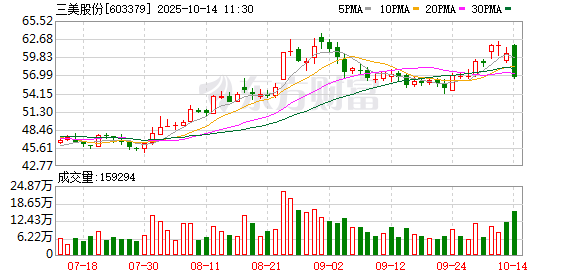
Core Viewpoint - Sanmei Co., Ltd. experienced a significant stock price drop of 5.05% as of 10:57 AM today, despite a strong earnings forecast for the first three quarters, projecting a net profit of 1.524 billion to 1.646 billion yuan, representing a year-on-year growth of 171.73% to 193.46% [2] Group 1: Stock Performance - As of the latest update, Sanmei's stock price fell by 5.05%, with a trading volume of 13.864 million shares and a transaction amount of 817 million yuan, resulting in a turnover rate of 2.27% [2] - In contrast, companies like Chuanjiang New Materials, Yuegui Co., and New China Life Insurance saw their stock prices increase by 10.01%, 9.99%, and 6.83% respectively, among those announcing earnings forecasts today [2] Group 2: Fund Flow - Over the past five days, Sanmei has seen a net outflow of main funds totaling 71.004 million yuan, with the previous trading day alone witnessing a net outflow of 75.0535 million yuan [2] - The latest margin trading data as of October 13 indicates that Sanmei's margin balance is 1.028 billion yuan, with a financing balance of 1.024 billion yuan, reflecting a decrease of 17.6134 million yuan over the past five days, equating to a decline of 1.69% [2]

9月税收增幅较高
第一财经· 2025-10-14 03:14
Core Insights - The article highlights the continuous growth of tax revenue in China, with a year-on-year increase of 6.9% in the third quarter, driven by economic recovery and favorable policies [3][4]. Tax Revenue Growth - Tax revenue for the first eight months of the year reached 121,085 billion yuan, showing a slight increase of 0.02% year-on-year [3]. - The capital market's activity, particularly after the implementation of a series of incremental policies, has significantly contributed to tax revenue growth, with a 56.8% increase in tax revenue from the capital market service industry [3][4]. Sector Performance - The manufacturing sector saw a tax revenue increase of 5.4%, accounting for 31% of total tax revenue and contributing 48% to the overall revenue increase [5]. - Real estate-related tax revenue has declined by 9.8% year-on-year, but the decline has narrowed due to ongoing policies aimed at stabilizing the real estate market [5]. Economic Indicators - The article emphasizes that tax data serves as an economic "barometer," reflecting the effectiveness of policies and the gradual improvement in corporate profitability and consumer activity [6].
中资离岸债每日总结(10.13) | 宝龙地产与特别小组成员订立重组支持协议
Sou Hu Cai Jing· 2025-10-14 03:00
Economic Outlook - Economists have raised their forecasts for U.S. economic growth for this year and next, with GDP expected to grow by 1.8% in 2023, up from a previous estimate of 1.3% [2] - The upward revision is primarily due to significantly improved expectations for business investment [2] - The U.S. economy is projected to grow at a similar pace in 2026 [2] Employment Trends - The average monthly job growth in the U.S. is now expected to be 60,000 for this year, down from a prior forecast of 87,000 [2] - Recent months have shown a notable slowdown in job growth, prompting the Federal Reserve to lower interest rates by 25 basis points in September [2] - Economists anticipate another 25 basis point rate cut from the Federal Reserve this year, followed by a total of 75 basis points in cuts by 2026 [2] Inflation Expectations - The NABE group expects U.S. inflation to remain above the Federal Reserve's 2% target until next year [2] - The year-on-year increase in the PCE price index is projected to decline from 3% this year to 2.5% by the end of 2026 [2] Trade and Economic Policy - The economic outlook has been complicated by significant and frequently changing policy measures from the Trump administration, particularly regarding tariffs [2] - The impact of tariffs on inflation has been slower and more moderate than many economists had anticipated [2]



寇江华接任渤海人寿董事长
Zhong Guo Jing Ji Wang· 2025-10-14 02:33
来源:中国银行保险报 朱艳霞 据了解,寇江华于2000年8月进入原中国保监会工作,在办公厅、消保局等部门任职;2015年至2017 年,挂职天津市滨海新区中心商务区管委会副主任;2018年4月,任天津港保税区管委会副巡视员。寇 江华还曾担任天津市滨海新区金融工作局党组书记、局长,中国(天津)自贸试验区管委会办公室党组成 员、副主任等。2025年3月,寇江华担任渤海人寿党委书记。 公告显示,截至2025年9月,渤海人寿董事会年内变更董事人数超过三分之一。对此,该公司表示,董 事变动均为正常人事调整,符合相关法律法规及公司章程规定,不会对日常经营管理及财务状况产生重 大不利影响。 近日,渤海人寿发布公告称,因到达退休年龄等原因,吕英博辞任渤海人寿董事、董事长及董事会下设 专门委员会职务。根据天津金融监管局批复核准,由寇江华接任渤海人寿董事、董事长。 (责任编辑:孟茜云) ...
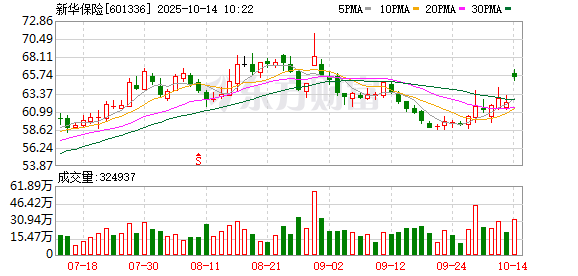
新华保险股价异动 前三季净利润预计增长45.00%—65.00%
Zheng Quan Shi Bao Wang· 2025-10-14 02:21
Core Viewpoint - The stock price of New China Life Insurance has surged by 6.69%, with a trading volume of 10.82 million shares and a transaction amount of 711 million yuan, following the release of its latest earnings forecast indicating a significant year-on-year net profit growth of 45% to 65% for the first three quarters [2] Financial Performance - The company expects a net profit of 29.986 billion to 34.122 billion yuan for the first three quarters, reflecting a year-on-year increase of 45% to 65% [2] - The latest financing balance as of October 13 is 2.67 billion yuan, with a recent increase in financing balance of 78.41 million yuan, representing a growth of 3.04% over the past five days [2] Market Activity - Despite the stock price increase, the main funds have shown a net outflow of 180 million yuan over the past five days, with a net inflow of 6.3462 million yuan on the previous trading day [2] - The stock has received a "buy" rating from one institution in the past month, with the highest target price set at 71.11 yuan by CITIC Securities on September 16 [2]
上市公司动态 | 盐湖股份前三季度净利预增36.89%-49.62%,领益智造前三季度净利同比预增34%-50%,北方稀土收到内蒙古证监局警示函
Sou Hu Cai Jing· 2025-10-13 15:16
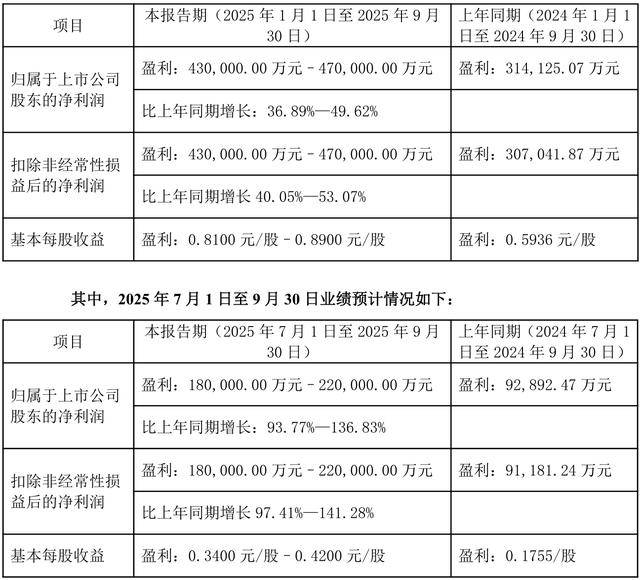
Group 1 - Salt Lake Co. expects net profit for the first three quarters of 2025 to be between 4.3 billion and 4.7 billion yuan, representing a year-on-year increase of 36.89% to 49.62% [1][2] - The increase in profit is attributed to the rise in potassium chloride prices compared to the previous year, which boosted profitability in that segment [1] - Lithium carbonate market prices have seen a downward adjustment, but overall performance remains positive compared to the previous year [1] Group 2 - Lingyi Technology anticipates net profit for the first three quarters of 2025 to be between 1.89 billion and 2.12 billion yuan, reflecting a growth of 34.10% to 50.42% year-on-year [4][5] - The growth is driven by the launch of new AI terminal products and increased production capacity [5] Group 3 - Xinhua Insurance projects net profit for the first three quarters of 2025 to be between 29.986 billion and 34.122 billion yuan, an increase of 45% to 65% year-on-year [7] - The growth is attributed to improved asset allocation and a favorable capital market environment, leading to significant investment income [7] Group 4 - Sanmei Co. expects net profit for the first three quarters of 2025 to be between 1.524 billion and 1.646 billion yuan, indicating a year-on-year increase of 171.73% to 193.46% [22] - The increase is driven by the reduction in production quotas for certain refrigerants and rising market prices [22] Group 5 - Flying Technology anticipates net profit for the first three quarters of 2025 to be between 275 million and 300 million yuan, representing a growth of 110.80% to 129.96% year-on-year [24] - The growth is supported by increased investment in cutting-edge fields and a recovery in consumer electronics demand [24] Group 6 - Northern Rare Earth received a warning letter from the Inner Mongolia Securities Regulatory Bureau for failing to disclose related party non-operating fund occupation [6] - The company incurred costs related to employee salaries and benefits post-acquisition, which were not disclosed as required [6] Group 7 - Gansu Energy expects net profit for the first three quarters of 2025 to be between 1.55 billion and 1.6 billion yuan, reflecting a year-on-year increase of 11.86% to 15.47% [29] - The increase is attributed to a decrease in power generation costs compared to the previous year [29] Group 8 - Dongfang Tower anticipates net profit for the first three quarters of 2025 to be between 750 million and 900 million yuan, indicating a growth of 60.83% to 93% year-on-year [30] - The growth is driven by stable production in potassium chloride and rising market prices [30]


【港股红利周报】港股红利前期回调较充分,外部扰动下或迎风格切换
Xin Lang Cai Jing· 2025-10-13 11:00
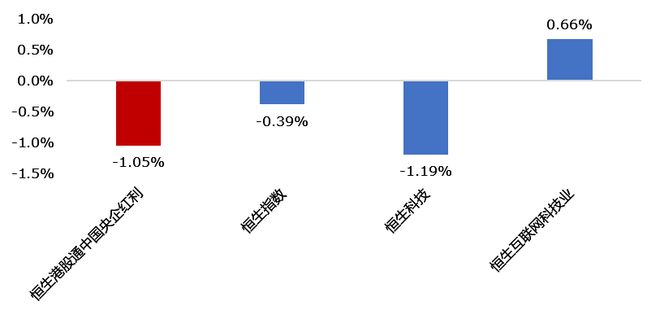
Group 1 - The core viewpoint indicates that the Hong Kong dividend sector has shown resilience, with the Hang Seng Hong Kong Stock Connect China Central State-Owned Enterprises Dividend Total Return Index rising by 1.08% while the Hang Seng Index and Hang Seng Technology Index fell by 3.11% and 5.48% respectively [1][2] - The dividend style has experienced a significant correction, making it an attractive investment opportunity as the market shifts from growth stocks to dividend stocks, which have shown a notable lag in performance over the past two months [1][2] - Insurance capital is expected to be a significant source of incremental funds in the stock market, with the dividend sector being a key allocation direction due to its low volatility and high dividend yield characteristics [1][2] Group 2 - The banking sector within the Hong Kong dividend weight sector is anticipated to see fundamental improvements due to supportive monetary policies and stabilized interest margins, which will enhance net interest income growth [2] - The dividend yield of the Hang Seng Hong Kong Stock Connect China Central State-Owned Enterprises Dividend Index is 6.10%, compared to 4.62% for the CSI Dividend Index, with a price-to-book ratio of 0.59 and a price-to-earnings ratio of 6.67 [2] - The low interest rate environment and weak economic recovery in China are favorable for dividend strategies, with state-owned enterprises showing strong willingness and capability for dividend distribution [2] Group 3 - The performance of the Hong Kong dividend assets has significantly outperformed mainstream broad-based indices in recent years, indicating a strong trend in favor of dividend strategies [8] - The top ten weighted stocks in the Hong Kong Stock Connect China Central State-Owned Enterprises Dividend Index include companies from various sectors, with notable dividend yields and recent performance metrics [25][23] - The recent performance of the Hong Kong Stock Connect China Central State-Owned Enterprises Dividend ETF shows a net value of 1.5934 and a scale of 33.94 billion, with a weekly trading volume of 3.84 billion [23]