
商业健康险高质量发展

Search documents
从头部险企健康险理赔“结构”,看实际保障力度被低估
Xin Lang Cai Jing· 2026-02-26 10:27
Core Insights - The article discusses the current state and challenges of commercial health insurance in China, highlighting the impact of policy and technology on the industry's growth and the perception of its value [1][2]. Group 1: Business Growth and Challenges - In 2025, the total premium for commercial health insurance reached 997.3 billion yuan, with a year-on-year growth of 2.04%, falling short of the expected trillion-yuan mark [2][13]. - The decline in health insurance premiums from life insurance companies, which saw a 5.9% drop in December 2025, has contributed to the overall negative growth in the sector [2][14]. - Life insurance companies reported a slight decrease in health insurance premiums for the entire year of 2025, totaling 769.9 billion yuan, down 0.41% from the previous year [2][14]. Group 2: Claims and Payouts - Despite the challenges faced by life insurance companies, the value of health insurance claims remains significant, with "medical + critical illness" claims accounting for about 80% of total payouts among leading insurers [5][16]. - For instance, China Life reported over 788 billion yuan in health insurance claims, representing 78.5% of its total claims in 2025 [6][17]. - The trend shows that medical insurance continues to have the highest number of claims, while critical illness insurance has the highest payout amounts [7][18]. Group 3: Underestimated Actual Payout Rates - There is a prevailing belief that the payout rate for commercial health insurance in China is low, around 40%, which is significantly below the 70%-85% range seen in developed countries [8][19]. - Recent analyses suggest that this perception is misleading, as the payout rate for medical insurance, excluding critical illness insurance, is approximately 75% [8][19]. - The actual payout rates for long-term medical insurance range from 55% to 80%, while short-term health insurance shows a payout rate of 50% to 70% for individual policies and 100% to 120% for group policies [8][19]. Group 4: Strategies for Growth and Risk Management - The industry needs to address the dual challenge of scaling growth while managing risks effectively to unlock the full value of health insurance [9][20]. - Expanding coverage for individuals with pre-existing conditions and chronic diseases is seen as a viable strategy to tap into new market segments [9][20]. - Insurers are encouraged to innovate products tailored to specific demographics, such as high-end consumers and the elderly, to better meet diverse needs [10][21].


迈入万亿元时代 商业健康险正迎来深刻变革
Jin Rong Shi Bao· 2026-01-28 01:02
Core Insights - The commercial health insurance sector in China is undergoing a significant transformation, evolving from a supplementary option in the medical insurance system to a key component supporting a multi-tiered medical security framework [1] - By November 2025, the premium scale of commercial health insurance is projected to reach 944 billion yuan, marking a year-on-year growth of 2.39%, with expectations to surpass 1 trillion yuan for the first time in 2025 [1] Policy and Market Dynamics - Since 2025, there has been a concentrated effort in policy development for commercial health insurance, with multiple departments releasing important documents that outline a clear blueprint for industry growth [2] - The "Guiding Opinions on Promoting High-Quality Development of Health Insurance" was issued in September 2025, proposing a "new five-year plan" for the market [2] - The National Healthcare Security Administration and the Ministry of Human Resources and Social Security released the "Commercial Health Insurance Innovative Drug Directory (2025)" to enhance the integration of commercial health insurance with basic medical insurance [2] Industry Growth and Product Development - The commercial health insurance sector has become an indispensable part of the multi-tiered medical security system, with a compound annual growth rate exceeding 20% over the past decade [3] - There are over 11,000 medical insurance products currently available, reflecting a rich and diverse product supply [3] - As of 2025, insurance funds directed towards the medical and elderly care sectors have exceeded 30 billion yuan, covering various sub-sectors such as biotechnology and medical devices [4] Innovation in Drug Coverage - The commercial health insurance sector is increasingly supporting pharmaceutical innovation, with estimated total payouts for innovative drugs and devices reaching approximately 14.7 billion yuan in 2025, maintaining a compound annual growth rate of 70% [5] - The industry has shifted from tentative coverage of a few specialty drugs to systematic coverage of new technologies and high-value treatments [5][6] Future Challenges and Opportunities - The commercial health insurance market is at a crossroads, with five key growth points identified for 2026, including the emergence of high-quality medical demand and the importance of product innovation and service resource integration [7] - The industry is experiencing a "hot and cold" phenomenon, with traditional long-term products under pressure while the medical insurance segment shows resilience [7] - The focus is shifting towards enhancing the user experience and ensuring sustainable growth through improved service networks and payment systems [8] Evolving Product Landscape - Inclusive products like "Hui Min Bao" are transitioning to a high-quality development path, moving away from low-cost models to more sustainable and well-structured offerings [8] - Long-term care insurance and disability insurance are recognized as promising areas, integrating health protection with elder care services [8] Industry Effectiveness and Collaboration - Ongoing debates about the effectiveness of coverage highlight the need for nuanced evaluations that consider different insurance types and their operational logic [9] - The future of commercial health insurance will involve clearer roles in collaboration with basic medical insurance, focusing on enhancing quality and service [10] - The industry is expected to emphasize layered supply and collaborative development, ensuring that growth translates into real benefits for families facing major health challenges [10]
一齐发声,精准发力:多方共促商保医保协同发展!
Sou Hu Cai Jing· 2026-01-26 01:28
Core Viewpoint - The high-quality development of commercial health insurance is both an internal requirement for the industry's transformation and an essential responsibility to support national strategies and ensure public welfare [1][10]. Group 1: Policy and Regulatory Framework - Nine government departments, including the Ministry of Commerce and the National Health Commission, jointly issued opinions to promote the high-quality development of the drug retail industry, emphasizing the construction of a commercial insurance payment guarantee system [1]. - The opinions encourage insurance institutions to develop commercial health insurance products that meet diverse public needs and support the establishment of risk-sharing mechanisms between drug retail enterprises and insurance institutions [1][10]. Group 2: Industry Collaboration and Development - The China Insurance Industry Association is actively promoting cross-industry communication and developing model clauses for commercial medical insurance, aiming to enhance public awareness of health insurance [2]. - The insurance industry will focus on responding to market demands and supporting national priorities, such as addressing population aging and promoting innovative drugs [2]. Group 3: Actuarial Insights and Cost Management - The Actuarial Association is focusing on cost measurement, experience analysis, and pricing optimization to ensure sustainable development in commercial health insurance [3]. - Key initiatives include compiling a net cost table for commercial medical insurance and conducting cost analysis for innovative drugs to align insurance rates with underwriting risks [3][4]. Group 4: Investment and Financial Support - Insurance funds are a significant source of long-term capital for the healthcare and elderly care industries, with over 150 billion yuan invested in medical-related fields by 2025 [6][7]. - Direct investments in healthcare and elderly care sectors have reached nearly 30 billion yuan, supporting various sub-sectors, including biotechnology and medical devices [6]. Group 5: Data Infrastructure and Information Sharing - The China Silver Insurance Company is building a data infrastructure to support the development of commercial health insurance, focusing on information sharing between medical insurance and commercial insurance [8][9]. - Efforts include creating intelligent product verification systems and enhancing data research to support decision-making in the industry [8]. Group 6: Market Growth and Future Outlook - The commercial health insurance sector has experienced explosive growth over the past decade, with an average annual growth rate exceeding 20% and over 11,000 medical insurance products available [10]. - By 2025, the total compensation for innovative drugs and devices is estimated to reach 14.7 billion yuan, reflecting a compound annual growth rate of 70% [11]. - The strategic positioning of commercial health insurance is becoming clearer, with a roadmap established for its role in the national health security system by 2030 [11][12].
商业健康险近10年保费年均复合增长率超20%
Zheng Quan Ri Bao Zhi Sheng· 2026-01-23 16:38
Core Insights - The commercial health insurance sector in China is experiencing significant growth driven by policy support and market demand, with a compound annual growth rate (CAGR) of over 20% in premium income over the past decade [1][2] - The industry is transitioning from a focus on scale expansion to quality improvement, evolving from "single product competition" to "ecosystem competition" [1][2] Industry Growth and Structure - The commercial health insurance market has over 11,000 medical insurance products available, providing robust support for public health [1] - The core offerings of commercial health insurance include critical illness insurance and medical insurance, with critical illness insurance seeing a slowdown in growth while medical insurance, particularly short-term plans, is rapidly expanding [2][3] - In the first 11 months of 2025, health insurance premium income from life insurance companies was 725.2 billion yuan, showing a slight decline compared to the same period in 2024, while property insurance companies reported a premium income of 218.7 billion yuan from short-term medical insurance, marking an 11.4% year-on-year increase [2] Quality Improvement Initiatives - The industry is focusing on enhancing product pricing and risk matching to solidify its foundation for high-quality development [4] - The China Banking and Insurance Information Technology Management Co. is working on optimizing health insurance product inspections and integrating medical insurance data to strengthen regulatory effectiveness [4] - The China Actuarial Society is developing net cost tables for commercial medical insurance to improve the alignment of insurance pricing with underwriting risks [4][5] Investment Strategies - The insurance sector is actively investing in the healthcare and elderly care industries, with over 150 billion yuan directed towards medical-related investments by the end of 2025 [6] - Direct investments in healthcare and elderly care reached nearly 30 billion yuan, covering various sectors such as biotechnology and medical devices [6] - Indirect investments in healthcare-related funds exceeded 250 billion yuan, indicating a strong commitment to the health sector [6] Future Outlook - The commercial health insurance industry is expected to integrate more deeply into the "Healthy China" strategy, evolving from a passive payer to an active health manager [7] - The focus will be on data-driven approaches and product innovation to address gaps in coverage for the elderly and those with pre-existing conditions, while also supporting the development of new biopharmaceuticals [7]
前瞻2026 | 健康险迈向万亿时代,百万医疗险如何穿越内卷深水区?
Di Yi Cai Jing· 2025-12-31 13:52
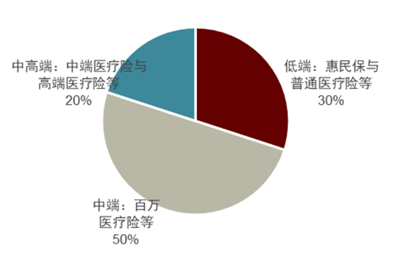
Core Insights - The health insurance market, particularly the million medical insurance, is transitioning from rapid growth to a more competitive and saturated environment, with premium growth slowing significantly [2][4][5] - The million medical insurance, once a growth driver, is now facing challenges such as homogenization, competition from inclusive insurance products, and evolving consumer demands [1][4][5] - A new wave of product iterations is underway, focusing on differentiation and service enhancement to meet consumer needs and adapt to regulatory changes [6][7][10] Market Trends - As of November 2025, the total premium for commercial health insurance reached 943.9 billion yuan, with a year-on-year growth of only 2.39%, indicating a slowdown compared to previous years [2][4] - The commercial medical insurance sector is expected to surpass critical illness insurance for the first time in 2024, with approximately half of its market share attributed to million medical insurance [2][4] Competitive Landscape - The industry is experiencing intense competition characterized by product similarity, with many offerings featuring similar coverage limits and deductibles, leading to a cycle of price competition and service enhancement [4][5] - The mismatch between supply and demand is evident, as current offerings primarily cover standard health insurance needs, leaving gaps in high-end medical services and coverage for non-standard health individuals [4][5][9] Consumer Demand - There is a growing consumer demand for services related to post-operative recovery, chronic disease management, and overall healthcare experience, which contrasts sharply with the current supply of similar insurance products [5][6] - The need for differentiated products that address long-tail demands is becoming increasingly critical as consumers seek more comprehensive health solutions [5][12] Product Innovation - Major insurance companies are launching updated versions of their million medical insurance products, focusing on customer-centric features and expanding coverage to include outpatient medications and high-value drugs [6][7][10] - The integration of rehabilitation costs into core coverage is emerging as a significant trend, reflecting a shift towards addressing long-term healthcare needs [8][9] Future Directions - The future of million medical insurance is expected to focus on three main innovation lines: extending coverage beyond traditional medical scenarios, enhancing service models through digital health platforms, and implementing personalized insurance solutions based on individual health data [13] - The industry is encouraged to find its position within the multi-tiered healthcare system, ensuring effective integration with basic medical insurance and critical illness insurance to provide tangible value to consumers [12][13]
重磅新规落地!账户医疗险、分红健康险来了
第一财经· 2025-09-30 15:53
Core Viewpoint - The article discusses the significant role of health insurance in China's national health security system by 2030, as outlined in the recent guidelines issued by the Financial Regulatory Bureau. It emphasizes the need for innovation and diversification in health insurance products to meet the growing demand for health protection among the population [3][5][6]. Group 1: Development Goals and Innovations - By 2030, health insurance is expected to play a more crucial role in the national health security system, with a multi-layered market structure that meets diverse needs across the population and lifecycle [5][6]. - The guidelines introduce innovative concepts such as account-based medical insurance and dividend health insurance, which expand the business forms and scope of commercial health insurance [6][7]. - The guidelines support the development of personal account-based long-term medical insurance, which is a model seen in countries with advanced health insurance systems [7][8]. Group 2: Regulatory Changes and Market Dynamics - The guidelines allow for an increase in the cost-sharing ratio of health management in health insurance products, which previously had a cap of 20%, enabling health insurance companies to enhance their service offerings [8][9]. - The guidelines encourage collaboration between health insurance companies and pharmaceutical/device firms to explore innovative payment methods for new drugs and technologies, thereby integrating health insurance with the medical and pharmaceutical sectors [9][10]. Group 3: Addressing High-Cost Treatments - The article highlights the role of commercial health insurance in providing coverage for high-cost treatments, such as CAR-T therapy, which is not yet included in the national health insurance directory [10][11]. - The guidelines aim to improve the multi-payment ecosystem, facilitating access to advanced medical technologies for patients [11][12]. Group 4: Future Directions - The Financial Regulatory Bureau plans to enhance the regulatory environment for health insurance, focusing on the development of floating yield health insurance and ensuring compliance with the new guidelines [11].
重磅新规落地!账户医疗险、分红健康险来了
Di Yi Cai Jing Zi Xun· 2025-09-30 14:59
Core Viewpoint - The "Guiding Opinions on Promoting the High-Quality Development of Health Insurance" released by the Financial Regulatory Bureau emphasizes the significant role of health insurance in the national health security system by 2030, outlining development goals and innovative points for commercial health insurance [1][2]. Group 1: Development Goals and Market Structure - By 2030, a multi-level health insurance market structure will be established, with coordinated development of group and individual health insurance to meet diverse needs across the population and lifecycle [2]. - The health insurance regulatory system will be more robust, reflecting improved regulatory effectiveness [2]. Group 2: Challenges and Opportunities - Current challenges in the health insurance sector include product homogeneity, insufficient operational capacity, and inadequate collaboration with the medical and pharmaceutical sectors, which hinder service improvement [2]. - Despite these challenges, there is a consensus that commercial health insurance has substantial growth potential in the medium to long term, with innovation being a key driver for high-quality development [2]. Group 3: Innovations in Health Insurance Products - The introduction of personal account-based long-term medical insurance and dividend health insurance are highlighted as significant innovations in the sector [3][4]. - Personal account medical insurance will allow for investment returns and can be used for health management and medical expenses, aligning with the trend of integrating health insurance with health management [3]. - Dividend health insurance will expand the sources of returns beyond fixed income, incorporating factors like disease incidence rates, thus enhancing the product's appeal [4]. Group 4: Integration with Innovative Medical Solutions - The Opinions stress the importance of integrating new medical technologies, drugs, and devices into health insurance coverage, promoting collaboration with pharmaceutical companies for innovative payment methods [5]. - The commercial health insurance sector is increasingly recognized for its role in supporting the payment for innovative drugs, with a projected sales figure of 162 billion yuan for innovative drugs in 2024, where commercial health insurance is expected to contribute approximately 12.4 billion yuan [5][6]. Group 5: Policy Support and Future Directions - The Opinions provide favorable policies for various health insurance products, including long-term care insurance and critical illness insurance, aiming to enhance consumer protection and service offerings [6]. - Future efforts will focus on creating a conducive policy environment for health insurance development, expediting the introduction of floating yield health insurance, and strengthening regulatory oversight to protect consumer rights [6].