Semiconductors

Search documents
NVIDIA stock at risk as technicals and fundamentals collide
Invezz· 2026-03-24 13:19
Core Viewpoint - NVIDIA stock is facing significant risks as both technical indicators and fundamental performance show conflicting signals, with a notable decline in stock price this year [1][5]. Technical Analysis - The stock price has decreased from an all-time high of $212 to $175, forming a head-and-shoulders pattern, indicating a potential bearish reversal [2][5]. - Currently, the stock is near the neckline of this pattern and has fallen below the 23.6% Fibonacci Retracement level at $182, suggesting further downside potential [3]. - A strong bearish breakdown is anticipated, with projections indicating a possible drop to the 38.2% Fibonacci Retracement level at $164, and potentially to $150 if it falls below that level [3][5]. Fundamental Performance - Despite the bearish technical outlook, NVIDIA's fundamentals remain strong, with a reported revenue increase of 72% to $67 billion [4]. - The company is projected to generate over $1 trillion in revenue by 2027, driven by new chip technologies [6]. - NVIDIA is considered undervalued, trading at 20x forward earnings compared to the S&P 500 average of 23, and has a forward PEG ratio of 0.50, lower than the sector median of 1.24 [8]. Market Context - Major technology companies in the U.S. are expected to spend over $650 billion in capital expenditures this year, with a significant portion allocated to NVIDIA chips [7]. - A potential decision by the U.S. to allow NVIDIA chip sales to China could further enhance demand for its products [8]. - The company's Rule of 40 metric is strong, with a profit margin of 53% and forward revenue growth exceeding 60%, resulting in a combined metric of 113% [9].


NVIDIA's GTC Developments Were Far Bigger Than the Market Realizes
247Wallst· 2026-03-24 13:16
Core Viewpoint - NVIDIA's recent developments, including a $1 trillion backlog and integration of Groq's technology, are significant but have not yet positively impacted its stock price, which remains in a consolidation phase between $175 and $190 despite a trailing P/E ratio below 22.0 times [1][12]. Company Developments - NVIDIA announced a substantial backlog of $1 trillion related to its Blackwell and Rubin projects, indicating strong demand and future revenue potential [1]. - The integration of Groq's language processing unit technology into NVIDIA's Vera Rubin platform aims to enhance its competitive advantage in inference computing [1][13]. - The company showcased various innovations during its GTC conference, suggesting ongoing advancements in technology that could benefit its market position [4][11]. Market Reaction - Despite positive developments, the stock has not reacted strongly, indicating a potential disconnect between the company's growth narrative and investor sentiment [2][5]. - The broader mega-cap tech sector, including NVIDIA, appears to be in a phase of low investor engagement, which may present opportunities for future growth as the market stabilizes [6][8]. Investment Implications - The current P/E multiple below 22.0 times raises questions about whether NVIDIA is undervalued or if there are risks ahead that could impact future performance [12]. - Analysts suggest that the growth narrative for NVIDIA has improved significantly compared to previous periods, yet the stock remains stagnant, indicating a potential mispricing in the market [11][12].
NVIDIA’s GTC Developments Were Far Bigger Than the Market Realizes
Yahoo Finance· 2026-03-24 13:16
Core Viewpoint - The current state of mega-cap tech and AI stocks, particularly Nvidia, suggests a period of consolidation despite significant technological advancements and product announcements, indicating potential investment opportunities as the market may be undervaluing growth narratives [1][4][6]. Company Developments - Nvidia has announced a substantial $1 trillion backlog related to its Blackwell and Rubin projects, alongside plans to integrate Groq's language processing unit technology into its Vera Rubin platform, which aims to enhance its competitive edge in inference computing [6][11]. - Despite these major announcements, Nvidia's stock remains in a consolidation phase within the $175-190 range, with a trailing price-to-earnings (P/E) multiple compressed below 22.0 times, raising questions about whether the stock is undervalued or facing potential declines [4][10]. Market Sentiment - The broader mega-cap tech sector appears to be in a dormant state, with even significant positive developments failing to elicit strong market reactions, suggesting that investor sentiment may be cautious or overly pessimistic [3][8]. - There is a belief that the growth narrative surrounding Nvidia has become more compelling compared to previous months, yet the stock's performance remains stagnant, indicating a disconnect between technological advancements and market valuation [9][12].
2 AI Infrastructure Stocks That are Looking Too Cheap
247Wallst· 2026-03-24 13:11
Core Viewpoint - The article highlights two AI infrastructure stocks, Oracle and Amazon, which are currently undervalued and present significant upside potential due to their heavy investments in AI infrastructure [1][2]. Group 1: Oracle - Oracle is trading at a trailing P/E of 27.7, which is considered depressed, while it ramps up spending on AI infrastructure and deploys AI agents [1][9]. - The company is perceived to be out of favor due to high capital expenditures and a challenging environment for software stocks, yet it is believed to have underestimated upside potential [5][9]. - Oracle is actively transitioning its data centers to next-generation technologies, which may mitigate fears of outdated infrastructure [8][9]. Group 2: Amazon - Amazon is trading at a trailing P/E of 29.3, close to its historical lows, despite significant planned investments in Nvidia chips through 2027 [1][11]. - The company is leveraging its competitive advantages in physical AI, including warehouse robots and autonomous vehicles, positioning itself as a leader in AI infrastructure [10][11]. - Amazon's substantial spending on AI is expected to yield better returns once market conditions stabilize, making it an attractive investment opportunity [11][12].



SemiAnalysis GTC深度解读:三款新系统背后,英伟达正在重新定义AI基础设施的边界
Hua Er Jie Jian Wen· 2026-03-24 13:01
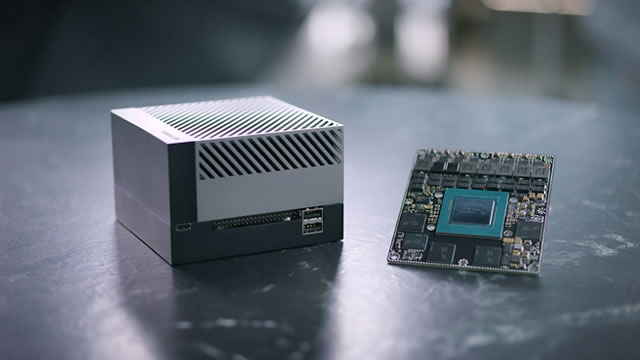
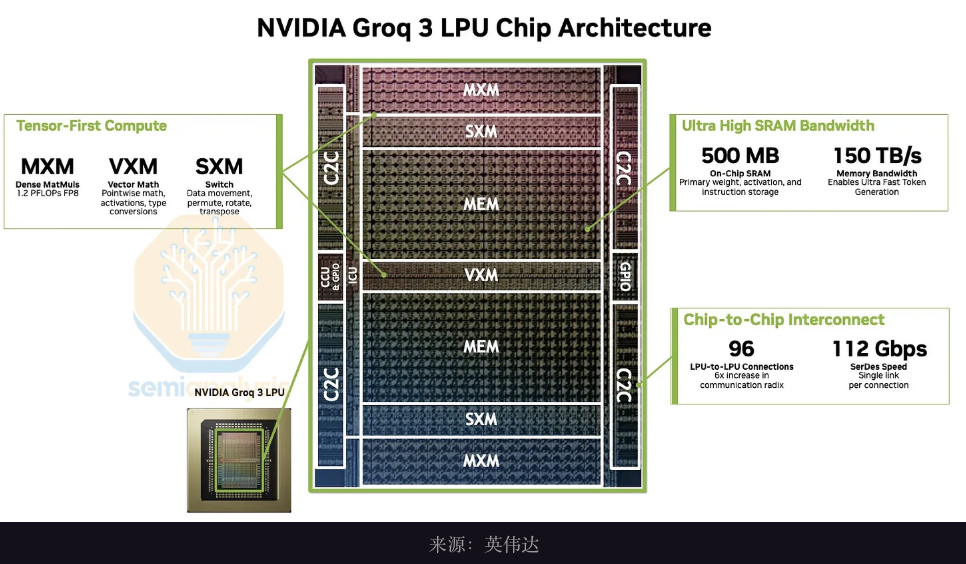
Core Insights - Nvidia is transitioning from being solely a GPU supplier to a full-stack AI infrastructure platform provider, expanding its reach into inference optimization, CPU density, and storage orchestration, which will significantly impact the AI hardware supply chain competition [2][16] Group 1: New Product Launches - At the GTC 2026 conference, Nvidia introduced three new systems: Groq LPX inference rack, Vera ETL256 CPU rack, and STX storage reference architecture, marking a comprehensive extension of its product offerings beyond GPU computing [1] - The Groq LPX system, Nvidia's first product following a $20 billion acquisition of Groq's intellectual property and core team, integrates Groq's LP30 chip with Nvidia GPUs and introduces the Attention FFN Disaggregation (AFD) technology to reduce decoding latency in high-interaction inference scenarios [1][3] - The Vera ETL256 system incorporates 256 CPUs into a single liquid-cooled rack, addressing the CPU supply bottleneck that has become more pronounced with the expansion of AI workloads [1][11] - The STX storage reference architecture extends Nvidia's control from computing and networking layers to storage infrastructure, establishing a complete layout for storage solutions [1][14] Group 2: Technical Specifications and Innovations - The LP30 chip, built on Samsung's SF4 process, features 500MB on-chip SRAM and delivers 1.2 PFLOPS of performance at FP8 precision, representing a significant improvement over Groq's first-generation LPU [3] - AFD technology separates attention and feedforward network computations across different hardware, allowing GPUs to handle attention calculations while LPUs manage FFN computations, optimizing system performance and reducing latency [7] - The LPX rack architecture consists of 32 LPU compute trays and 2 Spectrum-X switches, designed for high bandwidth and low latency, with a total bandwidth of approximately 640TB/s [9] Group 3: Market Implications - The introduction of these systems signals a strategic shift for Nvidia, indicating its intent to dominate not only the GPU market but also the broader AI infrastructure landscape, potentially leading to increased market share concentration within the AI hardware supply chain [2][16] - The Vera ETL256's design aims to eliminate the need for optical transceivers by ensuring all connections within the rack are copper-cable reachable, thus reducing costs while maintaining high performance [12] - Nvidia's collaboration with major storage vendors to support the STX standard reinforces its influence in establishing industry standards and enhancing its competitive position in the storage infrastructure market [14]
Arteris Network-on-Chip IP Deployed in Renesas’ Next-Gen R-Car Automotive Technology
Globenewswire· 2026-03-24 13:00
Core Insights - Arteris, Inc. has announced that its FlexNoC interconnect IP has been licensed by Renesas for the R-Car Gen 5 SoC series, aimed at enhancing performance and energy efficiency in automated vehicles [1][4] - The R-Car X5H SoC, currently in sampling, features AI acceleration of up to 400 trillion operations per second (TOPS) and utilizes chiplet extensions to enhance AI performance significantly [2] - The X5H SoC, developed using TSMC's 3 nm automotive process, achieves a 30% to 35% reduction in power consumption compared to previous generations, which lowers system costs and extends vehicle driving range while meeting ISO 26262 ASIL D safety requirements [3] Company and Industry Developments - Arteris provides advanced interconnect technology that is essential for the development of software-defined vehicles, enabling performance, power reductions, and functional safety for next-generation ADAS SoCs [4] - The collaboration between Arteris and Renesas focuses on enhancing connectivity and enabling high-performance, energy-efficient data movement for automotive innovations [4] - The FlexNoC interconnect IP is designed to improve SoC design success by minimizing development time, enhancing performance, and ensuring functional safety for critical applications like autonomous driving [4]


Jensen Huang Explains His Extreme Co-Design Strategy— And Why One-On-One Meetings Don't Work
Benzinga· 2026-03-24 12:58
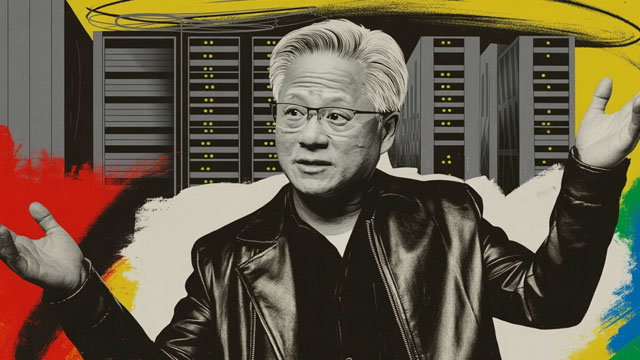
Core Concept - NVIDIA's CEO Jensen Huang introduced the idea of "extreme co-design," which is a comprehensive method for optimizing the entire software stack, including architectures, chips, systems, system software, algorithms, and applications [1]. Group 1: Workload Distribution and Architecture - Huang highlighted the significance of distributing workloads to fully leverage the advantages of increasing computer numbers [2]. - He stressed that a company's architecture and organization should align with its intended output [2]. Group 2: Leadership Style - At NVIDIA, Huang's leadership avoids one-on-one meetings with his 60 direct reports, promoting collaborative problem-solving across various components such as memory, CPUs, GPUs, optics, cooling, and networking [3]. - Huang stated that the team collectively addresses problems, emphasizing a collaborative approach [3]. Group 3: Comparison with Other Leaders - Huang's leadership style is similar to that of Mark Zuckerberg at Meta Platforms, both preferring small teams and self-management without regular one-on-one meetings [4]. - Zuckerberg manages a small team of 25-30 people and advocates for a non-hierarchical structure [4]. Group 4: AI in Management - The trend of using AI in management is on the rise, with Zuckerberg reportedly developing a personal AI agent to assist with executive responsibilities, indicating a shift towards AI-assisted leadership [5].

Rebound By Crude Oil Prices May Lead To Pullback On Wall Street
RTTNews· 2026-03-24 12:51
Market Overview - Major U.S. index futures indicate a lower open on Tuesday, with stocks expected to decline after a strong upward move in the previous session [1] - The downward momentum on Wall Street coincides with a rebound in crude oil prices, as Brent crude futures have risen above $100 a barrel [1] Oil Market Dynamics - Brent crude futures experienced a nearly 11% drop during Monday's trading following President Trump's claims of productive talks between the U.S. and Iran to resolve Middle Eastern conflicts [2] - Oil prices are rebounding as hostilities between Israel and Iran continue, with Iran denying any negotiations with the U.S. [2][11] Geopolitical Tensions - The conflict has entered its 25th day with no signs of de-escalation, and Saudi Arabia and the UAE are reportedly considering joining the fight against Iran [4][12] - Trump's postponement of military strikes on Iran's energy infrastructure for five days is seen as an attempt to lower energy prices and manage military plans [6][11] Stock Market Performance - Major U.S. stock indices posted notable gains, with the Dow rising by 631 points (1.4%) to 46,208.47, the Nasdaq increasing by 299 points (1.4%) to 21,946.76, and the S&P 500 climbing by 74 points (1.2%) to 6,581.00 [5] - Airline stocks performed well, with the NYSE Arca Airline Index increasing by 4.2% [8] Commodity and Currency Markets - Crude oil futures surged by $3.52 to $91.65 a barrel after a significant drop the previous day [10] - The U.S. dollar is trading at 158.82 yen, up from 158.43 yen, and against the euro, it is at $1.1583 compared to $1.1612 [10] Asian Market Reactions - Asian stocks followed Wall Street's upward trend, with China's Shanghai Composite Index rising by 1.8% and Hong Kong's Hang Seng Index increasing by 2.8% [13] - Japanese markets rebounded, with the Nikkei 225 Index jumping by 1.4% to 52,252.28 [14] European Market Sentiment - European stocks are struggling for direction amid uncertainty, despite Trump's decision to postpone strikes on Iran [17] - The Eurozone private sector growth slowed sharply, with the S&P Global flash euro zone Composite Purchasing Managers' Index falling to 50.5 from 51.9 [19]


Marvell Technology (MRVL) Traded Lower Despite Solid Execution
Yahoo Finance· 2026-03-24 12:49
Group 1 - Brown Advisory Mid-Cap Growth Strategy underperformed the Russell Midcap® Growth Index in Q4 2025 due to stock selection, particularly missing out on Palantir Technologies Inc (PLTR) [1] - The Strategy aims for solid risk-adjusted returns by investing in high-quality compounders with market capitalizations between $2 billion and $50 billion [1] - Marvell Technology, Inc. (NASDAQ:MRVL) is highlighted as a key holding, with a market capitalization of $78.841 billion and a one-month return of 15.01% [2] Group 2 - Marvell Technology, Inc. experienced a decline in 2025 despite strong execution on AI programs, with concerns about the scale of deployments at Amazon and Microsoft [3] - Expectations for Marvell Technology's growth are optimistic for 2026-2027, with acceleration anticipated in the second half of 2026 [3] - Marvell Technology is not among the 40 Most Popular Stocks Among Hedge Funds heading into 2026, although hedge fund holdings increased from 77 to 85 [4]

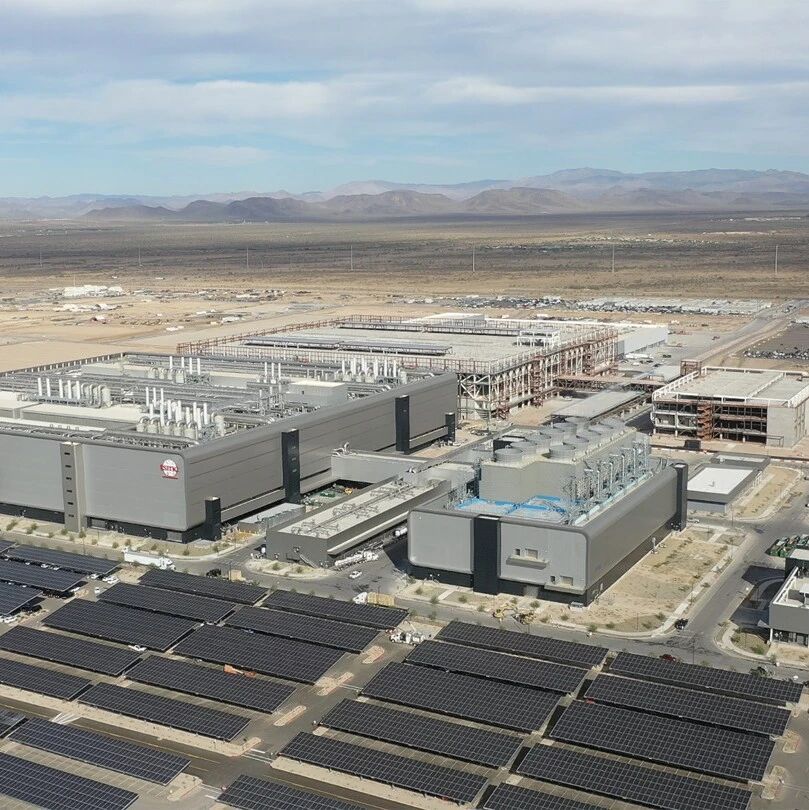
台积电海外建厂加速!
国芯网· 2026-03-24 12:43
Group 1 - The core viewpoint of the article emphasizes the rapid development of TSMC's overseas wafer fabrication plants, particularly in the U.S., where construction timelines have been significantly reduced from 6 quarters to 4-5 quarters [2] - TSMC's Arizona facility (Fab21 P2) is expected to achieve 3nm mass production by the second half of 2027, with the subsequent Fab21 P3 also anticipated to enter the main system installation phase around the same time [4] - TSMC is concurrently expanding its advanced process capacity in Taiwan, with the third phase (P3) of the 2nm and below production bases at Hsinchu Fab20 and Kaohsiung Fab22 set to begin equipment installation in Q3 2026 [4]