Mobile Phones

Search documents
智谱开源、豆包遇阻,AI手机竞赛白热化
2 1 Shi Ji Jing Ji Bao Dao· 2025-12-10 13:33
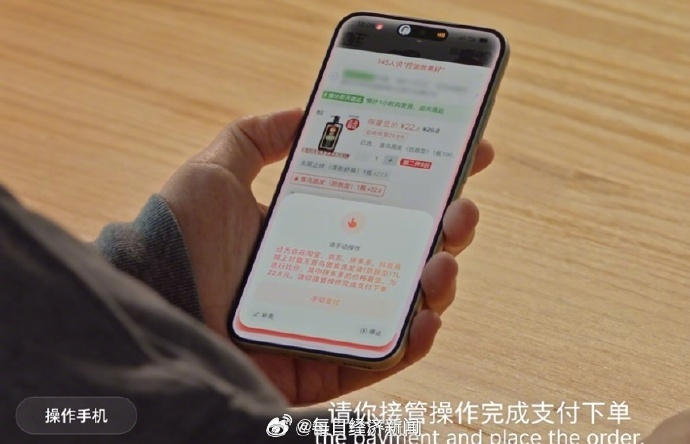
Core Viewpoint - The launch of AutoGLM by Zhipu Huazhang, claimed to be the world's first AI Agent with "Phone Use" capabilities, aims to create a public foundation for the industry while ensuring data privacy remains with users [1][4]. Group 1: Product Features and Capabilities - AutoGLM has been demonstrated to perform tasks such as sending mobile red packets and placing food orders, and it supports over 50 high-frequency applications including WeChat, Taobao, and Douyin [4]. - The open-source nature of AutoGLM is intended to transform its capabilities into a shared resource for the industry, allowing for collaborative development [4][5]. - The trend towards smaller, more efficient models is enabling mobile manufacturers to enhance on-device AI capabilities, which is crucial for data security [5]. Group 2: Industry Challenges - The mobile industry faces significant challenges regarding user privacy and data permissions, with existing standards failing to adapt to the needs of AI-driven automation [6][7]. - There is a lack of clear authorization standards for cross-application automation, which complicates the implementation of AI functionalities that users desire [6][7]. - The current competitive landscape among hardware manufacturers, app developers, and large model providers is creating barriers to collaboration and data sharing [7][9]. Group 3: Industry Responses and Future Directions - Companies like ZTE and Doubao are responding to the challenges by emphasizing openness and collaboration to enhance user experience [8]. - The industry is witnessing a trend where software companies are entering hardware markets, similar to historical moves by Microsoft and Google, indicating a shift towards integrated solutions [8]. - Despite the irreversible trend towards AI mobile agents, the industry must focus on lowering usage barriers and addressing real-world problems while ensuring privacy [9].


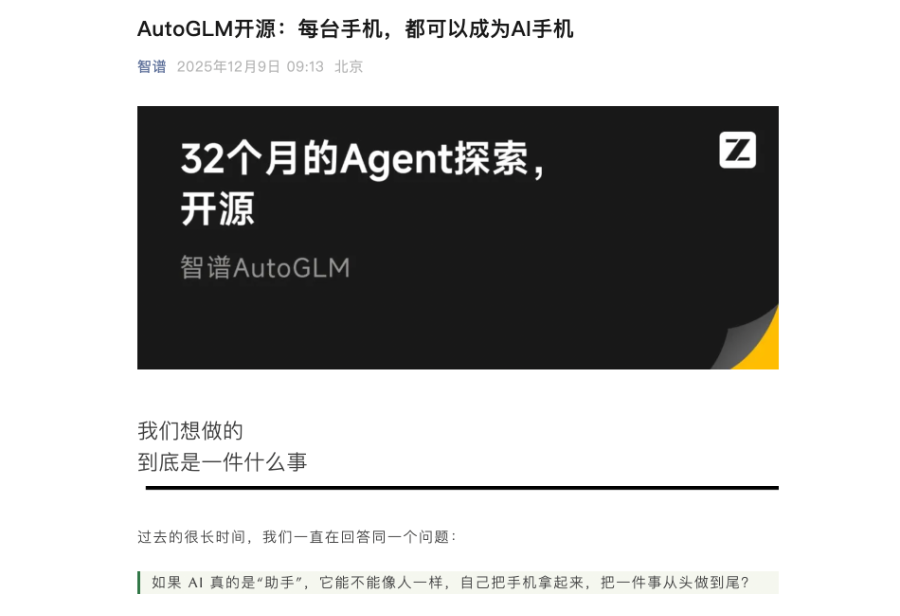
努比亚倪飞回应“豆包手机”争议:AI手机发展势不可逆
Nan Fang Du Shi Bao· 2025-12-10 09:41
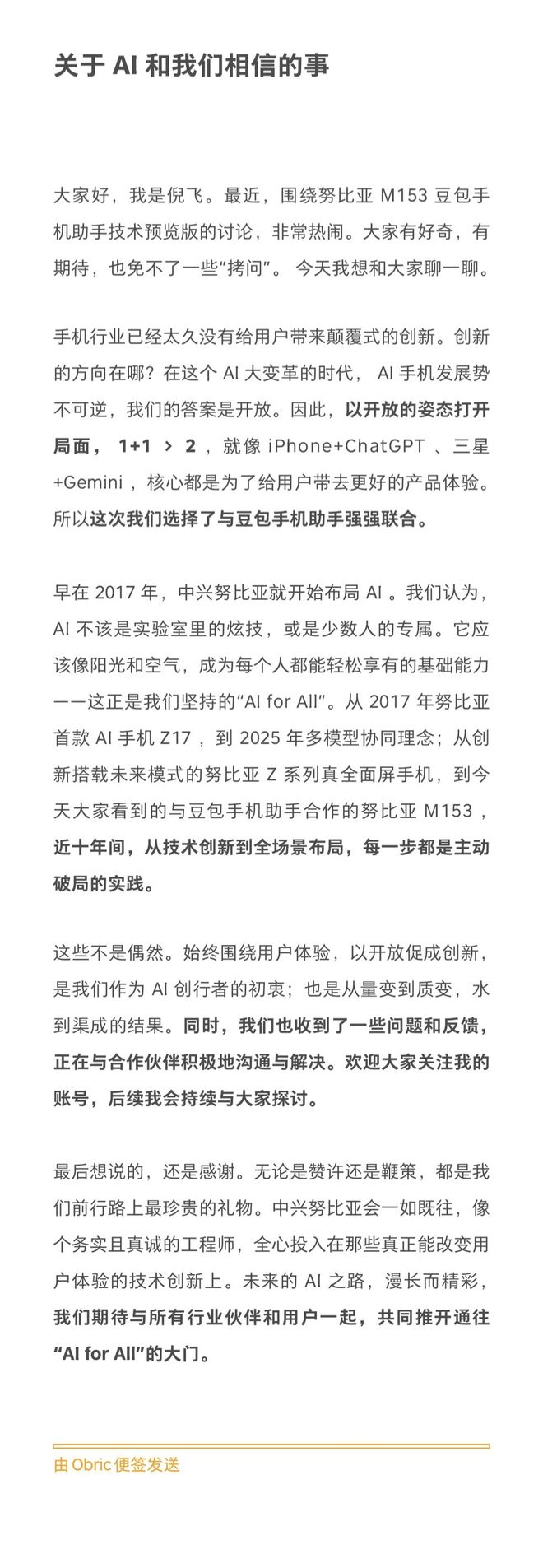
"大家有好奇,有期待,也免不了一些'拷问'。"12月9日,倪飞在回应中并未回避目前的困境。他表 示,手机行业已许久未出现颠覆式创新,在AI大变革时代,努比亚的选择是"开放"。 对于外界关于努比亚为何选择与豆包深度绑定的疑问,倪飞将其以"iPhone+ChatGPT"与"三星 +Gemini"的模式举例。他强调,核心目的是为了实现"1+1>2",给用户带去更好的体验。他坦言,目前 也收到了一些问题和反馈,"正在与合作伙伴积极地沟通与解决"。 从发布时的"一机难求"炒至万元,到遭遇微信等App"堵截",字节跳动豆包大模型与中兴努比亚联合发 布的努比亚Z60 Ultra领先版(工程机型号Nubia M153)在短短十天内站在了舆论的风口。 12月9日,针对近期行业对于努比亚M153技术预览版兼容性与安全性的讨论,中兴通讯终端事业部总 裁、努比亚技术有限公司总裁倪飞发文回应,表示收到了问题反馈,正与合作伙伴沟通解决。抖音集团 副总裁李亮随后也转发,称"AI带来的变革是真实存在的"。 倪飞、李亮回应:AI手机发展势不可逆 随后,抖音集团副总裁李亮转发了该微博,并配文称:"豆包和中兴的探索是一个开始,不论这次是不 是会成 ...
豆包手机遭「五大派」围剿,实测23款主流App,哪些「使不动」?
Xin Lang Ke Ji· 2025-12-10 07:25
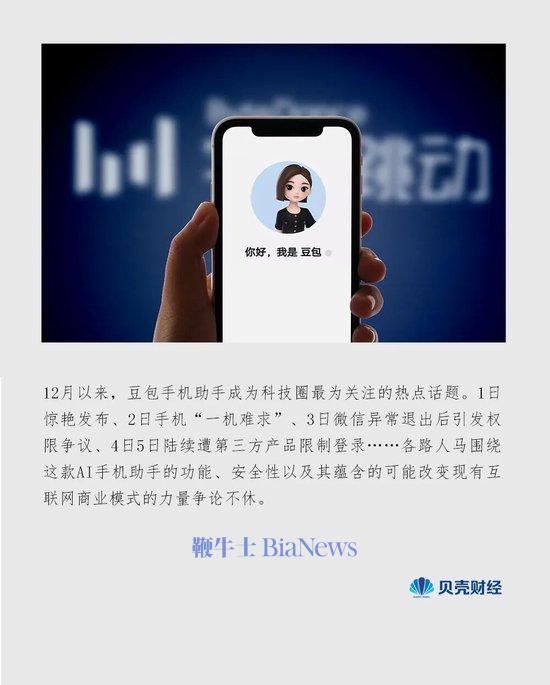
Core Insights - The launch of Doubao mobile assistant has sparked significant attention in the tech industry, with discussions surrounding its functionality, security, and potential to disrupt existing internet business models [3][4][6] - Following initial excitement, the assistant faced restrictions from major apps, limiting its capabilities and raising concerns about its usability [4][6][19] - Despite challenges, the assistant demonstrated practical AI capabilities, effectively handling tasks and user preferences [8][11][19] App Functionality and Restrictions - Out of 23 tested apps, 8 faced restrictions, with 15 remaining fully operational through AI commands [3][4] - Major apps like WeChat, Alipay, and Meituan were either completely inaccessible or limited in functionality, while others like QQ and JD remained unaffected [4][6] - The restrictions stemmed from concerns over security and compliance with app-specific risk control mechanisms [4][24] AI Assistant Experience - The Doubao mobile assistant showcased a high level of adaptability, successfully navigating various tasks and user requests [8][11][19] - It effectively closed ads and navigated app interfaces, providing a seamless user experience [8][11] - The assistant's ability to handle unexpected challenges and execute complex tasks demonstrated its advanced capabilities [13][19] Technical Aspects - The assistant's smooth operation is attributed to its system-level permissions and advanced model capabilities, allowing it to perform tasks in the background [21][22] - The use of INJECT_EVENTS permission enables the assistant to simulate user actions without interrupting the user experience [21][24] - The underlying technology is based on a proprietary model optimized for mobile use, enhancing its performance [22][24] Industry Implications - The emergence of AI assistants like Doubao poses a threat to traditional app business models, potentially undermining their advertising revenue [26][27] - Major apps are likely to resist the integration of such assistants due to concerns over user engagement and revenue loss [27][28] - The future of AI assistants will depend on establishing a cooperative ecosystem that balances user needs with app developers' interests [28]
豆包手机被炒至16000元,技术人员称可提供豆包手机解封教程
Xin Lang Cai Jing· 2025-12-10 06:51
Core Insights - The launch of Doubao phone has generated significant market interest, leading to a surge in its resale price on second-hand platforms, reaching 16,000 yuan, an increase of over 23% from the previous high of approximately 12,999 yuan [1][2][3] - The official purchase qualification codes (F codes) for Doubao phone have largely disappeared from second-hand platforms, indicating a shift in purchasing demand towards second-hand transactions [1][2] - Despite the release of a statement regarding adjustments to AI operation capabilities, a gray market for unlocking or circumventing restrictions on Doubao phones has emerged, with technical personnel offering tutorials for rooting Android devices [2][3] Market Dynamics - The resale price of Doubao phone has escalated from a range of 500-1,000 yuan for F codes to 16,000 yuan, reflecting a strong demand and speculative trading behavior in the market [1] - The inability to purchase Doubao phone through official channels has redirected all purchasing needs to the second-hand market, further driving up prices [1][2] - Technical experts indicate that rooting the device may not guarantee full functionality of the Doubao AI assistant due to high compatibility requirements, highlighting potential limitations in the gray market solutions [2][3]
Battle of the TriFolds: Samsung Galaxy Z TriFold vs. Huawei Mate XT
CNET· 2025-12-10 04:17
No content yet! ...
智谱开源AutoGLM,AI手机的 “全民共创” 时代,产业链迎来放量契机
财联社· 2025-12-10 01:25
昨日, AI大模型企业智谱开源其能操作手机的 AI Agent模型AutoGLM。开源链接在此: https://github.com/zai-org/Open-AutoGLM 此次开源的是一套 "拿来就用"的完整能力包,包括训练好的核心AI Agent模型、 Phone Use 能力框架与工具链、覆盖淘宝、抖音、美团 等 超过 50个高频中文App 。 市场对此反应迅速。业内调研数据显示,开源消息公布后, AI手机概念在二级市场短线拉 升,福蓉科技涨停,胜宏科技、道明光学等个股纷纷走高;思泉新材、鹏鼎控股等产业链配套 企业也纷纷跟涨 , 整体形成板块普涨的活跃态势,凸显市场对 AI手机产业链开放发展的强烈 看好。 开发者实测发现, AutoGLM通过一整套Phone Use能力框架,能在真机上稳定 准确 完成一 系列操作,诸如发送微信红包、外卖点单、机票预订等。 安卓生态虽以开源立足,却深陷 "碎片化"泥潭——全球超2万种设备型号、各厂商定制化系统 导致适配成本暴涨,开发者被迫将80%精力耗费在兼容工作上。更关键的是,安卓缺乏统一 的AI Agent底座,跨APP协同能力薄弱。 AutoGLM的开源恰好提供 ...
努比亚倪飞回应 “豆包手机争议”
Shen Zhen Shang Bao· 2025-12-09 23:04
Core Insights - The collaboration between Doubao and Nubia, a brand under ZTE, has led to the launch of the Doubao phone, Nubia M153, which has sparked significant discussion due to some mainstream apps rejecting its login [1][2] - The Doubao phone assistant technology was officially previewed on December 1, 2025, and the Nubia M153, priced at 3499 yuan, has seen a strong market response, with prices even reaching 10,000 yuan in some cases [1] - The Doubao phone assistant, integrated deeply into the phone's operating system, can perform complex cross-application operations via voice commands, but has faced issues with certain apps like WeChat and various banking applications [1][2] Group 1 - Nubia's president, Ni Fei, emphasized the irreversible trend of AI in mobile phone development and stated that the company is addressing the issues raised by users in collaboration with partners [1] - Doubao announced adjustments to the AI phone assistant's capabilities, particularly limiting its use in financial applications to ensure user security, reflecting a cautious approach to technology deployment [2] - Ni Fei highlighted the need for disruptive innovation in the mobile industry, comparing the collaboration to successful integrations like iPhone with ChatGPT, aiming to enhance user experience [2] Group 2 - Doubao's official WeChat account has responded multiple times regarding the AI assistant's capabilities and the adjustments made to ensure a stable and secure user experience [2] - The Doubao and Nubia partnership is seen as a starting point for exploring AI's potential in the mobile industry, with acknowledgment from Douyin Group's vice president about the real demand for AI-driven changes [2]
中兴通讯倪飞:AI手机发展趋势不可逆
Bei Jing Shang Bao· 2025-12-09 12:52
Core Viewpoint - The article discusses the recent developments and strategic direction of Nubia Technology in the AI smartphone sector, emphasizing the importance of innovation and user experience in the industry [1] Group 1: Company Strategy - Nubia's president, Ni Fei, highlighted the lack of disruptive innovation in the smartphone industry and stated that the trend towards AI smartphones is irreversible [1] - The collaboration with Doubao Mobile Assistant is likened to partnerships seen with iPhone+ChatGPT and Samsung+Gemini, aiming to enhance user experience [1] - Nubia has been focusing on AI since 2017, adhering to the "AI for All" philosophy, which aims to make AI accessible to everyone rather than a select few [1] Group 2: Product Development - The journey of Nubia's AI development includes the launch of the first AI smartphone, Z17, and the multi-model collaboration concept set for 2025 [1] - The recent M153 model, developed in partnership with Doubao, represents Nubia's ongoing commitment to proactive innovation [1] Group 3: User Engagement - Nubia is actively engaging with partners to address user feedback and is committed to ongoing discussions with the public regarding future developments [1] - The company expresses gratitude towards users for their support and emphasizes its focus on technological innovations that enhance user experience [1]
2026年,AI手机会出现iPhone时刻吗
经济观察报· 2025-12-09 10:21
理想状态下的AI手机,应该是底层硬件、操作系统与上层应用的无缝融合,带给用户如人类般思考 和行动的体验。但现实中,商业利益的互斥正在构筑更高的数字壁垒,这无疑割裂了用户体验。 未来的AI手机,到底会诞生在硅谷的聚光灯下,还是会孕育在 长三角或珠三角的实验室里?谁也不知道,但现在一定是创新 迸发的关键时刻。要实现这一愿景,需要国内软件大厂的进 取、国产硬件厂商的突围,更需要各方一起开放竞争、协同合 作。 作者: 陈白 封图:图虫创意 对中国手机厂商而言,即将到来的2026年,或许将成为智能手机普及以来最为艰难,却也最具决 定性的一年。 12月1日,字节跳动旗下的豆包宣布上线手机助手,试图重塑人机交互逻辑。这被视为软件厂商向 AI(人工智能)手机领域进军。AI手机是继智能机之后的又一次代际革命,这已是市场共识。但在 AI概念尚未完全落地之时,软硬件厂商围绕"入口"的争夺战已经提前打响。 AI的"iPhone时刻"未来会出现在软件公司还是在硬件厂商,现在谁也没有答案。 先来看硬件领域。在这个赛道上,中国手机厂商拥有不可忽视的比较优势。市场研究机构IDC数据 显示,2024年中国手机企业在全球的总出货量占比已超过半数 ...
中兴抖音回应豆包AI手机问题,称AI探索是未来
Mei Ri Jing Ji Xin Wen· 2025-12-09 06:35
Core Viewpoint - The collaboration between ZTE and Douyin on the Nubia M153 smartphone assistant has sparked discussions about the role of AI in the mobile industry, emphasizing that AI is a transformative force that addresses real user needs [1][4]. Group 1: Company Initiatives - ZTE's Nubia has been focusing on AI since 2017, aiming to make AI accessible to everyone, not just a select few [4]. - The partnership with Douyin is seen as a strategic move to enhance user experience through innovation, reflecting a commitment to open collaboration [4][5]. - The Nubia M153 smartphone is part of a broader strategy that includes the development of AI capabilities and a multi-model collaborative approach by 2025 [4]. Group 2: Industry Trends - The smartphone industry has not seen significant disruptive innovations for a long time, and the integration of AI is viewed as a necessary evolution [4]. - The collaboration is positioned as a response to the changing landscape of user expectations and technological advancements, with a focus on improving product experiences [4][5]. - The sentiment expressed by Douyin's executive highlights the belief that AI will play a crucial role in the future of technology and user engagement [1].