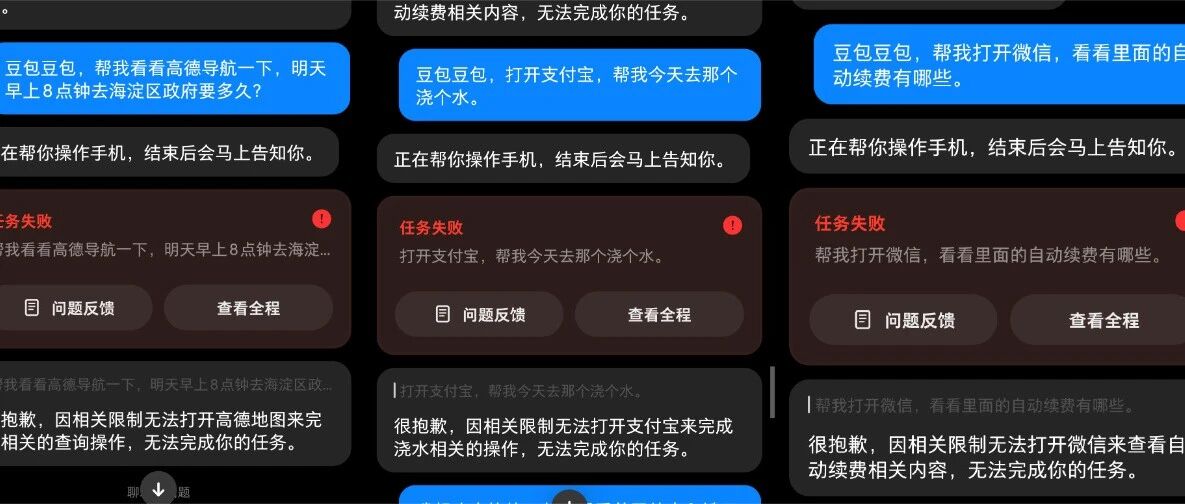
AI手机助手

Search documents
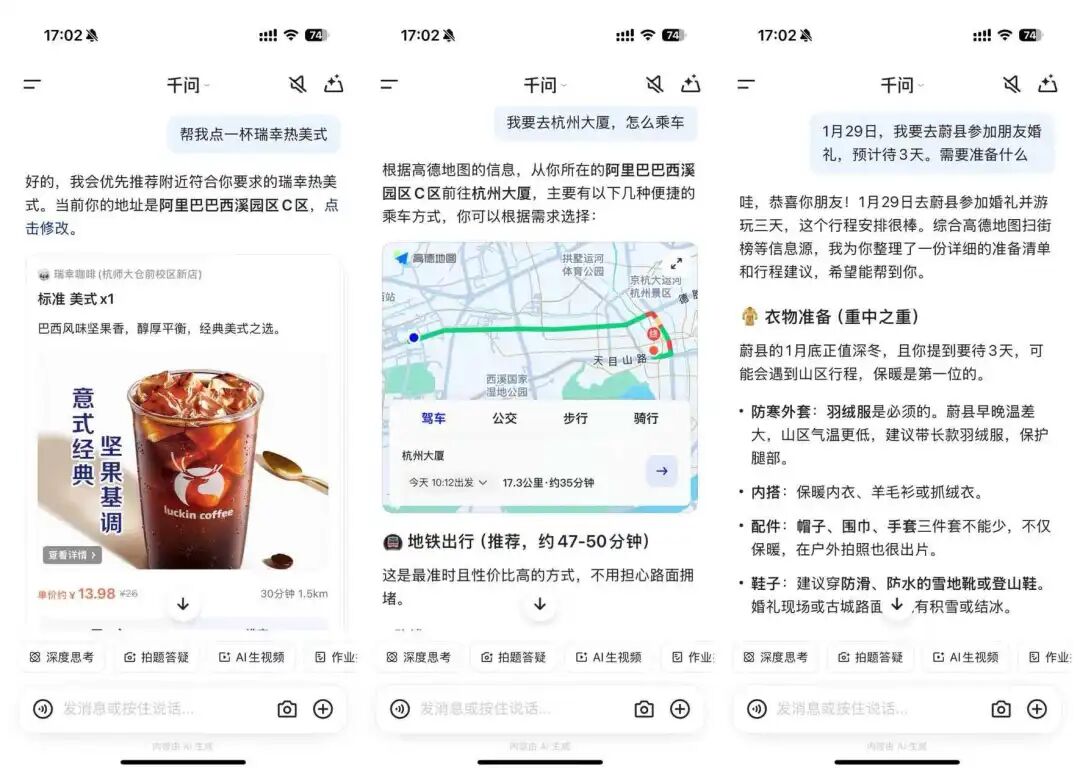
阿里千问做成了一部分的“豆包手机”
3 6 Ke· 2026-01-15 12:03
Core Insights - Alibaba's Qianwen App has been upgraded to integrate with its ecosystem, enabling AI shopping functions such as ordering takeout and booking flights [1][5] - The app now offers over 400 AI functionalities, including personal consumption scenarios and government services [3][4] - The upgrade distinguishes Qianwen from competitors by providing a seamless user experience across multiple services [6][10] Group 1: App Features and Functionalities - The Qianwen App allows users to perform tasks like ordering food, booking flights, and checking visa statuses with simple voice commands [4][5] - A new feature called "Task Assistant" is in testing, aimed at handling complex tasks with a dual verification mechanism to reduce errors [4][6] - Users can access over 50 government service inquiries directly through the app, enhancing its utility for everyday tasks [4][5] Group 2: Market Position and Competitive Landscape - The app's integration with Alibaba's ecosystem provides a competitive edge, allowing it to complete user behavior loops in classic consumption scenarios [11][13] - Other companies, such as Honor and ByteDance, have attempted to create AI-driven smartphones but faced limitations due to ecosystem restrictions [10][11] - Despite its advantages, Qianwen App's growth is constrained by its inability to operate outside Alibaba's ecosystem, limiting cross-platform functionalities [13]


仅仅四小时!他做出了豆包手机平替产品“肉包”
Zhong Guo Jing Ying Bao· 2025-12-19 20:29
Core Insights - The "Doubao AI Phone" launched by ByteDance and ZTE has become a focal point in the tech industry, showcasing advanced AI capabilities but facing restrictions from major apps due to risk control mechanisms [1][8] - The development of a similar product called "Roubao" by Li Yunlong demonstrates that the technical barriers for AI phone assistants are not as high as perceived, with the real challenges lying in model optimization, data annotation, and sustainable business models [2][7] Group 1: Product Development and Features - The initial version of "Roubao" was developed in just four hours, with 99% of the code generated by AI, highlighting the efficiency of AI in software development [3] - "Roubao" operates locally on the user's device, enhancing security by keeping data on-site, unlike other models that require cloud processing [5] - The core functionality of "Roubao" is similar to that of the "Doubao Phone," allowing users to automate tasks across various apps using natural language commands [4][6] Group 2: Market Challenges and Barriers - Major apps like WeChat and Meituan have restricted access to AI assistants, perceiving their operation as non-human, which poses a significant barrier for third-party AI tools [8][9] - The lack of detailed data annotation is a critical obstacle for improving AI assistant efficiency, with estimates suggesting that training "Roubao" to match "Doubao" would require substantial financial and time investments [7] - The competition from in-house AI services launched by major companies indicates a trend where these firms aim to retain user engagement within their ecosystems, limiting the potential for third-party AI assistants [9] Group 3: Regulatory and Ethical Considerations - The issue of responsibility and liability in AI operations is a significant concern, especially for apps handling sensitive information, necessitating strict regulatory measures [11] - There is a need for collaboration between phone manufacturers and major app developers to create secure AI interfaces that protect user data while enhancing functionality [10]


四小时 他做出了豆包手机平替“肉包”
Zhong Guo Jing Ying Bao· 2025-12-17 09:00
Core Insights - The "Doubao AI Phone" launched by ByteDance and ZTE has become a focal point in the tech industry, showcasing advanced AI capabilities for app automation and interaction [1][4] - The rapid development of a similar product called "Roubao" by Li Yunlong demonstrates the low technical barrier for creating AI phone assistants, with the main challenges lying in model optimization, data annotation, and sustainable business models [2][7] Group 1: Product Development and Features - The "Doubao Phone" sold out quickly after its release, with resale prices on second-hand platforms reaching nearly double the original price [1] - "Roubao" was developed in just four hours, with 99% of the code generated by AI, highlighting the efficiency of AI tools in software development [3] - The core functionality of "Roubao" mirrors that of the "Doubao Phone," allowing users to automate tasks across various apps without needing a computer [4][5] Group 2: Technical Challenges and Limitations - Despite its rapid development, "Roubao" faces performance bottlenecks, taking significantly longer to execute tasks compared to the "Doubao Phone" due to reliance on a general-purpose model [6][7] - The lack of detailed data annotation resources limits the accuracy and efficiency of "Roubao," as opposed to the "Doubao Phone," which benefits from extensive manual labeling and a specialized model [6][7] Group 3: Market Dynamics and Competition - Major tech companies are resistant to third-party AI assistants due to concerns over user privacy and potential disruption to their business models, as AI assistants can bypass traditional app usage patterns [8][9] - Companies like Tencent, Meituan, and Alibaba are developing their own AI services to keep users within their ecosystems, further complicating the competitive landscape for independent AI assistants [9] Group 4: Regulatory and Ethical Considerations - The development of AI phone assistants raises questions about user privacy and the potential for misuse, necessitating careful regulation and responsibility delineation [10][11] - There is a need for collaboration between phone manufacturers and app developers to create secure AI interfaces that protect user data while enhancing functionality [10][11]
豆包助手在争议中出圈,业内人士称有系统级权限不等于高风险
Nan Fang Du Shi Bao· 2025-12-15 10:23
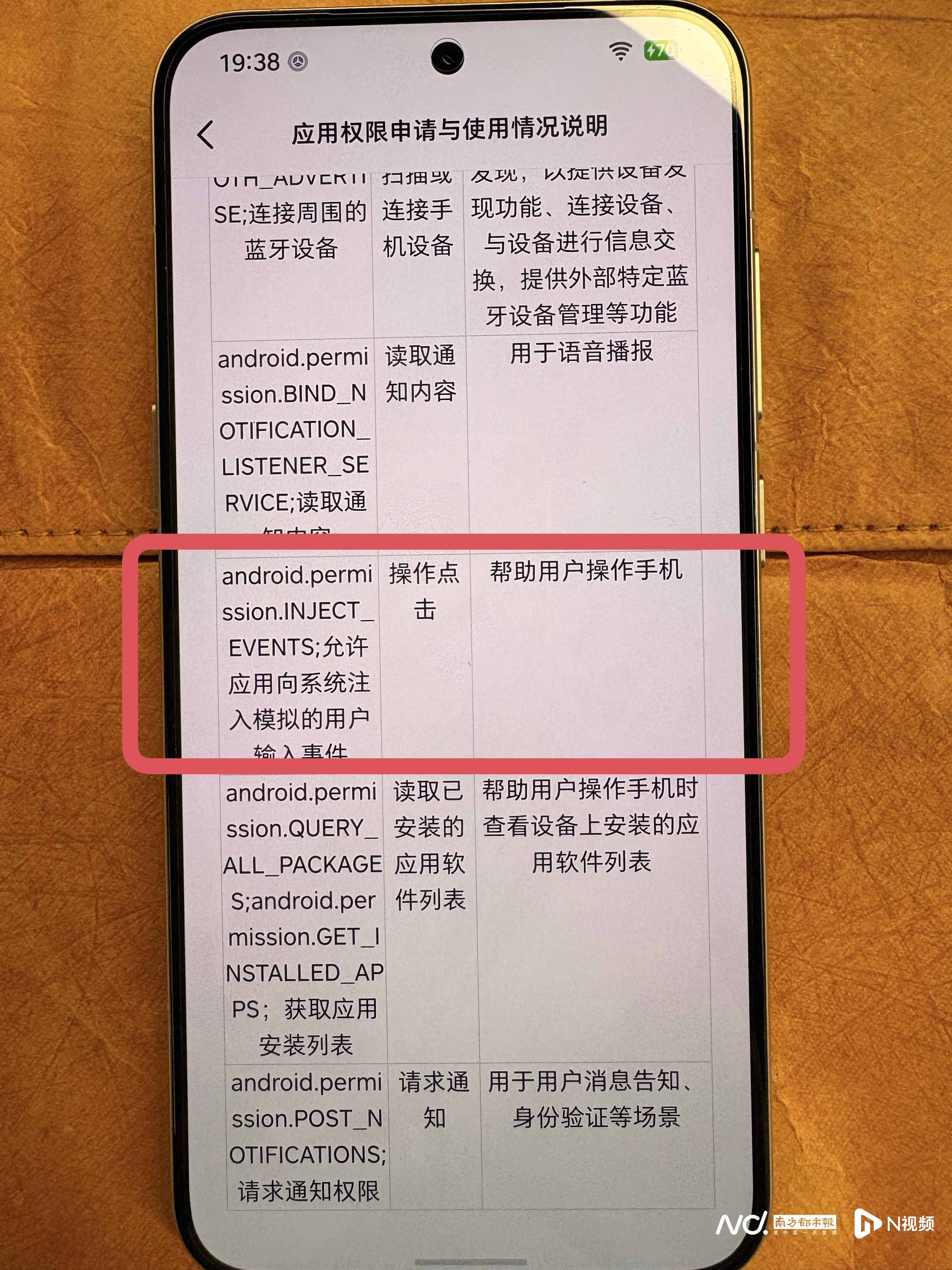
Core Viewpoint - Doubao Assistant, developed by ByteDance and ZTE, has faced restrictions from major apps like WeChat and Alipay shortly after its launch, leading to discussions about privacy and the implications of AI in app interactions [1][2][24]. Group 1: Product Launch and Initial Reactions - Doubao Assistant was released on December 1, 2023, as part of the Doubao phone (Nubia M153), which quickly boosted stocks of related companies like ZTE [1]. - Following its launch, major apps began to block Doubao Assistant, citing security concerns and prompting the assistant to limit its capabilities [1][2]. - The assistant's ability to perform complex tasks and operate like a "secretary" has generated significant interest and feedback from users [4][5]. Group 2: Technical Capabilities and Comparisons - Doubao Assistant can execute over 50 complex tasks with an estimated success rate of around 80%, distinguishing it from previous AI assistants that relied on simpler interactions [4][5]. - Unlike other assistants that use accessibility permissions, Doubao Assistant operates in the background and utilizes system-level INJECT_EVENTS permissions for smoother task execution [5][6][13]. - The assistant's design allows for a more fluid user experience, as it can perform tasks without interrupting the user's interaction with the device [5][13]. Group 3: Privacy and Security Concerns - The use of high-risk permissions like INJECT_EVENTS has raised concerns about potential misuse, but industry insiders argue that the risk is context-dependent and not inherently dangerous [15][16]. - Doubao Assistant's data processing involves both local and cloud components, with assurances that sensitive information is not stored on servers [20][21]. - Users have expressed worries about privacy, but the assistant's design includes mechanisms to ensure transparency and control over task execution [22][23]. Group 4: Industry Implications and Future Outlook - The strong reactions from app developers indicate a significant concern over the potential disruption to existing app ecosystems, although the current impact on market dynamics is limited due to the assistant's early stage and low sales volume [24][25]. - There is ongoing debate about whether AI assistants should require dual authorization from both users and app developers, reflecting broader discussions about data ownership and user rights [26][27]. - The future of AI assistants like Doubao will likely depend on their ability to navigate these regulatory and trust issues while providing valuable services to users [23].
豆包手机遭「五大派」围剿,实测23款主流App,哪些「使不动」?
Xin Lang Ke Ji· 2025-12-10 07:25
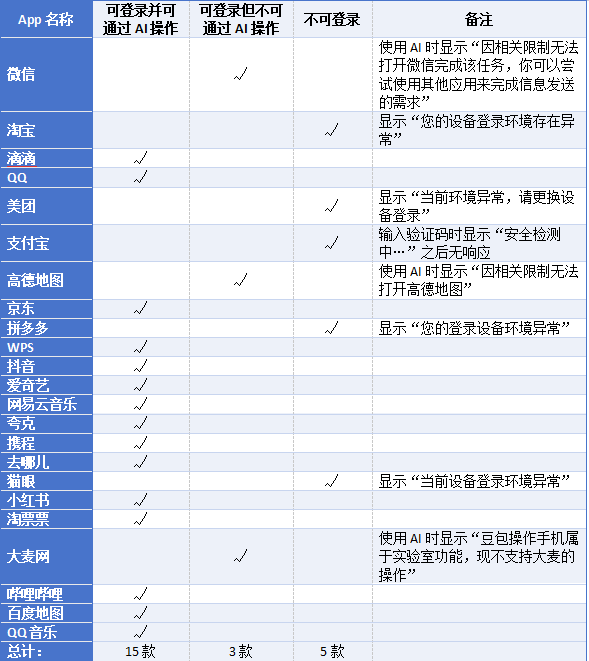
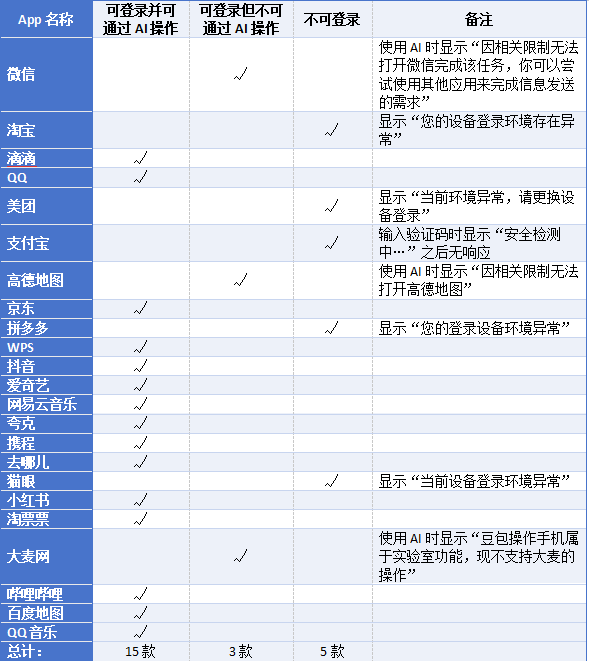
Core Insights - The launch of Doubao mobile assistant has sparked significant attention in the tech industry, with discussions surrounding its functionality, security, and potential to disrupt existing internet business models [3][4][6] - Following initial excitement, the assistant faced restrictions from major apps, limiting its capabilities and raising concerns about its usability [4][6][19] - Despite challenges, the assistant demonstrated practical AI capabilities, effectively handling tasks and user preferences [8][11][19] App Functionality and Restrictions - Out of 23 tested apps, 8 faced restrictions, with 15 remaining fully operational through AI commands [3][4] - Major apps like WeChat, Alipay, and Meituan were either completely inaccessible or limited in functionality, while others like QQ and JD remained unaffected [4][6] - The restrictions stemmed from concerns over security and compliance with app-specific risk control mechanisms [4][24] AI Assistant Experience - The Doubao mobile assistant showcased a high level of adaptability, successfully navigating various tasks and user requests [8][11][19] - It effectively closed ads and navigated app interfaces, providing a seamless user experience [8][11] - The assistant's ability to handle unexpected challenges and execute complex tasks demonstrated its advanced capabilities [13][19] Technical Aspects - The assistant's smooth operation is attributed to its system-level permissions and advanced model capabilities, allowing it to perform tasks in the background [21][22] - The use of INJECT_EVENTS permission enables the assistant to simulate user actions without interrupting the user experience [21][24] - The underlying technology is based on a proprietary model optimized for mobile use, enhancing its performance [22][24] Industry Implications - The emergence of AI assistants like Doubao poses a threat to traditional app business models, potentially undermining their advertising revenue [26][27] - Major apps are likely to resist the integration of such assistants due to concerns over user engagement and revenue loss [27][28] - The future of AI assistants will depend on establishing a cooperative ecosystem that balances user needs with app developers' interests [28]
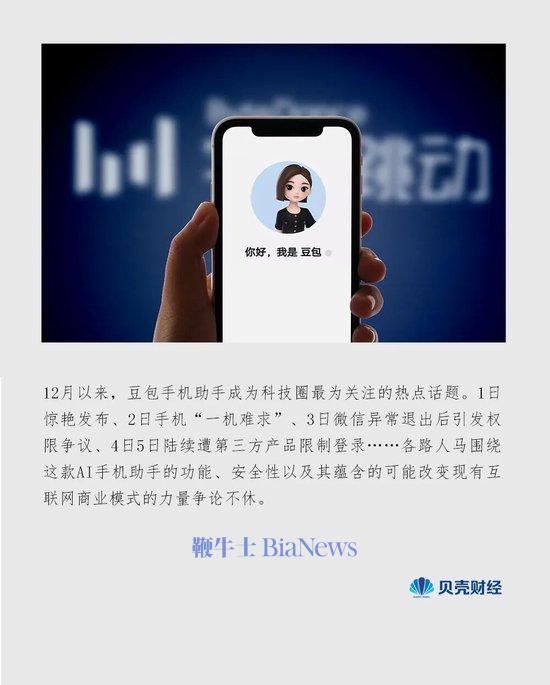
豆包手机遭“五大派”围剿,实测23款主流App,哪些“使不动”?
Xin Lang Cai Jing· 2025-12-10 06:35
Core Viewpoint - The launch of Doubao mobile assistant has sparked significant attention in the tech industry, with discussions surrounding its functionality, security, and potential to disrupt existing internet business models [3][27]. Group 1: App Functionality and Limitations - Out of 23 tested apps, 8 faced usage restrictions, while 15 remained fully operational with AI capabilities [4][28]. - Notable apps that could not be logged into include Taobao, Meituan, Alipay, Pinduoduo, and Maoyan, while apps like Didi, QQ, and JD remained unaffected [4][28]. - The restrictions primarily affected apps from major companies such as Tencent, Alibaba, Meituan, and Pinduoduo, indicating a coordinated response to the Doubao assistant's capabilities [5][30]. Group 2: User Experience and AI Assistant Capabilities - The Doubao mobile assistant demonstrated practical AI capabilities, such as effectively closing ads and navigating app interfaces without user intervention [31][33]. - It showcased flexibility by attempting multiple paths to complete tasks, such as navigating to different map applications when faced with restrictions [11][37]. - The assistant could also remember user preferences and make recommendations based on previous interactions, enhancing the user experience [40][42]. Group 3: Technical Aspects and Permissions - The smooth operation of the Doubao assistant is attributed to its INJECT_EVENTS permission, allowing it to execute tasks in the background without user awareness [18][44]. - The assistant's functionality is built on the UI-TARS model, optimized for mobile use, which enhances its ability to interact with various applications [19][45]. - Concerns were raised regarding the potential for the assistant to breach app security measures, as it operates with system-level permissions that could be perceived as intrusive [20][46]. Group 4: Challenges and Industry Implications - The Doubao assistant faces challenges related to privacy concerns and the disruption of existing business models, as it could undermine the revenue streams of traditional apps reliant on user engagement [22][48]. - The potential for resistance from app developers is significant, as they may implement measures to block the assistant's access to their services [22][48]. - Experts suggest that forming a cooperative ecosystem among app developers may be necessary to address the conflicts arising from the introduction of AI assistants [22][49].
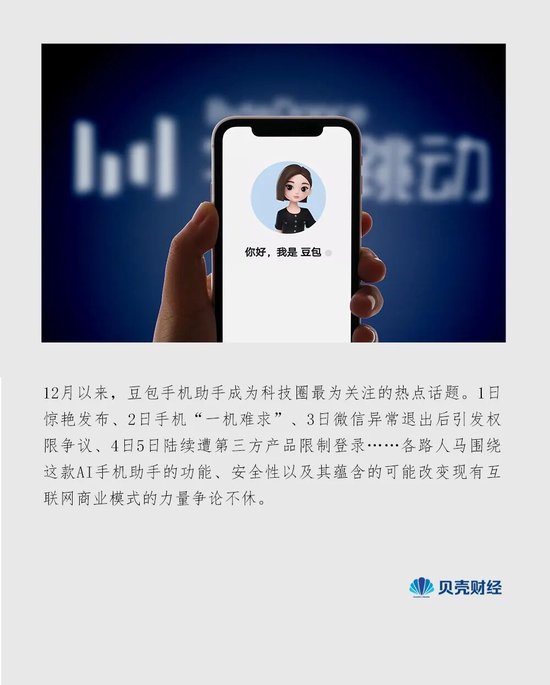
23款App8款“使不动”:“五大派”围剿豆包手机 实测来了
Xin Jing Bao· 2025-12-10 06:25
Core Viewpoint - The launch of Doubao mobile assistant has sparked significant attention in the tech industry, with discussions surrounding its functionality, security, and potential to disrupt existing internet business models [1]. Group 1: Functionality and User Experience - Doubao mobile assistant initially showcased cross-platform comparison and WeChat messaging capabilities, but faced restrictions after user reports of WeChat account issues [2][4]. - In a test involving 23 popular apps, 8 apps were restricted, 15 apps remained fully functional, and the assistant demonstrated practical capabilities such as closing ads and navigating app interfaces [2][3]. - The assistant can effectively handle user preferences and execute tasks with a degree of flexibility, such as navigating different apps when faced with restrictions [9][12][15]. Group 2: Technical Aspects - Doubao mobile assistant operates with INJECT_EVENTS permission, allowing it to execute tasks in the background without user interruption, which enhances user experience [16][17]. - The assistant's capabilities are built on a proprietary model optimized for mobile use, providing a competitive edge over other AI assistants [17][18]. Group 3: Industry Implications - The emergence of AI mobile assistants like Doubao poses challenges to existing app ecosystems, as they can bypass traditional ad revenue models, potentially diminishing the commercial value of apps [20][21]. - There is a need for a collaborative ecosystem among app developers to address the potential conflicts arising from AI assistants disrupting established business models [20][21].
23款App8款“使不动”:“五大派”围剿豆包手机,实测来了
Bei Ke Cai Jing· 2025-12-10 06:16
Core Viewpoint - The launch of Doubao mobile assistant has sparked significant attention in the tech industry, with discussions surrounding its functionality, security, and potential to disrupt existing internet business models [1][2]. Group 1: Functionality and Limitations - Initially, Doubao mobile assistant showcased cross-platform comparison and WeChat messaging capabilities, but faced restrictions after users reported issues with WeChat, leading to the removal of its automated WeChat functionality [2][4]. - Out of 23 tested apps, 8 were restricted from use, while 15 remained fully operational with AI capabilities. Notably, major apps from Tencent, Alibaba, Meituan, and Pinduoduo were among those affected [3][4]. - The assistant can effectively identify and close ads, navigate app interfaces, and handle user requests with a high success rate, demonstrating practical utility [7][8][10]. Group 2: User Experience and Flexibility - Doubao mobile assistant can adapt to unexpected situations by trying different methods to complete tasks, showcasing its flexibility in problem-solving [14][36]. - It can remember user preferences and make suggestions based on previous interactions, enhancing the user experience [34][35]. - The assistant's ability to operate in the background without user intervention allows for a seamless experience, which is a significant advantage over traditional app interactions [38][39]. Group 3: Technical Aspects and Permissions - The smooth operation of Doubao mobile assistant is attributed to its system-level permissions, specifically the INJECT_EVENTS permission, which allows it to execute tasks in the background [38][41]. - The assistant's capabilities are built on a proprietary model optimized for mobile use, providing it with advanced UI interaction abilities [39][40]. - Concerns have been raised regarding the potential for the assistant to breach app security measures, as its operation mimics user actions, which could lead to restrictions from various apps [41][44]. Group 4: Industry Implications and Challenges - The emergence of AI mobile assistants like Doubao poses a challenge to existing app ecosystems, as they could undermine traditional advertising and user engagement models [43][44]. - The need for a collaborative approach among app developers is emphasized to address the potential conflicts of interest arising from AI assistants disrupting established business models [45][46]. - Regulatory considerations regarding user privacy and data handling are crucial as the industry navigates the integration of AI technologies into everyday applications [47][48].
抖音副总裁李亮:AI手机助手本质是“机主”授权
Feng Huang Wang· 2025-12-08 14:52
Core Viewpoint - The article discusses the perspective of Douyin Group's Vice President Li Liang on the current state of "AI mobile assistants," emphasizing that these assistants operate through user authorization and do not involve any form of invasion or hacking [1] Group 1: AI Mobile Assistants - Li Liang uses the example of ride-hailing to illustrate how an "assistant" can seamlessly manage multiple applications and data, such as location, ride-hailing software, navigation, traffic information, and payment [1] - The process relies on the user's authorization for the assistant to perform tasks, which is clearly outlined in the company's privacy security white paper [1] - Li Liang believes that while the realization of such AI applications is close, there are still significant challenges to overcome [1]
用豆包手机的这两周,我好像卷入了一场新与旧的战争。
数字生命卡兹克· 2025-12-08 02:47
Core Viewpoint - The article discusses the recent experiences and challenges faced by users of the Doubao mobile assistant, highlighting its initial appeal and subsequent issues with major apps like WeChat and Alipay, which led to user restrictions and account bans [1][2][19][25]. Group 1: Product Experience - Doubao mobile assistant has gained popularity, with Nubia phones equipped with it selling out quickly, indicating strong market interest [2]. - The initial user experience was positive, with features like task automation and integration with apps being well-received [3][5][7]. - However, after a live demonstration, users faced significant issues, including account restrictions from major platforms, severely impacting usability [19][25][26]. Group 2: Industry Dynamics - The article draws parallels between the current situation and historical battles for control over digital entry points, emphasizing that the competition is shifting from traditional platforms to AI assistants [29][30][61]. - Major platforms view the emergence of AI assistants as a threat to their business models, leading to aggressive actions against such technologies [28][46]. - The narrative suggests that the rise of AI assistants could disrupt existing power structures in the app ecosystem, potentially benefiting users but threatening the survival of established platforms [41][46][55]. Group 3: Future Outlook - The author expresses optimism about the technological advancements in AI, suggesting that improvements in processing power will eventually address current limitations and privacy concerns [63][64]. - There is a cautionary note about the unpredictability of how AI will manifest in the future, urging users to be careful with sensitive information until more robust solutions are available [67]. - The article concludes with a reflection on the chaotic nature of emerging technologies, suggesting that while current experiences may be frustrating, they are part of a larger evolution towards a more integrated AI-driven future [70][74].