豆包手机

Search documents
手机卖不动、涨价,高端化、AI化能拯救手机行业吗?
新财富· 2026-03-25 08:06
Core Viewpoint - The global smartphone market is expected to experience a significant decline in shipment volume in 2026, with a projected drop of 12.9% year-on-year, reaching approximately 1.12 billion units, while the average selling price (ASP) is anticipated to rise to $523, marking a historical high [3][5]. Group 1: Market Trends - The smartphone shipment volume peaked in 2017, and the market has since seen minimal innovation, leading to a structural adjustment within the industry [5]. - In China, smartphone shipments are projected to decline from 560 million units in 2016 to 314 million units in 2024, a decrease of 44% [6]. - The demand for smartphones is primarily driven by replacement purchases, which are highly sensitive to price changes, especially in mature markets [6]. Group 2: Price Increases - The rise in smartphone prices is largely attributed to increased memory costs, with LPDDR4/5 prices rising by 38%-43% and NAND prices increasing by 33%-38% [7][8]. - The cost of storage components has shifted from being a minor issue to a significant factor in overall device pricing, with mid-range smartphones seeing storage costs rise to 35%-45% of the bill of materials (BOM) [7][8]. - Major brands like OPPO, vivo, and Honor have announced price increases for their mid-range models, with adjustments of up to 500 yuan [10][11]. Group 3: High-End Market Dynamics - High-end smartphones are experiencing different market dynamics compared to mid-range devices, with brands focusing on premium features to justify higher prices [8][17]. - Apple has maintained its pricing strategy by increasing storage capacity without raising prices, while Huawei has opted for price stability or reductions [14][15]. - The introduction of foldable smartphones is seen as a potential growth area, with Apple's entry into this market expected to significantly increase penetration rates [18][20]. Group 4: AI Integration - The smartphone industry is at a critical juncture, with the potential for AI technology to drive the next wave of innovation and market growth [22]. - The launch of AI-integrated devices, such as the "豆包手机" by ByteDance and Nubia, has generated significant interest, highlighting the conflict between software and hardware ecosystems [22][24]. - Major players like Google and Apple are focusing on integrating AI capabilities into their systems, while domestic brands are prioritizing in-house AI development [25].



广东“最强春招”,超4000个岗位年薪超50万
21世纪经济报道· 2026-03-16 11:20
Group 1 - The "Million Talents Gathering in South Guangdong" recruitment fair in Guangzhou showcased over 85,000 job positions from nearly 2,000 employers, attracting around 120,000 job seekers on its opening day [1] - The recruitment fair adopted an innovative "two-hall division, industry clustering" model, with Hall 17.1 focusing on modern service industries and Hall 17.2 on advanced manufacturing, reflecting Guangdong's strategy of integrating manufacturing and services [2][4] - The event highlighted the emergence of new job roles driven by the integration of manufacturing and services, particularly in sectors like low-altitude economy, which has been elevated to a pillar industry status [4][6] Group 2 - High-paying positions, including those with salaries ranging from 200,000 to 500,000 yuan, were concentrated in research and development, software, and information technology services, with over 4,000 positions offering salaries above 500,000 yuan [8][10] - Companies like Xiaopeng Motors are offering numerous high-salary positions, including roles such as large model algorithm engineers and autonomous driving product experts, reflecting the trend of service-oriented manufacturing [6][10] - The recruitment fair also saw a demand for AI-related positions, such as AI art designers and video planning supervisors, indicating a shift towards roles that require a blend of technical and creative skills [8][9] Group 3 - The integration of manufacturing and services is not merely a combination but a deep collaboration that creates new job opportunities in emerging industries, as highlighted by the Guangdong Provincial White Paper on the coordinated development of manufacturing and services [6][11] - The recruitment fair served as a platform for cities in Guangdong to showcase their commitment to this integration, with each city presenting unique strengths and job offerings [13][14] - The event illustrated a shift from competing on industry alone to competing on ecosystem and policy, as cities adopt more youthful and distinctive approaches to attract talent [15]

从OpenClaw说起:Agentic AI时代CPU价值的回归
半导体行业观察· 2026-03-11 02:00
Core Insights - The article discusses the emergence of "Agentic AI" and highlights the launch of OpenClaw, a lightweight AI agent deployed on a Mac Mini, which serves as a personal assistant through messaging interactions [2][44] - It emphasizes the shift from GPU-dominated computing to a more balanced CPU-GPU collaboration in AI applications, particularly in the context of intelligent agents [44] Group 1: Definition and Characteristics of AI Agents - AI agents are defined as intelligent systems capable of autonomous perception, decision-making, and action to achieve specific goals, distinguishing them from AI assistants and chatbots [5][6] - Key capabilities required for AI agents include perception, planning, memory, and action, enabling them to perform complex tasks independently [7][9] Group 2: Chain-of-Thought (CoT) and Its Importance - CoT is described as a foundational element for Agentic AI, allowing models to break down complex tasks into logical steps, enhancing accuracy and reducing errors [10][20] - The article outlines how CoT facilitates task planning, exception handling, interpretability, and the synergy between reasoning and action [12][13] Group 3: Retrieval-Augmented Generation (RAG) - RAG is introduced as a method to enhance CoT by providing external knowledge, addressing issues like error propagation and lack of feedback in AI agents [21][24] - The RAG process involves text vectorization, similarity metrics, and nearest neighbor search to retrieve relevant information for improved decision-making [26][27] Group 4: Engram and Its Role - Engram is presented as a memory module that enhances reasoning by separating static knowledge storage from dynamic inference, improving the efficiency of AI agents [33][35] - The integration of Engram allows for faster knowledge retrieval and reduces the cognitive load on models, enabling them to focus on complex reasoning tasks [34][36] Group 5: CPU's Resurgence in AI - The article argues that the evolution of Agentic AI necessitates a renewed focus on CPU capabilities, particularly in handling high concurrency and inter-process context switching [38][39] - It highlights the importance of technologies like CXL for memory expansion and efficient CPU-GPU communication, which are critical for the performance of intelligent agents [41][42]

专访复旦大学刘典:智能体规则需坚持“发展中立规、规随业进”
21世纪经济报道· 2026-03-06 04:13
Core Viewpoint - The article discusses the strategic significance of intelligent terminal devices as a core driver of the "Artificial Intelligence +" initiative, emphasizing their role in integrating AI into various sectors and enhancing productivity [1][4]. Group 1: Development of Intelligent Terminals - Intelligent terminals represent a critical leap from AI technology breakthroughs to industrial scale, facilitating deep integration of AI with various fields [3][4]. - The development of intelligent terminals is aligned with national strategies to foster new productive forces and is essential for transforming AI technology into industrial competitiveness and economic growth [4][6]. Group 2: Global Competition and Market Dynamics - The emergence of intelligent terminals is reshaping the competitive landscape of the digital economy, moving from closed competition to open collaboration [5][6]. - The global AI competition has shifted focus from technology development to constructing industrial ecosystems and establishing rule-making authority, as seen in the collaboration between Samsung and Gemini [5][6]. Group 3: Domestic Strategy and Innovation - China should leverage local innovations like Doubao phone to establish a strong foundation for participating in global AI governance and securing rule-making power [6][7]. - Encouraging the rapid deployment of new technologies and products in various scenarios is crucial for building a self-sustaining industrial ecosystem [7][8]. Group 4: Regulatory Framework and Ecosystem Balance - The development of intelligent terminals requires a dynamic regulatory framework that respects the underlying logic of industrial evolution while ensuring data security and fair competition [8][9]. - Establishing a rule system for the intelligent terminal industry is a vital practice for China's emerging industry innovation, aiming to balance innovation vitality with market fairness [9].

氪星晚报|蜜雪冰城要在河南老家建“雪王乐园”;DHL集团与京东签署谅解备忘录;日本芯片公司Rapidus获佳能、软银、索尼等公司投资
3 6 Ke· 2026-02-27 11:20
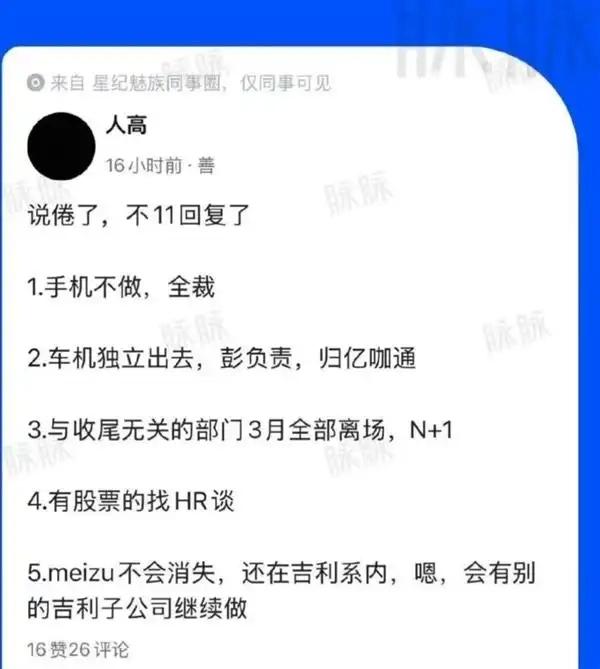
Group 1: Tesla and Autonomous Driving - Tesla has completed road tests of its latest autonomous driving technology in Abu Dhabi under driver supervision, aiming to innovate transportation while balancing safety and modern innovation adoption [1] Group 2: Business Developments - Meizhu Ice City is progressing with its first indoor theme park project, "Snow King Paradise," located in Zhengzhou, which integrates shopping and experiential activities [1] - Meizu has announced a pause on domestic smartphone hardware development and is seeking third-party hardware partnerships, potentially with Cube Magic [1] - SKF plans to list its automotive business, SKF Vertevo, as an independent company on Nasdaq Stockholm in Q4 2023, pending board and shareholder approval [2] - DHL Group and JD.com have signed a memorandum of understanding to collaborate in logistics and e-commerce, facilitating German brands' entry into the Chinese market [2] Group 3: Market Trends and Consumer Behavior - Douyin Mall's "38 Good Goods Festival" will start on March 4, focusing on women's self-gifting and seasonal needs, with various support measures for merchants [4] - Kuaishou reported record high daily active users during the Spring Festival, with a 60% increase in users participating in the "Shake Red Envelope" feature [5][6] Group 4: Investment and Financing - AI sports technology company "Tribute to the Unknown" has completed over 100 million yuan in Pre-A round financing, with funds aimed at global market expansion and product development [7] - Japanese chip company Rapidus has secured 267.6 billion yen (approximately 1.7 billion USD) in funding from both government and private sectors to advance its 2nm semiconductor production goals by 2027 [8]

豆包手机回应存在安全漏洞:针对视频演示的攻击方法 豆包手机助手已升级了相应的防护措施
Jin Rong Jie· 2026-02-27 04:49
Core Viewpoint - The company emphasizes its commitment to user information security and has established a public security vulnerability response platform, offering substantial rewards for vulnerability reporters [1] Group 1 - The company has not received detailed reports regarding the alleged vulnerability of the Doubao Mobile Assistant nor any notifications from cybersecurity regulatory authorities [1] - According to national regulations on cybersecurity product vulnerability management, the unauthorized disclosure of vulnerabilities may constitute a legal violation [1] - The vulnerability demonstration video circulating online requires users to actively request the AI to check malicious emails or messages to trigger an attack, indicating that the AI does not execute high-risk operations automatically without user instruction [1] Group 2 - In response to the attack methods demonstrated in the video, the company has upgraded its protective measures [1]
谷歌版的“豆包手机”来了
Di Yi Cai Jing Zi Xun· 2026-02-27 02:23
Group 1 - Samsung launched the Galaxy S26 series smartphones at the Galaxy Unpacked event, featuring AI capabilities in collaboration with Google to assist users with complex tasks like ordering food and hailing rides [2][5] - Google's Android ecosystem president, Sameer Samat, stated that this marks the next chapter for Android, evolving from an operating system to an intelligent system, with Gemini's multimodal reasoning capabilities aiding users in navigating applications [5][11] - The new AI features initially support scenarios such as ride-hailing (e.g., Uber) and food delivery (e.g., DoorDash, Grubhub), allowing users to issue commands to Gemini using natural language [5][6] Group 2 - Users can observe Gemini's operations transparently, with the ability to enter or stop tasks, while still being able to use their phones for other activities [6] - Google introduced an upgraded feature called Circle to Search, enabling users to search multiple items with a gesture and offering virtual try-on capabilities by uploading a photo [7] - The AI system can also identify potential scams during phone calls, providing real-time alerts to users, with the analysis conducted on-device to protect privacy [7][12] Group 3 - The collaboration between Google and Samsung is seen as a response to ByteDance's "Doubao Phone," which also features a system-level AI assistant capable of cross-app automation [8][9] - Industry experts note that while both devices share similarities in functionality, Google's approach utilizes AppFunctions and UI automation, differing from the single-path AI screen reading used by Doubao Phone [10][11] - The transition of Android from a mobile operating system to an intelligent system faces challenges, particularly in gaining support from app developers for broader automation capabilities [11][12] Group 4 - Predictions indicate that by 2026, the shipment of new-generation AI smartphones in China will reach 147 million units, representing a 31.6% year-on-year growth and capturing 53% of the overall market [12] - Samsung's Galaxy AI is expected to double its coverage to 800 million devices globally following the collaboration with Google [12] - The development of AI smartphones is influenced by two main technical routes: one focusing on system permissions and visual paths, and the other on intelligent agent interconnectivity, with Google's choice serving as a significant indicator for the industry's direction [12]


联手三星,让安卓系统点外卖,谷歌给AI手机先“打个版”
Di Yi Cai Jing· 2026-02-27 02:06
Core Insights - Google is positioned as a potential leader in the AI smartphone sector following its collaboration with Samsung to integrate AI functionalities into the Galaxy S26 series [1][4][11] Group 1: AI Integration and Functionality - The collaboration between Google and Samsung introduces AI capabilities in the Galaxy S26 series, enabling users to perform complex tasks such as ordering food and hailing rides through natural language commands [1][4] - The AI assistant, Gemini, utilizes its multimodal reasoning abilities to assist users in navigating applications and completing various tasks, marking a shift from Android as an operating system to a more intelligent system [4][6] - Specific use cases highlighted include ordering food from group chats, where Gemini can process preferences and automate the ordering process, enhancing user experience [6][7] Group 2: Technical Aspects and User Experience - The new AI system is designed to be transparent and controllable, allowing users to monitor Gemini's actions and maintain the ability to use their phones for other tasks simultaneously [6][7] - Google has introduced an upgraded feature called Circle to Search, enabling users to search for multiple items with a single gesture, enhancing the shopping experience [6] - The AI system also includes a fraud detection feature integrated into the Samsung Phone application, providing real-time alerts during calls if potential scams are detected [7] Group 3: Market Context and Competitive Landscape - The launch of the AI smartphone by Google and Samsung is seen as a response to the recent success of ByteDance's "Doubao Phone," which also features a system-level AI assistant [7][8] - Industry experts note that while both devices share similarities in functionality, Google's approach involves a combination of AppFunctions and UI automation, differing from the purely AI-driven methods of competitors [9][10] - The global smartphone market is anticipated to see significant growth in AI smartphone shipments, with projections indicating that by 2026, AI smartphones will account for 53% of the market in China [11]

AI下半场,没有巨头敢掉队
3 6 Ke· 2026-02-25 00:16
Core Insights - The AI competition among major companies has intensified during the recent Spring Festival, with significant cash incentives and promotional activities [1][2][4] - Companies are focusing on three main areas of AI competition: AI empowerment, independent AI applications, and AI hardware [9][25] Group 1: AI Empowerment - Major companies are embedding AI capabilities into traditional business models, such as Alibaba's Quark browser transforming into an "AI Super Box" by March 2025 [10] - Tencent plans to launch Qbot, an intelligent assistant, in May 2025, enhancing its QQ browser with various AI functionalities [10] - Baidu will transition its traditional search box to an "intelligent box" by July 2025, marking a shift towards AI-driven search [11] - Meituan has launched an AI life assistant named "Xiao Mei" [12] - The integration of AI has positively impacted some business segments, with Tencent's marketing services revenue reaching 36.2 billion yuan in Q3 2025, a 21% increase year-on-year [16] Group 2: Independent AI Applications - Companies are shifting focus to independent AI applications as AI empowerment alone does not alter the competitive landscape [18] - Alibaba's "AI Super Entrance" strategy has pivoted to its Qianwen app, which has surpassed 30 million monthly active users by December 2025 [19] - Doubao continues to leverage sponsorships, such as the Spring Festival Gala, to maintain its leading position in the market [20] - Current AI applications show limited daily usage time, with the highest being around 10 minutes per user [22][23] Group 3: AI Hardware - The competition has expanded from software to hardware, with the launch of the Doubao phone in December 2025, which sold out within a day [25] - The rapid success of the Doubao phone has prompted other companies to restrict access to their platforms on this device [26] - AI glasses have also gained popularity, with Alibaba's Quark AI glasses S1 selling out immediately and a significant increase in global smart glasses shipments [29] - Predictions indicate that global smart glasses shipments could exceed 40 million units by 2029 [30] Group 4: Strategic Directions of Major Companies - Alibaba focuses on providing tool value through its AI applications, aiming to assist users in various tasks [33] - Tencent emphasizes social value, with its "Yuanbao" platform allowing users to invite friends through social media [36] - ByteDance's Doubao offers emotional value, creating a personalized and engaging user experience [41] - The strategies of these companies reflect their core strengths, with Alibaba addressing practical needs, Tencent focusing on social interactions, and ByteDance enhancing emotional connections [43]


2026年手机厂商开始失去定价权
3 6 Ke· 2026-02-24 23:42
Core Insights - The mobile industry is experiencing significant shifts due to supply chain pressures, leading to different responses from companies like vivo, Meizu, and Nubia [1][2][3] - The rise in DRAM prices has disproportionately affected mid-tier smartphone manufacturers, pushing some towards the brink of collapse [2][3][5] - Historical parallels are drawn between the current situation and the fall of Nokia, emphasizing how supply chain dynamics can redefine industry leaders [2][13] Company Responses - Meizu has officially canceled the launch of its Meizu 22 Air due to rising memory costs, reflecting its inability to sustain operations [5][6] - Vivo has appointed Hu Baishan as the new president, signaling a strategic shift towards technology and innovation beyond smartphones [7][9] - Xiaomi is diversifying its business model by focusing on automotive and smart home sectors, indicating a shift in growth strategy [9][10] Market Dynamics - The high-end smartphone market is thriving, with predictions that devices priced over $600 will capture over 35% of the global market share by 2026 [6] - The mid-tier market is shrinking, with longer replacement cycles and reduced consumer willingness to upgrade due to rising costs [6][10] - The entry of AI into the smartphone market is creating new dynamics, with companies like ByteDance testing user willingness to cede control for convenience [11][12] Future Outlook - The combination of rising DRAM prices and the introduction of AI is reshaping the survival thresholds in the smartphone industry [13] - Companies that adapt to these changes, like Xiaomi with its automotive ambitions, may find new avenues for profitability [10][13] - The overall landscape of the smartphone market is expected to evolve significantly, with AI playing a central role in defining future consumer experiences [12][13]