
体外诊断

Search documents
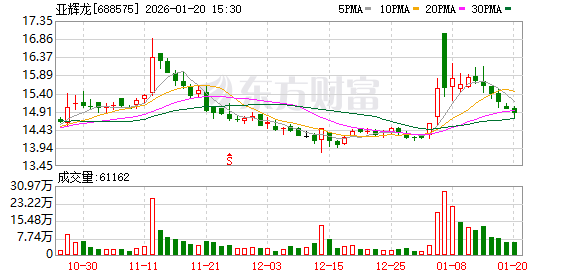
亚辉龙牵手两所高校共建联合实验室 加速布局神经诊疗与智能诊断新赛道
Zheng Quan Ri Bao· 2026-01-20 09:07
Core Insights - Shenzhen YHLO Biotech Co., Ltd. has made significant strides in the field of industry-academia-research collaboration by establishing two joint laboratories with Hong Kong University of Science and Technology (Shenzhen) and Shenzhen Technology University, focusing on neurological diagnosis and intelligent diagnostics [2][3] Group 1: Joint Laboratories - The "Neurodiagnosis Joint Laboratory" will focus on major neurodegenerative diseases such as Alzheimer's and Parkinson's, conducting systematic research on disease biomarkers, diagnostic technology development, and key equipment research [3] - The "Intelligent Diagnosis and Precision Medicine Joint Laboratory" will concentrate on AI image recognition systems, microfluidic detection platforms, and the exploration of new biomarkers, aiming to develop key technologies in intelligent diagnostics and precision medicine [3] Group 2: Strategic Goals - Both laboratories aim to convert core research outcomes into marketable products within 3 to 5 years while cultivating innovative and practical talent [3] - The establishment of these laboratories reflects YHLO's commitment to a clinical demand-oriented and industry transformation-focused collaboration logic [3][4] Group 3: Long-term Collaboration - YHLO's Chairman and CEO emphasized that the collaboration with universities is not just about project alignment but also about systematic and institutional long-term cooperation [4] - The joint laboratories are expected to facilitate a full chain from frontier research to technology development, product transformation, and clinical application, ultimately benefiting patients [4][5]


亚辉龙牵手两所高校共建联合实验室,加速布局神经诊疗与智能诊断新赛道
Zheng Quan Shi Bao Wang· 2026-01-20 08:29
Group 1 - The core viewpoint of the news is that Aihua Long has established two joint laboratories with universities in Shenzhen, focusing on neurological diagnosis and intelligent diagnosis, which signifies the company's commitment to advancing its capabilities in the in vitro diagnostics and life health sectors [1][2][3] Group 2 - The "Neurodiagnosis Joint Laboratory" with the Chinese University of Hong Kong (Shenzhen) will focus on major neurodegenerative diseases such as Alzheimer's and Parkinson's, conducting systematic research on disease biomarkers, diagnostic technology, and key equipment development [1] - The "Intelligent Diagnosis and Precision Medicine Joint Laboratory" with Shenzhen Technology University will concentrate on AI image recognition systems, microfluidic detection platforms, and the development of new biological markers, aiming to convert core R&D results into marketable products within 3 to 5 years [2] - Aihua Long's collaboration with these universities reflects a strategy of integrating clinical needs with industrial transformation, emphasizing a systematic and institutional long-term cooperation model [2][3] - The establishment of these laboratories is expected to enhance Aihua Long's product line and technical reserves, contributing to the high-quality development of the biopharmaceutical industry in the Guangdong-Hong Kong-Macao Greater Bay Area [3] - The company aims to create a comprehensive innovation ecosystem in the health industry through the integration of research, technology development, product transformation, and clinical application [2][3]
新产业跌2.05%,成交额1.12亿元,主力资金净流出764.90万元
Xin Lang Cai Jing· 2026-01-20 04:16
Core Viewpoint - The company, New Industry Biomedical Engineering Co., Ltd., has experienced a decline in stock price and a mixed financial performance, with a slight increase in revenue but a significant decrease in net profit [1][2]. Group 1: Stock Performance - On January 20, the stock price of New Industry fell by 2.05% to 56.76 CNY per share, with a trading volume of 112 million CNY and a turnover rate of 0.29%, resulting in a total market capitalization of 44.597 billion CNY [1]. - Year-to-date, the stock price has increased by 0.91%, but it has decreased by 4.96% over the last five trading days, 3.80% over the last 20 days, and 8.32% over the last 60 days [1]. Group 2: Financial Performance - For the period from January to September 2025, the company achieved a revenue of 3.428 billion CNY, representing a year-on-year growth of 0.39%, while the net profit attributable to shareholders was 1.205 billion CNY, reflecting a year-on-year decrease of 12.92% [2]. - Cumulatively, since its A-share listing, the company has distributed a total of 3.86 billion CNY in dividends, with 2.357 billion CNY distributed over the last three years [3]. Group 3: Shareholder Information - As of September 30, 2025, the number of shareholders decreased by 15.87% to 13,100, with an average of 51,997 circulating shares per shareholder, which is an increase of 18.87% [2]. - Among the top ten circulating shareholders, Hong Kong Central Clearing Limited is the fourth largest, holding 26.4824 million shares, an increase of 4.2383 million shares from the previous period [3].
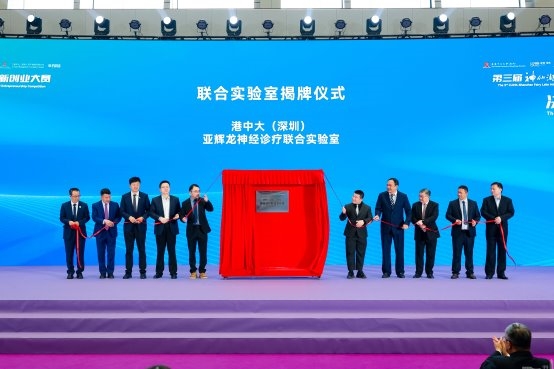
亚辉龙同日牵手两所高校共建联合实验室,加速布局神经诊疗与智能诊断新赛道
Sou Hu Wang· 2026-01-20 03:04
Group 1 - On January 19, Shenzhen Aihuilong Biotechnology Co., Ltd. (Aihuilong, 688575.SH) established two joint laboratories with Hong Kong University of Science and Technology (Shenzhen) and Shenzhen Technology University, focusing on neurological disease diagnosis and intelligent diagnosis and precision medicine [1][2] - The "Neurodiagnosis Joint Laboratory" will focus on early diagnosis and treatment of neurological diseases, particularly Alzheimer's and Parkinson's diseases, addressing the challenges in the diagnosis of neurological disorders [4][8] - The "Intelligent Diagnosis and Precision Medicine Joint Laboratory" aims to develop AI image recognition systems, microfluidic detection platforms, and new biomarkers, leveraging the strengths of both universities and Aihuilong's market experience [5][7] Group 2 - Aihuilong's collaboration with two universities reflects its commitment to integrating clinical needs with industrial transformation, emphasizing a systematic and long-term partnership approach [8] - The establishment of these laboratories is expected to enhance Aihuilong's product line and technical reserves, contributing to the high-quality development of the biopharmaceutical industry in the Guangdong-Hong Kong-Macao Greater Bay Area [8] - The joint laboratories will facilitate a comprehensive approach from cutting-edge research to clinical application, aiming to create an innovative ecosystem in the health industry [8]
北京热景生物技术股份有限公司2025年年度业绩预告
Shang Hai Zheng Quan Bao· 2026-01-16 19:27
Group 1 - The company forecasts a revenue of between 400 million to 420 million yuan for the year 2025, representing a year-on-year decrease of 17.79% to 21.71% compared to 2024 [1] - The projected net profit attributable to the parent company is expected to be between -210 million to -230 million yuan, indicating an increase in losses of 9.94% to 20.42% compared to the previous year [1] - The net profit attributable to the parent company, after deducting non-recurring gains and losses, is anticipated to be between -250 million to -270 million yuan [1] Group 2 - In 2024, the company reported a revenue of 510.9 million yuan [2] - The net profit attributable to the parent company for 2024 was -191.0046 million yuan [2] - The net profit attributable to the parent company, after deducting non-recurring gains and losses, was -231.1898 million yuan [3] Group 3 - The decline in net profit and net profit after deducting non-recurring gains and losses is primarily due to the impact of industry policies such as centralized procurement, leading to a decrease in domestic prices and demand, along with adjustments in tax policies affecting gross margin [4] - The company increased its investment in the joint venture ShunJing Pharmaceutical, which became a subsidiary, resulting in significant R&D expenses that negatively impacted net profit [4] - Increased R&D investments by joint ventures like YaoJing Gene and ZhiYuan Bio in innovative drug fields have also contributed to expanded investment losses, adversely affecting the company's net profit [4]

热景生物预计2025年净利亏损2.1亿元至2.3亿元
Bei Jing Shang Bao· 2026-01-16 13:20
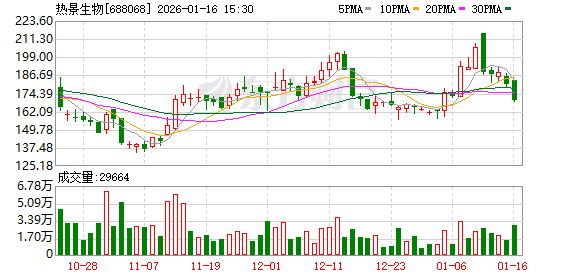
Core Viewpoint - The company, Hotgen Biotech (688068), is forecasting a net profit loss of between 210 million to 230 million yuan for the year 2025, indicating an increase in losses of 9.94% to 20.42% compared to the previous year [2] Industry Impact - The in vitro diagnostic industry is facing significant challenges due to industry policies such as centralized procurement, leading to a short-term decline in domestic prices and reduced demand [2] - Adjustments in national tax policies for the industry have had a considerable impact on the company's overall gross margin and profits [2] Asset Impairment - The company has adhered to its consistent impairment policy, resulting in the recognition of asset impairment losses related to its reagents and equipment [2]
热景生物(688068.SH)发预亏,预计2025年度归母净亏损2.1亿元至2.3亿元
智通财经网· 2026-01-16 10:32
Core Viewpoint - The company, Hotgen Biotech (688068.SH), expects a net loss attributable to shareholders of the parent company for the year 2025 to be between -210 million to -230 million yuan, representing an increase in loss of 9.94% to 20.42% compared to the same period last year [1] Industry Impact - The in vitro diagnostic industry is facing significant challenges due to industry policies such as centralized procurement, leading to a short-term decline in domestic prices and reduced demand [1] - Changes in national tax policies for the industry have had a considerable impact on the company's overall gross margin and gross profit [1] Company Financials - The company has recognized asset impairment losses related to its operating assets, including reagents and equipment, in accordance with its consistent impairment accounting policy [1] - The company increased its investment in the joint venture, ShunJing Pharmaceutical, which has become a subsidiary and is included in the consolidated financial statements [1] - The accelerated development of the innovative drug pipeline at ShunJing Pharmaceutical has led to a significant increase in research and development expenses, adversely affecting the company's net profit [1] Joint Ventures and Investments - The company's joint ventures, including YaoJing Gene and ZhiYuan Biotech, have continued to increase their research and development investments in the field of biopharmaceutical innovation, resulting in expanded investment losses for the company [1]
科华生物:公司2025年半年度海外营业收入为228042894.49元
Zheng Quan Ri Bao Zhi Sheng· 2026-01-16 10:04
Group 1 - The core viewpoint of the article highlights that Kehua Bio is actively expanding its overseas market presence while leveraging its 40 years of experience in the in vitro diagnostic industry [1] - The company has established a sales network in Europe through its Italian subsidiary TGS, aiming to enhance its market reach in that region [1] - Kehua Bio has developed local service systems in several countries, including the Netherlands, South Korea, Kazakhstan, Thailand, Vietnam, Sri Lanka, Pakistan, Myanmar, and Peru, successfully registering and selling diagnostic instruments and reagents [1] Group 2 - According to the company's semi-annual report for 2025, the overseas operating revenue for the first half of 2025 reached 228,042,894.49 yuan, representing a year-on-year growth of 20.16% [1]

康华股份IPO:经销商库存水平激增收入真实性或存疑 公司治理隐忧重重且IPO前夕持续大额分红
Xin Lang Cai Jing· 2026-01-16 08:08
Core Viewpoint - The listing process of Kanghua Co., Ltd. on the Beijing Stock Exchange is shrouded in uncertainty due to a series of unconventional operations and ongoing inquiries from regulatory authorities, leading to concerns about the company's fundamentals and sincerity in the listing process [1][7]. Financial Performance - Kanghua Co., Ltd. met the financial standards for listing by reporting a net profit of 104 million yuan and a return on equity of 9.3% for 2024, but its 2023 return on equity was only 6.56%, indicating reliance on a single year's data for compliance [2][8]. - In the first half of 2025, the company reported a revenue of 435 million yuan, a year-on-year decrease of 19.32%, and a net profit of 46 million yuan, down 23.4% [2][8]. Inventory and Revenue Recognition Concerns - The inventory level of major distributors reached 26.58% of their procurement by June 2025, significantly higher than 11.73% at the end of 2023, raising doubts about the authenticity of revenue recognition [10]. - By September 2025, only about 36% of the inventory from June had been sold, which is below historical levels, suggesting potential issues with normal business practices [10]. Governance Issues - The company faces significant governance concerns, including potential conflicts of interest due to family-controlled enterprises engaging in similar businesses, which complicates the independence of operations [5][12]. - Kanghua Co., Ltd. has been criticized for a lack of transparency and competitive processes in asset disposal, particularly regarding a write-off of 97.31 million yuan in inventory, raising questions about the fairness and safety of asset recovery [6][13]. Fundraising and Project Viability - The company initially planned to raise 562 million yuan for five projects but reduced the amount to 368 million yuan and cut the number of projects to three after receiving regulatory inquiries, indicating potential issues with project viability and necessity [4][11]. - The reduction in fundraising and project scope has led to skepticism about the company's actual need for capital and the rationale behind its IPO [4][11].
安必平股价跌5.32%,长城基金旗下1只基金位居十大流通股东,持有85万股浮亏损失144.5万元
Xin Lang Cai Jing· 2026-01-16 02:59
Group 1 - The core point of the news is that Anbiping's stock price dropped by 5.32% to 30.26 CNY per share, with a trading volume of 96.7 million CNY and a turnover rate of 3.33%, resulting in a total market capitalization of 2.831 billion CNY [1] - Anbiping, established on July 6, 2005, and listed on August 20, 2020, is primarily engaged in the research, production, and sales of in vitro diagnostic reagents and instruments [1] - The revenue composition of Anbiping includes 79.72% from self-produced products, 13.11% from purchased products, 5.90% from service income, and 1.27% from other sources [1] Group 2 - Longcheng Consumption Value Mixed A Fund (200006) is among the top ten circulating shareholders of Anbiping, holding 850,000 shares, which is unchanged from the previous period, representing 0.91% of the circulating shares [2] - The fund has incurred an estimated floating loss of approximately 1.445 million CNY today [2] - Longcheng Consumption Value Mixed A Fund was established on April 6, 2006, with a current scale of 516 million CNY, and has achieved a year-to-date return of 21.73%, ranking 56 out of 8,847 in its category [2]
