
Cloud Computing

Search documents
Oracle Leads U.S. Tech Stocks Down Premarket
Barrons· 2026-02-02 10:56
Core Insights - U.S. tech stocks experienced a decline in premarket trading, influenced by trends in Asian and European markets [1] - Oracle's stock fell by 3.4% following the announcement of plans to raise between $45 billion and $50 billion to meet cloud demand from major clients [1] - The fundraising strategy will involve a combination of debt and equity, amid growing concerns from lenders and investors regarding tech companies' capital expenditures [1] Company-Specific Developments - Oracle's fundraising is aimed at satisfying contracted cloud demand from significant customers, including Nvidia, OpenAI, Advanced Micro Devices (AMD), and Meta [1] - Nvidia's previously announced investment plan of $100 billion has reportedly stalled, contributing to a 1.6% decline in Nvidia's shares premarket [1] - Other companies in the sector also saw declines, with CoreWeave's futures dropping by 3.05% and AMD's shares falling by 1.95%, while Meta's stock decreased by 1.4% premarket [1]

Oracle to raise up to $50bn for cloud infrastructure buildout
Yahoo Finance· 2026-02-02 10:28
Funding Plans - Oracle plans to secure between $45 billion and $50 billion in funding during 2026 to expand its cloud infrastructure capacity to meet demand from clients like AMD, Nvidia, Meta, OpenAI, TikTok, and xAI [1] - The funding will be raised through a combination of equity and debt financing, with an approximate split of 50% for each approach [1] Equity Financing - For the equity portion, Oracle will utilize a mix of equity-linked and common equity issuances, including an initial offering of mandatory convertible preferred securities and an at-the-market equity program authorized for up to $20 billion [2] - Shares will be issued under this program in line with market prices and capital requirements [2] Debt Financing - Oracle expects to complete a single issuance of investment-grade senior unsecured bonds early in 2026, with no additional bond offerings planned for the year beyond this transaction [3] - Goldman Sachs & Co. will lead the senior unsecured bond offering, while Citigroup will manage the at-the-market equity issuance and the convertible preferred equity offering [3] Strategic Goals - The funding approach aims to preserve Oracle's investment-grade rating and maintain balance sheet strength while expanding cloud services [4] - Oracle anticipates 2026 to be a pivotal year for advancing AI in the US, focusing on building AI infrastructure to support medical research, scientific breakthroughs, and economic growth [4] AI Infrastructure Development - Oracle is developing AI data center campuses in collaboration with OpenAI in Texas and other sites in New Mexico, Wisconsin, and Michigan, with a commitment to benefit local communities [5] - The company plans to fund on-site power generation or grid upgrades and implement closed-loop cooling systems to limit water use [5] AI Supercomputer Collaboration - In October 2025, Oracle and Nvidia collaborated to build an AI supercomputer named Solstice at Argonne National Laboratory for the US Department of Energy, achieving a combined output of 2,200 exaflops of AI performance [6]
CRWV NOTIFICATION: CoreWeave, Inc. Faces Securities Fraud Allegations Over Infrastructure Delays, Investors Alerted to Contact BFA Law by March 13
TMX Newsfile· 2026-02-02 09:48
Core Points - A class action lawsuit has been filed against CoreWeave, Inc. and its senior executives for securities fraud following significant stock drops due to potential violations of federal securities laws [1][3] - Investors are encouraged to seek additional information regarding the lawsuit and their legal options [2][9] Company Overview - CoreWeave is an AI-focused cloud computing company that operates data centers providing high-performance GPU infrastructure [4] - The company relies on partnerships, including a merger agreement with Core Scientific announced on July 7, 2025 [4] Allegations and Stock Performance - CoreWeave allegedly overstated its ability to meet customer demand and concealed significant construction delays at its data centers [5] - The stock price dropped significantly due to various announcements: - On October 30, 2025, the stock fell by $8.87 (over 6%) after the merger with Core Scientific was terminated [6] - On November 10, 2025, the stock dropped by $17.22 (over 16%) following lowered guidance for revenue and operational metrics due to construction delays [7] - On December 15, 2025, the stock decreased by $2.85 (over 3%) after reports of further delays in a major data center project [8]



东吴证券:云涨价已现 关注AI Agent需求带动下的云投资机会
智通财经网· 2026-02-02 08:47
Core Viewpoint - Counterpoint Research predicts a significant increase in storage prices, with a rise of 40% to 50% expected in Q1 2026 and an additional 20% in Q2 2026, driven by hardware cost increases and growing demand for AI applications [1][4]. Supply Side - Major cloud providers, including Google and Amazon, have begun raising prices for their services, marking the first price hikes in years. Google Cloud announced price increases effective May 1, 2026, with data transmission costs in North America rising by 100% from $0.04/GB to $0.08/GB, and similar increases in Europe and Asia [1][2]. - Intel and AMD are planning to raise server CPU prices by 10-15% due to high demand from large-scale cloud service providers, with their server CPU production nearly sold out for 2026 [4]. - The price of G.652.D optical fiber in China has surged by approximately 80% compared to November 2025, reaching a near seven-year high of over 40 yuan per core kilometer in January 2026, with some manufacturers quoting prices as high as 50 yuan per core kilometer [4]. Demand Side - The rapid adoption of AI Agents is driving demand, exemplified by the explosive growth of the Clawdbot (now OpenClaw) on Moltbook, which has reached 1.5 million users. Google's integration of Gemini3 into Chrome browsers enhances accessibility for 3.8 billion users [3]. - Tencent has announced a cash distribution of 1 billion yuan for the Spring Festival, and its Yuanbao app has reached the top of the free app charts on the Apple Store [3]. Related Companies - Key players in the computing rental sector include Hongjing Technology (301396.SZ) and Xiechuang Data (300857.SZ). Major cloud providers include Wangsu Technology (300017.SZ), UCloud (688158.SH), Qingyun Technology (688316.SH), and Alibaba (09988) [5]. - Companies involved in CPU production include Lanke Technology (688008.SH), Haiguang Information (688041.SH), Guanghe Technology (001382.SZ), Longxin Zhongke (688047.SH), and China Great Wall (000066.SZ) [5]. - IDC and related companies include Runze Technology (300442.SZ), Dwei Technology (600589.SH), Aofei Data (300738.SZ), Dataport (603881.SH), and Zhongheng Electric (002364.SZ) [5].



“隐身”的腾讯云,不想当第一
Xin Lang Cai Jing· 2026-02-02 08:44
Core Viewpoint - The competition among cloud service providers in China, particularly in the AI cloud sector, is intensifying, with companies like Alibaba Cloud, Volcano Engine, and Tencent Cloud adopting different strategies to capture market share and achieve profitability [1][6][26]. Group 1: Advertising and Market Position - Since 2025, the number of AI cloud-related advertisements in major airports has significantly increased, with major players like Alibaba Cloud and Volcano Engine dominating the advertising space [1]. - In Shenzhen's Bao'an Airport, Alibaba Cloud claims to lead the AI cloud market share, while Volcano Engine asserts a 46.4% share of the public cloud large model market [2][5]. - Tencent Cloud's absence from the advertising scene is notable, especially as AI is seen as a critical growth area for cloud computing [5]. Group 2: Profitability vs. Scale - Tencent Cloud achieved overall profitability in its cloud business by 2025, a rare feat in an industry plagued by a "profit black hole" due to prolonged price wars [6][8]. - The industry has seen a trend where higher revenues often correlate with greater losses, with Alibaba Cloud's latest report showing a profit margin of less than 9% [8]. - Tencent Cloud has shifted its focus from absolute revenue to sustainable income structures, leading to a reduction in low-profit business segments [10]. Group 3: Business Strategies - Tencent Cloud's strategy emphasizes high-quality growth and a focus on high-value clients, resulting in a decrease in market share but a healthier revenue model [10][12]. - Volcano Engine's approach involves aggressive pricing for Token sales to attract AI customers, but this model has been criticized for lacking customer retention [14][15]. - Tencent Cloud's business structure is differentiated, with a focus on 40% IaaS, 40% PaaS, and 20% SaaS, highlighting its commitment to AI SaaS products [17]. Group 4: Market Growth and Competition - The AI cloud market in China reached 22.3 billion yuan in the first half of 2025, with Alibaba Cloud holding a 35.8% market share, followed by Volcano Engine at 14.8% [28]. - Tencent Cloud's revenue from partnerships has shown double-digit growth, with AI and SaaS product orders doubling [24]. - The competition is not just about market share but also about long-term sustainability and the ability to adapt to industry changes [26]. Group 5: Ecosystem and Partnerships - Tencent Cloud emphasizes a partnership-first approach, valuing long-term relationships with partners over short-term gains [24]. - The company has collaborated with over 11,000 partners, maintaining a focus on mutual respect and shared benefits [24]. - The competitive landscape has seen some cloud providers exploit partnerships, leading to a breakdown in trust and collaboration [21][22].


做“难而正确的选择”,华为云产业智能化的“深潜”逻辑
Jing Ji Wang· 2026-02-02 07:11
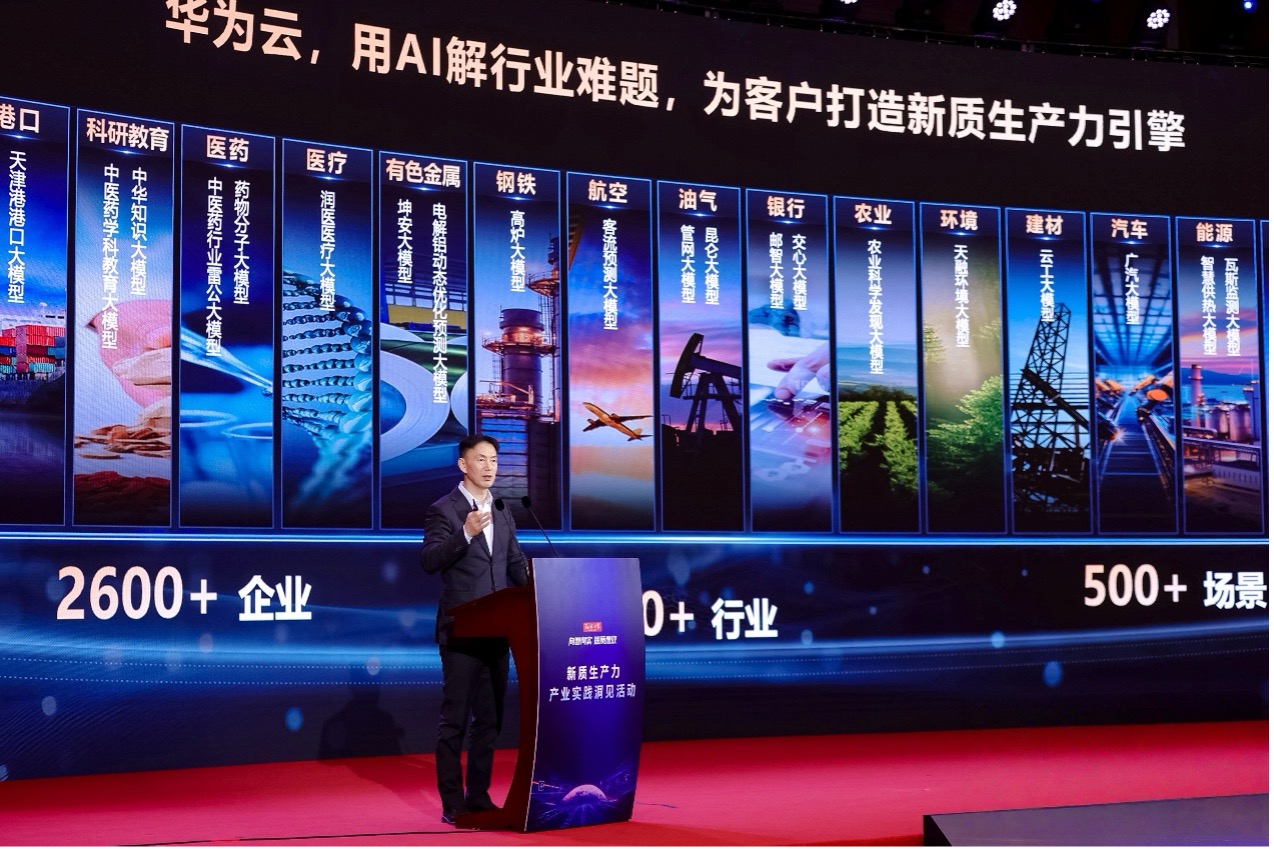
Core Insights - Artificial intelligence (AI) has transitioned from a topic of discussion to a strategic focus for industries, especially following the Chinese government's endorsement of AI integration into various sectors [1][3] - Huawei Cloud has been recognized for its AI infrastructure and industry integration, showcasing its role in transforming AI from a conceptual tool to a practical business engine [1][7] Group 1: AI Integration and Industry Transformation - AI technology is systematically reshaping various industries, with Huawei Cloud emphasizing the importance of combining computational power with industry-specific scenarios [3][7] - The collaboration between Huawei Cloud and Nanjing Steel has led to the development of the "Yuanye Steel Model," which has implemented 20 intelligent applications across four business areas, enhancing production processes [4] - In Inner Mongolia, Huawei Cloud's partnership has resulted in the world's first fleet of 100 autonomous electric mining trucks, demonstrating significant operational efficiency and safety improvements [4] Group 2: Achievements and Impact - Huawei Cloud has enabled substantial efficiency gains across multiple sectors, such as reducing inspection times from 6 hours to 20 minutes in industrial inspections, achieving over 98% accuracy in fault detection [5] - In the steel industry, AI has improved temperature prediction accuracy in blast furnaces to 80%, leading to a fuel saving of approximately 7,800 tons per furnace annually [5] - The company has developed over 30 industry-specific AI models, serving more than 500 scenarios and 2,600 enterprises across various fields, contributing to high-quality industrial development in China [9] Group 3: Strategic Approach and Future Directions - Huawei Cloud aims to tackle complex industry challenges by focusing on three key areas: understanding physical environments, managing specialized data, and ensuring effective implementation of AI solutions [8] - The company positions itself as a "technical partner," providing comprehensive AI services that include not only computational power but also development frameworks and industry solutions [8] - Looking ahead, Huawei Cloud is committed to continuous innovation in core technologies and collaborative efforts with industry partners to embed AI deeply into core business processes, thereby creating new industrial value [9]
华为云发布“行业AI梦工厂”智慧医疗专区!规模最大的医疗设备ETF(159873)获资金逆势布局,实时净申购1100万份
Sou Hu Cai Jing· 2026-02-02 07:01
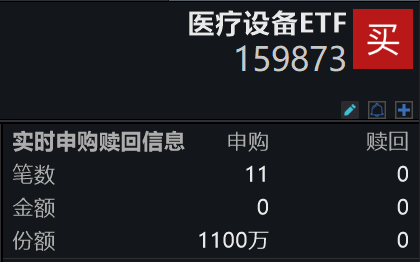
Group 1: ETF Performance - As of February 2, 2026, the Medical Equipment ETF (159873) had a turnover of 5.82% with a transaction volume of 14.6087 million yuan, while the tracked index, the CSI All Share Healthcare Equipment and Services Index (H30178), fell by 1.44% [1] - The Medical Equipment ETF (159873) saw a net subscription of 11 million shares during the trading session [2] - The Biopharmaceutical ETF (159859) had a turnover of 3.87% with a transaction volume of 142 million yuan, and the corresponding index, the National Biopharmaceutical Index (399441), decreased by 2.18% [2] Group 2: Fund Flows - The Medical Equipment ETF (159873) experienced a net inflow of 4.2585 million yuan, with a total of 22.8076 million yuan net inflow over the last five trading days [2] - The Biopharmaceutical ETF (159859) achieved a new high in scale at 3.705 billion yuan and a new high in shares at 9.396 billion shares as of January 30 [3] - The Biopharmaceutical ETF (159859) has seen continuous net inflows over the past ten days, totaling 425 million yuan [3] Group 3: Sector Insights - The Medical Equipment ETF (159873) has a high content of brain-computer interface technology, accounting for over 17%, indicating strong technological attributes [3] - The overall industry landscape for medical devices is improving, with leading companies showing performance recovery in Q3, suggesting potential for future capital inflows [6] - The innovative drug sector is expected to see a recovery phase, with a focus on domestic innovation and increased global participation, indicating a positive outlook for investment opportunities [7]
Why Microsoft’s results sparked a $381 billion rout
BusinessLine· 2026-02-02 06:15
Wall Street’s apprehension about the cost of developing artificial intelligence technology has been simmering beneath the surface of the stock market for months. Now it’s starting to boil over.Microsoft Corp. reported solid earnings on Wednesday, but investors zeroed in on stagnating growth in its Azure cloud-computing business and the more than $100 billion it’s expected to dole out in capital spending this year. The next day, the stock tumbled 10%, and the selling continued on Friday, wiping out $381 bil ...


计算机行业点评报告:云涨价已现,关注AI Agent需求带动下的云投资机会
Soochow Securities· 2026-02-02 05:24
Investment Rating - The report maintains an "Overweight" investment rating for the computer industry [1] Core Insights - Cloud service providers like Google Cloud and Amazon Web Services have announced price increases, marking a significant shift in the market [5][10] - The demand for AI Agents is accelerating, with notable growth in applications and user engagement [11][13] - Supply-side pressures are leading to rising hardware costs, including storage and CPU prices [16] - The report suggests that the upcoming Chinese New Year will boost domestic AI application demand, potentially leading to further price increases in cloud services [17] Summary by Sections Price Increases by Major Cloud Providers - Google Cloud announced price hikes effective May 1, 2026, with data transfer costs in North America increasing from $0.04/GB to $0.08/GB (100% increase), Europe from $0.05/GB to $0.08/GB (60% increase), and Asia from $0.06/GB to $0.085/GB (42% increase) [10] - Amazon Web Services raised prices for its EC2 machine learning capacity blocks by approximately 15% [10] Demand Side: Acceleration of AI Agent Adoption - The rapid growth of AI Agents is exemplified by the success of Moltclaw, which has seen exponential user growth [11] - Google has integrated its Gemini 3 into Chrome, transforming it into a comprehensive AGI platform for 3.8 billion users [13] Supply Side: Hardware Price Increases - Storage prices are expected to rise by 40% to 50% in Q1 2026 and by about 20% in Q2 2026 [16] - Intel and AMD plan to increase server CPU prices by 10-15% due to high demand and limited supply [16] - Prices for G.652.D optical fibers in China have surged by approximately 80% compared to November 2025, with some prices exceeding 50 yuan per core kilometer [16] Investment Recommendations - The report identifies potential investment opportunities in the AI cloud industry, particularly as hardware costs rise and demand for AI applications increases [17] - Recommended companies include cloud service providers like Wangsu Science and Technology, Yike Technology, and Alibaba, as well as CPU manufacturers like Lianqi Technology and Longxin Zhongke [18][19][20]
计算机行业点评报告:云涨价已现,关注AIAgent需求带动下的云投资机会
Soochow Securities· 2026-02-02 05:11
Investment Rating - The report maintains an "Overweight" investment rating for the computer industry [1] Core Insights - The report highlights that major cloud providers like Google and Amazon have begun to raise prices, indicating a shift in the market dynamics [5][10] - The demand for AI Agents is accelerating, with significant growth in user engagement and application development [11][13] - Supply-side pressures are leading to price increases in hardware components, including storage and CPUs, which are expected to continue into 2026 [16] Summary by Sections Price Increases by Major Cloud Providers - Google Cloud announced a price increase effective May 1, 2026, with data transmission costs in North America rising from $0.04/GB to $0.08/GB (100% increase), Europe from $0.05/GB to $0.08/GB (60% increase), and Asia from $0.06/GB to $0.085/GB (approximately 42% increase) [10] - Amazon Web Services (AWS) raised prices for its EC2 machine learning capacity blocks by about 15%, with specific instance costs increasing from $34.61 to $39.80 per hour [10] Demand Side: Acceleration of AI Agent Deployment - The report notes the rapid growth of AI Agents, particularly with the success of Moltclaw, which has seen exponential user growth [11] - Google's integration of Gemini 3 into Chrome browsers signifies a major advancement, potentially transforming 3.8 billion users' browsers into comprehensive AGI access points [13] Supply Side: Hardware Price Increases - Storage prices are projected to rise by 40% to 50% in Q1 2026 and by approximately 20% in Q2 2026, as per Counterpoint Research [16] - Intel and AMD are expected to increase server CPU prices by 10-15% due to high demand and limited supply [16] - Fiber optic prices in China have surged by approximately 80% compared to November 2025, with some prices exceeding 50 yuan per core kilometer [16] Investment Recommendations - The report suggests that rising hardware costs combined with increasing demand for AI applications present significant investment opportunities in the AI cloud industry [17] - Recommended investment targets include computing rental firms like Hongjing Technology and cloud service providers such as Wangsu Technology and Alibaba [18][19]
