秒哒平台

Search documents
领跑十年:百度智能云全栈AI基础设施推动产业智能化
Sou Hu Wang· 2025-12-29 07:36
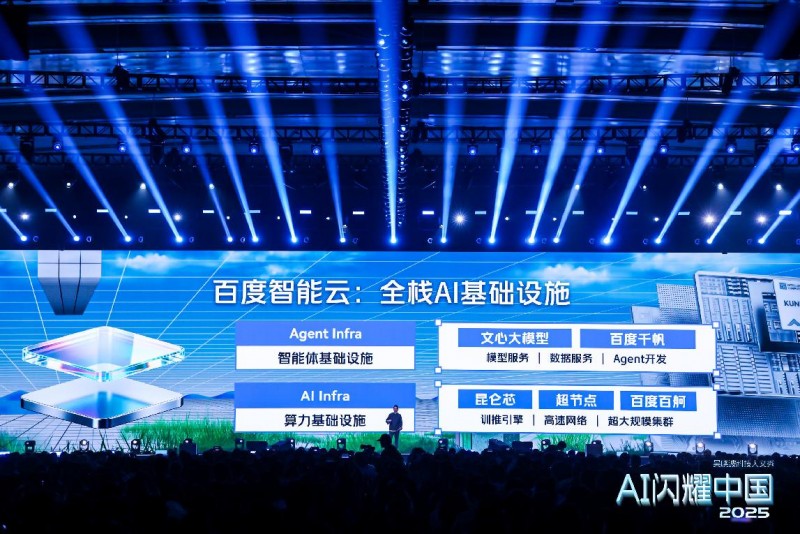
Core Insights - China is accelerating the integration of AI technology with the real economy, driven by its vast application scenarios and proactive industrial policies [1] - Baidu Smart Cloud is a key player in this transformation, providing a comprehensive AI infrastructure that translates cutting-edge AI capabilities into practical productivity for enterprises [1][6] Group 1: AI Infrastructure Development - Baidu Smart Cloud aims to position AI as a "profit center" for businesses rather than a "cost center," emphasizing the direct creation of business value through AI [2] - The infrastructure consists of a dual-layer architecture: a robust AI Infra for foundational computing power and a flexible Agent Infra for developing and managing intelligent agents [4] - Significant investments in AI infrastructure are projected, with an estimated 400 billion RMB in 2025 and over 10 trillion RMB by 2030, narrowing the gap in AI model capabilities between China and the U.S. from 20% to 0.3% [5] Group 2: Market Position and Achievements - Baidu Smart Cloud has evolved from a technology enabler to a builder of an industrial innovation ecosystem, providing end-to-end AI solutions that integrate cloud computing with advanced AI technologies [6] - The company has achieved notable market success, leading in core areas for six consecutive years and covering over 65% of state-owned enterprises and 100% of systemically important banks [6] - In 2025, Baidu Smart Cloud led the market with 95 winning projects and a total bid amount of 7.1 billion RMB in the large model sector [6] Group 3: Application Innovation - The "MiaoDa" platform enables no-code AI application development, significantly lowering the barrier for individuals and businesses to create efficient applications at minimal cost [8][9] - The platform has generated over 500,000 agents and served 10 million users within a year, demonstrating the high demand for zero-code AI development tools [9] - MiaoDa's core philosophy is to empower everyone, including non-technical individuals, to quickly turn ideas into operational digital products [9] Group 4: Future Outlook - Baidu Smart Cloud is set to play a crucial role in the deep integration of AI with the real economy over the next decade, fostering a collaborative AI ecosystem and enabling numerous entrepreneurs to leverage AI tools for value creation [11] - The ongoing transformation in various industries is expected to open up vast opportunities, driven by the advancements in AI technology [11]


AI新业务首次突破百亿,百度大胆革新的底气是什么?
阿尔法工场研究院· 2025-08-21 01:38
Core Viewpoint - Baidu's Q2 financial report demonstrates a significant transformation in its AI business, marking a shift from a decade-long technology investment to a scalable monetization phase, with total revenue reaching 32.7 billion yuan and core net profit increasing by 35% year-on-year [3][4][6]. Financial Performance - In Q2, Baidu's total revenue was 32.7 billion yuan, with core revenue at 26.3 billion yuan and a net profit of 7.4 billion yuan, reflecting a 35% year-on-year growth [3][4]. - AI new business revenue surpassed 10 billion yuan for the first time, growing by 34% year-on-year [3]. AI Business Growth - Baidu's AI new business, including smart cloud services, is showing strong growth, with global ride-hailing service "Luobo Kuaipao" achieving over 2.2 million service instances in Q2, a 148% increase year-on-year [3][4]. - The cumulative global service instances for "Luobo Kuaipao" exceeded 14 million, covering 16 cities worldwide [3]. Technological Innovation - Baidu has adopted a more aggressive approach to technological innovation compared to competitors like Google, leading the market in smart cloud business growth and undergoing a comprehensive AI transformation in its core search business [4][20]. - The company has transitioned from incremental improvements to disruptive restructuring in its search business, with over 64% of search results generated directly by AI as of July [19][20]. Competitive Positioning - Baidu's strategy emphasizes long-term technological investment over short-term gains, allowing it to build significant barriers in the evolving tech landscape [5][39]. - The company is positioned as a leader in the AI public cloud market, maintaining the top spot for six consecutive years, with a 14.9% market share in the large model platform market as of 2024 [23][31]. Ecosystem Development - Baidu's full-stack AI strategy integrates chip, framework, model, and application layers, providing end-to-end solutions rather than just computational power [23][30]. - The company has established a robust ecosystem that supports AI applications, evidenced by partnerships with major enterprises like China Merchants and State Grid [30]. Future Outlook - Baidu is focused on creating a new "AI as a Service" model, with innovations in digital human technology and a commitment to redefining the search experience [41][44]. - The company's long-term vision is supported by a stable cash flow from its smart cloud services and the rapid expansion of "Luobo Kuaipao" in international markets [43][46].
三天,我看清楚了未来AI将如何介入我们的生活
3 6 Ke· 2025-07-31 23:23
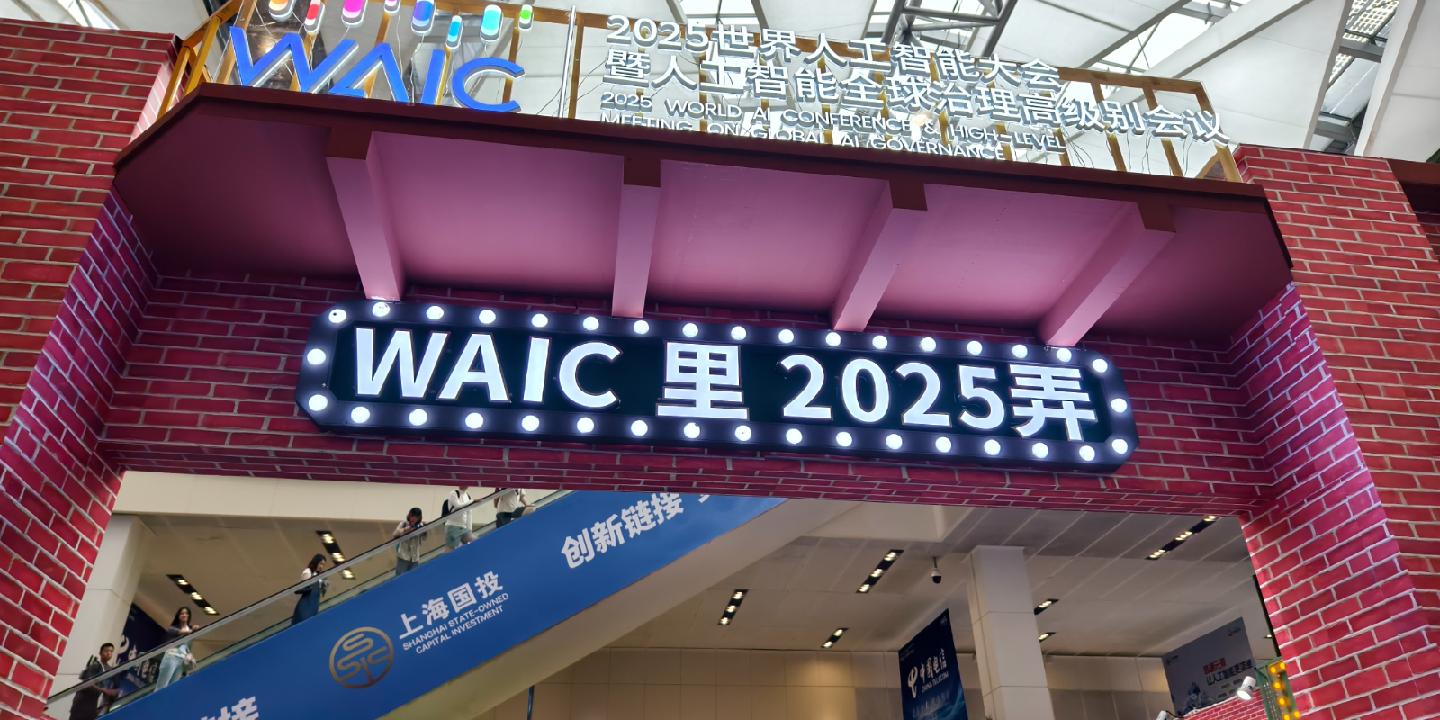
Core Insights - The 2025 World Artificial Intelligence Conference (WAIC) concluded with significant participation, featuring over 1,500 experts from more than 70 countries and regions, and 800 companies, indicating growing interest in AI technologies [1][2] - Key trends highlighted include the pervasive integration of generative AI across various sectors, advancements in computing power, enhanced capabilities of robots, and significant progress in Robotaxi technology [3][4] Generative AI Developments - Generative AI is becoming ubiquitous, moving beyond simple applications to industrial, medical, and transportation sectors [3] - New models, such as the Step 3 from Jieyue Star, demonstrate significant advancements with 321 billion parameters, enhancing efficiency and reducing computational costs [4] - MiniMax introduced a full-stack intelligent agent capable of executing tasks autonomously, showcasing rapid iteration and competitive dynamics in the sector [4] Safety and Security Innovations - AI security technologies, such as those from Hehe Information, can identify deepfakes in milliseconds, crucial for finance and government sectors [5] - Baidu showcased a comprehensive application generation pipeline, enabling users to create functional applications rapidly [5] Computing Power Advancements - Domestic GPU manufacturers showcased significant advancements, with Huawei's CloudMatrix 384 super node achieving 300 PFlops of computing power [9][11] - The focus has shifted from single-card performance to overall efficiency and cost-effectiveness in AI applications [12][14] Robotics Evolution - Robots are evolving from basic functionalities to performing complex tasks, including emotional interactions and practical applications in various fields [15][21] - Companies like Qianxun Intelligent and Fuliye Intelligent are demonstrating robots capable of performing intricate movements and providing companionship in healthcare settings [15][16] Autonomous Driving Innovations - The WAIC featured practical demonstrations of Robotaxi technology, with companies like Xiaoma Zhixing and Baidu showcasing their autonomous vehicles navigating real traffic [22][24] - The Shanghai government announced plans to enhance autonomous driving infrastructure, aiming for significant passenger and cargo transport by 2027 [27]
在WAIC 2025看到AI的明天:六个变化,正在发生
Jing Ji Guan Cha Wang· 2025-07-27 11:13
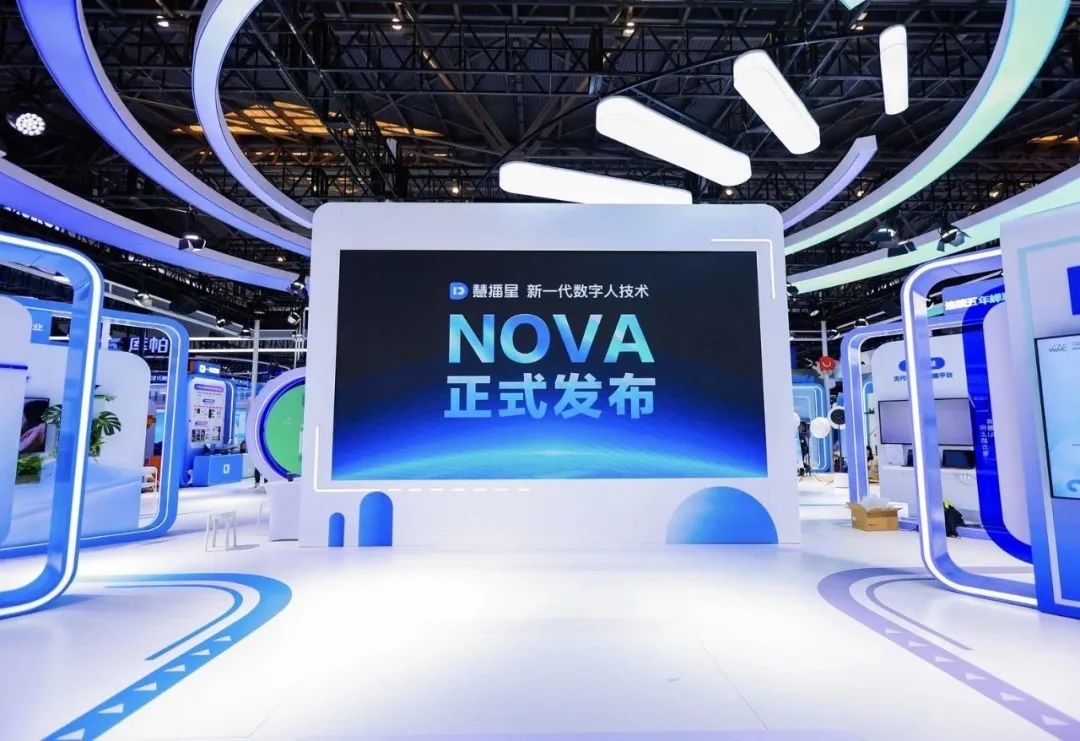
Core Insights - The WAIC 2025 showcased over 800 companies and 3000 exhibits, highlighting a clearer path for AI development in the post-large model era [2] - Six key trends were identified, indicating a shift from basic AI capabilities to high-frequency applications in service, office, content, and interaction [2] Group 1: Trends in AI Development - Trend 1: Embodied intelligence is moving from a display phase to practical applications with collaborative robots capable of executing tasks in real-world scenarios [3][4] - Trend 2: AI is becoming an "invisible partner" for personal efficiency, with major companies like Huawei, Alibaba, and Baidu showcasing AI's role in enhancing individual capabilities [6][18] - Trend 3: AI agents are evolving from chat tools to task execution, with platforms like Baidu's NOVA enabling advanced digital human interactions [19][26] Group 2: Company Innovations - Huawei's Ascend 384 super node was highlighted for its significant improvements in resource scheduling and computational performance, enhancing AI model training efficiency [8] - Alibaba introduced the Quark AI glasses, marking a shift in AI applications from software to multi-form daily devices [10] - Baidu's "Miao Da" platform allows non-technical users to create complex applications, demonstrating AI's potential to streamline development processes [14][18] Group 3: Emerging AI Startups - New startups like Flowith are gaining attention for their innovative approaches to AI interaction, focusing on non-linear thinking and collaborative creativity [56][58] - The "AI Six Dragons" are diversifying, with companies like Step and MiniMax showcasing distinct product strategies and technological capabilities [27][29] Group 4: Human-AI Interaction - AI is transitioning from a tool to a partner, with products like SenseTime's emotional companion robots and Kingsoft's WPS Lingxi assistant enhancing user engagement and productivity [42][44][55] - The trend indicates a deeper integration of AI into personal and professional environments, emphasizing emotional connection and collaborative efficiency [55][62]