Autos

Search documents
US government confirms Tesla and LG Energy Solution's $4.3 billion battery deal
Reuters· 2026-03-17 03:24
Core Viewpoint - The U.S. government has confirmed a $4.3 billion supply agreement between Tesla and LG Energy Solution to establish a lithium iron phosphate (LFP) battery cell manufacturing facility in Lansing, Michigan, with production expected to start in 2027 [1]. Group 1: Agreement Details - The agreement aims to create a robust domestic battery supply chain for Tesla's Megapack 3 energy storage systems produced in Houston [2]. - This deal is part of a broader initiative highlighted by the U.S. government to enhance energy security in the Indo-Pacific region [2]. Group 2: Market Context - LG Energy Solution is one of the few producers of LFP batteries in the U.S., a market segment that has been largely dominated by Chinese competitors [4]. - The deal is seen as a strategic move by Tesla to reduce its reliance on Chinese imports amid ongoing tariffs [3].



Lucid Stock Is Cheap, but Does That Make It a Buy Now?
The Motley Fool· 2026-03-17 03:15
Core Insights - The electric vehicle market is rapidly growing, with Tesla and BYD Auto as the main competitors, while smaller companies like Lucid and Rivian are still in the start-up phase [1] - Lucid has seen a significant drop in stock price, down 98% from its peak, raising questions about its investment potential [1] - Lucid has made progress in production, nearly doubling its output and increasing deliveries by over 70% in Q4 2025, while also receiving awards for its vehicles [1][3] Production Comparison - Lucid produced 8,412 EVs in Q4 2025, significantly lower than Tesla's 434,358 vehicles, indicating a substantial gap in production capabilities [3] - Rivian produced 10,974 vehicles in the same quarter, showing that Lucid is closer in production to Rivian than to Tesla [4] Financial Performance - Lucid reported revenues of $1.35 billion in 2025 against a cost of goods sold of $2.61 billion, indicating a loss on each vehicle sold [6] - Rivian, in contrast, generated a gross profit in 2025, highlighting a key difference in financial health between the two companies [6] Investment Considerations - Lucid is considered cheap, but this is attributed to its challenges in achieving profitability and competing in a highly competitive market [7] - The company is seen as suitable for aggressive investors, but caution is advised due to its current production status and profitability uncertainties [7]


EV变局(3)印度塔塔在保护主义下崛起
日经中文网· 2026-03-17 03:07
Core Viewpoint - Tata Motors has achieved significant success in the Indian EV market by leveraging low pricing strategies and benefiting from protective government policies that impose high tariffs on imports, particularly from China [2][9]. Group 1: Tata Motors' EV Strategy - Tata Motors launched the new EV "Punch" at a competitive price of 649,000 INR (approximately 48,000 RMB), positioning it as a game-changer in the market [4]. - To further reduce initial purchase costs, Tata introduced a battery usage fee of 2.6 INR per kilometer, making EV ownership more accessible to consumers [5]. - Tata holds a 40% market share in the EV segment, significantly outperforming competitors like Suzuki, which has only recently entered the EV market [8]. Group 2: Market Dynamics and Competition - Tata's initial pricing strategy for the "Tiago" EV was set at 849,000 INR, with over 10,000 bookings received within a day. The price was later reduced to 799,000 INR in 2024 due to economic factors [8]. - The Indian government imposes tariffs exceeding 100% on imported vehicles, which has hindered foreign competitors like Tesla and BYD from gaining traction in the market [11]. - Tesla's sales in India are minimal, with only 225 units sold in 2025, attributed to high pricing and tariffs [11]. Group 3: Regional EV Developments - In Vietnam, the domestic EV manufacturer VinFast has seen its sales double to approximately 175,099 units, benefiting from low taxes on EVs compared to gasoline vehicles [12]. - Indonesia is planning to develop its own EV brand, with government support aimed at fostering local production and reducing tax burdens on EVs [14]. - The overall market share of Japanese car manufacturers in Indonesia has decreased from 96% in 2020 to 80% in 2025, indicating a shift towards local and Chinese manufacturers [17].

2月终端销量榜 | 新能源汽车高端化趋势明显
数说新能源· 2026-03-17 02:31
Overall Situation - In February 2026, China's passenger car terminal sales reached 1.123 million units, a month-on-month decrease of 35.3% [2] - Total sales of new energy passenger vehicles were 431,000 units, down 31.3% month-on-month [2] - Breakdown of new energy vehicle sales: pure electric vehicles (EVs) sold 262,000 units (down 32.1%), plug-in hybrid vehicles (PHEVs) sold 112,100 units (down 25.6%), and range-extended vehicles sold 47,300 units (down 43.6%) [2] - The penetration rate of new energy vehicles in the passenger car market was 38.4%, slightly up from 36.3% the previous month [2] Market Overview - The passenger car market showed differentiated growth due to the impact of the Spring Festival, with overall performance of new energy vehicles being average [4] - Factors such as the reduction of purchase tax incentives and the phasing out of trade-in policies have led to lower consumer purchasing intentions [4] - The high-end new energy vehicle segment saw an increase, with C-class passenger vehicles accounting for 59% of the market, indicating a trend towards higher quality development in the car market [4] - Predictions for March 2026 suggest a recovery in market demand, driven by new vehicle launches from companies like Xiaomi and Li Auto, alongside the upcoming Beijing Auto Show [4] Brand Rankings - The top-selling pure electric models in February 2026 included Xiaomi YU7 (20,000 units), Tesla Model Y (18,000 units), and Li Auto i6 (16,000 units) [8] - The leading plug-in hybrid models were the Ti7 (111,000 units), BYD Song Pro (93,000 units), and BYD Zhao PLUS (53,000 units) [9]


51WORLD Becomes NVIDIA's Global L4 Simulation Partner to Accelerate Reasoning-Based Autonomous Driving Development!
Prnewswire· 2026-03-17 02:11
Group 1 - NVIDIA announced a partnership with 51WORLD to integrate its Omniverse NuRec with 51WORLD's SimOne, aimed at enhancing reasoning-based autonomous driving development [1] - The collaboration addresses the challenge of non-interactive real-world scenario data, which is a significant pain point in the industry [1] - This partnership is expected to empower global Level 4 (L4) automotive partners by accelerating the development of advanced autonomous driving systems [1] Group 2 - 51WORLD has achieved a 53.5% market share in China's Level 3+ (L3+) simulation sector, reinforcing its position in the global Physical AI market [2] - The partnership with NVIDIA is anticipated to further solidify 51WORLD's core position within the global Physical AI arena [2]


五一视界成为英伟达全球L4智驾仿真合作伙伴,加速推理型自动驾驶开发
IPO早知道· 2026-03-17 02:07
Core Insights - The collaboration between Nvidia and 51Sim will further solidify 51Sim's core position in the global Physical AI sector [2][3] - 51Sim is not just a simulation software company but is positioned as a foundational builder for the Physical AI era [3] - The strategic value of simulation and data platforms is expected to amplify as autonomous driving continues to expand as a core scenario in Physical AI [3][4] Market Position - According to Frost & Sullivan's report, 51Sim holds a 53.5% market share in China's end-to-end high-level intelligent driving simulation and data platform market, making it the leader in this space [2] - 51Sim is establishing sustainable scale barriers and ecological advantages within the industry [2][4] - The focus for capital markets is shifting from algorithm iteration speed to identifying which companies can support the long-term infrastructure of Physical AI [3]

日本股票投资策略-Japanese equities investment strategy (March)
2026-03-17 02:07
Summary of Japanese Equities Investment Strategy Industry Overview - **Industry**: Japanese Equities - **Key Indices**: TOPIX, Nikkei 225 Core Insights and Arguments 1. **Geopolitical Risks**: Anxiety over geopolitical risks, particularly related to Iran, is expected to settle down, which could positively impact Japanese equities [1][7][102] 2. **Market Dynamics**: Financial markets are experiencing a pattern where initial stories drive market movements, which later reverse as the market stabilizes. This includes the expectation of rising P/E multiples following political events and the impact of AI on SaaS stocks [1][2] 3. **Profit Growth**: A forecast of double-digit profit growth in FY26 is anticipated, supporting the case for stock market gains [2][106] 4. **Share Buybacks**: The reduction in outstanding shares due to buybacks and tender offers is expected to contribute positively to equity valuations [2][111] 5. **Economic Growth vs. Interest Rates**: The scenario of nominal economic growth exceeding nominal long-term interest rates (G > R) remains intact, which historically favors equities over bonds [2][103] Market Forecasts 1. **Index Projections**: - TOPIX is expected to reach 4,000 by the end of 2026, with further increases to 4,200 by the end of 2027 and 4,400 by the end of 2028 [2][116] - Nikkei 225 is projected to finish at 60,000 by the end of 2026, rising to 63,000 by the end of 2027 and 66,000 by the end of 2028 [2][116] 2. **Short-term Corrections**: Anticipated corrections to around 3,800 for TOPIX and 57,000 for Nikkei 225 in March and April as geopolitical tensions normalize [2][114] Sector Recommendations 1. **Preferred Sectors**: Focus on electrical appliances and machinery, with additional interest in information & communication, automobiles, and insurance [3] 2. **Avoidance**: Recommendations to avoid sectors such as steel, pharmaceuticals, and those linked to inbound tourism due to their sensitivity to crude oil prices [3] Crude Oil Price Sensitivity 1. **Impact on Earnings**: A 10% rise in crude oil prices is estimated to depress EPS at major companies by 1–1.25%, indicating a significant sensitivity of Japanese equities to oil price fluctuations [38][39] 2. **Historical Patterns**: Historical data shows that when the US economy grows post-oil price spikes, Japanese equities tend to gain, while they falter during recessions [9][10] Investor Behavior and Market Sentiment 1. **Investor Positioning**: There is a noted shift in investor focus towards supply-demand factors and positioning adjustments, with substantial inflows into Japanese equity funds despite recent market declines [58][72] 2. **Pension Fund Activity**: Selling pressure from pension funds has diminished, with increased inflows into equity investment trusts observed [72] Risks and Concerns 1. **Broader Economic Risks**: Concerns about US private credit, overinvestment in AI, and the potential decline of SaaS are highlighted as ongoing risks [78] 2. **Monetary Policy Implications**: The upcoming monetary policy meetings of central banks are expected to be influenced by the current economic climate and crude oil prices [87] Valuation Trends 1. **Valuation Adjustments**: The 12-month forward P/E for TOPIX has decreased from 18.5x to 16.8x, indicating a correction in valuations amid rising geopolitical tensions and oil prices [93] 2. **Future Valuation Outlook**: Expectations for P/E ratios to gradually decline to around 15–16x from 2027 onwards, reflecting a cautious market sentiment [115] This comprehensive analysis provides a detailed overview of the current state and future outlook of Japanese equities, emphasizing the interplay between geopolitical factors, economic growth, and market dynamics.
中国汽车行业核心要点:我们对 AIDC 引擎、重型卡车、电动两轮车等领域的观点-China Auto Sector Keys_ Our views on AIDC engine, heavy-duty truck, electric two-wheelers and more
2026-03-17 02:07
Summary of Key Points from the Conference Call Industry Overview - The report focuses on the **China Auto Sector**, specifically analyzing companies involved in **AIDC engines**, **heavy-duty trucks (HDT)**, and **electric two-wheelers (e-2W)**. Key companies mentioned include **Weichai Power (2338.HK)**, **China Yuchai International (CYI.US)**, **Sinotruk - H (3808.HK)**, **Ninebot (689009.SH)**, and **CFMoto (603129.SH)** [2][3][7][11][18]. Core Insights and Arguments AIDC Engine Market - **Weichai Power** is expected to see its AIDC engine sales volume grow at more than a **30% CAGR** from 2025 to 2028, driven by robust demand in both China and the US, with **50% of its volume growth** coming from outside China [6][10]. - The **global AIDC engine market** is projected to expand at a **20%+ CAGR** from 2024 to 2028, with Chinese OEMs expected to add **30-50%** to their capacity [10]. - **Yuchai** is anticipated to maintain a **40-50% market share** in China's AIDC engine market due to its cost advantages and strong client relationships [10]. Heavy-Duty Truck (HDT) Market - **Sinotruk** is forecasted to increase its overseas sales volume from approximately **153k units in 2025** to **250k units by 2030** [12]. - The global total addressable market (TAM) for Chinese HDTs is estimated at around **800k units**, with Sinotruk expected to maintain a **45% market share** in HDT exports [17]. - Export profitability for Sinotruk is higher than domestic sales, with **70-80% of net profit** derived from HDT exports [17]. Electric Two-Wheelers (e-2W) Market - **Ninebot** is experiencing rapid growth in the e-2W market, outpacing competitors like Niu and Zeeho [20]. - The company is also venturing into the robotic lawn mower market, which could represent a **TAM of Rmb50-60 billion** by 2030, significantly increasing from the current size of **Rmb20-30 billion** [20]. Additional Important Insights - **Pricing Dynamics**: AIDC engines in China are sold at only **one-third the price** of similar products in the US and EU, allowing Weichai to leverage price and margin premiums in these markets [6]. - **Market Share Projections**: By 2028, Yuchai is expected to increase its engine market share from **27% to 53%**, while Weichai's share is projected to rise from **12% to 30%** [9]. - **Risks**: The heavy-duty truck industry faces cyclical risks, including economic growth fluctuations and changes in environmental policies [27]. For the e-2W sector, risks include potential shifts in transport preferences and fierce price competition [26][30]. Conclusion The conference call highlights significant growth opportunities in the China Auto Sector, particularly in AIDC engines, heavy-duty trucks, and electric two-wheelers. Companies like Weichai, Yuchai, Sinotruk, and Ninebot are well-positioned to capitalize on these trends, although they must navigate various market risks and competitive pressures.

Is Tesla a Recession-Proof Stock?
The Motley Fool· 2026-03-17 02:05
Core Viewpoint - Tesla is not recession-proof but possesses structural advantages that may help it navigate economic downturns better than traditional automakers [2][17]. Group 1: Industry Context - The auto industry is cyclical, with consumers often postponing large purchases like vehicles during recessions [5][6]. - Tesla generates the majority of its revenue from vehicle sales, with automotive revenue accounting for 73% of total revenue in 2025 [4]. Group 2: Company Advantages - Tesla has a strong balance sheet, with $44 billion in cash and cash equivalents, allowing for continued investment during economic challenges [9]. - The company's vertically integrated business model provides greater control over costs, enabling quicker adjustments to pricing and production [10]. - Tesla benefits from strong brand recognition and a loyal customer base, which may help it navigate downturns more effectively than weaker competitors [11]. Group 3: Long-term Strategy - Tesla is investing in autonomous cars, robotaxi networks, and humanoid robotics, which could create recurring revenue streams less dependent on vehicle sales [12]. - The energy storage business represents another potential diversification source, relying more on infrastructure investment than consumer spending cycles [13]. Group 4: Stock Behavior - Tesla's stock may remain volatile during economic uncertainty, with a high price-to-earnings (P/E) ratio of 475, leading to potential declines in share price even if the company performs well [15][16]. - The key question for long-term investors is whether Tesla can maintain investment momentum in emerging technologies throughout economic cycles [18].
广汽集团四大因素致亏逾80亿整车毛利率-7.35%
Chang Jiang Shang Bao· 2026-03-17 01:50
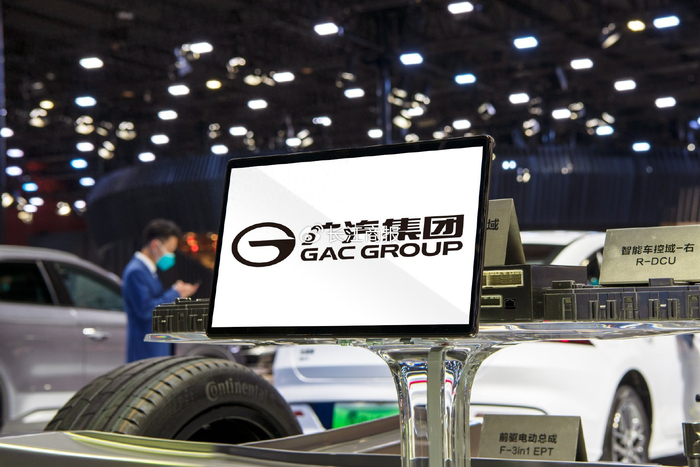
Core Viewpoint - GAC Group is expected to report a net loss of 8 to 9 billion yuan in 2025, marking its first annual loss in nearly 20 years, primarily due to declining revenue, reduced profits, and rising costs [3][4]. Financial Performance - The company's gross margin for the automotive manufacturing segment is projected to be -7.35% in 2025, with a significant drop from the previous year's margin [4][5]. - In the first three quarters of 2025, GAC Group reported a net loss of 4.312 billion yuan, indicating a substantial loss of approximately 4 billion yuan in the fourth quarter alone [4]. - The revenue from automotive manufacturing is expected to decrease from 78.934 billion yuan in 2024 to 69.010 billion yuan in 2025, while the cost of manufacturing is projected to decline from 77.214 billion yuan to 74.085 billion yuan [4]. Factors Contributing to Loss - The decline in revenue is attributed to a 22.83% drop in sales of self-owned passenger vehicles, leading to a contraction in the revenue scale [5]. - Increased promotional expenditures, which rose by 5 percentage points compared to the previous year, failed to boost sales, further compressing profit margins [5]. - Rising costs due to underutilization of capacity and increased fixed costs, including labor and depreciation, have also contributed to the overall financial strain [5]. Strategic Response - GAC Group aims to rebound by targeting a sales volume of 2 million vehicles in 2026, representing a year-on-year growth rate of 16.2% [6][8]. - The company plans to focus on three main tasks: stabilizing joint ventures, strengthening self-owned brands, and expanding its ecosystem [7][9]. - GAC Group is also investing in the development of intelligent robots, with plans for mass production by 2027, which could provide a new growth avenue [10].