Semiconductor

Search documents
黑芝麻智能官宣战略收购亿智电子 拓展AI芯片全场景未来
Zheng Quan Shi Bao Wang· 2026-01-03 01:29
Group 1 - Black Sesame Intelligent officially announced a strategic acquisition of Yizhi Electronics, aiming to integrate Yizhi's low-power, cost-effective AI SoC chip technology and products to enhance its overall layout in automotive-grade computing and edge intelligence solutions [1] - The acquisition involves equity transfer and capital increase, resulting in Black Sesame indirectly holding 60% of Yizhi Electronics. Yizhi's core team has committed to achieving a cumulative revenue of no less than 1.2 billion yuan and a net profit of no less than 90 million yuan over three years starting from 2026, with corresponding incentive and constraint mechanisms in place [1] - The collaboration will focus on three main areas: expanding the automotive product matrix and customer base, implementing robotics and AI+ innovative business, and coordinating R&D and supply chain mass production [1] Group 2 - The acquisition is a significant step towards Black Sesame's strategic goal of achieving a "full range of AI chips + full scene solutions," enhancing its comprehensive competitiveness in the AI chip sector and accelerating sustainable growth [2] - Black Sesame has been active recently, announcing a strategic partnership with Lenovo Research Institute's Robotics Laboratory to integrate technological advantages and enhance innovation capabilities in robotics and software application algorithms [2] - The SesameX multidimensional embodied intelligent computing platform is a comprehensive system developed by Black Sesame, designed for commercial deployment in robotics, integrating hardware, software, toolchains, and model ecosystems [3]

Micron’s (MU) 2026 Outlook Strengthens as Memory Pricing Improves
Yahoo Finance· 2026-01-03 00:41
Core Insights - Micron Technology, Inc. is recognized as one of the 20 Best Performing Dividend Stocks in 2025 [1] - The company's outlook for 2026 has strengthened due to improved memory pricing and tightening demand for memory chips [2][3] Financial Performance - Micron's shares have increased approximately 238% in 2026, indicating a significant rally driven by improved demand and pricing for memory products [3] - The latest earnings report for fiscal Q1 2026, ending November 27, shows a strong start to the year, suggesting that the current cycle has potential for sustained growth [4] Capital Expenditure Plans - Micron has raised its fiscal 2026 capital expenditure forecast to $20 billion, up from $18 billion, reflecting confidence in sustained demand [5] - This increase in capital expenditure is notable compared to the $13.8 billion spent in the previous fiscal year, indicating a long-term positive outlook for the memory market [5] Industry Context - Micron operates in the memory and storage products sector, primarily focusing on DRAM and NAND flash, which are essential for various applications including computers, smartphones, and data centers [6]

Micron stock skyrockets nearly 10%: what's driving AI memory re-rating
Invezz· 2026-01-02 20:00
Core Viewpoint - Micron stock (NASDAQ: MU) experienced a nearly 10% increase, driven by a combination of supply scarcity, record earnings momentum, and aggressive re-ratings from Wall Street [1] Group 1: Supply and Demand Dynamics - The stock surge is attributed to a perfect storm of supply scarcity, indicating a tight market for Micron's products [1] Group 2: Financial Performance - Micron is witnessing record earnings momentum, suggesting strong financial performance that is likely contributing to investor confidence and stock price appreciation [1] Group 3: Market Reactions - Aggressive re-ratings from Wall Street reflect a positive shift in analyst sentiment towards Micron, further fueling the stock's upward movement [1]

Baidu (BIDU) Gains Catalyst Watch at Citi as AI Strategy Accelerates
Yahoo Finance· 2026-01-02 16:29
Group 1: Company Overview - Baidu, Inc. (NASDAQ:BIDU) is a leading Chinese technology company that manages China's largest internet search engine and has expanded into AI-driven initiatives, including self-driving technology [4] Group 2: Recent Developments - Citi has initiated a 90-day upside catalyst watch on Baidu, indicating potential favorable developments in the coming months while maintaining a Buy rating with a price target of $181 [1] - The Kunlunxin spin-off announced in December is expected to create $3 billion in semiconductor value, supporting China's goal to reduce reliance on US technology, particularly Nvidia chips [2] - Baidu is set to release the ERNIE 5.0 foundation model in November 2025, which aims to enhance its AI product suite and integrate AI across its cloud and search offerings, keeping pace with industry leaders in language, audio, and visual data understanding [3]

美股异动 | 昆仑芯已秘密赴港IPO 百度(BIDU.US)盘前大涨超10%
智通财经网· 2026-01-02 14:02
智通财经APP获悉,周五,百度(BIDU.US)盘前大涨超10%,报144.10美元。此外,今日百度(09888)港 股也涨超9%,创两年新高。消息面上,百度集团发布公告,于2026年1月1日,昆仑芯已透过其联席保 荐人以保密形式向香港联交所提交上市申请表格(A1表格),以申请批准昆仑芯股份于香港联交所主板上 市及买卖。建议分拆完成后,预计昆仑芯仍将为公司的附属公司。 富瑞发布研报指出,分拆将有效释放昆仑芯的市场价值,预计其整体估值介于160亿至230亿美元之间。 按百度持有59%股权计算,这部分资产价值约90亿至130亿美元。基于此,富瑞将百度目标价上调14% 至176港元,并维持"买入"评级。 公开资料显示,昆仑芯前身为百度智能芯片及架构部,专注于通用AI芯片设计与生产。其产品广泛应 用于数据中心、云计算及自动驾驶等领域。摩根大通预测,该公司收入将从2025年的13亿元人民币飙升 至2026年的83亿元,增幅达6倍。 ...
新股前瞻 | 从智能视觉迈向AI、HPC,龙迅半导体赴港能否开启二次增长曲线?
智通财经网· 2026-01-02 13:21
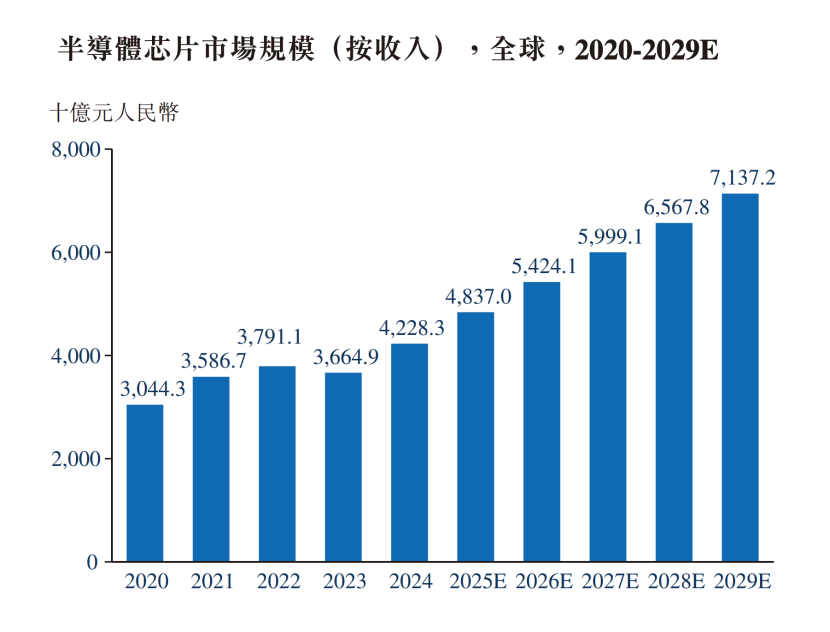
Core Viewpoint - Longxin Semiconductor, a fabless chip design company, has initiated its H-share IPO process to expand its international capital channels amidst a wave of A-share technology companies seeking secondary listings in Hong Kong [1][2]. Company Overview - Longxin Semiconductor focuses on the research and sales of integrated circuits, particularly in the high-growth sectors of smart video chips and high-speed interconnect chips [2]. - The company ranks fifth globally in the video bridging chip market by revenue and first among mainland Chinese manufacturers, according to a report by Frost & Sullivan [2]. Financial Performance - Revenue growth from 2022 to 2024 is projected at RMB 2.41 billion, RMB 3.23 billion, and RMB 4.66 billion, with a compound annual growth rate (CAGR) of 39.1% [3]. - For the first nine months of 2025, revenue reached RMB 3.89 billion, a 16.7% increase compared to the same period in 2024 [3]. - Net profit for the same period in 2025 grew by 32.5% to RMB 1.25 billion [3]. - Gross margins for 2022, 2023, and 2024 were 58.8%, 53.6%, and 54.3%, respectively, reflecting strong profitability due to optimized product mix and core technology control [3]. Market Position and Competitive Advantage - Longxin Semiconductor has established a significant lead in the mixed-signal chip market, ranking first in mainland China and among the top five globally in the video bridging chip sector [4]. - The proprietary ClearEdge technology platform integrates high-bandwidth SerDes, high-speed protocol processing, and video processing, supporting transmission rates of up to 20Gbps, with advancements towards 32Gbps [4]. - The company has developed a diverse product matrix with over 200 chip models, enabling rapid reuse and expansion across various applications, thus shortening development cycles and reducing costs [4]. Application and Growth Areas - The smart visual terminal segment contributed 79.3% of total revenue in the first nine months of 2025, with applications in drones, robots, commercial displays, and video conferencing systems [5]. - The smart automotive sector has emerged as a strong growth driver, with revenue share increasing from 8.0% in 2022 to 18.0% in 2024, reflecting a CAGR of 109.2% [5]. - The company has 14 chip models certified for automotive applications, enhancing its integration into high-end automotive displays and autonomous driving systems [5]. Strategic Initiatives - The dual listing strategy (A+H) aims to address future uncertainties and leverage capital markets for growth [6]. - The global semiconductor market is projected to grow from RMB 3 trillion in 2020 to RMB 4.2 trillion in 2024, with expectations to reach RMB 7.1 trillion by 2029 [7]. - The Chinese government has elevated the integrated circuit industry to a national strategic level, providing unprecedented opportunities for domestic chip design companies like Longxin Semiconductor [10]. - The funds raised from the IPO will be directed towards enhancing R&D capabilities, expanding overseas business networks, and strategic acquisitions in the global semiconductor industry [10]. Future Outlook - Longxin Semiconductor aims to define new standards in high-speed data transmission through next-generation technologies, addressing the evolving demands of smart cockpits and spatial computing devices [11]. - The company's ability to balance technological iteration and global supply chain dynamics will be crucial for its success in the competitive landscape [11].

汇成国际控股(01146):青岛华芯锚点所投资的上海壁仞已成功在联交所上市
智通财经网· 2026-01-02 13:20
Core Viewpoint - Huitong International Holdings (01146) announced that its invested fund, Qingdao Huaxin Anchor Investment Center, informed that its portfolio company, Shanghai Biran Technology Co., Ltd., successfully listed on the Hong Kong Stock Exchange on January 2, 2026 [1] Group 1: Company Overview - Qingdao Huaxin Anchor is a limited partnership established under the laws of the People's Republic of China, with its general partner being Qingdao Anchor Technology Investment Development Co., Ltd. [1] - Shanghai Biran, founded in China, primarily engages in the sales of General-Purpose Graphics Processing Unit (GPGPU) chips, GPGPU-based intelligent computing solutions to support artificial intelligence, and related research and development activities [1] Group 2: Investment Details - Following the completion of the listing, the company holds 1.70255 million shares of Shanghai Biran, representing approximately 0.07% of Shanghai Biran's issued share capital, which has been converted into H-shares [1] - Based on the closing price of Shanghai Biran H-shares at HKD 34.46 on January 2, 2026, the fair value of the company's stake through Qingdao Huaxin Anchor is approximately HKD 58.6699 million (around RMB 52.9918 million) [2] - After deducting the company's investment cost and related expenses, this investment is expected to yield a net gain compared to the initial investment cost in Qingdao Huaxin Anchor [2]
壁仞科技上市首日市值破千亿,专家:市场看好中国AI算力自主长期形势
Sou Hu Cai Jing· 2026-01-02 13:17
Core Viewpoint - Wallen Technology (06082.HK) debuted on the Hong Kong Stock Exchange on January 2, 2023, with a significant opening price of HKD 35.7, reflecting an 82.14% increase, marking it as the first domestic GPU company listed in Hong Kong and the third overall in China [1][2]. Company Overview - Founded in 2019, Wallen Technology focuses on GPGPU (General-Purpose Graphics Processing Unit) chips and intelligent computing solutions, primarily generating revenue from product sales, support services, and rental income from intelligent computing clusters [2][4]. - The company has consistently recorded net losses since its inception, indicating challenges in commercializing its products and solutions [2][4]. Financial Performance - Wallen Technology's revenue for the years ending December 31 and June 30 is projected as follows: - 2022: RMB 499,000 - 2023: RMB 62.03 million - 2024: RMB 337.9 million - 2025 (first half): RMB 58.9 million - The gross profit margins are expected to decline from 100% in 2022 to 31.9% by mid-2025, with cumulative losses exceeding RMB 6.3 billion [4][5]. - The company heavily relies on a few major clients, with revenue from the top five clients accounting for 98.1% in 2023, which poses risks of revenue volatility [5]. Market Position and Competition - Wallen Technology holds a market share of 0.16% in the Chinese intelligent computing chip market and 0.2% in the general GPU market as of 2024, with expectations to reach 0.19% by 2025 [1]. - The Chinese smart computing chip market is highly concentrated, with Nvidia and Huawei's HiSilicon accounting for 94.4% of the market share, leaving Wallen Technology and over 15 other players to compete for the remaining share [1][2]. Research and Development - The company has incurred substantial R&D expenses, totaling RMB 10.18 billion in 2022, RMB 8.86 billion in 2023, and projected RMB 8.27 billion in 2024, which constitutes a significant portion of its total operating expenses [5][6]. - As of mid-2025, Wallen Technology employs 657 R&D personnel, representing 83% of its workforce, with a majority holding advanced degrees and significant industry experience [5][6]. IPO and Future Plans - The IPO proceeds are primarily intended for R&D of intelligent computing solutions, commercialization efforts, and general corporate purposes, with the company aiming to leverage its technological advantages in the AI model computing power sector [6][7].

What Makes Micron Technology (MU) a Bullish Stock?
Yahoo Finance· 2026-01-02 11:57
Core Insights - Chautauqua Capital Management's third-quarter 2025 investor letter indicates that global equity markets performed well due to the resolution of trade conflicts and a dovish shift in U.S. monetary policy [1] - The Baird Chautauqua International Growth Fund and the Baird Chautauqua Global Growth Fund underperformed their respective benchmarks, primarily due to poor stock selection in the information technology, financials, and industrials sectors [1] Company Highlights - Micron Technology, Inc. (NASDAQ:MU) reported a one-month return of 25.93% and a 52-week gain of 226.82%, closing at $285.41 per share with a market capitalization of $321.23 billion on December 31, 2025 [2] - Micron raised its fourth-quarter guidance for revenues, earnings, and margins, citing improved pricing in DRAM and strong demand for high-bandwidth memory driven by AI data centers, with CY26 capacity already fully sold out [3] - In the first quarter of fiscal 2026, Micron reported revenue of $13.6 billion, reflecting a 21% sequential increase and a 57% year-over-year increase [4]
China's AI Frenzy Kickstarts 2026. What It Means for U.S. Tech Stocks.
Barrons· 2026-01-02 11:53
Group 1 - Baidu's chip unit has filed for an IPO in Hong Kong, indicating a strategic move to raise capital and expand its semiconductor business [1] - The filing comes amid a competitive landscape in the chip industry, where companies are increasingly focusing on innovation and production capabilities [1] - The IPO is expected to attract significant investor interest, reflecting the growing demand for advanced technology solutions [1] Group 2 - Trump has delayed tariffs on furniture, which may impact the pricing and supply chain dynamics within the home goods sector [1] - This decision could provide temporary relief to manufacturers and retailers, allowing them to adjust their strategies in response to market conditions [1] - The delay may also influence consumer behavior, as pricing stability could lead to increased spending in the home furnishings market [1] Group 3 - Google is making changes to its home listings sector, which could disrupt traditional real estate practices and enhance user experience [1] - The shake-up may lead to increased competition among real estate platforms, pushing them to innovate and improve their offerings [1] - These changes are likely to affect how consumers search for and purchase homes, potentially reshaping the real estate market landscape [1]