
储能

Search documents
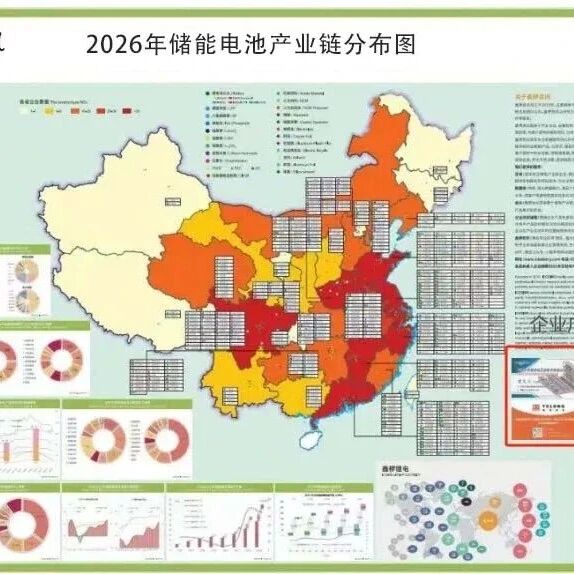
招商!鑫椤资讯2026中国储能产业分布图
鑫椤锂电· 2026-01-19 07:58
Core Viewpoint - The article emphasizes the importance of a distribution map for energy storage companies, serving as a targeted advertisement to reach decision-makers in the industry [1]. Group 1: Target Audience - The distribution map is aimed at key decision-makers in energy storage system procurement, upstream and downstream enterprises in the industry chain, government investment departments, and investment institutions [3]. Group 2: Map Features - The regional layout heat map precisely marks leading enterprises and industrial clusters in key provinces and cities across the country [4]. - The industry chain panorama covers core enterprises from lithium mining to battery cells, PCS, system integration, EPC, and applications [4]. - Key projects are highlighted within the map [4]. Group 3: Policy Insights - The policy heat index provides a clear overview of subsidy intensity, energy storage requirements, and electricity pricing policies across various provinces [5].

直播预告 | 2025年全球储能市场回顾
鑫椤锂电· 2026-01-19 07:58
Group 1 - The article discusses an upcoming live event focused on the global energy storage market review for 2025, scheduled for January 20, 2026, at 15:30 [2][6][7] - The live session will cover key topics such as cell shipment volumes, market share of companies, and segmented markets [6] - Additionally, the event will address system shipment volumes and the market share of integrators in the energy storage sector [6]

非洲储能掘金者生存图鉴:40%暴利,杀猪盘与极致博弈
3 6 Ke· 2026-01-19 07:41
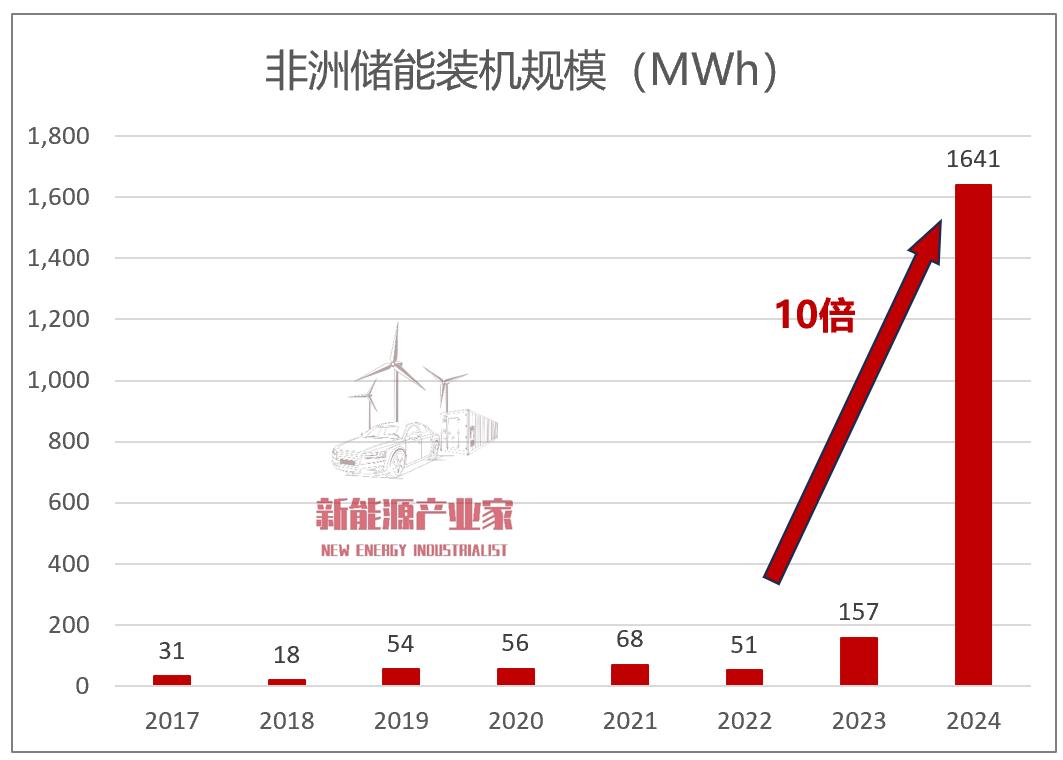
非洲新能源的暴利掘金故事,始于一场精心策划的毒品栽赃骗局。 2024年跨年夜,David是在赞比亚的看守所里度过的。 他在非洲做储能,是一家base在赞比亚的美元基金合伙人及EPC公司负责人。他遭遇了一场为他量身定制的杀猪盘: "我们在非洲做光储EPC,利润率能达到40%甚至是50%。" 当国内储能为了几分钱的差价卷到头破血流时,David手里是做不完的项目和订单,非洲的极度缺电带来了巨大的市场空间。 根据ESS,2024年非洲储能的装机规模已经达到1.64GWh,同比增长近10倍。 2024年非洲储能装机规模达1.64GWh 来源:ESS,国盛证券研究所 要知道非洲不是一个单一市场,而是由54个国家、复杂地形和碎片化需求拼成的马赛克。 在这里全球巨头尚未形成碾压之势,极端的风险与极端的收益,正吸引着大批中国的中小型中国储能玩家奔赴非洲大陆,开凿出一条通往未来的血路。 当然竞争门槛也在提高,简单卖设备已经卷不下去了,玩家必须要纵深到开发侧、运营侧甚至是资金侧的全链条。 他的当地合伙人勾结官员,将他的签证信息从移民局系统删除,并在办公室里放毒品栽赃陷害他。 "他们要把我从这个国家弄出去,然后把公司资产都侵吞了。 ...
华宝新能(301327.SZ):已积极布局GEO策略
Ge Long Hui· 2026-01-19 07:15
Core Viewpoint - The company is actively adapting to the transformation in marketing paradigms driven by the proliferation of AI technology, focusing on Generative Engine Optimization (GEO) strategies to shift from "passive search" to "active generation and scenario recommendation" [1] Group 1: Company Strategy - The company is leveraging its deep understanding of overseas e-commerce platforms like Amazon and user content needs to enhance its operations [1] - The focus areas include upgrading semantic scene content, improving content credibility and value, and promoting localization in different markets [1] Group 2: Product Development - The company aims to support the global market expansion of products such as balcony photovoltaic energy storage through its strategic initiatives [1]
A股储能概念午后持续反弹,海博思创涨超10%
Xin Lang Cai Jing· 2026-01-19 06:45
Group 1 - The core viewpoint of the article highlights a significant rebound in the A-share energy storage sector on January 19, with several companies experiencing notable stock price increases [1] - Haibo Sichuang saw its stock price rise by over 10%, indicating strong market interest and investor confidence in the company [1] - Other companies in the sector, including Huazi Technology, Airo Energy, Atas, Jinlang Technology, and Sunshine Power, also experienced stock price increases, reflecting a broader positive trend in the energy storage market [1]




海博思创股价涨5.13%,易米基金旗下1只基金重仓,持有1.48万股浮盈赚取19.06万元
Xin Lang Cai Jing· 2026-01-19 06:34
Group 1 - The core viewpoint of the news is that Haibo Sichuang's stock has seen a significant increase, with a rise of 5.13% to 263.60 CNY per share, and a total market capitalization of 47.472 billion CNY as of January 19 [1] - Haibo Sichuang focuses on the research, production, and sales of electrochemical energy storage systems, providing a full range of energy storage system products and solutions for various sectors including traditional power generation, renewable energy, smart grids, and end power users [1] - The company's main business revenue composition is as follows: 99.77% from energy storage systems, 0.10% from new energy vehicle leasing, 0.07% from other services, and 0.06% from technical services [1] Group 2 - From the perspective of fund holdings, Yimi Fund has a significant position in Haibo Sichuang, with its Yimi Low Carbon Economy Stock Fund A (017165) holding 14,800 shares, which represents 6.43% of the fund's net value [2] - The Yimi Low Carbon Economy Stock Fund A was established on March 14, 2023, with a latest scale of 46.7103 million CNY, and has achieved a year-to-date return of 3.64% [2] - The fund has performed well over the past year, with a return of 55.2%, ranking 1072 out of 4226 in its category [2]
全球首座!海辰储能点亮储能电池"灯塔工厂",领跑锂电长时储能赛道
中国能源报· 2026-01-19 06:04
Core Viewpoint - The article highlights that the Chongqing base of Hichain Energy has been recognized as the world's first "lighthouse factory" for energy storage batteries, marking a significant achievement in smart manufacturing and digital transformation within the global energy storage industry [2][4]. Group 1: Lighthouse Factory Recognition - The "lighthouse factory" initiative, launched by the World Economic Forum and McKinsey in 2018, aims to identify leading examples of smart manufacturing in the context of the Fourth Industrial Revolution [4]. - As of now, there are 224 lighthouse factories globally, with the Chongqing base being the first in the energy storage battery sector, filling a significant gap and showcasing China's advancements in smart manufacturing and digital upgrades [4][6]. Group 2: Smart Manufacturing and Digital Transformation - Hichain Energy's Chongqing base addresses three major challenges in the lithium battery storage industry: high compound annual growth rate of market demand, downward pressure on product prices, and increasing quality consistency requirements [6]. - The factory implements near-zero defect manufacturing, systematic cost reduction, and full-process intelligent operations to enhance digital and intelligent upgrades, significantly improving product quality, capacity, and overall equipment efficiency [6][8]. Group 3: Innovative Production Lines - The Chongqing base has established the world's first dedicated production line for long-duration energy storage batteries, with the ∞Cell 1175Ah battery set to achieve mass production by June 2025 [11]. - The associated ∞Power 6.25MWh long-duration energy storage system is scheduled for global delivery in October 2025, and it has been recognized at the national level as part of China's "14th Five-Year" achievements [11]. Group 4: Future Development and Industry Leadership - Hichain Energy aims to leverage its lighthouse factory status to enhance smart research and manufacturing capabilities, while also promoting digital upgrades across the supply chain [11]. - The company plans to contribute to the global energy sector's green and sustainable development by sharing replicable smart manufacturing experiences and capabilities, facilitating large-scale, high-quality, and efficient production and application of long-duration energy storage batteries and systems [11].

超13GWh!多企储能订单新进展
行家说储能· 2026-01-19 05:18
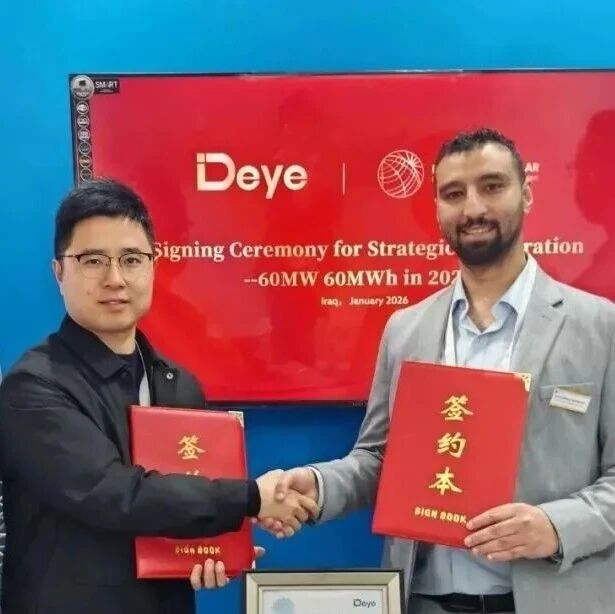
Core Insights - The energy storage industry continues to see a surge in orders as companies announce significant progress in their projects and partnerships, indicating a robust market outlook for 2026 [2] Group 1: Company Developments - Trina Solar has reported that its overseas orders have exceeded 12 GWh, with plans to ship 15-16 GWh in 2026, and expects over 60% of shipments to be international [3] - Kubo Energy signed a strategic cooperation agreement for 1.5 GWh with IBG Group in the Czech Republic, aiming to deliver within 18 months [4] - Kubo Energy has successfully delivered over 200 MWh of storage projects in the Czech Republic and is constructing a smart manufacturing base with an annual capacity of 15 GWh, set to be operational by mid-2026 [6] - DEYE signed a major cooperation agreement to supply 60 MWh of energy storage systems and inverters to Philadelphia Solar for projects in Jordan and Iraq [7][9] - Dongfang Electric signed a contract for a 300 MW solar and 75 MWh storage project in Uzbekistan, marking a significant expansion in Central Asia [10][12] - Risen Energy is collaborating with Eco Persona in Malaysia to develop commercial rooftop solar projects, focusing on high-efficiency integrated systems [13][15] - Samsung C&T has signed a development agreement for two battery energy storage systems (BESS) projects totaling 350 MW in Texas, aimed at enhancing grid stability and supporting renewable energy integration [16] Group 2: Market Trends - The energy storage market is experiencing a strong demand for integrated solar and storage solutions, with companies actively pursuing international partnerships to expand their reach [2][4][10] - The trend towards higher capacity and efficiency in energy storage systems is evident, with companies like Trina Solar and Kubo Energy increasing their production capabilities to meet growing demand [3][6] - The focus on sustainability and clean energy solutions is driving collaborations across various regions, particularly in emerging markets like the Middle East and Central Asia [9][12][13]


10家!1月储能相关企业资本动作密集
行家说储能· 2026-01-19 05:18
Core Viewpoint - The energy storage industry is experiencing a surge in capital activities, with multiple companies, including Haier New Energy and Deye, making significant progress in their IPO processes [2][4][6]. Group 1: Haier New Energy - Haier New Energy has secured over 1 billion yuan in financing and has initiated its IPO counseling process [4]. - The company focuses on "green energy + energy storage + smart energy controllers," providing comprehensive services for residential and commercial users globally [4]. - Haier New Energy has expanded its business to over 50 countries and regions, including Europe, Australia, Southeast Asia, South Asia, and Africa [4]. Group 2: Deye - Deye has made significant progress in its Hong Kong IPO, with its shareholders approving the proposal for issuing H-shares [6]. - The company aims to enhance its global strategy and market competitiveness while expanding its international financing channels [6]. - Financial data shows that Deye achieved a total revenue of 8.846 billion yuan in the first three quarters of 2025, a year-on-year increase of 10.36%, with a net profit of 2.347 billion yuan, up 4.79% [6]. Group 3: Industry Trends - As of January 19, 2026, a total of 10 energy storage-related companies have updated their IPO progress, indicating a strong desire among leading firms to leverage capital markets for expansion [3][9]. - These companies span key areas of the energy storage industry, including storage materials, batteries, and system integration, highlighting the robust growth potential in the sector [9]. - Notable companies involved include Gote Electronics, Penghui Energy, and others, each with significant revenue growth and strategic plans for IPOs [10].


固态电池迈向工程化验证关键期
Zhong Guo Neng Yuan Wang· 2026-01-19 04:57
Market Performance - The electric equipment and new energy sector increased by 0.79% this week, with industrial automation rising by 4.19%, the new energy vehicle index up by 1.44%, the photovoltaic sector up by 0.87%, and the nuclear power sector up by 0.66%. Conversely, the power generation equipment fell by 2.27%, the lithium battery index decreased by 3.55%, and the wind power sector dropped by 4.74% [1][3]. Industry Insights - In the new energy vehicle sector, global sales are expected to grow rapidly, with projections of 16.49 million units sold in 2025, a year-on-year increase of 28.2%, and 19 million units in 2026, a 15.2% growth [4]. - The domestic power battery cumulative installation is projected to reach 769.7 GWh by 2025, reflecting a 40.4% year-on-year growth [4]. - The solid-state battery technology is approaching a critical engineering verification phase, with companies like BYD bidding for GWh-level solid-state battery equipment [4]. - The photovoltaic sector is expected to benefit from regulatory measures aimed at controlling upstream silicon material prices, which may enhance profitability in downstream battery components [2][4]. - Wind power demand is anticipated to continue growing, with government support for new projects [2][4]. Company Highlights - Tianji Co. expects a net profit of 70 million to 105 million yuan in 2025, marking a return to profitability [5]. - Siyuan Electric anticipates a net profit of 3.163 billion yuan in 2025, a 54.35% increase year-on-year [5]. - TCL Zhonghuan forecasts a net loss of 8.2 billion to 9.6 billion yuan in 2025 and plans to invest in new energy to accelerate its integrated strategy [5]. - Rongbai Technology signed a procurement agreement with CATL for lithium iron phosphate materials, with total sales expected to exceed 120 billion yuan [5].
