
信托

Search documents
2024年信托资产规模超29万亿元
Jin Rong Shi Bao· 2025-08-08 07:52
Group 1 - The core viewpoint of the news is that the trust industry in China is experiencing significant growth, with the total trust asset scale reaching 29.56 trillion yuan by the end of 2024, marking a 9.48% increase from June 2024 and a 23.58% increase from the end of 2023 [1] - The main business of trust companies is gradually shifting from traditional non-standard financing to more diversified and specialized asset service trusts, asset management trusts, and public welfare charity trusts [1] - By the end of 2024, the scale of wealth management service trusts exceeded 1 trillion yuan, with family trusts at 643.58 billion yuan, insurance trusts at 270.40 billion yuan, and other personal wealth management trusts at 114.91 billion yuan [1] Group 2 - In asset management trusts, the scale of securities investment trusts reached 10.99 trillion yuan by the end of 2024, with 9.15 trillion yuan allocated to bonds, 723 billion yuan to stocks, and 398.1 billion yuan to funds [1] - The scale of public welfare charity trusts, with trust companies as trustees, was 4.965 billion yuan by the end of 2024, with a total of 2,244 registered charity trusts amounting to 8.507 billion yuan [2] - Among the registered charity trusts, 2,211 were managed by trust companies as sole or co-trustees, with a total scale of 8.438 billion yuan [2]
信息披露更透明 信托投资者权益保护更进一步
Jin Rong Shi Bao· 2025-08-08 07:52
Core Insights - The Financial Regulatory Authority is drafting a new regulation to standardize information disclosure for asset management trust products, aiming to enhance investor protection and unify regulatory standards across similar financial products [1][2]. Group 1: Regulatory Changes - The new regulation, titled "Management Measures for Information Disclosure of Asset Management Products by Banking and Insurance Institutions (Draft for Comments)," is designed to address inconsistencies in information disclosure across different asset management products [1][2]. - The regulation aims to strengthen the protection of investors' rights by ensuring they have access to comprehensive and detailed product information, thereby fulfilling the fiduciary duty of asset management institutions [2][3]. Group 2: Industry Impact - The introduction of standardized information disclosure is expected to enhance transparency, allowing investors to better understand the operation, risk status, and management of trust products, thus reducing information asymmetry [3][4]. - By improving information disclosure practices, the regulation is anticipated to bolster market confidence, protect investor rights, and promote the long-term healthy development of the trust industry [3][5]. Group 3: Investor Protection Measures - A multi-dimensional investor protection system is being established, which includes breaking the rigid payment structure, regulating shareholder behavior, optimizing corporate governance, and refining risk prevention measures [5][6]. - The regulatory framework emphasizes the importance of compliance and governance within trust companies, mandating the establishment of compliance management systems and the appointment of chief compliance officers [6][7].
物业管理中添了“信托”会怎样?
Jin Rong Shi Bao· 2025-08-08 07:52
Core Insights - The introduction of property service trusts in Shanxi Taiyuan marks a significant innovation in the property management sector, following a similar initiative in Beijing [1][2] - The implementation of the "Three Classification New Regulations" has facilitated the categorization of property service trusts under asset service trusts, enhancing the operational framework for these services [1][4] - The property service trust model aims to improve transparency, governance, and service quality in property management, addressing long-standing issues in the sector [3][10] Group 1: Property Service Trust Implementation - Shanxi Trust and Taiyuan's Yingze District have launched the "Jinxiang Sunshine" property service trust, which collects all public funds into a trust account for better financial management [1][3] - Chengdu's Wuhou District has successfully implemented a property service trust 2.0 model, enhancing management of old residential areas and increasing resident satisfaction [2][3] - The "Golden No. 1 Chengdu Changshou Garden Old Residential Area Property Service Trust" is noted as the first property service trust following the new regulations, showcasing a shift towards community-focused governance [2][3] Group 2: Advantages of Property Service Trusts - The property service trust model separates management rights and income rights, fostering a new trust relationship between homeowners and property companies [4][6] - This model enhances fund transparency and efficiency in supervision, allowing homeowners to monitor fund usage in real-time [6][10] - The introduction of community fund and service trust platforms has proven effective in managing resources and improving service delivery in underfunded areas [9][10] Group 3: Future Prospects and Developments - The trust industry is expected to see significant growth in administrative service trusts, with a reported scale of 18,176.79 billion yuan in 2024 [5] - The successful cases of property service trusts indicate a positive cycle where improved services lead to higher fee collection rates from residents [8][10] - Shanxi Trust plans to expand its service trust product offerings to include community micro-upgrades and elderly care, aiming to enhance the quality of life for residents [11]
三分类新规引领慈善信托发展
Jin Rong Shi Bao· 2025-08-08 07:52
Core Insights - The article discusses the growing importance of charitable trusts as a means for individuals to participate in social welfare and philanthropy, complementing traditional donation methods [1][4] - Recent regulatory changes, including the "Three Classification New Regulations," have provided strong support for the development of charitable trusts in China [1][2] Regulatory Support - The implementation of the "Three Classification New Regulations" has led to improved policies for charitable trusts, including tax incentives introduced in the revised Charity Law effective September 5, 2024 [2] - The Ministry of Civil Affairs and the Financial Regulatory Bureau have issued guidelines on annual expenditures and management fees for charitable trusts, establishing basic principles for trustees [2] - The State Council has emphasized the need to develop charitable trusts to support various initiatives such as rural revitalization, education, healthcare, and ecological protection [2] Development of Charitable Trusts - Following policy support, charitable trusts have seen significant growth, with 539 charitable trusts registered nationwide by the end of 2024, and total assets reaching 4.965 billion yuan [4] - The focus areas for charitable trusts include rural revitalization, poverty alleviation, and education, with 202 charitable trusts specifically aimed at education in 2024 [4] - Trust companies are increasingly establishing specialized departments for charitable trusts and forming corporate foundations to enhance resource integration and efficiency [3][4] Innovative Approaches - Trust companies are exploring various innovative models for charitable trusts, including the use of equity, real estate, intellectual property, and insurance rights as trust assets, thereby attracting more participants [5] - Specific examples include charitable trusts supporting community initiatives like "neighborhood kitchens" for the elderly and rural revitalization projects [5] Recommendations for Trust Companies - Experts suggest that trust companies should refine the positioning of charitable trusts, differentiating them from charitable foundations, and leverage their unique advantages to promote healthy development in the charity sector [6] - There is a call for integrating charitable trusts with asset service trusts and asset management trusts to effectively combine public and private interests [6]
信托公司增资“补血”为转型打基础
Jin Rong Shi Bao· 2025-08-08 07:52
Core Viewpoint - The trust industry is experiencing a significant increase in capital replenishment efforts due to stricter regulations and the need for business transformation, with multiple companies successfully raising capital in 2025 [1][4][6] Group 1: Capital Increases - Dongguan Trust has increased its registered capital from 20.65 billion yuan to 22.20 billion yuan in June 2025, marking a total increase of 1.55 billion yuan [1] - Other trust companies, including Tianjin Trust, Northern Trust, and Jilin Trust, have also completed capital increases in 2025, with Tianjin Trust raising its capital from 3.6 billion yuan to 5.286 billion yuan, an increase of 1.686 billion yuan [1][2] - Jilin Trust's registered capital increased from 3.15 billion yuan to 4.205 billion yuan, adding 1.055 billion yuan [1][2] Group 2: Methods of Capital Increase - Some trust companies are introducing new shareholders for capital increases, such as Northern Trust, which brought in two new shareholders, including a state-owned enterprise and a subsidiary of a central enterprise [2] - Jilin Trust's capital increase was funded by a new shareholder, changing its largest shareholder from the Jilin Provincial Finance Department to the Jilin Provincial Financial Holding Group [2][3] Group 3: Regulatory Environment - The regulatory environment is pushing trust companies to increase their capital, with new guidelines from the China Banking and Insurance Regulatory Commission emphasizing compliance and risk management [4][6] - The minimum registered capital requirement for trust companies has been raised from 300 million yuan to 500 million yuan, reflecting the importance of capital strength in the industry [4][6] Group 4: Strategic Importance of Capital Increases - Capital increases are seen as essential for trust companies to enhance their risk resistance and profitability amid industry transformation and regulatory pressures [5][6] - The trust industry is in a transitional phase, requiring companies to improve their capabilities in compliance, innovation, and risk management to adapt to the new market environment [6]
特殊需要信托:困局中破解“托付”难题
Jin Rong Shi Bao· 2025-08-08 07:52
Core Insights - The article discusses the establishment and significance of special needs trusts in China, emphasizing their role in providing financial security and support for individuals with disabilities and their families [1][2][5] - It highlights the challenges faced by families in understanding and accessing trust services, as well as the need for collaboration among government, social organizations, and financial institutions to create a comprehensive support system [7][8][9] Group 1: Special Needs Trust Overview - Special needs trusts are designed for vulnerable populations, including minors, individuals with mental disabilities, and elderly persons who cannot care for themselves [1][2] - The trust service aims to meet the specific needs of these individuals, providing a structured financial solution that integrates with existing social security systems [1][5] Group 2: Market Development and Challenges - As of the end of 2023, 13 trust companies have engaged in special needs trust services, with a total scale of 165 million yuan [3] - The development of special needs trusts is still in its early stages, with only about 20 companies currently offering such services [3][4] - Families often face difficulties in understanding trust mechanisms, necessitating educational outreach and support from trust professionals [2][6] Group 3: Case Studies and Practical Applications - A notable case involved an elderly woman in Shanghai who established a special needs trust to secure her property and ensure its transfer to her nephew, demonstrating the practical benefits of such trusts [3][4] - The article presents various innovative models, such as combining insurance with trust services to provide ongoing financial support for individuals with disabilities [6] Group 4: Collaborative Efforts and Future Directions - The article calls for a multi-faceted approach involving government, social organizations, and financial institutions to create a sustainable ecosystem for special needs trusts [7][8] - It emphasizes the importance of recognizing special needs trusts not merely as financial products but as essential legal structures that can address broader social issues [7][9]
以信托财产独立性重构纳税主体
Jin Rong Shi Bao· 2025-08-08 07:52
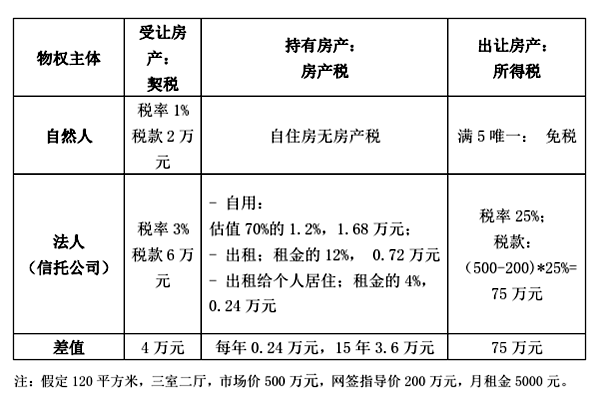
Core Insights - The article highlights the challenges faced by families with special needs when establishing special needs trusts, particularly the heavy tax burdens that can hinder their effectiveness [1][4][6] - The "Tongzhou case" serves as a significant example of how a special needs trust can provide long-term support for individuals with disabilities, showcasing the potential benefits of such trusts when tax burdens are alleviated [2][3][12] Group 1: Special Needs Trusts - Special needs trusts are essential for protecting the rights and dignity of vulnerable groups, including individuals with autism and the elderly [2][6] - The establishment of a special needs trust allows families to ensure ongoing care and support for their disabled members, overcoming potential legal and financial obstacles [2][4] Group 2: Real Estate and Trusts - The introduction of real estate into special needs trusts allows ordinary families to utilize their primary assets for long-term security and dignity [3][4] - The pilot program in Beijing facilitates the inclusion of real estate in trusts, making it accessible to a broader demographic [3][4] Group 3: Tax Burdens - High tax burdens associated with real estate trusts, including deed tax, property tax, and income tax, present significant barriers to the establishment of special needs trusts [4][6] - The tax implications for trusts are disproportionately higher compared to individual ownership, discouraging families from setting up these protective financial structures [4][5] Group 4: Tax Fairness and Reform - The primary demand from families utilizing special needs trusts is for tax fairness rather than tax benefits, advocating for tax rates comparable to those for individual property ownership [6][8] - Proposed reforms suggest redefining the tax obligations of trusts to align more closely with individual tax rates, particularly for properties used for personal or familial residence [8][11] Group 5: Legal Framework and Support - Establishing the legal status of trust plans as independent entities for tax purposes is crucial for resolving the current tax burden issues [7][11] - Legal experts are increasingly supportive of clarifying the tax and property rights of trust plans, which could lead to significant improvements in the trust system for special needs families [12]

家族信托:在市场喧嚣中破土生长
Jin Rong Shi Bao· 2025-08-08 07:52
应该说,伴随着居民财富积累、产业代际传承开启,家族信托在中国从初生的种子终于破土生长。 然而,从零的突破到行业标准雏形,从高净值人群专属工具到进入越来越多家庭视野,它的步履始终与 质疑共存:什么是信托?信托公司可信吗?家族财富锁入信托契约,是否真能避开纷争与风险?尤其是 当某些司法纠纷中信托财产"击穿"发生时,疑虑更如潮水般蔓延。 自2012年平安信托设立国内首单家族信托以来,目前该公司家族信托资产管理规模超530亿元,服 务客户数超3000名。从今年5月的数据来看,平安信托新增客户数和新增规模均位列行业第一。从信托 行业来看,截至2024年末,家族信托余额为6435.79亿元。可见,较早布局家族信托的信托公司在行业 内已具备一定的先发优势。 从近些年的相关案例来看,不论是某些境外家族信托被债权人"击穿",还是近期南通某法院执行某 信托基金的案件,引起众人关注或质疑的关键点是家族信托或者说是信托遭遇的信任和认知困境。 首先是认知迷雾。对相当多潜在客户而言,"信托"二字仍较为神秘,这种隔阂非一日形成,复杂的 法律设计、专属的服务流程、非刚兑的定位均构筑着一定的心理距离。当客户看不懂也感觉"控不住"受 托人的操作 ...
信托的风险隔离功能还值得信任吗?
Jin Rong Shi Bao· 2025-08-08 07:52
Core Viewpoint - Recent cases of trust property being executed by courts have raised concerns about the independence and risk isolation functions of trusts, leading to questions about the validity and effectiveness of trusts in protecting assets [1][2][3] Group 1: Trust Validity and Execution - Trusts can be "pierced" under three circumstances: the trust is invalid from the start, the trust is valid but the property can be executed by law, and the trust property is executed incorrectly [1][2] - An invalid trust may arise if the trust property does not meet legal requirements or if it was established to harm creditors' interests, leading to forced execution of the trust property [1][3] - A valid trust may still be subject to execution if the settlor retains ownership or control over the trust property, making it vulnerable to creditors [1][3] Group 2: Recent Case Analysis - In a recent case from Nantong, the legitimacy of the trust fund in question is uncertain, particularly if it involves illegal funds, which would render the trust invalid from the outset [3][4] - Other cases, such as one involving a trust established with marital assets for an extramarital affair, highlight the issues of legality and public order, which can invalidate the trust [3][4] - A complex case in Shandong involved illegal medical assets, where the trust's validity depended on the source of the funds and whether they were mixed with illegal proceeds [4] Group 3: Understanding Trusts - Trusts are a product of social needs and have evolved over time, with family trusts becoming more common among the general public [5][6] - Misunderstandings about trusts often lead to concerns about their potential misuse for fraud or legal evasion, despite their ability to help families isolate risks [5][6] Group 4: Risk Isolation Mechanism - The independence of trust property is crucial for risk isolation, with absolute independence from the trustee's other assets and relative independence from the settlor's other assets [8] - There are exceptions to this independence, including obligations to certain creditors, control by the settlor, and failure to transfer property to the trustee [8] Group 5: Future of Trusts - The effectiveness of the trust system relies on balancing risk isolation for beneficiaries and protection for creditors, ensuring that trusts are not misused to evade legal obligations [9] - The emergence of family trusts has increased the complexity of legal issues surrounding trusts, necessitating better implementation of trust laws and public education on trusts [9]
不动产登记 开启养老金融新篇章
Jin Rong Shi Bao· 2025-08-08 07:42
Core Viewpoint - The introduction of real estate trust property registration in cities like Beijing, Shanghai, and Guangdong aims to address the legal barriers of trust property ownership, facilitating the integration of real estate resources with pension needs and promoting innovation in pension finance [2][5]. Group 1: Real Estate Trust Property Registration - The core breakthrough of real estate trust property registration is the resolution of legal obstacles related to trust property ownership registration, which previously hindered the inclusion of non-cash assets like real estate into trusts [2]. - Successful pilot cases in Beijing and Shanghai have demonstrated the innovative merging of trust systems with pension needs, creating new pathways for transforming real estate resources into pension security [2]. - The registration of real estate and equity assets serves as a foundational guarantee for trust companies to conduct pension trusts, enhancing asset security and providing stable underlying assets for pension finance [2]. Group 2: Comparison with Traditional "Housing for Pension" Models - Unlike traditional "housing for pension" models, real estate trusts offer advantages such as risk isolation, where trust assets are independent of the trustee and client’s assets, thus safeguarding pension security from debt or inheritance disputes [3]. - Real estate trusts allow for flexible inheritance arrangements, enabling multiple beneficiaries, which supports both pension and inheritance goals, unlike mortgage models that may lead to asset ownership by financial institutions [3]. - Trust beneficiaries are protected as trustees are contractually obligated to manage assets, mitigating risks associated with market fluctuations and institutional failures that could disrupt pension payments [3]. Group 3: Target Audience and Accessibility - The primary audience for real estate pension solutions includes property owners lacking stable cash flow, families without children or with children living abroad, and high-net-worth families seeking to balance pension security with wealth transfer [4]. - Real estate trusts do not have specific entry thresholds, allowing for a more inclusive approach to pension services, potentially through "mini trust" models that accept partial ownership or smaller properties [4]. - Policy support is essential, including fee reductions and tax incentives, to attract a broader demographic to participate in real estate trusts [4]. Group 4: Sustainability and Risk Management - The real estate trust model is expected to activate idle properties, enhancing their usage efficiency and allowing elderly individuals to gradually release property value without causing market disruptions [5][6]. - The market potential for this model is significant, especially in first- and second-tier cities, with the possibility of forming a market worth hundreds of billions in the next 5 to 10 years if supportive tax policies are implemented [5]. - Trust companies must develop robust risk control mechanisms, including dynamic valuation systems and risk reserve funds, to protect the interests of elderly clients [5][6]. Group 5: Nationwide Promotion and Policy Support - Nationwide promotion of real estate trust property registration will require time due to regional differences, with potential expansions in cities with high aging rates and stable property values expected between 2025 and 2027 [7]. - Key supporting policies include optimizing tax regulations, ensuring judicial protection for trust assets, and coordinating standards across various regulatory departments [7]. Group 6: Recommendations for Trust Companies - Trust companies should focus on product innovation, such as developing combined products like "housing for pension" trusts with long-term care insurance, to extend service offerings [8]. - Building an ecosystem by collaborating with pension and healthcare institutions can create comprehensive pension solutions [8]. - Leveraging technology, such as AI, can enhance operational efficiency in property valuation and rental predictions [8].