显示面板

Search documents
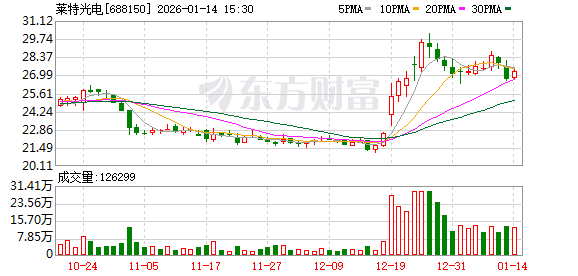
莱特光电:京东方8.6代线已于2025年12月30日成功提前5个月点亮
Zheng Quan Ri Bao· 2026-01-14 12:36
Core Viewpoint - The successful early activation of BOE's 8.6-generation line is a significant advancement for the domestic display industry, enhancing the production of high-end touch OLED displays for smart terminals like laptops and tablets [2] Group 1: Industry Developments - The 8.6-generation line, activated five months ahead of schedule, is crucial for the domestic display industry's breakthrough into mid-size, high-quality OLED sectors [2] - This advancement will improve the supply capability from small to mid-size products and reduce unit costs through scaled production, accelerating the penetration of OLED technology in various high-end applications [2] Group 2: Company Opportunities - The 8.6-generation line's substrate area is 2.16 times larger than that of the 6th generation line, which, combined with the application of Tandem stacking technology, is expected to significantly increase the demand for OLED emitting materials, creating a market potential exceeding 10 billion [2] - The rapid penetration into the mid-size sector will provide the company with extensive application scenarios for its products [2] - The company has proactively positioned itself in the relevant emitting materials and is currently collaborating with clients on validation work, laying a solid foundation for long-term business growth [2]



和辉光电:预计2025年度归属于上市公司股东的净利润为负值
Zhi Tong Cai Jing· 2026-01-14 11:56
Core Viewpoint - The company, Hehui Optoelectronics (688538.SH), announced that it expects to achieve a revenue growth of over 10% year-on-year for the fiscal year 2025, but it will continue to report a net loss attributable to shareholders of the listed company [1] Financial Performance - The company anticipates a revenue increase exceeding 10% for the year 2025 [1] - The net profit attributable to shareholders is projected to be negative, indicating continued financial losses for the company in 2025 [1]

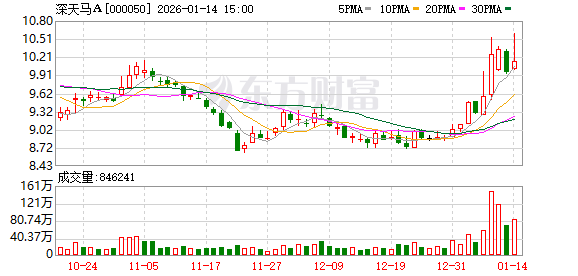
深天马A:2025年前三季度公司车载业务毛利率同比稳中有升
Zheng Quan Ri Bao· 2026-01-14 09:41
Core Viewpoint - The company anticipates a steady increase in the gross margin of its automotive display business by the third quarter of 2025, despite facing competitive market pressures and pricing challenges [2]. Group 1: Company Insights - The company is optimistic about the automotive display market, believing that the growth in automotive demand and the trend of specification upgrades will continue [2]. - The automotive display business primarily focuses on module shipments with a high degree of customization [2]. - The company plans to enhance product technology solutions and specifications, increasing the penetration of LTPS technology in automotive products and upgrading product sizes [2]. Group 2: Market Challenges - The company acknowledges the intense market competition and pricing pressures, which may have a certain transmission effect on the upstream supply chain [2]. - There is a commitment to continuously increase the complexity and integration of product modules to enhance the value of automotive products [2]. - The company aims to increase the proportion of high value-added products to strive for stable gross margins [2].

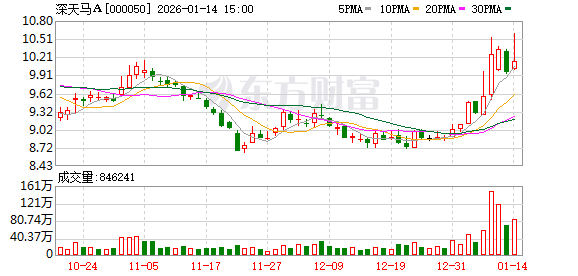
深天马A:2025年前三季度公司两条柔性产线均保持良好的运营
Zheng Quan Ri Bao· 2026-01-14 09:40
(文章来源:证券日报) 证券日报网1月14日讯 ,深天马A在接受调研者提问时表示,2025年以来,行业柔性OLED手机显示产 品需求端温和增长,供给端竞争格局持续演进,相关产品市场价格阶段性承压。2025年前三季度,公司 两条柔性产线均保持良好的运营:TM17运营效率持续改善、产品结构优化和全维度降本的大力推进, 前三季度净利润同比改善超30%,经营质效明显提升。同时,积极推进中尺寸、穿戴领域的多元化拓 展,2025年实现了首款柔性穿戴量产出货,打开了新的业务增长空间。公司重要联营公司TM18产线持 续爬坡,并着力强化高规格产品能力,旗舰高端产品出货量持续攀升,已实现旗舰产品在国内头部品牌 全覆盖,支持多款旗舰机型首发,并积极推进行业新技术前瞻布局。公司将持续在产线能力提升、全维 度降本等方面下功夫,并在市场端持续提升柔性OLED产品结构的高端化和在中尺寸、穿戴等领域的多 元化拓展,不断提升产品价值度,稳健应对市场变化。 ...
深天马A:公司聚焦显示主业,同时积极布局基于面板工艺与TFT驱动技术的非显示应用技术开发
Zheng Quan Ri Bao· 2026-01-14 09:40
(文章来源:证券日报) 证券日报网1月14日讯 ,深天马A在接受调研者提问时表示,公司聚焦显示主业,同时积极布局基于面 板工艺与TFT驱动技术的非显示应用技术开发,建立了MPG平台(多项目玻璃基板技术平台),稳步推 进与行业伙伴在面板级超材料智能天线、微流控、智能调光、大面积指纹识别、柔性传感器等领域开展 技术开发与合作,将面板制造技术赋能更广泛的应用领域。目前,公司相关业务主要还在孵化和培育 期,部分技术已经小批量,公司将持续探索市场需求和优化产品方案。 ...
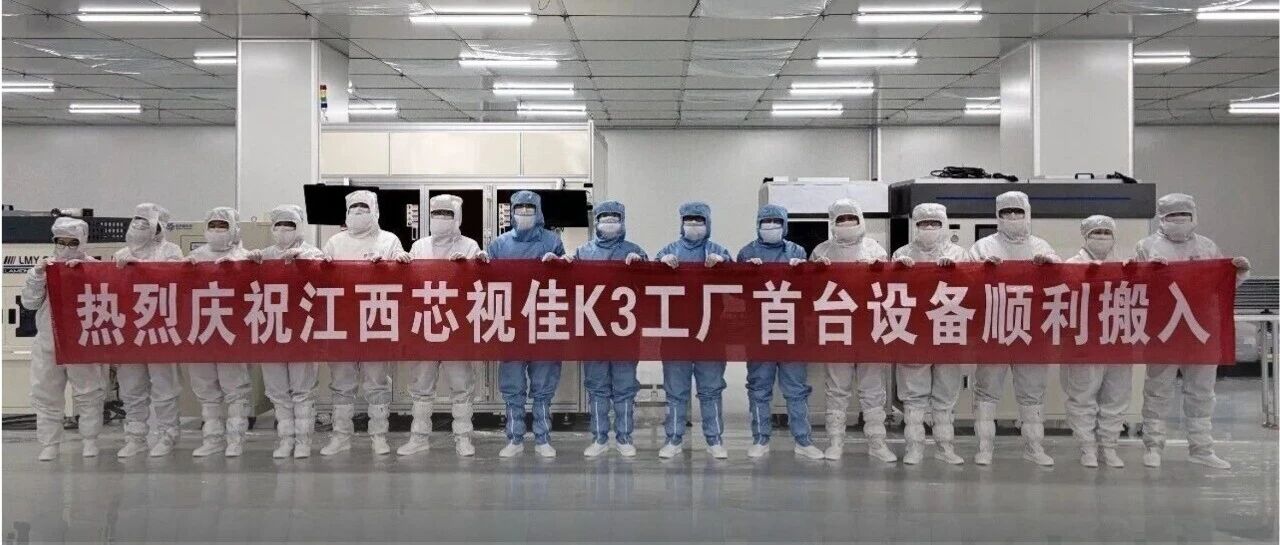
总投资10亿,江西OLED模组工厂首台设备进场
WitsView睿智显示· 2026-01-14 07:45
Core Viewpoint - The completion of the K3 factory's cleanroom renovation marks a significant milestone for the company, enabling large-scale manufacturing of high-end OLED modules, with the factory now in the equipment installation and trial production phase [1][3]. Group 1: K3 Factory Overview - The K3 factory, operated by Jiangxi Xinshi Technology Co., Ltd., has a total investment of 1 billion yuan and is being constructed in two phases: the first phase plans to produce 12 million flexible OLED modules annually with 2 fully automated production lines [3][4]. - The second phase will add the capacity to produce 2.5 million silicon-based OLED display modules per year, also equipped with 2 fully automated production lines [3][4]. - Once fully operational, the project is expected to generate an annual output value exceeding 1 billion yuan, focusing on high-end applications in VR/AR, automotive, and specialized displays [3][4]. Group 2: Product Features and Applications - The K3 factory will primarily produce OLED modules characterized by high resolution, high brightness, low power consumption, ultra-thin design, and long lifespan, targeting next-generation near-eye display devices [3][4]. - The products are intended for diverse application scenarios, including consumer electronics, smart wearables, and automotive displays [3][4]. Group 3: Future Developments - The factory will focus on process optimization and capacity enhancement, aiming to provide innovative display product solutions for global customers through technological advancements [4]. - Additionally, the company announced the successful lighting of its 12-inch Micro OLED production line (K2 project) in December 2025, with a total investment of 1.5 billion yuan and a planned monthly capacity of 4,000 12-inch wafers, primarily for AR/VR/MR applications [4]. - The company's K1 factory in Huainan, Anhui, was completed and put into production in April 2023, with a total investment of 100 million yuan, mainly producing silicon-based OLED micro-displays, flexible OLED smartphone screens, and automotive display modules, with an expected annual output value of 200 million yuan [4].
2026面板业危中有机:大盘或微降,液晶获利稳,中尺寸OLED飙升
Di Yi Cai Jing· 2026-01-14 06:06
Core Viewpoint - The memory price increase is impacting terminal demand, while the supply of LCD TV panels is concentrated, with a price rebound in January. The demand for automotive displays and high-end IT products will be the main growth points in the industry. Group 1: Company Performance - TCL Technology's subsidiary TCL Huaxing is expected to achieve revenue exceeding 100 billion yuan and net profit over 8 billion yuan by 2025, attracting attention to the panel industry [4] - TCL Huaxing's revenue is projected to grow by 23% to approximately 106.3 billion yuan in 2025, with 47% coming from TV panels, marking a decline in TV panel revenue share below 50% for the first time [5] - The company has strengthened its position by acquiring LGD's Guangzhou 8.5-generation LCD panel line and increasing its stake in Shenzhen Huaxing, contributing to profit growth [5] Group 2: Industry Outlook - The global display panel industry is expected to see a revenue of $114.4 billion in 2025, a slight decline of 1.3%, primarily due to a downturn in the mobile product panel market [6] - The LCD panel sales are projected to reach $69.5 billion, while OLED panel sales are expected to be $44.7 billion, both showing slight declines [6] - The overall sales of the global panel industry are anticipated to decrease by 1.8% to $112.4 billion this year, with a 2% decline in the shipment of mainstream consumer electronics expected [6] Group 3: Market Dynamics - The top three companies, BOE, TCL Huaxing, and Huike, account for 70% of the global LCD TV panel market shipment, with a projected 3% increase in global LCD TV panel shipments in 2025 [6][7] - The profitability of LCD panels is expected to stabilize due to production control and price stability, with a focus on large-size panels and a shift towards high-end products [7] - The demand for mid-size OLED panels is expected to grow significantly, with a projected sales increase of over 20% in 2026 [8] Group 4: Competitive Landscape - The competition in the mid-size OLED market is expected to intensify, particularly as new production lines from BOE and Samsung enter mass production [9] - The demand for automotive displays and high-end IT products is anticipated to be the main growth drivers in the future market [9]

深天马A接待1家机构调研,包括淡水泉投资、等
Jin Rong Jie· 2026-01-14 02:24
Core Viewpoint - The company has shown significant growth in its automotive business, with a 24% year-on-year increase in sales for the first three quarters of 2025, driven by traditional automotive displays, automotive electronics, and domestic new energy sectors [1][3]. Group 1: Automotive Business - The automotive business sales increased by approximately 24% year-on-year in the first three quarters of 2025, with traditional automotive displays stable and growth in automotive electronics and new energy sectors [1][3]. - The gross margin for the automotive business has remained stable year-on-year, with expectations for continued growth despite competitive pressures [6]. - The company plans to enhance product value through improved technical solutions, increased LTPS technology penetration, and product size upgrades [1][6]. Group 2: Flexible OLED Business - The flexible OLED business has seen a significant improvement, with net profit from the TM17 production line increasing by over 30% year-on-year, and the launch of the first flexible wearable product [5]. - The TM18 production line is ramping up production of high-end flagship products, achieving coverage of major domestic brand flagship models [5]. Group 3: Non-Display Business - The company is focusing on non-display applications based on panel technology and TFT driving technology, establishing an MPG platform for developing technologies in areas like smart antennas and microfluidics [4]. - Current non-display business initiatives are in the incubation phase, with some technologies already in small-scale production [4]. Group 4: Micro-LED Business - The company has been developing Micro-LED technology since 2017, focusing on automotive and splicing display applications, with plans for small-scale production of standardized display modules in 2025 [6]. - The company has launched industry-leading Micro-LED products, including a 108-inch and a 135-inch 4K seamless splicing display, showcasing advancements in size, contrast, color range, and brightness [6]. Group 5: Future Planning and Strategy - The company adheres to a "2+1+N" strategy, focusing on mobile and automotive displays as core businesses, with IT displays as a key growth area and non-display applications as value-added businesses [2][9]. - Future projects include the construction of the 8.6-generation panel production line (TM19), new display module production line (TM20), and full-process Micro-LED production line, aimed at enhancing long-term competitiveness [2][9].
TCL科技2025年归母净利预增169%-191%,达42.1-45.5亿元!
Cai Fu Zai Xian· 2026-01-14 02:16
Core Viewpoint - TCL Technology Group Co., Ltd. is expected to achieve a net profit attributable to shareholders of 4.21 billion to 4.55 billion yuan for the year 2025, representing a year-on-year increase of 169% to 191% [1] - The company has demonstrated strong profitability with a significant increase in net profit excluding non-recurring gains and losses, projected to be between 2.89 billion and 3.20 billion yuan, reflecting a year-on-year surge of 869% to 973% [1] Group 1: Financial Performance - TCL Huaxing has implemented a "leading strategy," achieving operating revenue exceeding 100 billion yuan and net profit surpassing 8 billion yuan, with operating cash flow net exceeding 40 billion yuan, indicating high-quality growth [1] - The company has maintained competitive advantages in large-size products such as TVs and commercial displays, while experiencing rapid growth in the small and medium-size product sectors [1] Group 2: Strategic Developments - TCL Technology completed the acquisition of 100% equity in the former LG Display (China) Co., Ltd., enhancing its capacity advantage in the large and medium-size LCD panel market [1] - The company has increased its stake in Shenzhen Huaxing Optoelectronics Semiconductor Display Technology Co., Ltd., effectively improving its net profit attributable to shareholders [1] Group 3: Technological Advancements - The expansion of TCL Huaxing's G5.5 generation printed OLED production line and the construction of the world's first high-generation printed OLED production line mark significant steps in the commercialization of next-generation display technologies [1] - In the semiconductor materials sector, TCL Zhonghuan has solidified its leading position in the domestic market, achieving operating revenue exceeding 5.7 billion yuan [2] Group 4: Market Position and Challenges - TCL Zhonghuan is experiencing significant fluctuations in the photovoltaic industry due to oversupply across various segments, but is focusing on product innovation and global strategies to improve profitability [2] - The company’s TV OEM business remains industry-leading, with display manufacturing experiencing rapid growth and enhanced profitability through the expansion into high-value-added product areas [2]
2025年中国硅基OLED微显示屏行业进入壁垒、发展历程、产业链图谱、市场规模、竞争格局及发展趋势分析:XR领域需求高达50.39%[图]
Chan Ye Xin Xi Wang· 2026-01-14 01:27
Core Insights - The silicon-based OLED microdisplay has become the core display solution for XR (AR/VR) devices due to its high resolution, high contrast, low power consumption, and miniaturization advantages, with applications expanding from consumer to industrial and medical fields as AI and XR technologies converge [1][10] - The global shipment of silicon-based OLED microdisplays is expected to reach 6.365 million units in 2024, a year-on-year increase of 25.1%, with a market size of $1.27 billion, growing by 13.4% year-on-year [10] Industry Overview - Microdisplays are defined as screens smaller than 2 inches with pixel sizes under 10 micrometers, with silicon-based OLED microdisplays utilizing single-crystal silicon wafers as driving backplanes and OLEDs as light-emitting units, offering high resolution, brightness, contrast, and rapid response [2][3] - The main technologies in the microdisplay market include Fast-LCD, LCoS, and silicon-based OLED, with silicon-based OLED showing significant advantages in contrast, response speed, and pixel density, particularly in VR and AR applications [3][4] Industry Barriers - The production of silicon-based OLED involves multiple processes requiring high technical precision, combining semiconductor and OLED display technologies, which creates significant entry barriers due to the need for breakthroughs in key processes [4][5] Development History - The development of China's silicon-based OLED microdisplay industry can be divided into four stages: laboratory exploration, technological breakthroughs, industrialization, and global competition, with leading companies achieving breakthroughs in performance metrics since 2024 [5][6] Industry Chain - The upstream of the silicon-based OLED microdisplay industry includes suppliers of raw materials, production equipment, and testing equipment, while the midstream focuses on R&D, design, and production, and the downstream encompasses application markets such as XR, electronic viewfinders, and infrared thermal imaging [7][8] Current Market Status - The XR field is the core demand market for silicon-based OLED microdisplays, expected to account for 50.39% of the market in 2024, driven by the need for high information density and immersive display effects [8][10] Competitive Landscape - The XR market is primarily dominated by Sony and Visionox, with Sony holding a 50.8% share of global shipments in 2024, while Visionox ranks second with a 35.2% share [11][12] Company Analysis - Visionox is a leading provider of microdisplay solutions, with a diverse product range and a strong focus on R&D, achieving a production rate of 95.33% in the first half of 2025 [12] - Suzhou Qingyue Technology specializes in OLED and silicon-based OLED microdisplays, with a revenue of 0.13 billion yuan from its silicon-based OLED business in 2024, accounting for 1.69% of total revenue [13] Future Trends - The silicon-based OLED microdisplay industry is expected to focus on continuous performance upgrades, with advancements in brightness, optical efficiency, and power consumption [14] - The industry will accelerate the localization of the supply chain, enhancing collaboration and innovation across upstream and downstream sectors [15] - The integration of AI and XR technologies will drive the development of a cohesive ecosystem, enhancing global competitiveness and shifting the industry from a "follower" to a "leader" position [15]