科研

Search documents
深圳光明科学城加速崛起
Jing Ji Ri Bao· 2025-12-04 22:24
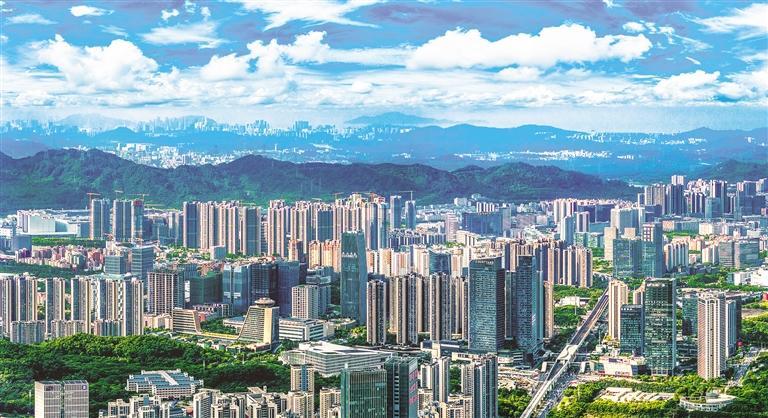
光明科学城 12月4日,为期两天的光明科学城论坛·2025开幕,这场以"开放""智创""领航"为年度主题关键词的科学盛会, 集中展示大湾区综合性国家科学中心建设新进展的同时,以务实行动回应了科技创新与产业创新深度融合的 新时代之问。 湾区科创新核 奏响协作强音 作为大湾区综合性国家科学中心先行启动区的重要组成部分,深圳光明科学城(以下简称"光明科学城")肩 负着打造国家战略科技新力量的责任。自2018年规划建设以来,深圳以超常规力度打造世界一流科学城,集 中布局一批大科学装置、2所高水平研究型高校、2个广东省实验室、11个科研机构,聚集颜宁、杨学明、樊 建平等知名院士在内的高层次人才超3000人;光明科学城连续3年入选全国科技城百强榜,排名从2022年第24 名跃升至2024年第7名,创新能力和综合竞争力位居全国前列。 高水平科技开放合作是实现高水平科技自立自强的内在要求,优化区域开放布局,进一步探索协同创新合作 模式和机制,有助于推进优质创新资源共享共用,促进科研、产业优势互补,打造形态多样的开放高地,促 进科技水平大幅提升。 抢抓新一轮科技革命和产业变革历史机遇,需要全面增强自主创新能力,不断催生新质生产 ...

广东三大科学城形成“半小时科研圈” 广深莞共建科创共同体
Shen Zhen Shang Bao· 2025-12-03 23:17
三大科学城通过广深港、广珠澳科技创新走廊以及跨珠江口通道串联,加速形成"半小时科研圈",为创 新链、产业链、资金链、人才链深度融合奠定坚实基础。 据悉,在国家各部委支持下,广东已布局建设10个国家重大科技基础设施。加上一批地方大设施,广东 已初步形成覆盖信息、生命、材料、能源领域的世界级科技基础设施集群,共同筑起广东原始创新的坚 实底座。 祝永辉介绍,已布局的重大科技基础设施一经投入运行,很快展现了强大的产业带动作用。如2024年, 全省人工智能核心产业规模超2200亿元,同比增长约25%,稳居全国第一方阵。 【深圳商报讯】(驻穗记者 张莹)12月3日,在广东省"十四五"高水平科技自立自强新闻发布会上,广 东省大湾区办专职副主任祝永辉透露,粤港澳大湾区综合性国家科学中心先行启动区建设已较好完成第 一阶段目标任务。 具体来说,深圳光明科学城、东莞松山湖科学城、南沙科学城三大科学城联动共建,构筑起创新空间核 心载体。 深圳光明科学城实现了从传统产业区到尖端科技集聚区的跨越,已建成深圳湾实验室、人工智能与数字 经济实验室等一批重大科研平台,集聚院士59位、高层次人才超3000名,在脑科学、合成生物等前沿领 域取得5 ...
学习规划建议每日问答丨促进科技自主创新和人才自主培养良性互动需要把握哪些重点
Xin Hua She· 2025-12-03 04:22
Group 1 - The core viewpoint emphasizes the importance of promoting a virtuous interaction between technological innovation and talent cultivation, highlighting the need for a cohesive development of education, technology, and talent [1] - There is a structural mismatch between talent cultivation and technological innovation supply and demand, necessitating a coordinated approach to advance education, technology, and talent [1] Group 2 - Establishing a dynamic talent cultivation mechanism that aligns with technological development needs is crucial, focusing on reforming educational concepts, systems, and methods to produce high-level innovation talents [2] - The mechanism should include monitoring and forecasting talent demand, adjusting academic disciplines, and targeting urgent talent needs in strategic fields such as artificial intelligence and biotechnology [2] Group 3 - Deepening the collaboration between education and technology is essential, particularly in nurturing young scientific talents and strategic scientists to address major technological challenges [3] - A supportive mechanism for talent organization, research funding, and incentives should be established to enhance the cultivation of strategic talents [3] Group 4 - Creating a conducive environment for talent growth involves reforming evaluation systems to focus on innovation capability and contribution, detaching talent titles from resource allocation [4] - Fostering an innovative culture that encourages risk-taking and respects scientific endeavors is vital for nurturing outstanding talents [4]
唠科|世界知名科创榜单中国领跑
Xin Hua She· 2025-12-03 02:26
Core Insights - China has recently ranked highly in several prestigious international research platforms, indicating a significant rise in its research and innovation capabilities, attracting global academic attention towards the East [2] Group 1: Research Cities - Beijing has maintained its position at the top of the global research city rankings for nine consecutive years, with Shanghai, Guangzhou, Wuhan, Nanjing, and Hangzhou also making it into the top ten [3] - China holds a historic majority in the top ten research cities globally, with several Chinese cities appearing in the global top 200 [3] - Research output in Beijing increased by over 9% from 2023 to 2024, while Shanghai's output saw a significant increase of nearly 2844575 [3] Group 2: Academic Disciplines - Chinese cities continue to dominate the rankings in chemistry, physical sciences, and earth and environmental sciences, with Beijing ranking first globally in all three fields [4] - For the first time, Chinese cities occupied all top ten positions in the chemistry field, while they secured six positions each in the other two fields [4] - The changes reflect a broader trend of China expanding its leading advantage in global research [4] Group 3: Innovation Index - China has become one of the top ten most innovative economies globally for the first time, according to the World Intellectual Property Organization's 2025 Global Innovation Index report [4] - China ranks first globally in several intellectual property-related sub-indicators, with the "Shenzhen-Hong Kong-Guangzhou" innovation cluster ranking first globally [4] - The chief economist of the World Intellectual Property Organization noted that China's innovation activities have shown remarkable performance in recent years, supported by government planning and attention [4] Group 4: Rising Scientific Leadership - The number of Chinese scientists taking leadership roles in international collaborations is rapidly increasing, with over half of the research projects with the UK led by Chinese scientists [5] - Approximately one-fifth of the 2025 Highly Cited Researchers awards were granted to researchers from mainland China, with the Chinese Academy of Sciences leading globally with 258 awards, surpassing Harvard University's 170 [5] - A report from the Swedish Foundation for International Cooperation in Research and Higher Education indicates that China has surpassed the US in research strength, particularly in mathematics, computing, and engineering [5] - In the field of remote sensing research, China accounted for 47% of the published results globally in 2023 [5]

特稿丨中国创新为什么行——国际学界关注中国科研发展之道
Xin Hua She· 2025-12-02 12:09
Group 1: Core Insights - China's research and innovation capabilities have significantly improved, with international recognition highlighting its achievements in research output, quality, and collaborative leadership [1][4][5] - The "clustered" innovation ecosystem in cities like Nanjing and Beijing has fostered collaboration among academia, industry, and government, enhancing the efficiency of research-to-application transitions [2][3][4] - China's strategic investment in research and development has led to a substantial increase in funding, with R&D spending growing nearly sixfold from 2007 to 2023, surpassing the EU and nearing the US levels [4][6] Group 2: City-Level Innovations - Nanjing has emerged as a leading innovation hub, showcasing advanced technologies at the World Intelligent Manufacturing Conference, and is now among the top ten global research cities [2][3] - Beijing has maintained its position as the top global research city for nine consecutive years, developing a comprehensive innovation platform [2][3] - Hangzhou has entered the top ten list, fostering significant advancements in artificial intelligence and other key industries [2][3] Group 3: Talent Development - China is experiencing a "scale dividend" in STEM graduates, with 3.6 million graduates in 2020, contributing to a growing pool of research talent [6][7] - The number of Chinese researchers in international collaborations is increasing, with a notable rise in high-impact publications and awards [7] - Top institutions like Tsinghua University and Peking University are attracting elite talent, particularly in foundational scientific research [7]
特稿|中国创新为什么行——国际学界关注中国科研发展之道
Xin Hua She· 2025-12-02 11:29
Group 1 - China's research and innovation capabilities have significantly improved, with the country ranking first in various global research metrics, including research output and innovation clusters [1][3] - The city of Nanjing, along with five other Chinese cities, has entered the top ten global research cities, marking a notable achievement for China in the international research landscape [1][2] - The World Intellectual Property Organization reports that China has 26 of the world's top 100 technology innovation clusters, leading globally, with the "Shenzhen-Hong Kong-Guangzhou" cluster ranking first [2][3] Group 2 - China's sustained investment in research and development has led to a rapid increase in research output, with funding growing nearly sixfold from 2007 to 2023, surpassing the European Union and nearing the United States [3][4] - The number of STEM graduates in China reached 3.6 million in 2020, contributing to a large pool of research talent, which is crucial for the country's scientific advancement [5][6] - Chinese researchers are increasingly taking leadership roles in international scientific collaborations, with a significant number of awards for high-impact research being granted to Chinese scientists [6]
以进一步深化改革融通江苏发展新动能
Xin Hua Ri Bao· 2025-12-02 05:48
Group 1 - The core viewpoint emphasizes that Jiangsu must leverage reform as a key driver for high-quality development, focusing on "integration" to break down institutional barriers and enhance the flow of critical elements such as talent, technology, capital, and data [1] - The "14th Five-Year Plan" period requires Jiangsu to address existing barriers between technology, education, and talent through reform practices, enhancing their interaction to support industrial upgrades and future development [2] - Establishing a dual-channel mechanism for industry professors and technology vice presidents aims to integrate academic and industry expertise, enhancing the practical application of research in enterprises [3] Group 2 - The emphasis on regional collaboration highlights the need for Jiangsu to create a complementary and high-quality regional economic layout, leveraging its strategic position in the Yangtze River Delta [5] - The "1+3" functional area reform is identified as a key strategy to address development imbalances and enhance overall competitiveness within Jiangsu [5] - The proposal to optimize the "flying economy" and establish a shared benefits mechanism aims to stimulate cooperation between regions and enhance innovation [6] Group 3 - The focus on market system construction aims to eliminate obstacles to the establishment of a unified national market, enhancing supply and demand dynamics through institutional reforms [8] - Jiangsu's strong supply capacity for intermediate products necessitates reforms to elevate its position in the value chain, promoting high-value-added segments [8] - The introduction of a public demand-driven technology iteration mechanism aims to address challenges in urban governance, healthcare, and environmental protection [9] Group 4 - Jiangsu's large population of 85 million presents an opportunity to convert its market potential into effective demand, driving high-quality supply [10] - The exploration of new consumption incentives linked to sustainable behaviors aims to create a circular consumption market [10] - The establishment of a skills-based compensation guideline is intended to ensure that skill enhancements directly reflect in income growth [10] Group 5 - The need for a platform-driven approach to enhance the market-oriented allocation of factors is emphasized, promoting the integration of technology, data, and governance [11] - The establishment of a data aggregation hub aims to clarify rights and responsibilities in data development and usage, ensuring equitable benefit sharing [11] - The introduction of a collaborative and efficient system for assessment will shift focus from GDP to indicators of factor integration, linking results to resource allocation [12]
【科技日报】青海盐湖所:支撑世界级盐湖产业基地建设
Ke Ji Ri Bao· 2025-12-02 02:55
Core Insights - The Qinghai Salt Lake Research Institute is the only national research institution in China and globally dedicated to salt lake research, leading the construction of world-class salt lake industrial bases [1] - During the 14th Five-Year Plan period, the institute established a "Green High-Value Utilization Laboratory for Salt Lake Resources" and received support for building one of the top ten national scientific innovation platforms in Qinghai Province [1] - The institute is involved in 140 major national scientific tasks with a total funding of approximately 270 million yuan, focusing on the extraction and separation of difficult-to-utilize potassium and lithium resources, isotope separation technology, and green efficient separation of key strategic resources from salt lakes [1] - Significant research breakthroughs have been made regarding the potential resources of rubidium and cesium in Tibetan salt lake brine, as well as the current status and future prospects of lithium, potassium, and oil and gas mineral resources, which have been recognized as major advancements in the second scientific expedition to Tibet [1]
两部门:到2035年各科学事业单位内部控制体系更加健全
Zheng Quan Shi Bao Wang· 2025-12-01 08:53
Core Viewpoint - The Ministry of Finance and the Ministry of Science and Technology issued guidelines to strengthen internal control systems in scientific institutions, aiming for a robust framework by 2027 and further improvements by 2035 [1] Group 1: Internal Control System Goals - By 2027, a clear, balanced, effective, and well-supervised internal control system is expected to be established in scientific institutions [1] - The guidelines emphasize strict financial discipline to ensure legal compliance, asset security, and the authenticity of financial information [1] - The aim is to prevent corruption and scientific misconduct while enhancing the efficiency of resource allocation in research [1] Group 2: Long-term Vision - By 2035, the internal control systems in scientific institutions are projected to be more robust, effectively enhancing research capabilities [1] - The improvements in internal control are intended to lay a solid foundation for building a strong technological nation [1]
中国科技创新闪耀海外知名榜单
Xin Hua Wang· 2025-11-30 09:16
Core Insights - China's scientific research output is experiencing explosive growth in both quantity and quality, leading to a dominant position in various global rankings [2][3] Group 1: Research Cities - The latest "Nature Index - Research Cities 2024" report indicates that Chinese research cities are flourishing, with Beijing ranking first for nine consecutive years and several other cities like Shanghai, Guangzhou, and Wuhan making it to the top ten [3] - Beijing's research output increased by over 9% from 2023 to 2024, while Shanghai saw an increase of nearly 20%, reflecting a broader trend of expanding leadership in research [3] - Chinese cities dominate in the fields of chemistry, physical sciences, and earth and environmental sciences, with Beijing leading globally in all three areas [3] Group 2: International Influence - Chinese scientists are increasingly taking leadership roles in international collaborations, leading over half of the research projects with the UK and expected to reach similar leadership proportions with Europe and the US in the coming years [4] - The Chinese Academy of Sciences topped the 2025 Highly Cited Researchers list with 258 awards, surpassing Harvard University [4] - A report from STINT indicates that China has surpassed the US in research strength, particularly in mathematics, computing, and engineering [4] Group 3: Contribution to Sustainable Development - China is the largest contributor to global Sustainable Development Goals (SDG) related research, with its academic outputs increasingly influencing global SDG policy-making [5][7] - 24% of global published research in 2024 pertains to SDG-related studies, with Chinese research being widely cited in SDG policy documents, particularly by international organizations like the WHO [7] - Chinese research findings are significantly impacting global health and environmental policy documents since 2022, highlighting the importance of China's contributions to sustainable development [7]