自动驾驶

Search documents
馭勢科技再冲港股IPO:聚焦L4级自动驾驶,中信证券独家保荐
Ju Chao Zi Xun· 2025-11-29 04:02
Core Viewpoint - Yushi Technology (Beijing) Co., Ltd. is making another attempt to list on the Hong Kong Stock Exchange, focusing on L4 autonomous driving technology and commercial vehicles in closed scenarios such as airports and factories [2] Group 1: Industry Position and Market Focus - Yushi Technology is the largest supplier of L4 autonomous driving solutions for commercial vehicles in airport and factory scenarios in Greater China, with a significant market share [2] - The company is the only global supplier providing large-scale commercial L4 autonomous driving solutions for airports, meeting the highest international safety standards [2] - The revenue from airport scenarios is projected to account for 35.1%, 71.2%, 58.7%, and 50.3% of total revenue from autonomous vehicle solutions and leasing services from 2022 to June 2025 [2] Group 2: Business Operations and Revenue Streams - The core products of Yushi Technology include commercial vehicles equipped with L4 autonomous driving capabilities, autonomous driving kits, software solutions, and leasing services, designed for unmanned operation without standby safety personnel [2] - The company has established partnerships with 20 airports, including 17 in China and 3 overseas, and is exploring opportunities with 4 new airports [2] - Revenue from factory scenarios is expected to represent 26.4%, 22.2%, 25.8%, and 12.0% from 2022 to June 2025 [3] Group 3: Financial Performance and Client Relationships - Major clients include Fortune 500 companies, with the revenue contribution from the top five clients being 57.6%, 66.0%, 46.2%, and 82.8% from 2022 to June 2025 [3] - The average retention rate of key clients, contributing over 10 million yuan, is 100%, 75.0%, 75.0%, and 40.0% for the respective periods [3] - The procurement amount from the top five suppliers has remained stable, accounting for 32.2%, 35.5%, 33.7%, and 54.4% during the same period [3] Group 4: Research and Development Capabilities - Yushi Technology's R&D capabilities are a core competitive advantage, with centers in Beijing, Shanghai, and Chongqing focusing on AI, L4 autonomous driving, hardware, and cloud technology [4] - The R&D team consists of 227 members, with 52.4% holding master's degrees or higher, led by core members with over 8 years of industry experience [4] - The company has invested in R&D with expenditures of 189 million yuan, 184 million yuan, 196 million yuan, and 98 million yuan from 2022 to the first half of 2025 [4] Group 5: Intellectual Property and Compliance - Yushi Technology has been granted 627 patents and has submitted 234 patent applications, with a significant portion of its technology being developed internally [4] - All solutions are classified as "designated special technology products" under Hong Kong listing rules, with all revenue during the performance period derived from such product sales [4]


语言或许不是自驾的「终极答案」,但它无疑是当下最可行的路径...
自动驾驶之心· 2025-11-29 02:06
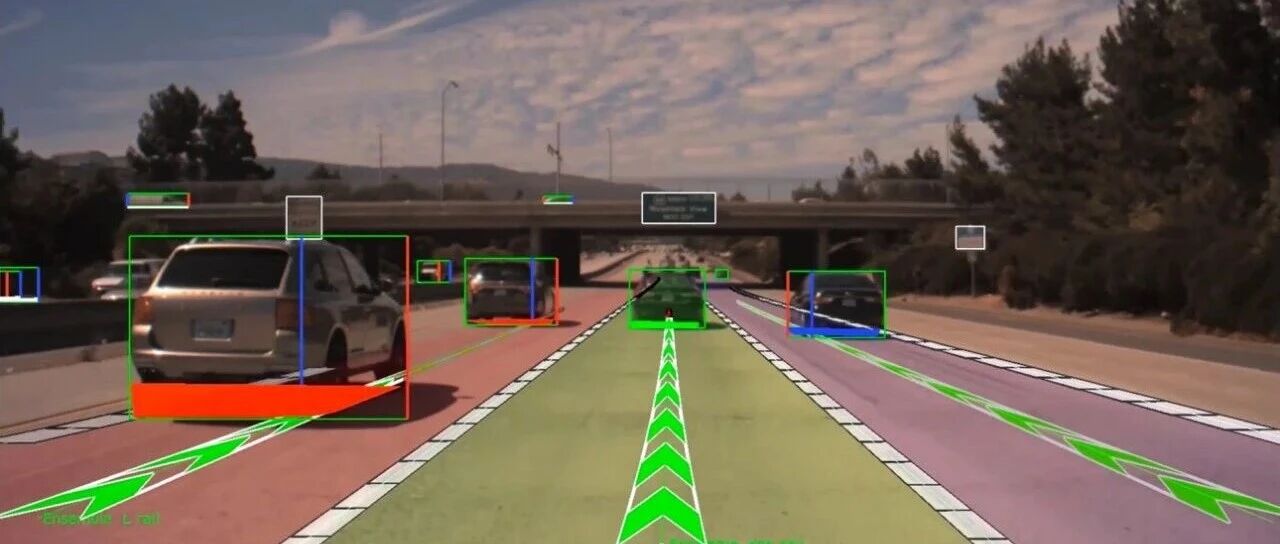
Core Insights - The article emphasizes that the current development of autonomous driving systems relies heavily on data-driven models, but the next breakthrough must focus on enhancing reasoning capabilities [2][4][7]. Group 1: Current State of Autonomous Driving - The industry predominantly uses a classic data flywheel model for production models, which includes deployment, effect verification, data mining, retraining, and redeployment [4]. - As data scales have increased to tens of millions, the performance gains from merely increasing data size have diminished, leading to higher costs and more complex challenges [4][7]. - Companies like Tesla, Li Auto, Xiaomi, and Xpeng have recognized this shift and are adapting their strategies accordingly [4]. Group 2: Insights from Other Fields - The article draws parallels between autonomous driving and robotics, noting that while autonomous driving has benefited from abundant data, robotics has faced data scarcity [7]. - Recent advancements in robotics, such as large datasets and new algorithms, have emerged from this scarcity, potentially paving the way for more robust capabilities in embodied intelligence [7]. Group 3: Future Directions in Autonomous Driving - The article identifies a critical flaw in current autonomous driving systems: the lack of deep reasoning capabilities [7]. - To transition to the next phase of autonomous driving (referred to as Autonomous Driving 3.0), four pillars are necessary: reasoning ability, common-sense cognition, long-term memory, and explanation and interaction [7][9]. - NVIDIA's upcoming Alpamayo-R1 model aims to integrate explicit causal reasoning with trajectory planning within a unified VLA architecture, highlighting a shift towards reasoning-driven approaches [7]. Group 4: Community and Learning Resources - The article promotes a community platform for knowledge sharing in autonomous driving, which includes resources for beginners and advanced learners, as well as opportunities for networking with industry experts [13][28]. - The community has compiled extensive resources, including over 40 technical directions and nearly 60 datasets related to autonomous driving, facilitating easier access to information for both newcomers and experienced professionals [28][50].
【光大研究每日速递】20251128
光大证券研究· 2025-11-29 00:04
Group 1 - The A-share market experienced a general decline in November, with the major indices falling due to overseas expectation fluctuations and a decrease in market risk appetite. The Kweichow Moutai index saw the largest drop of 7.1%, while the Shanghai 50 index had the smallest decline of 1.3%. The performance across industries showed significant differentiation, with the comprehensive, banking, and media sectors leading in gains [4] Group 2 - Ideal Automotive reported a total revenue of 27.36 billion yuan in Q3 2025, reflecting a year-on-year decrease of 36.2% and a quarter-on-quarter decrease of 9.5%. The gross margin also fell by 5.2 percentage points year-on-year and 3.8 percentage points quarter-on-quarter to 16.3%. The company recorded a Non-GAAP net loss of 360 million yuan, marking its first quarterly Non-GAAP loss since 2023. The decline in performance was attributed to lower-than-expected sales and recall provisions [5] Group 3 - Pony.ai achieved a total revenue of 25.44 million USD in Q3 2025, representing a year-on-year increase of 72% and a quarter-on-quarter increase of 19%. The gross margin improved by 9 percentage points year-on-year and 2 percentage points quarter-on-quarter to 18%. However, the Non-GAAP net loss widened by 33% year-on-year and 19% quarter-on-quarter to 54.72 million USD [6]

全线上涨!芯片股爆发
Zheng Quan Shi Bao· 2025-11-28 23:23
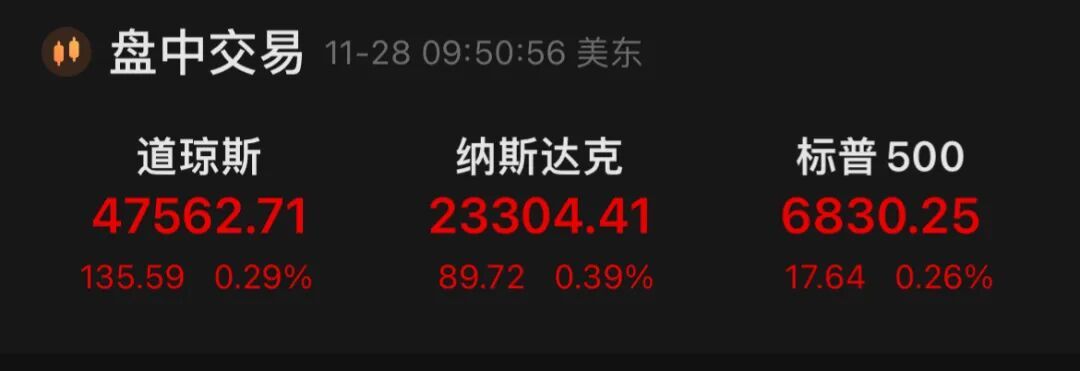
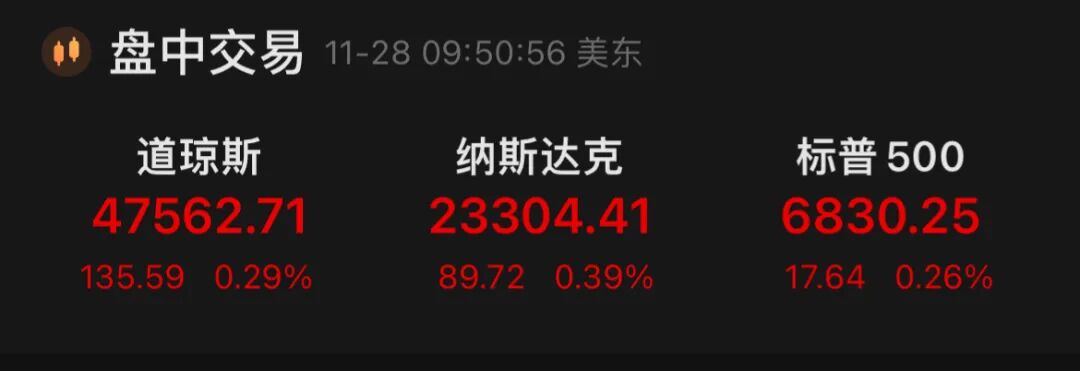
Market Overview - US stock markets collectively rose, with the Dow Jones up 0.29%, Nasdaq up 0.39%, and S&P 500 up 0.26% [1] Company Updates - Google shares increased by nearly 1%, with CEO Sundar Pichai expressing hopes to send TPU to space by 2027 [3] - Oracle's stock fell over 3% as multiple banks are negotiating to provide $38 billion in loans to Oracle and data center builder VANTAGE [3] Industry Trends - Storage sector stocks saw a collective rise, with SanDisk up over 4%, Micron Technology up 2.8%, and Western Digital up 2%. This surge is attributed to an exacerbated global shortage of storage chips, with research institutions predicting a 50% increase in storage chip prices [4] - Precious metals experienced significant price movements, with spot gold reaching $4200 per ounce, up 1.03%, and spot silver rising to $55 per ounce, marking a 3% increase and a new record high. Factors contributing to silver's rise include expectations of a Federal Reserve rate cut in December, inflows into silver ETFs, and ongoing supply constraints [6] - LME copper prices surged by 2.5%, reaching a new high of $11,210 per ton [7] - Cryptocurrency prices also saw increases, with Bitcoin rising to $92,324.6 (up 1.68%) and Ethereum reaching $3,074.75 (up 2.64%) in the past 24 hours [8] Chinese Concept Stocks - Chinese concept stocks generally rose, with Bawang Tea up over 4% and Pony.ai up more than 3%, while Canadian Solar fell nearly 2% [5]
深夜全线爆发,白银创历史新高
Zheng Quan Shi Bao· 2025-11-28 23:03
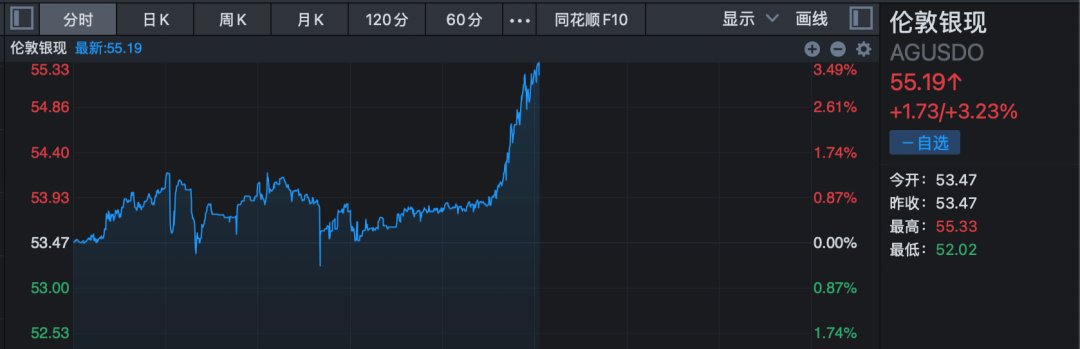
Market Overview - US stock indices opened higher, with the Dow Jones Industrial Average at 47,604.20, up 0.37%, the Nasdaq at 23,273.50, up 0.25%, and the S&P 500 at 6,829.45, also up 0.25% [4] - Technology stocks surged, particularly storage chip companies, with Micron Technology rising over 2% and Western Digital increasing nearly 1% due to a global supply-demand imbalance in the DRAM market driven by surging AI computing needs [4] - The Nasdaq China Golden Dragon Index rose nearly 1%, with popular Chinese concept stocks generally increasing [4] Precious Metals - Spot gold rose to over $4,200 per ounce, gaining more than 1% in a single day [1] - Spot silver increased by 3.23%, reaching a new historical high of $55.19 per ounce [1][2] Base Metals - Base metals experienced a significant rally, with London tin rising nearly 3% and New York copper increasing by 2% [2] - Other metals such as aluminum and zinc also saw price increases [2][3] Company Performance - Bawang Tea reported a total GMV of 7.93 billion yuan and net income of 3.208 billion yuan for Q3 2025, with a registered user base of 222 million, reflecting a 36.7% year-on-year growth [5][6] - Pony.ai announced a revenue of 181 million yuan for Q3 2025, a 72% increase year-on-year, with its Robotaxi business revenue growing by 89.5% [6] - NIO delivered 87,100 vehicles in Q3 2025, a 40.8% increase year-on-year, with revenue reaching 21.79 billion yuan, up 16.7% [7] - Hesai Technology launched new high-performance chips and advanced lidar technology during a recent event [7]
中国自动驾驶企业开启“大航海时代”
Zheng Quan Ri Bao· 2025-11-28 16:47
Core Viewpoint - The global market for autonomous driving is rapidly expanding, with Chinese companies making significant strides in various international markets, but intense competition and profitability challenges persist [1][3]. Group 1: Market Expansion - Chinese autonomous driving technology has successfully penetrated markets in Singapore, UAE, Saudi Arabia, and the USA, covering various vehicle types such as sanitation vehicles, mining trucks, minibuses, and Robotaxis [1]. - The industry is transitioning from single-point demonstrations to comprehensive coverage, forming a trillion-yuan global market [1]. Group 2: Competitive Landscape - There are over 8,200 active autonomous driving-related companies in China, leading to fierce competition and a "burning money for market share" phenomenon [3]. - Major players in the Robotaxi sector, such as Xiaoma Zhixing and Wenyan Zhixing, reported significant losses, with Xiaoma Zhixing's net loss reaching $152 million in the first three quarters of 2025, a 62.1% year-on-year increase [3][4]. - R&D expenditures are a major factor in these losses, with Xiaoma Zhixing spending over $517 million from 2022 to 2024, while total revenue during the same period was only $215 million, resulting in an R&D expenditure ratio of 239.5% [3]. Group 3: Opportunities in International Markets - The demand for autonomous driving technology is high in developed countries due to issues like labor shortages and inefficiencies in public transport [5]. - Companies are shifting from merely exporting products to providing comprehensive "technology + operation" solutions [6]. Group 4: Challenges in Globalization - Key challenges include policy compliance, adapting technology to different scenarios, and cultural differences in safety standards [7][8]. - Environmental factors, such as extreme temperatures in the Middle East, pose significant challenges to the performance of autonomous vehicles [8]. Group 5: Capital and Funding - The ongoing commercialization challenges necessitate continuous funding for autonomous driving companies to maintain technological advancements [9]. - Recent IPOs and significant funding rounds, such as Didi Autonomous Driving's $2 billion Series D round, highlight the importance of capital in supporting international expansion and local adaptation [9]. Group 6: Strategic Partnerships - Collaborations with global ride-hailing platforms, like Uber, are crucial for Chinese autonomous driving companies to establish a foothold in international markets [6][10]. - Companies are focusing on building a robust ecosystem and leveraging partnerships to enhance their competitive edge [10].
深夜,全线上涨!芯片股爆发!
Zheng Quan Shi Bao· 2025-11-28 15:33
Market Overview - US stock markets collectively rose, with the Dow Jones up 0.29%, Nasdaq up 0.39%, and S&P 500 up 0.26% [1] Company Updates - Google's stock increased by nearly 1% as CEO Sundar Pichai announced plans to send TPU to space by 2027 [3] - Oracle's stock fell over 3% amid discussions with multiple banks for a $38 billion loan for Oracle and data center builder VANTAGE [3] Sector Performance - Storage sector stocks saw a collective rise, with SanDisk up over 4%, Micron Technology up 2.8%, and Western Digital up 2%, driven by a worsening global shortage of storage chips and a forecasted 50% price increase [4] - Chinese concept stocks generally rose, with Bawang Tea up over 4% and Pony.ai up over 3%, while Canadian Solar fell nearly 2% [5] Commodity Market - Spot gold reached $4200 per ounce, up 1.03% for the day, while spot silver rose 3% to $55 per ounce, setting a new record high due to multiple favorable factors including expectations of a Fed rate cut in December and tight supply conditions [6] - LME copper prices surged by 2.5%, reaching a new high of $11,210 per ton [7] Cryptocurrency Market - Bitcoin rose to $92,324.6, gaining 1.68% in the past 24 hours, while Ethereum increased to $3,074.75, up 2.64% in the same period [8]



驭势科技递表港交所
Mei Ri Jing Ji Xin Wen· 2025-11-28 14:38
Group 1 - The core point of the article is that Yushi Technology (Beijing) Co., Ltd. has submitted a listing application to the Hong Kong Stock Exchange, with CITIC Securities as the exclusive sponsor [1] Group 2 - The listing application indicates Yushi Technology's intention to enter the public market, which may provide it with additional capital for growth and expansion [1] - The involvement of CITIC Securities as the exclusive sponsor suggests a strong backing and confidence in Yushi Technology's market potential [1]
产学研融合助力科技自强,一批京企无人车进高校
Bei Jing Ri Bao Ke Hu Duan· 2025-11-28 12:52
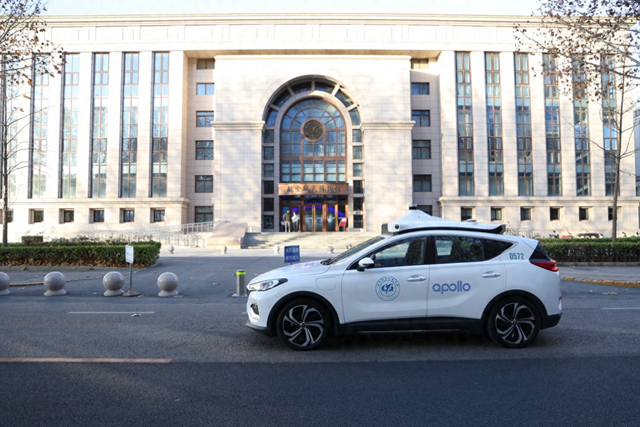
Core Insights - The collaboration between Baidu Apollo and Beihang University aims to enhance research, education, and talent development in the field of autonomous driving [1][3] - Baidu Apollo is recognized as a leader in the domestic autonomous driving sector, while Beihang University is one of the first institutions to offer a specialized program in this area [3] Group 1: Collaboration and Contributions - Baidu Apollo has donated autonomous vehicles to Beihang University to support research and education in autonomous driving [1] - The partnership has led to the establishment of China's first "autonomous driving" major and has been recognized as a typical project in the Ministry of Education's collaborative education initiative [3] Group 2: Future Plans and Initiatives - Baidu Apollo plans to launch the "Spark Program" in early 2025, which will involve donating autonomous vehicles and experimental platforms to multiple universities, including Wuhan University and Fudan University [3] - This initiative aims to foster the development of autonomous driving technology and cultivate more skilled professionals in the industry [3]

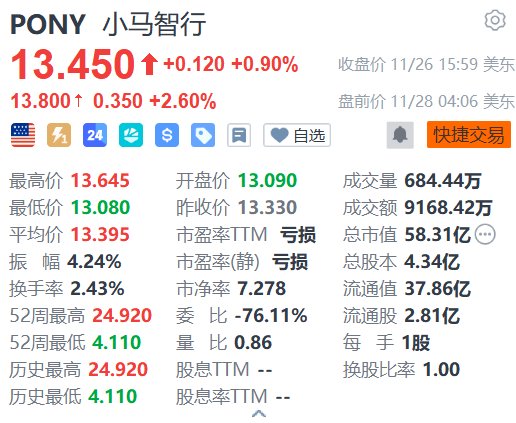
美股异动丨小马智行盘前涨超2% 机构指其将快速进入规模化复制阶段
Ge Long Hui· 2025-11-28 09:25
Group 1 - The core viewpoint of the article highlights that Pony.ai (PONY.US) is benefiting from a surge in its Robotaxi business, with Q3 revenue exceeding expectations [1] - According to a report from China Merchants Securities International, the G7 model in Guangzhou has achieved breakeven, validating the Robotaxi business model and indicating a rapid scale-up phase [1] - Bank of America Securities reported that as of November 23, Pony.ai's Robotaxi fleet reached 961 vehicles, with management confident of surpassing the 1,000 vehicle target by year-end and expecting over 3,000 vehicles by the end of 2026 [1] Group 2 - Bank of America has raised its revenue forecasts for Pony.ai for 2025 to 2027 by 5%, 4%, and 9% respectively, and increased the target price for its US stock from $20 to $21 [1] - The stock price of Pony.ai rose by 2.6% in pre-market trading, reaching $13.8 [1] - The total market capitalization of Pony.ai is reported to be $5.831 billion [1]