储能

Search documents
500MW/2000MWh!奇点能源首个GWh级项目成功并网
中关村储能产业技术联盟· 2026-01-14 02:59
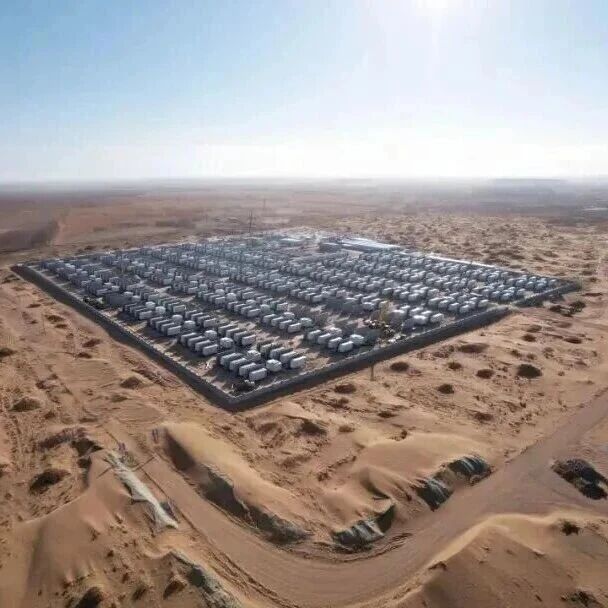
Group 1 - The core viewpoint of the article highlights the successful grid connection of the Inner Mongolia Tengkou 500MW/2000MWh energy storage project, marking a significant milestone for the company as its first GWh-level project [2][3][13] - The project utilizes the company's newly developed Galaxy-1 modular prefabricated cabin, featuring a total installed capacity of 500MW/2000MWh, with 400 units of Galaxy-1-4G and 100 units of eLink-HV35 integrated transformer [5][6] - The successful implementation of the project demonstrates the reliability and excellence of the Galaxy-1 product in large-scale applications, contributing to the stability and safety of the regional power grid [8][11] Group 2 - The energy storage project enhances the ability to smooth out fluctuations from intermittent renewable energy sources like wind and solar, significantly improving grid regulation and operational safety [11] - The project is expected to increase the consumption of renewable energy in the region, reducing waste from wind and solar energy, and accelerating the transformation of the energy structure in Inner Mongolia [11][13] - The company plans to continue innovating in the energy storage sector and aims to make a substantial impact on China's energy revolution [13]

12月116项储能政策发布,15省电力市场规则更新
中关村储能产业技术联盟· 2026-01-14 02:59
Policy Data Overview - A total of 116 energy storage-related policies were released by December 2025, with 11 at the national level. The most significant policies are categorized as very important, with 51 items, primarily from Shaanxi, Qinghai, Sichuan, and Fujian. The majority of policies focus on electricity market and ancillary service policies [2]. Important Policy Overview - The National Development and Reform Commission and the National Energy Administration issued a notice to establish a national unified electricity market evaluation system, promoting the development of new business formats like energy storage and virtual power plants, and encouraging private sector participation [5]. - The National Development and Reform Commission and the National Energy Administration released the basic rules for the medium- and long-term electricity market, stating that no artificial price levels will be set for market participants [5]. - The first batch of national zero-carbon park construction includes 52 parks, with completion deadlines set for 2027 to 2030 [5]. - The National Development and Reform Commission published a notice expanding the scope of infrastructure REITs to include energy storage facilities [6]. Electricity Price Policies - Hebei Province adjusted its time-of-use electricity pricing policy, adding deep valley periods in winter and shifting peak periods in summer [8]. - Shandong Province announced that its time-of-use pricing for industrial and commercial customers will remain unchanged from 2025 [8]. - Shanxi Province is seeking opinions on further improving its time-of-use pricing policy, adjusting peak and valley periods [9]. - Hubei Province established a new pricing mechanism for energy storage, including capacity compensation for grid-side independent storage [9]. Electricity Market Policies - The National Energy Administration's Central China Regulatory Bureau revised the Jiangxi Province electricity market rules, detailing price limits for different time segments [11]. - Beijing plans to arrange a total electricity market transaction volume of 950 billion kWh for 2026, with direct market transactions accounting for 350 billion kWh [12]. - The Tianjin Industrial and Information Technology Bureau set a direct trading volume of 375 billion kWh for 2026 [12]. - The Sichuan Electricity Trading Center released its overall trading plan for 2026, maintaining time-of-use pricing for wholesale and retail users [14]. Ancillary Services Policies - The National Energy Administration's Hunan Regulatory Office published implementation details for ancillary services, requiring independent new energy storage capacities of no less than 2MW/2MWh [22]. - The Sichuan Electricity Trading Center clarified that various market functions will no longer operate during the trial period of the electricity market settlement [22]. - Yunnan Province's auxiliary service market implementation details set compensation for frequency regulation mileage [23]. Subsidy Policies - The Longgang District Development and Reform Bureau in Shenzhen issued guidelines to support high-quality development in the new energy industry, including energy storage [28]. - The Gansu Provincial Development and Reform Commission announced a reliable capacity compensation mechanism for grid-side independent new energy storage [28]. - The Henan Provincial Development and Reform Commission publicized the results of fiscal rewards for newly built non-independent new energy storage projects [28]. Management Norms - The Shaanxi Provincial Development and Reform Commission issued a notice to strengthen the management of new energy storage projects, emphasizing the need for scientific assessment of storage demand [30]. - The Sichuan Provincial Energy Bureau highlighted safety management for electrochemical storage stations, identifying common risk points [31]. - The Qinghai Provincial Government released fire safety management measures for electrochemical storage stations [31]. Demonstration Projects - The Qinghai Provincial Development and Reform Commission announced the first batch of green electricity direct connection pilot projects, including various renewable energy sources [35]. Virtual Power Plant Policies - The Qinghai Provincial Energy Bureau published management plans for virtual power plants, setting performance requirements for regulation capacity [37]. - The Jiangsu Provincial Development and Reform Commission aims to promote high-quality development of virtual power plants, targeting a regulation capacity of over 5 million kW by 2030 [38]. - The Guangxi Zhuang Autonomous Region Development and Reform Commission set goals for virtual power plant regulation capacity by 2027 and 2030 [38].

海博思创股价涨5.27%,广发基金旗下1只基金位居十大流通股东,持有58.79万股浮盈赚取681.93万元
Xin Lang Cai Jing· 2026-01-14 02:55
Group 1 - The core point of the article highlights the performance and market position of Haibo Sichuang Technology Co., Ltd., which focuses on the research, production, and sales of electrochemical energy storage systems, reporting a stock price increase of 5.27% to 231.66 CNY per share, with a total market capitalization of 41.72 billion CNY [1] - The company's main business revenue composition is as follows: energy storage systems account for 99.77%, new energy vehicle leasing for 0.10%, other services for 0.07%, and technical services for 0.06% [1] - Haibo Sichuang is located in Beijing and was established on November 4, 2011, with its listing date set for January 27, 2025 [1] Group 2 - From the perspective of major circulating shareholders, Guangfa Fund's Guangfa High-end Manufacturing Stock A (004997) entered the top ten circulating shareholders of Haibo Sichuang in the third quarter, holding 587,900 shares, which is 1.55% of the circulating shares, with an estimated floating profit of approximately 6.82 million CNY [2] - Guangfa High-end Manufacturing Stock A has a total scale of 4.424 billion CNY, with a year-to-date return of 2.37% and a one-year return of 23.53% [2] Group 3 - Guangfa Carbon Neutrality Theme Mixed Fund A (018418) holds 9,062 shares of Haibo Sichuang, representing 4.14% of the fund's net value, ranking as the tenth largest holding, with an estimated floating profit of about 105,100 CNY [4] - This fund has a total scale of 32.89 million CNY, with a year-to-date return of 1.58% and a one-year return of 84.2% [4]
光伏出口退税取消,硅料价格小幅上涨
Zhong Guo Neng Yuan Wang· 2026-01-14 02:10
Core Viewpoint - The report highlights a decline in production and demand in the photovoltaic and energy storage sectors, with specific emphasis on the challenges faced by domestic and international markets, including rising component prices and seasonal demand fluctuations [1][2]. Production - Photovoltaic module production in November 2025 decreased by 2.43% compared to October 2025, with domestic installation progress in December falling short of expectations and rising component prices causing reluctance among downstream buyers [2] - In January 2026, China's production of power, storage, and consumer batteries is projected to be 210 GWh, a decrease of 4.55% month-on-month, primarily driven by a significant decline in second-tier enterprises [2] Prices - As of January 7, 2026, the price of polysilicon dense material increased by 3.85% to 54.00 CNY/kg, while the average price of 183N monocrystalline silicon wafers rose by 12.00% to 1.40 CNY/piece [3] - In November 2025, the average price of lithium iron phosphate battery storage systems ranged from 0.4452 to 0.6828 CNY/Wh, with an average of 0.5721 CNY/Wh, reflecting a month-on-month decrease of 6.4% [3] Demand - In November 2025, the export value of photovoltaic modules reached approximately 2.412 billion USD, marking a year-on-year increase of 34.08% and a month-on-month increase of 6.84% [4] - Domestic photovoltaic installations in November 2025 totaled 22.02 GW, representing a month-on-month growth of 74.76% but a year-on-year decline of 11.92% [4] Investment Recommendations - The report suggests focusing on energy storage-related companies, recommending specific stocks such as Sungrow Power Supply (300274), Narada Power Source (300068), Tongrun Equipment (002150), Huashengchang (002980), and Shouhang New Energy (301658) [5]
屯昌:大同产业园“上新”忙
Hai Nan Ri Bao· 2026-01-14 01:29
Core Viewpoint - The article highlights the ongoing developments in the Daitong Industrial Park in Tunchang, focusing on the launch of new environmental products, the construction of a craft beer factory, and the initiation of a large-scale energy storage project. Group 1: Environmental Equipment Manufacturing - The Hainan (Tunchang) Environmental Equipment Manufacturing Plant has developed a new underground garbage collection system that effectively isolates odors and connects to the IoT for capacity alerts, with a patent application in progress [3][4] - The plant has been operational since the end of 2024 and collaborates with local research institutions to produce municipal sanitation facilities, waste disposal, and wastewater treatment equipment, aligning with Tunchang's industrial layout [3][5] - The company plans to expand its operations with a second phase project focused on developing new energy garbage transfer vehicles [5] Group 2: Craft Beer Production - The Yangchun Beer (Hainan) Craft Brewery is nearing completion, with large fermentation tanks installed and equipment in the final stages of testing, expected to begin production around the Chinese New Year [5] - Once fully operational, the brewery is projected to produce 50,000 tons annually, generating an estimated revenue exceeding 200 million yuan [5] Group 3: Energy Storage Project - The Hengneng Century 200MW/800MWh independent shared energy storage project has commenced construction, aiming to facilitate the transition of local energy consumption towards an integrated model of generation, grid, load, and storage [5] - This project is expected to attract more renewable energy companies to the industrial park, fostering a cluster effect [5] Group 4: Industrial Park Development - The Daitong Industrial Park is recognized as a national-level demonstration zone for integrated urban and industrial development, with over 2,951 acres of land reserved and more than 2.85 billion yuan invested in construction [5] - The park is enhancing its infrastructure to support various industries, including green circular economy, new stone materials, and deep processing of forestry products, providing ample space for high-quality projects [5] Group 5: Investment and Economic Growth - In December 2025, Tunchang signed 12 projects with a total planned investment of over 1.63 billion yuan, covering sectors such as tourism, agricultural processing, cross-border e-commerce, and ecological agriculture [6] - The local government aims to optimize project tracking services to ensure timely implementation and benefits from the free trade port policies [6]
1200亿元,宁德时代与容百科技签订巨额大单
财联社· 2026-01-13 13:40
Core Viewpoint - Company Rongbai Technology (688005.SH) has signed a binding procurement cooperation agreement with CATL for lithium iron phosphate cathode materials, with a total expected supply of 3.05 million tons and a sales amount exceeding 120 billion yuan from Q1 2026 to 2031 [1] Group 1 - The agreement is significant for both parties, indicating a strong partnership in the growing lithium iron phosphate battery market [1] - The overseas market for lithium iron phosphate power batteries presents substantial growth opportunities [1] - The development of solar cells and energy storage battery technologies, along with advancements in AI, is driving down costs and facilitating the emergence of a new energy era, leading to explosive growth in the energy storage industry [1] Group 2 - The market for both power and energy storage continues to show immense potential for lithium iron phosphate [1] - Rongbai Technology claims its products lead the industry in key performance indicators such as iron leaching rate, first efficiency, and packing density, making them suitable for high-end energy storage and power applications [1] - The company has completed the key development and application of its third and fourth generation products and has begun the application development phase for its fifth generation products, which have passed internal testing [1]



深交所2026年首单IPO过会!高特电子首发获得通过
Bei Jing Shang Bao· 2026-01-13 13:24
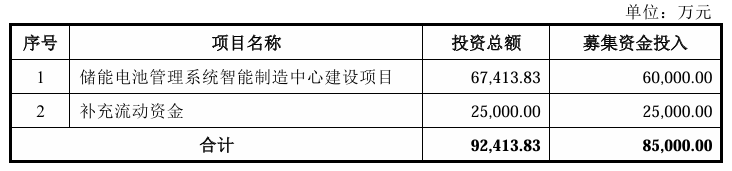
Core Viewpoint - Hangzhou Gaote Electronics Co., Ltd. has successfully passed the IPO review on the Shenzhen Stock Exchange, marking it as the first IPO project of 2026 on the exchange [1] Company Overview - Gaote Electronics is recognized as a national high-tech enterprise and a specialized and innovative "little giant" company, focusing on providing new energy storage battery management systems that are safe, reliable, efficient, stable, and more economical [1] IPO Details - The company aims to raise 850 million yuan through its IPO, which will be allocated to the construction of an intelligent manufacturing center for battery management systems and to supplement working capital after deducting issuance costs [1]
容百科技:与宁德时代签署日常经营重大合同
Bei Jing Shang Bao· 2026-01-13 12:22
公告称,一方面,在海外地区磷酸铁锂动力电池有很大的发展空间。另一方面,由于太阳能电池及储能 电池技术的发展,成本不断降低,再加上AI技术的发展,以及这三项技术的相互作用,使得新能源时 代真正来临,储能行业得到爆发式增长。动力和储能市场的发展,使得磷酸铁锂仍具备巨大的市场空 间。 北京商报讯(记者 陶凤 王天逸)1月13日,宁波容百新能源科技股份有限公司发布公告称,与宁德时代 新能源科技股份有限公司签署了《磷酸铁锂正极材料采购合作协议》。协议约定,自2026年第一季度开 始至2031年,容百科技合计为宁德时代供应国内区域磷酸铁锂正极材料预计为305万吨,协议总销售金 额超1200亿元。本协议对双方均具有约束性。 ...
高特电子创业板IPO首发过会!
中关村储能产业技术联盟· 2026-01-13 12:15
Core Viewpoint - Hangzhou Gaote Electronics Co., Ltd. has successfully passed the listing review by the Shenzhen Stock Exchange and is now in the registration submission phase, aiming to raise 850 million yuan for its projects [2][3]. Group 1: Company Overview - The company was officially accepted for its IPO application on June 23, 2025, entered the inquiry phase on July 9, 2025, and received approval from the listing committee on January 13, 2026 [3]. - The expected financing amount for the IPO is 850 million yuan, with 600 million yuan allocated for the construction of an intelligent manufacturing center for energy storage battery management systems [5]. Group 2: Financial Performance - From 2022 to 2024, the compound annual growth rate (CAGR) of the company's main business revenue reached 63.31%, with projected revenue of 919 million yuan and a net profit of 98.42 million yuan in 2024 [5]. - The comprehensive gross profit margin has remained around 26% [5]. Group 3: Research and Development - As of the end of 2024, the company has 183 R&D personnel, accounting for over 30% of its workforce, with cumulative R&D investment exceeding 100 million yuan [5]. - The company has begun to transition from a "system service provider" to a "data service provider," with data service revenue accounting for 8% of total revenue in 2024 [5]. Group 4: Technological Innovation - Gaote Electronics is one of the few companies in the industry innovating at the chip level, having developed core technologies such as the domestically produced AFE information collection chips in collaboration with Xi'an Aerospace Minxin [6]. - The second-generation BMS products incorporate safety valve status monitoring into the AFE chip, enhancing safety measures with millisecond-level warnings and precise location tracking [6]. Group 5: Industry Engagement - The company is confirmed to participate in the 14th International Energy Storage Summit and Exhibition (ESIE 2026), scheduled for March 31 to April 3, 2026, in Beijing [6].

高特电子创业板IPO过会 拟募资8.5亿元
Zhi Tong Cai Jing· 2026-01-13 12:12
Core Viewpoint - Gaote Electronics has successfully passed the IPO meeting for the ChiNext board, aiming to raise 850 million yuan for its battery management system (BMS) products in the new energy sector [1] Group 1: Company Overview - Established in 1998, Gaote Electronics is a national high-tech enterprise and a "specialized and innovative" small giant, focusing on innovative technology [1] - The company aims to become a leading global supplier of safety and value enhancement solutions for new energy storage systems [1] - Gaote Electronics has maintained a leading position in the shipment volume of BMS products in the large-scale energy storage sector for three consecutive years [1] Group 2: Product and Market Position - The main products include energy storage BMS modules and related products, with applications in various fields such as large high-voltage energy storage power stations, commercial energy storage, and backup power systems [1][2] - The company is recognized as the top BMS manufacturer in China for 2023, according to the CESA's white paper on the new energy storage industry [2] - Key clients include major companies such as China Southern Power Grid, China Petroleum, and CATL [2] Group 3: Financial Performance - Revenue for the years 2022, 2023, and 2024 is reported as approximately 346 million yuan, 779 million yuan, and 919 million yuan respectively, with a net profit of 53.75 million yuan, 88.23 million yuan, and 98.42 million yuan for the same years [4] - As of June 2025, total assets are projected to reach approximately 137.4 billion yuan, with a debt-to-asset ratio of 38.02% [6] - The company has maintained a research and development expense ratio of around 6.36% to 6.94% of its revenue over the past few years [6]