
基因测序

Search documents
中信证券股份有限公司关于深圳华大智造科技股份有限公司2025年半年度持续督导跟踪报告
Zhong Guo Zheng Quan Bao - Zhong Zheng Wang· 2025-09-13 03:55
Core Viewpoint - The report outlines the ongoing supervision and assessment of Shenzhen Huada Intelligent Manufacturing Co., Ltd. (华大智造) by CITIC Securities during its initial public offering and listing on the Sci-Tech Innovation Board, emphasizing compliance with regulatory requirements and the absence of significant issues during the review period [1][3][32]. Group 1: Continuous Supervision Overview - CITIC Securities has established a continuous supervision work system and a corresponding work plan, clarifying the requirements for on-site inspections [1]. - The sponsor has signed a sponsorship agreement with the company, which specifies the rights and obligations of both parties during the supervision period [1]. Group 2: Findings and Issues - During the supervision period, no significant issues were identified by the sponsor or the representative [3]. - The company faces risks related to significant performance declines or losses due to high R&D investments and market expansion costs, particularly if international relations worsen or macroeconomic conditions deteriorate [4]. Group 3: Core Competitiveness Risks - The company operates in a technology-intensive life sciences sector, facing risks related to product upgrades and technological updates, which require substantial R&D investments [5][6]. - Risks include the potential loss of core technical talent and the leakage of core technologies, which could adversely affect the company's long-term development [6]. - The company is also exposed to intellectual property litigation risks, particularly from competitors like Illumina, which could limit its market expansion in affected regions [7]. Group 4: Operational Risks - The global gene sequencing industry is rapidly evolving with increasing competition, particularly from established players like Illumina and Thermo Fisher [8]. - The company has developed a diverse product matrix but faces challenges due to economic downturns and regulatory pressures affecting market growth [9]. - New business and customer expansion efforts are critical, as the company must adapt to market demands and regulatory environments [10]. Group 5: Financial Risks - The company has adjusted its pricing strategy in response to competitive pressures, which has led to fluctuations in gross margins [12]. - There is a risk of bad debts from accounts receivable, despite measures taken to manage credit risk [13]. - Inventory levels are high, and potential declines in market demand could lead to significant write-downs [14]. Group 6: Macro Environment Risks - Geopolitical tensions and international trade protectionism pose risks to the company's product sales and market access [15]. - The company relies on overseas suppliers for some raw materials, making it vulnerable to supply chain disruptions due to trade conflicts [16]. Group 7: Financial Performance Indicators - The company's net profit attributable to shareholders has shown a significant reduction in losses, with a decrease of 65.28% year-on-year [16]. - The basic earnings per share also reflect a similar trend, indicating improved financial management and cost reduction efforts [16]. Group 8: Core Competitiveness - The company has developed a comprehensive product matrix in gene sequencing, leveraging its proprietary DNBSEQ technology to enhance its market position [18][19]. - The focus on intelligent automation and AI-driven solutions is expected to drive innovation and operational efficiency in laboratory settings [21][23]. Group 9: Research and Development - R&D expenditures have increased, with a higher proportion of costs being capitalized compared to the previous year [30]. - The company is actively pursuing various R&D projects to enhance its technological capabilities and product offerings [30]. Group 10: Compliance and Governance - The company has established a robust system for managing and utilizing raised funds, ensuring compliance with regulatory requirements [32]. - There are no significant changes in the shareholding status of major stakeholders during the supervision period [34].


国产测序仪迈入迭代时刻
2 1 Shi Ji Jing Ji Bao Dao· 2025-09-12 11:33
Core Insights - The sequencing instrument market is experiencing significant changes with the launch of the DNBSEQ T7+ by BGI Genomics, which boasts a data output capacity exceeding 14Tb in 24 hours, making it one of the highest throughput and cost-effective clinical sequencing devices globally [1][5] - The competitive landscape for domestic sequencing instruments is intensifying, with various companies like Zhenmai Biology and Novogene launching innovative products to capture market share [2][6] Market Dynamics - The T7+ is now available for order, with immediate supply in mainland China and planned deliveries to Hong Kong, Macau, Taiwan, and overseas regions by the fourth quarter of 2025 [2] - Domestic sequencing instruments are gaining market share, with predictions indicating that by 2025, the market share of domestic brands could exceed 60% [3] - BGI Genomics reported a revenue of 1.114 billion yuan in the first half of 2025, a slight year-on-year decline of 7.9%, but with a 40% increase in instrument shipments [3] Competitive Landscape - The industry is witnessing a "razor-blade" model where instrument sales drive ongoing consumable revenue, making it crucial to capture installation volume for long-term value [4] - The rapid development of domestic sequencing instruments is accompanied by challenges such as intense price competition and the need for continuous R&D investment to maintain technological competitiveness [4][7] Global Expansion - Domestic sequencing companies are increasingly entering global markets, with BGI Genomics establishing over ten localized service centers abroad and Novogene's services reaching over 30 countries [8] - The gap between domestic devices and international brands is narrowing, indicating a new era driven by domestic innovation, AI integration, and multi-omics research [8]
从盐田出发,解码生命版图:华大发布会揭示产业扩张雄心
Nan Fang Du Shi Bao· 2025-09-12 07:48
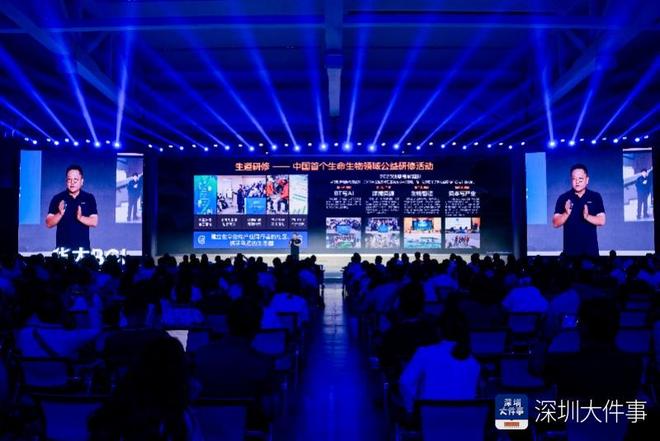
Core Insights - The article highlights BGI's ambition to transition from being labeled merely as a "gene sequencing factory" to becoming a comprehensive player in the life sciences sector, showcasing its broader strategic vision and innovations in various fields [1][11]. Group 1: Technological Advancements - BGI's flagship product, the DNBSEQ-T7+ ultra-high-throughput sequencer, can process 35,000 whole genomes annually and deliver over 14TB of data within 24 hours, addressing efficiency bottlenecks in large-scale sequencing and providing a cost-effective foundation for downstream applications [3][11]. - The introduction of the spatiotemporal transcriptome FFPE V1.1 product demonstrates BGI's commitment to applying core technologies to solve real-world research and clinical challenges [5]. Group 2: Market Expansion - BGI is shifting its focus from B2B research services to the consumer market, launching several direct-to-consumer (DTC) products, including a rapid alcohol tolerance test and customized probiotics based on gut microbiome data, indicating a strategic move towards the broader health market [6][11]. - The company aims to create a commercial ecosystem through its i99 health management platform and GigaLab smart laboratories, facilitating a closed-loop system from data detection to personalized intervention [6][11]. Group 3: Strategic Initiatives - BGI is exploring strategic "blue ocean" markets in public health and agricultural food sectors, with initiatives like rapid pathogen identification solutions and data-driven medical systems aimed at enhancing public health infrastructure [9][10]. - In agriculture, BGI is promoting sustainable practices such as perennial rice cultivation and soil improvement, alongside implementing DNA technology for food traceability, showcasing its commitment to modernizing agriculture through biotechnology [10]. Group 4: Future Vision - The company is transitioning from being a participant in the industry to becoming a leader, achieving vertical integration across the entire value chain from equipment manufacturing to application development, thereby gaining control over industry standards [11]. - BGI is actively working to democratize advanced genetic technologies, transforming complex scientific concepts into accessible consumer products, which reflects its urgent need to find new growth avenues and the maturation of the genetic technology industry [11][12]. - The integration of AI and data science into BGI's core operations signifies its alignment with global trends in biotechnology and information technology, positioning itself for future advancements in health management [12].

推动合作共享!“十万长读长大人群联盟”在深圳宣布成立
Zheng Quan Shi Bao Wang· 2025-09-12 07:13
Core Insights - The "Long 100K Genomes Consortium" was officially established to integrate long-read sequencing technology resources and enhance high-precision genetic structure analysis capabilities [1][2] - The consortium aims to promote the application of long-read sequencing technology across various fields, including research, clinical settings, agriculture, and drug development [1][2] Group 1: Consortium Formation and Objectives - The consortium consists of 18 initial members, including universities, hospitals, research institutions, and companies, highlighting a collaborative effort in advancing long-read sequencing technology [2] - The alliance will focus on standardization, data sharing mechanisms, and expanding applications across multiple fields to strengthen China's competitive position in global population genetics research [2] Group 2: Technological Advancements and Applications - The G400-ER sequencing platform has demonstrated a data output exceeding 400GB per chip and an accuracy rate of Q17+ (≥98%), showcasing the technological capabilities of the consortium members [3] - The consortium plans to create a comprehensive genetic structure map of the Chinese population, establishing a new paradigm for precision medicine through resource sharing and collaborative efforts [3] Group 3: Clinical Integration and Research Collaboration - Long-read sequencing technology is transitioning from development to clinical maturity, addressing challenges in pathogen detection and complex disease diagnosis [4] - Experts emphasize the importance of ethical review and compliance with national policies in conducting cohort studies, advocating for a combination of long-read and short-read sequencing technologies for optimal results [5] Group 4: Future Directions and Strategic Goals - The establishment of the consortium is seen as a critical opportunity for the transition of long-read sequencing technology from research to clinical applications, with expectations for resource integration and efficiency enhancement [5] - The consortium aims to foster collaboration among various stakeholders to drive advancements in life sciences, precision medicine, and industry transformation, contributing to human health and societal development [5]
尹烨:调好嘴、迈开腿、睡好觉、没事儿就傻笑
Zhong Guo Xin Wen Wang· 2025-09-11 05:50
Group 1 - The core message emphasizes the importance of health and wellness, advocating for a lifestyle that includes good nutrition, physical activity, adequate sleep, and positivity [2] - The CEO of BGI Group, Yin Ye, highlights the need for technological innovation to be accessible and affordable, particularly in the context of expensive foreign therapies [2] - There is a belief that as core tools in life sciences become more accessible and the marginal cost of digital health approaches zero, a new norm of health and longevity will emerge [2] Group 2 - BGI Group has signed cooperation agreements with multiple companies, including Gene+ and Berry Technology, to become the first batch of clients for the T7+ system [4] - A collaborative initiative called the "Hundred Thousand Long Read Genome Alliance" has been established, involving BGI and 14 medical and research institutions [5] - BGI is also working with various partners to create a digital health ecosystem that integrates biological intelligence and health services [5] Group 3 - A strategic cooperation agreement has been signed between BGI Group and the management bureau of Hainan Boao Lecheng International Medical Tourism Pilot Zone to enhance collaborative innovation [7] - Yin Ye has been appointed as the "Chief Science Communication Ambassador" for the Lecheng area [7]

基因测序仪国产替代进程加快,但价格拼得更狠了,厂商如何突围
Di Yi Cai Jing Zi Xun· 2025-09-10 09:05
Group 1: Market Overview - The domestic gene sequencing instrument bidding market is accelerating, with 137 procurement units and 123 winning units, totaling approximately 249 million yuan in bids for 179 sets of equipment by mid-2025 [1] - Domestic manufacturers, including BGI Genomics (688114.SH) and Berry Genomics (000710.SZ), captured a combined market share of 59.31%, while the only foreign manufacturer, Thermo Fisher, held a 14.44% market share [1] - In 2024, BGI Genomics was the only domestic manufacturer in the top three by market share, with a 50.05% share, while foreign manufacturers had a combined share of 16.24% [1] Group 2: Company Performance - BGI Genomics reported a significant increase in sales volume for its long-read sequencing instruments, exceeding 700 units in the first half of 2025, marking a year-on-year growth of 60.35% [2] - The company also reduced its net profit loss by 65.28% during the same period [2] Group 3: Competitive Landscape - The competition in the domestic gene sequencing market is intensifying, leading to price wars among manufacturers [3] - BGI Genomics' adjusted gross margin decreased by 8.03 percentage points to 52.85% in the first half of 2025, while Berry Genomics and Novogene (688315.SH) also experienced declines in their gross margins [3] - The business model in the gene sequencing industry relies on equipment sales as an entry point, with consumables as the core profit driver, making market share in equipment sales crucial for long-term customer value [3] Group 4: Technological Advancements - BGI Genomics launched the DNBSEQ T7+ ultra-high-throughput gene sequencer, capable of delivering over 14Tb of sequencing data within 24 hours, significantly improving processing times compared to competitors [4] - The T7+ sequencer addresses previous delays in sample processing, allowing for a more efficient workflow and consistent scheduling for customers [4] - The technology ensures high-quality sequencing by maintaining the integrity of DNA samples, thus minimizing errors associated with other methods [4]
测序仪产品完成全线升级,华大智造称“有望步入业务增量期”
Jing Ji Guan Cha Wang· 2025-09-10 08:25
Core Viewpoint - The domestic gene sequencing market in China is experiencing significant changes, with BGI Group's subsidiary, BGI Genomics, leading advancements in high-throughput gene sequencing technology, particularly with the launch of the T7+ sequencer, which enhances capabilities and reduces operational costs [1][2][3]. Group 1: Product Development and Market Position - BGI Genomics launched the T7+ sequencer, an upgraded version of the T7, which integrates seven modules for improved throughput and speed while being environmentally friendly [2][3]. - The T7+ is recognized as the "world's strongest daily delivery capacity ultra-high-throughput gene sequencer," capable of producing up to 14Tb of data in 24 hours, setting a new industry record [3]. - The company has achieved a historical high in instrument sales for its long-read sequencing business, with over 700 units sold in the first half of 2025, marking a 60.35% year-on-year increase [3]. Group 2: Market Dynamics and Strategic Positioning - The Chinese Ministry of Commerce has placed Illumina on an unreliable entity list, banning its exports to China, which has created a favorable environment for domestic companies like BGI Genomics [2]. - BGI Genomics has a robust order backlog of approximately 900 million yuan, with 700 million yuan (78%) attributed to its long-read sequencing business, indicating strong future performance potential [4]. - The company is positioning 2025 as a pivotal year for its long-read strategy, following a series of product launches aimed at enhancing its market share and technological capabilities [2][4].
诺禾致源:2025年第一次临时股东大会决议公告
Zheng Quan Ri Bao· 2025-09-01 14:13
Group 1 - The company, Novogene, announced the convening of its first extraordinary general meeting of shareholders for 2025 on September 1, 2025 [2] - The meeting will review and approve the proposal regarding the revision and formulation of certain corporate governance systems [2]

盐田科技如何为世界首例猪肺移植“安检”?
Nan Fang Du Shi Bao· 2025-09-01 09:46
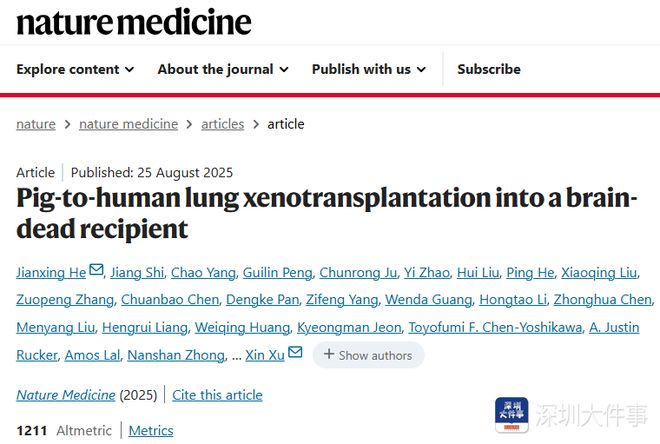
Core Viewpoint - A groundbreaking achievement in organ transplantation has been made by Chinese scientists, marking the world's first successful transplantation of gene-edited pig lungs into a brain-dead patient, which functioned effectively for over 10 days [1] Group 1: Breakthrough in Organ Transplantation - The successful transplantation represents a significant advancement in xenotransplantation, a concept that has been pursued for over a century [4] - Pigs are considered ideal organ donors due to their organ size and function being similar to humans, but the human immune system poses a major challenge [4][5] - The use of gene editing technology has allowed for modifications in the pig's genome, effectively creating a "pass" for the pig organs to be accepted by the human body [5] Group 2: Role of BGI Genomics - BGI Genomics, based in Shenzhen, played a crucial role in ensuring the safety of the transplantation by utilizing its high-throughput sequencing technology [8] - The DNBSEQ sequencing platform conducted comprehensive genomic screening of the pig lung, identifying any potential pathogens that could pose risks to human health [8] - The sequencing process provided a detailed "health report" confirming the absence of known pathogens, which was essential for the success of the surgery [8] Group 3: Implications for Future Transplantation - The surgery was successful, with the transplanted pig lung performing normal respiratory functions without signs of acute rejection [9] - This historic step indicates the feasibility of xenogeneic lung transplantation, offering hope to countless patients awaiting suitable organ donors [9] - The advancements in gene editing and reliable domestic sequencing platforms highlight the potential for future breakthroughs in organ transplantation [9]
唤醒海量临床样本,解锁宿主与微生物的对话 华大开发“万能钥匙”
Shen Zhen Shang Bao· 2025-09-01 03:28
Core Insights - The article discusses the launch of the innovative Stereo-seq V2 technology, which addresses the challenges of analyzing formalin-fixed paraffin-embedded (FFPE) samples, enabling high-resolution real-time monitoring of gene activity in both human cells and invading microorganisms [1][2]. Group 1: Technology Overview - Stereo-seq V2 is described as a "universal key" that unlocks the potential of archived clinical samples, facilitating a shift from merely visualizing cells to understanding the interactions between cells and microorganisms in precision medicine [1][2]. - The technology overcomes significant challenges associated with FFPE samples, such as RNA degradation and molecular cross-linking, through an innovative "repair" process that captures previously overlooked genetic signals [3]. Group 2: Clinical Applications - The introduction of Stereo-seq V2 is seen as a milestone for spatial omics technology, with applications in precision oncology, where it can identify gene copy number variations related to patient prognosis and discover novel gene splice variants that contribute to drug resistance [4]. - In infectious disease contexts, the technology allows for the direct localization of pathogens in tissue samples and assessment of host immune responses, guiding targeted therapies [4]. - The technology also holds promise in antibody drug development by rapidly identifying and locating pathogen-specific neutralizing antibody clones, thus accelerating the drug screening process [4]. Group 3: Previous Achievements - Prior to Stereo-seq V2, the national key laboratory had released the Stereo-cell technology, which achieved breakthroughs in multi-modal integration and in situ dynamic capture, marking a significant advancement in single-cell sequencing capabilities [5].