
Internet

Search documents
Salesforce CEO Marc Benioff Just Said Gemini 3 Changed the World. Does That Make GOOGL Stock a Buy?
Yahoo Finance· 2025-12-01 21:23
Core Insights - Google has demonstrated resilience against competition from Microsoft-backed OpenAI, particularly with the launch of its advanced AI system, Gemini 3, on November 18, which has shifted the competitive landscape in its favor [1][4]. AI and Quantum Computing Commitment - Google's strategic early investment in AI and quantum computing has been pivotal, integrating AI into core services like Search, YouTube, and Maps long before it became mainstream [2]. Revenue Streams and Market Position - Google has a diverse revenue base, with significant contributions from its advertising business, cloud services, and other initiatives, positioning it as a dominant player in the digital landscape [3]. Stock Performance and Market Capitalization - Following the launch of Gemini 3, Google's stock reached an all-time high of $328.83 on November 25, with a market capitalization around $3.9 trillion, nearing the $4 trillion mark [5]. Recent Financial Performance - In Q3 fiscal 2025, Google reported total revenue of $102.3 billion, a 16% year-over-year increase, surpassing expectations [7]. Google Services revenue rose 14% to $87.1 billion, driven by strong performance in Search and YouTube ads [8]. Cloud Revenue Growth - Google Cloud revenue increased by 34% to $15.2 billion, indicating strong demand for its cloud offerings [8]. Profitability Metrics - Operating income for the quarter rose 9% to $31.2 billion, with an operating margin of 30.5%, impacted by a $3.5 billion antitrust fine [8]. Earnings Per Share - Google reported an EPS of $2.87, reflecting a 35.4% year-over-year increase, exceeding estimates by approximately 27% [9]. Future Investments - The company plans capital expenditures between $91 billion and $93 billion for fiscal 2025, highlighting ongoing investments in infrastructure and technology [9]. Gemini 3 User Engagement - Gemini 3 has achieved significant user engagement, with 2 billion monthly users accessing AI Overviews and over 650 million monthly users of the Gemini app [11]. Analyst Sentiment - Analysts have expressed strong enthusiasm for Gemini 3, with investment firms recognizing it as a leading AI model and a potential game-changer for Google's competitive position [13]. Analyst Ratings - Among 55 analysts covering Google stock, 44 rate it a "Strong Buy," indicating strong market confidence, with an average price target of $321.96 [14].

X @Bloomberg
Bloomberg· 2025-12-01 17:04
Legal & Regulatory - US Supreme Court considered strengthening internet providers' protection from copyright liability related to customer piracy [1] - A $1 billion (十亿) music industry copyright lawsuit against Cox Communications Inc was questioned [1]
Korean tech giants to clash over stablecoins as competition heats up
Yahoo Finance· 2025-12-01 16:33
Core Viewpoint - The competition for stablecoin dominance between South Korea's tech giants Naver and Kakao is intensifying, with both companies leveraging their existing platforms to drive adoption in sectors like K-pop, e-commerce, and webtoons [1][2]. Group 1: Naver's Strategy - Naver is positioned to gain an advantage in the stablecoin market due to its acquisition of Upbit, which is expected to enhance its crypto capabilities [3]. - Naver aims to integrate its stablecoin with its existing e-pay platform, Naver Pay, and the Upbit exchange, potentially launching on the Giwachain blockchain [4][5]. - The stablecoin will also be utilized on Naver's shopping and webtoon platforms, and integrated with its video streaming service CHZZK for content monetization [5][6]. Group 2: Kakao's Approach - Kakao, known for its KakaoTalk app and Kakao Bank, is also exploring stablecoin issuance, potentially leveraging its partnership with Coinone, a competitor to Upbit [7]. - There are speculations about Kakao considering a takeover of Coinone to strengthen its position in the stablecoin market [7].
Is Meta Platforms Stock a Buy Below $650?
247Wallst· 2025-12-01 14:04
Core Viewpoint - Meta Platforms has experienced a significant stock recovery since late 2022, driven by investments in AI, but recent performance indicates a plateau, raising questions about future growth potential [3][5][10]. Financial Performance - In Q3 2025, Meta's revenue grew 26.2% year-over-year to $51.24 billion, surpassing analyst expectations by 3.71% [6][10]. - The company's cash per share declined by 76.74% year-over-year, reflecting a strategic decision to invest up to $72 billion in AI for 2025 [6][11]. Stock Performance - Meta's stock price fell from a peak near $785 to below $600 before recovering to around $650, indicating volatility and market caution [5][10]. - The stock has remained flat over the past six months, suggesting that investors are awaiting tangible results from AI investments before increasing their valuation of the stock [5][10]. Strategic Direction - CEO Mark Zuckerberg's pivot towards AI was a response to stagnation in user growth within the Family of Apps segment, which includes Facebook, Instagram, WhatsApp, and Messenger [8][9]. - The introduction of AI technologies, particularly following the emergence of ChatGPT, has revitalized Meta's growth prospects, leading to a more favorable market perception [9][10]. Investment Considerations - Analysts express caution regarding further investments in Meta stock, suggesting that the current premium may not justify the risks associated with its concentrated focus on AI [13][15]. - Alternatives such as Alphabet and Microsoft are recommended for those looking to invest in AI and advertising synergies, as they may offer more diversified growth opportunities [14][15].



Billionaire Warren Buffett Sold 45% of Berkshire's Stake in Bank of America and Piled Into a Virtual Monopoly That's Gained Nearly 13,000% Since Its IPO
The Motley Fool· 2025-12-01 08:06
Core Insights - Warren Buffett is set to retire as CEO of Berkshire Hathaway at the end of 2025, having led the company for 60 years, during which its Class A shares increased nearly 6,200,000% [2] - Despite his impending retirement, Buffett continues to manage Berkshire's substantial investment portfolio, which is valued at nearly $312 billion [4] Group 1: Bank of America Stake Reduction - Buffett has been selling shares of Bank of America (BofA) for five consecutive quarters, reducing Berkshire's stake by 464,781,994 shares, which is a 45% decrease from over 1.03 billion shares previously held [7] - The selling of BofA shares is interpreted as profit-taking, as the stock has more than tripled in value over the past decade [8] - The current valuation of BofA's common stock is at a 39% premium to its book value, indicating it may not be the attractive investment it once was [11] Group 2: Economic Considerations - Buffett acknowledges the nonlinear nature of economic cycles, suggesting that long periods of economic growth can benefit banks like BofA, which can prudently expand their loan portfolios [6] - The ongoing Federal Reserve rate-easing cycle may impact BofA's net interest income, prompting Buffett to reduce his stake in the bank [12] Group 3: Investment in Alphabet - Buffett made a significant investment in Alphabet, purchasing 17,846,142 Class A shares valued at over $4.3 billion, marking a notable shift in investment strategy [14] - Alphabet holds a dominant position in the internet search market, with a 90% global market share, and has shown robust growth in its cloud services, with a 34% growth rate in the third quarter [15][19] - The valuation of Alphabet shares was attractive at the time of purchase, trading between 16 and 22 times forward-year earnings per share, reflecting its strong market position and growth potential [22]



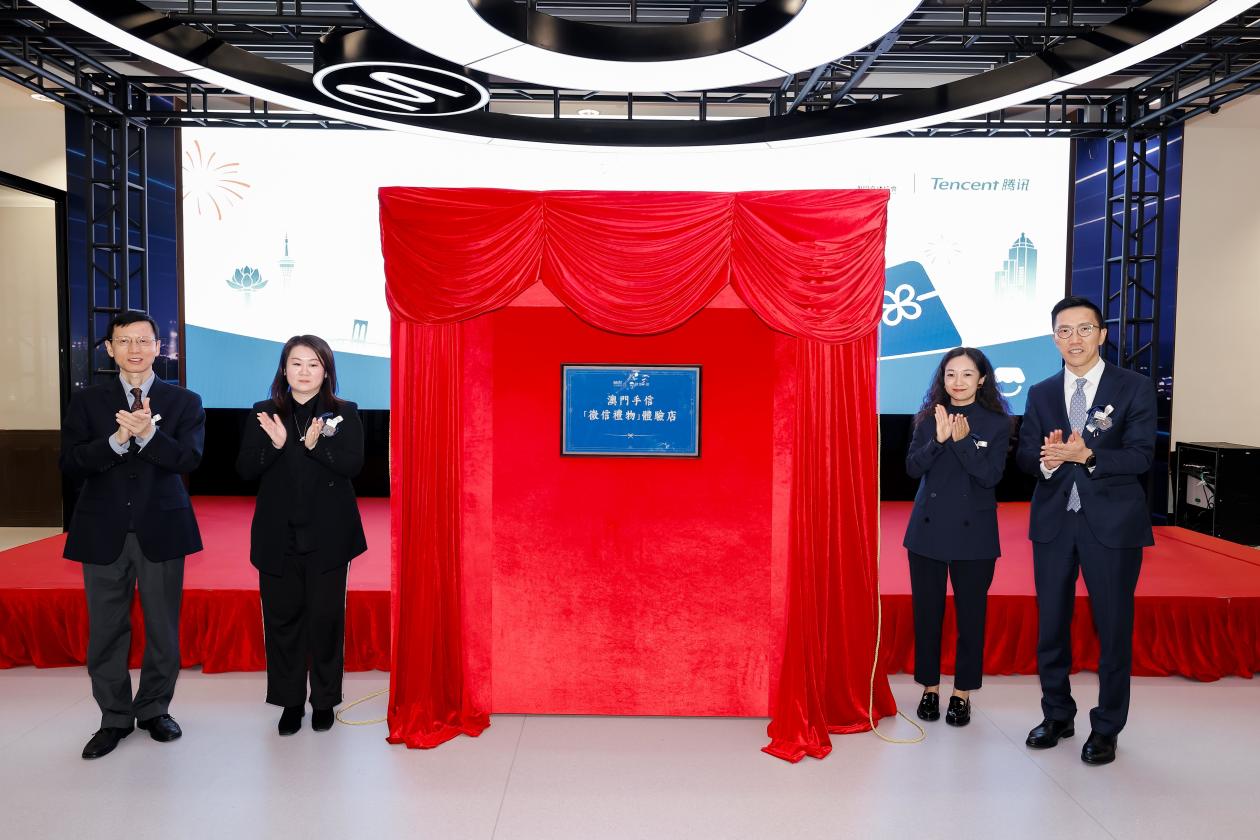
澳门打造首个微信礼物线下体验店,微信蓝包代替“大包小包”
Huan Qiu Wang· 2025-12-01 04:48
Core Insights - The launch of the "Gift to Macau" live e-commerce festival aims to enhance the shopping experience for mainland tourists in Macau and promote the use of WeChat ecosystem for small and medium-sized enterprises (SMEs) [1][4] Group 1: Event Overview - The "Gift to Macau" live e-commerce festival is supported by the Macau Economic and Technological Development Bureau and organized by the Macau Live Streaming Association in collaboration with Tencent [1] - The first offline WeChat gift experience store has been established near the bustling Senado Square, featuring over 20 local specialty shops for tourists to experience a "one-stop" shopping experience [1][4] Group 2: Consumer Experience - The new offline store addresses common pain points for cross-border tourists, such as the inconvenience of carrying multiple items, by allowing customers to scan a "gift code" to order products online for delivery to friends and family [4] - The festival will also involve various content creators and influencers from the WeChat ecosystem to conduct live streaming sales, enhancing visibility for local businesses [4] Group 3: Business Impact - The WeChat store is seen as a crucial step for Macau SMEs to achieve e-commerce and digitalization, enabling them to convert one-time customers into repeat buyers through direct interaction [6] - The "front store, back warehouse" model allows for orders placed in Macau to be shipped from the mainland, optimizing operational efficiency and enhancing the experience for cross-border tourists [6] - The WeChat gift function is expected to become a standard feature in offline cultural and tourism scenarios, similar to the "WeChat payment code" [6]

工信部:1—10月份我国规模以上互联网企业实现利润总额1237亿元
Yang Shi Wang· 2025-12-01 03:13
Overall Performance - Internet business revenue shows steady growth, reaching 16,189 billion yuan from January to October, with a year-on-year increase of 1.1%, a decline of 1.7 percentage points compared to the previous three quarters [1] - Total profit for internet enterprises decreased by 10.9% year-on-year to 1,237 billion yuan, but the decline has narrowed by 2.2 percentage points compared to the previous three quarters [1] - Research and development expenditure increased steadily, totaling 861.7 billion yuan, with a year-on-year growth of 7.1%, an increase of 0.5 percentage points compared to the previous three quarters [1] Regional Performance - Eastern region maintains growth in internet business revenue, achieving 14,523 billion yuan with a year-on-year increase of 3%, surpassing the national growth rate by 1.9 percentage points, accounting for 89.7% of national internet business revenue [2] - The Beijing-Tianjin-Hebei region shows rapid growth, with internet business revenue of 5,312 billion yuan, a year-on-year increase of 9.6%, representing 32.8% of national internet business revenue [2] - Among the top five regions for internet business revenue, Beijing (growth of 9.9%), Guangdong (growth of 7.5%), and Zhejiang (growth of 10.6%) achieved a combined revenue of 13,639 billion yuan, with a year-on-year growth of 4.4%, accounting for 84.2% of national internet business revenue excluding cross-regional enterprises [2]
Google CEO calls for national AI regulation to compete with China more effectively
Fox Business· 2025-12-01 02:06
Core Viewpoint - Google CEO Sundar Pichai emphasized the need for the U.S. to balance AI regulation to avoid falling behind China, highlighting the potential confusion from over 1,000 AI-related bills in state legislatures [1][2]. Regulation and Competition - Pichai questioned how U.S. companies can cope with varied regulations while competing with rapidly advancing countries like China, advocating for a national-level approach to balance innovation and regulation [2][4]. - He stressed the importance of creating international frameworks to prevent the weaponization of AI technologies [4]. Benefits and Risks of AI - Pichai acknowledged the significant benefits of AI, such as advancements in drug development and cancer treatments, while also warning about the potential misuse of these technologies by malicious actors [4][5]. - He noted that technology has a dual nature, and society must learn to harness it for the greater good [5]. Defensive Use of AI - Google is actively using AI defensively to combat criminal activities, with tools like SynthID designed to identify AI-generated content [7][8]. - Pichai mentioned a recent court ruling in favor of Google against a phishing operation that affected over a million individuals globally [7]. Future of AI and Technology - Pichai discussed innovative projects like "Suncatcher," aimed at building solar-powered AI data centers in space, predicting that such initiatives will become standard in the next decade [8]. - He compared current concerns about AI to past criticisms of Google, expressing confidence that society will adapt and that creativity will flourish in the future [11].

百度-开放日要点:迈向价值释放之路
2025-12-01 01:29
Summary of Baidu, Inc. Corporate Day 2025 Conference Call Company Overview - **Company**: Baidu, Inc. - **Industry**: Internet Services in China - **Market Cap**: US$40.6 billion as of November 26, 2025 - **Current Stock Price**: US$117.88 - **12-Month Rating**: Buy with a price target of US$155 Key Points and Arguments Value Unlocking Strategies - Baidu management presented multiple strategies aimed at unlocking company value, including: 1. Enhancing disclosure transparency by potentially adding new disclosures related to business margins and product metrics in future reports [2] 2. Improving shareholder returns with considerations for higher certainty in buybacks and/or dividends [2] 3. Enhancing operational efficiency through disciplined resource allocation across core business lines [2] 4. Unlocking value for core and high-potential businesses, specifically Apollo Go and Kunlun Chips [2] AI Transformation in Core Ads - AI-generated content has penetrated approximately 70% of mobile search result pages, replacing traditional ad formats with multimodal direct answers and agent-based interactions [3] - Despite a decline in core ad revenue, Baidu is testing new monetization models, such as: - Embedding product recommendations within AI-generated answers, where advertisers pay per click [3] - Content-marketing integrations, including AI-generated product videos paired with listings [3] - Digital human technology is not yet generating direct revenue, but future options may include charging technical support fees or taking commissions on transactions [3] Cloud Business Growth - Subscription revenue from the GPU cloud business is expected to maintain rapid growth, although overall cloud revenue growth may face challenges due to a high base in Q4 2025 and Q1 2026 [4] - Management expressed confidence in the self-developed Kunlun Chip, which currently contributes immaterial revenue but is expected to ramp up and boost cloud segment revenue [4] Financial Projections - Revenue projections for Baidu are as follows (in million RMB): - 2025E: 129,068 - 2026E: 135,196 - 2027E: 144,202 [9] - EPS projections (in RMB): - 2025E: 53.95 - 2026E: 48.65 - 2027E: 57.41 [7] Valuation and Price Target - The price target of US$155 is based on a sum-of-the-parts (SOTP) valuation methodology, assuming: - 5x PE for core ads - 3x PS for cloud - US$11/share for Apollo Go [5] Risks Identified - Key risks for Baidu include: 1. Evolving competitive landscape 2. Execution of new business strategies 3. Integration of invested companies 4. Rising costs of traffic acquisition and content promotion 5. Maintenance and upgrading of IT systems 6. Intellectual property rights infringement 7. International market expansion challenges 8. Key management departures 9. Regulatory risks [13] Market Outlook - The forecast stock return is estimated at 31.5%, with no expected dividend yield [10] - The market return assumption is 10.8%, leading to a forecast excess return of 20.7% [10] Additional Insights - Baidu's management is focused on improving operational efficiency and shareholder returns, indicating a proactive approach to addressing investor concerns and market challenges [2][4] - The ongoing transformation towards AI and cloud services positions Baidu favorably for future growth, despite current revenue challenges in core advertising [3][4]
解读中国互联网:头部 AI 应用追踪 -尖端 AI 模型竞争持续,新 AI 聊天机器人上线-Navigating China Internet_ Top AI_apps tracker_ Continued contest in State-of-the-Art AI models & new AI chatbot launches
2025-12-01 00:49
Summary of Key Points from the Conference Call Industry Overview - The conference call focuses on the **China Internet** industry, particularly developments in **AI** and **chatbot applications**. Core Insights and Arguments 1. **AI Model Developments**: - US AI models have regained top positions in rankings, with Google releasing **Gemini 3 Pro** and **Nano Banana Pro**, showcasing superior capabilities compared to existing models despite concerns about diminishing returns in AI scaling laws [1][8][29]. - Chinese AI models are expected to catch up within 3-6 months after US releases, indicating a competitive landscape [1][8]. 2. **Consumer AI Applications**: - **Alibaba** launched the **Qwen App**, achieving **10 million downloads** in the first week, aiming to be a productivity assistant that supports shopping and local services [1][9]. - **Ant Group's LingGuang App** reached **2 million downloads** in 6 days, focusing on AI coding capabilities [1][11]. - **Tencent** integrated AI assistant **Yuanbao** into **WeChat Pay**, enhancing operational efficiency for SMEs [1][11]. 3. **AI Infrastructure Demand**: - There is a growing demand for AI inference, with Chinese data centers expected to see a demand upcycle starting in **2026**. **Alibaba** noted that new AI demand is outpacing infrastructure capacity, leading to an optimistic capex outlook [1][12]. - **Bytedance's Volcano Engine** serves a significant portion of top brands and institutions, indicating strong market penetration [1][12]. 4. **Capex Trends**: - **Alibaba's** capex increased by **80% year-over-year** to **Rmb 32 billion**, while **Tencent's** capex declined due to chip availability issues [1][8]. - Alibaba's positive capex outlook is attributed to its AI infrastructure capabilities, contrasting with Tencent's more cautious approach [1][8]. 5. **AI Model Releases**: - **Xiaomi** introduced the **MiMo-Embodied model**, integrating autonomous driving and embodied AI capabilities [1][12]. - **Tencent** released **HunyuanVideo 1.5**, a video generation model with competitive performance metrics [1][12]. 6. **Market Dynamics**: - The Chinese AI market is characterized by a mix of open-source models and competitive pricing, with **80% of AI startups** utilizing open-source models from China [1][12]. - The gap in multi-modal capabilities between Chinese and global players is narrowing, with Chinese models differentiating through cost and speed [1][12]. Additional Important Insights - **Valuation Comparisons**: Tencent and Alibaba are trading at lower valuations compared to global peers, suggesting potential upside for investors [1][8]. - **Engagement Trends**: Domestic AI applications have seen a **15% month-over-month increase** in engagement, driven by platforms like **Doubao** and **DeepSeek** [1][17]. - **E-commerce and Local Services**: E-commerce engagement grew by **11% year-over-year**, with platforms like **JD** and **Taobao** showing strong performance [1][16]. - **Regulatory Environment**: Cross-border e-commerce faces increasing regulatory pressure, particularly affecting platforms like **Temu** [1][16]. This summary encapsulates the key developments and insights from the conference call, highlighting the competitive landscape and growth potential within the China Internet and AI sectors.

