Robotics

Search documents
IJRR 重磅,浙江大学机械工程学院Grasp Lab用AI 赋能机械革新:机器人抓取的新突破
机器人大讲堂· 2025-12-30 17:00
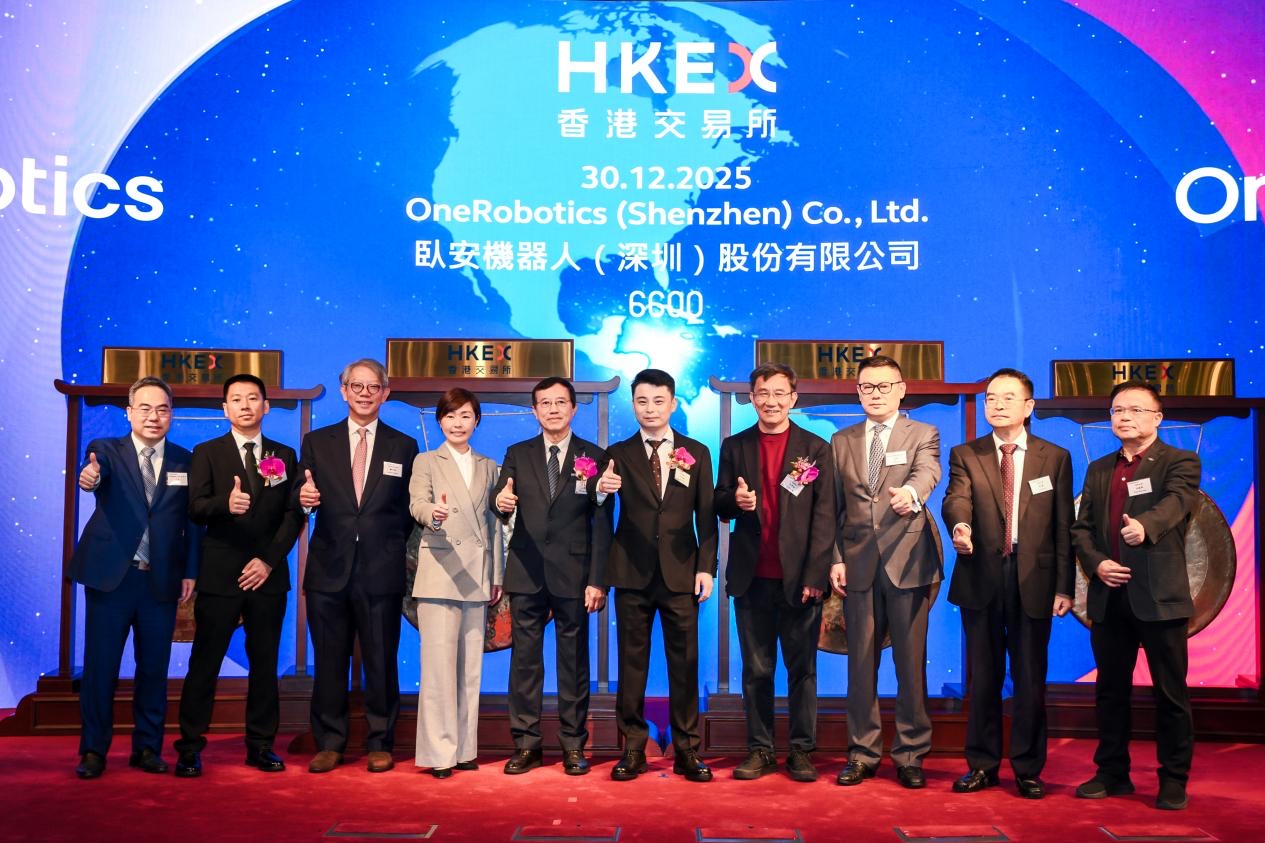
Core Viewpoint - The article discusses the innovative advancements of the GL-Robot developed by Zhejiang University's Grasp Lab, which integrates AI and mechanical design to overcome traditional challenges in robotic grasping and manipulation, particularly by decoupling dexterous hands from tactile sensors, enabling high-precision force control without the need for expensive tactile sensors [1][16]. Group 1: Mechanical Structure Optimization - The mechanical structure of GL-Robot is a key component, featuring a novel underactuated two-finger three-joint architecture that simplifies drive complexity while enhancing force transmission efficiency [2]. - The design incorporates a unique "stacked four-bar linkage decoupling mechanism" that allows for both coupled and decoupled joint movements, reducing actuator load and improving adaptability [2]. Group 2: Multi-Modal Sensing - GL-Robot achieves a breakthrough in force control without tactile sensors by utilizing a framework that maps motor current to external contact states, allowing for effective grasping without traditional sensor dependencies [9][11]. - The system employs Long Short-Term Memory (LSTM) networks to analyze current fluctuations during grasping, achieving force control precision as low as 0.1N and a maximum load capacity of 250N, demonstrating its capability to handle both delicate and heavy objects [11]. Group 3: Grasping and Operation Planning - GL-Robot features a hierarchical dual-mode strategy for intelligent grasping and operation planning, dynamically adapting to various task requirements through a combination of position and current-based control [12][15]. - The planning logic is deeply integrated with mechanical characteristics, allowing for stable grasping of a wide range of objects, from thin coins to large cubes, while preventing slippage [15]. Group 4: Core Value and Future Outlook - The integration of AI and mechanical design in GL-Robot not only reduces costs by eliminating the need for expensive force sensors but also enhances performance metrics such as load capacity and precision, positioning it as a competitive alternative to commercial grippers [16]. - The ongoing advancements in AI-driven design and control are expected to further enhance robotic grasping capabilities, expanding applications in industrial automation and service sectors [16].

“制度创新+科技突破”助力A股行稳致远
Zheng Quan Ri Bao· 2025-12-30 16:09
Group 1 - In 2025, the A-share market's trading activity increased significantly, with a total transaction amount reaching 417.8 trillion yuan, a year-on-year growth of over 60% [1] - The rise in trading activity is driven by a clear focus on technology, which is reshaping market logic [2] - Regulatory reforms aimed at promoting a virtuous cycle of "technology-capital-industry" were introduced, including the implementation of the "1+6" reform measures on the Sci-Tech Innovation Board and the introduction of a third listing standard for the Growth Enterprise Market [3] Group 2 - By the end of Q3 2025, the balance of investments in stocks and securities investment funds by life and property insurance companies reached 5.59 trillion yuan, a significant increase of 36.2% from the beginning of the year [4] - The domestic large model DeepSeek achieved key breakthroughs, shifting the industry focus from technical challenges to real-world applications, while the robotics sector progressed from "technology demonstration" to "commercial closure" [4] - The total R&D investment of A-share listed companies reached 1.16 trillion yuan in the first three quarters of 2025, marking the third consecutive year of exceeding one trillion yuan [5] Group 3 - The optimization of the A-share industry structure is evident, with technology-related sectors such as information technology, healthcare, and high-end manufacturing significantly increasing their market capitalization share [5] - The market valuation system is evolving, with innovation metrics like R&D conversion efficiency and patent quality becoming important references for investors [5] - The synergy between technological breakthroughs and institutional innovations is fundamentally changing the overall ecology of the A-share market [6]
机器人ETF(562500) 放量大涨3.23%,持仓股掀起涨停潮
Mei Ri Jing Ji Xin Wen· 2025-12-30 14:35
Group 1 - The Robot ETF (562500) experienced a significant increase of 3.23%, breaking through moving average resistance, with a trading volume exceeding 2.237 billion yuan and a turnover rate of over 8.5% [1] - Key stocks within the ETF saw substantial gains, with Boke Co. achieving a 20% limit up, Xinshi Da reaching a 10% limit up, and several other major stocks like Haoshi Machinery and Green Harmonics rising over 11% [1] - Zhejiang Haideman recently hosted institutional research, showcasing its machine tool business and advancements in embodied intelligence, planning to produce at least 10,000 robotic dogs next year [1] Group 2 - CITIC Construction Investment Securities reported that the humanoid robot industry chain is experiencing active financing, with a focus on technology research and capacity expansion [2] - Yushu Technology has completed IPO guidance, while Songyan Power announced nearly 200 million yuan in Pre-B+ round financing led by CICC Capital [2] - The Robot ETF (562500) is the only robot-themed ETF in the market with a scale exceeding 20 billion yuan, covering various segments including humanoid robots, industrial robots, and service robots [2]

每年新增600+本!智能技术与机器人学有哪些图书值得一读︱编辑荐书
机器人大讲堂· 2025-12-30 14:00
大幅增强身体能力和智力,让日常工作生活等变得更轻松,这是人类长久以来的梦想。如今广泛应用且快速发展的智 能技术将在未来数十年内推动技术与社会的重大变革,帮助人类实现这一梦想。 施普林格·自然 智能技术与机器人学电子图书合集 每年出版 600多种 相关领域的电子图书,收录了那些有望改变人类 社会基本形态的跨学科研究,汇集了来自世界各地知名作者的前沿成果,涉及智能系统的各个领域。 合集涵盖智能交通、人形机器人、自动驾驶汽车、物联网、智慧城市、人机交互、工业4.0、医疗机器人和数据科学等 应用。施普林格∙自然智能技术与机器人学电子图书合集致力于为读者提供成熟知识体系以及前沿研究成果,成为相关 领域的前沿研究的关键的基础知识保障。 施普林格∙自然智能技术与机器人学电子图书合集涵盖广泛的学科领域,包括但不限于: | • 自动化 | • 机电一体化 | | --- | --- | | • 计算智能 | • 智能机器人 | | • 控制 | • 智能技术 | | • 嵌入式系统 | • 环境智能 | | • 信息科学 | • 大数据 | | • 智能和自动化系统 | • 人机协作 | 施普林格·自然智能技术与机器人学图书合 ...
深圳举办国内首个灵巧手大赛,格松机器人夺得冠军
Nan Fang Du Shi Bao· 2025-12-30 13:58
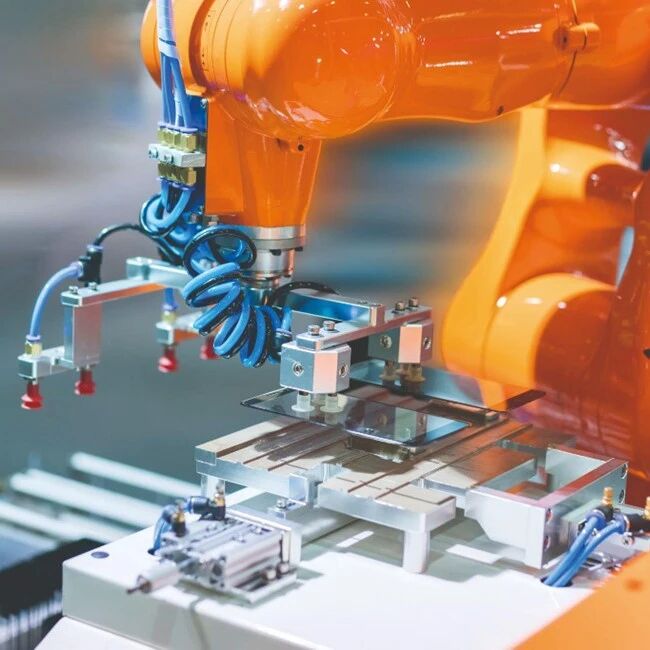
12月30日,2025年深圳智能机器人灵巧手大赛竞技赛颁奖仪式在深圳市南山区举行。本届大赛以"灵动 创新,巧绘未来"为主题,聚焦机器人末端执行技术的关键突破,由深圳市科技创新局指导,联合深圳 市人工智能与机器人研究院、国际先进技术应用推进中心(深圳)、深圳市人才集团有限公司共同主 办,标志着深圳在具身智能赛道上迈出坚实一步。 作为国内首个专注灵巧手技术研发与场景落地的专业赛事,本届大赛恰逢"机器人量产元年"的关键节 点,自启动以来共吸引来自深圳、香港、杭州等地高校、科研院所及重点企业的53支高水平团队踊跃参 与,掀起一场关于"最后一厘米"操作能力的技术比拼热潮。 比赛中,人流穿行、电梯共用、光照变化等复杂变量全面考验机器人的稳定性、环境适应性与泛化能 力。尤其"将折叠后的外卖箱投入上下高度仅3厘米的回收口"成为全场公认的技术难点,被选手称为"对 类人手操作极限的挑战"。 自变量机器人在抗干扰能力、长期运行稳定性及跨场景迁移方面表现远超预期,评审团一致决定授予 其"评审团特别荣誉",以嘉奖其在通用具身智能方向上的前瞻性探索。 深圳市科技创新局党组书记、局长张林为冠军颁授奖牌。 格松机器人凭借其成熟的高自由度灵巧 ...

人形机器人的“破圈”与“落地
机器人圈· 2025-12-30 12:51
2025年,人形机器人走出实验室的"象牙塔",成为贯穿全年的流量密码。 从央视春晚16台机器人跳秧歌的文化破圈,到马拉松赛道上的笨拙可爱;从优必选、宇树科技、特斯拉的千台级 量产交付,到9998元"小布米"两天售罄……这一年,人形机器人完成了从"技术炫技"到"产业落地"的关键一跃, 被业界公认为"走出实验室、走进生活"的分水岭。 现象级出圈:从春晚舞台到社交热搜的全民狂欢 2025年人形机器人的"破圈",始于一场传统文化与前沿科技的碰撞。 央视蛇年春晚舞台上,16个来自杭州宇树科技的人形机器人——宇树H1"福兮",身着花袄、手持花绢,踏着节奏 明快的舞步,与真人舞蹈演员一同上演了"AI机器秧歌"。 赛博朋克与民俗文化的奇妙融合,让机器人首次具备"文化符号"级传播力,相关话题连续霸屏社交平台热搜。 这场"开年首秀"热度持续发酵,从"高光时刻"到"出糗名场面"均引发全民围观,并迅速蔓延至教育、文旅体等方 方面面。无论是在开学日担任"老师"主讲第一课,还是在公园CityWalk,在展会担任"嘉宾"……它们亲和有趣的 形象逐步被大众接受,在不同场景中成为万众追捧的"打工人"。 同时,随着机器人春晚表演的出圈,具身智能 ...

看涨
第一财经· 2025-12-30 12:07
Core Viewpoint - The A-share market shows increasing divergence among the three major indices, with the Shanghai Composite Index halting its nine-day rally, indicating potential technical corrections ahead [3]. Market Performance - The trading volume of both markets reached 4 trillion yuan, reflecting a slight increase of 0.14%, indicating stable market activity [4]. - A total of 1,837 stocks rose, but the overall market sentiment was mixed, with more stocks declining than advancing [3]. Sector Analysis - The humanoid robot concept stocks surged in the afternoon, while sectors like digital currency, AI smartphones, and short drama games performed actively. Conversely, the photovoltaic industry chain experienced a pullback, and stocks related to Hainan Free Trade Zone, outbound tax refunds, and commercial aerospace saw adjustments [3]. - Funds are shifting from large-cap blue chips to growth sectors, suggesting a rotation opportunity in areas like AI applications and commercial aerospace [4]. Fund Flow and Sentiment - There was a net outflow of institutional funds, while retail investors showed a net inflow, indicating a cautious approach from institutions and a more active stance from retail investors [5]. - Institutions are focusing on low-valuation, high-dividend sectors as defensive positions, while also considering long-term investments in growth sectors with clear industrial trends and policy support, such as commercial aerospace and humanoid robots [6]. Investor Behavior - Retail investors are becoming more cautious, with a significant portion (47.86%) choosing to hold their positions, while 32.03% increased their holdings and 20.11% reduced their positions [9]. - The sentiment among retail investors is leaning towards a cautious outlook, with 65.67% anticipating a market decline [12].

Is the Global X Robotics & Artificial Intelligence ETF (BOTZ) Set to Triple in 3 Years?
Yahoo Finance· 2025-12-30 11:40
Core Insights - The traditional approach to thematic investing in funds typically focuses on a single theme, while some ETFs provide exposure to multiple intersecting themes, such as AI and robotics [2] Group 1: ETF Overview - The Global X Robotics & Artificial Intelligence ETF (NASDAQ: BOTZ) has a market size of $3.16 billion and has been operational for 9 years, making it one of the older AI ETFs [4] - The fund's weighted average market capitalization of its holdings is $521.8 billion, with Nvidia currently comprising about 11.4% of its weight, which is expected to decrease to 8% during the annual rebalancing in March [5] Group 2: Investment Potential - The ETF's significant exposure to the tech sector, with approximately 41.7% of its weight in tech stocks, positions it well for potential growth driven by the AI sector [6] - The evolving technology of agentic AI is anticipated to be a major growth driver, particularly in online shopping, where AI-powered bots enhance user experience through product recommendations [7] Group 3: Long-term Growth Catalysts - Expanding use cases for artificial intelligence are seen as catalysts for the fund's growth, while its exposure to robotics also presents additional investment opportunities [8]
【财经分析】机器人企业“南下”热 2026年或迎资本与商业化双重考验之年
Xin Hua Cai Jing· 2025-12-30 11:32
新华财经香港12月30日电 2025年,机器人产业链企业密集出现在香港交易所门前。从工业机器人本体,到仓储物流、特种机器人,再到传感器、减速器等 核心零部件,一批此前长期以A股为主要目标的企业,开始选择"南下"。 市场人士分析认为,机器人企业"南下"寻求资金的核心驱动因素在于机器人行业所处爆发前夕的产业阶段与香港市场友好上市政策、更好的估值认可相契 合。而能否兑现商业价值、持续拓展订单规模并实现可持续盈利则是未来一年机器人企业所面临的"大考"。 机器人企业集中登陆港交所 2025年春晚"秧BOT"的灵动表演给全国人民带来震撼;二季度"天工Ultra"跑完半程马拉松;年末宇树机器人的"韦伯斯特"空翻+舞蹈秀令人赞叹…… 2025年被认为是机器人企业上市大年,企业密集登陆港交所。 统计数据显示,今年以来已有约30家机器人产业链相关公司向港交所递交上市申请,涵盖工业机器人、服务机器人、具身智能、移动机器人、机器人零部件 等全产业链环节。 | 企业名称 | 状态 / 进展 | | --- | --- | | 奥迪威 | 已递表(2025年递表统计中) | | 仙工智能 | 在港交所更新招股书(递表进展) | | 卡诺 ...
从哈工大到港交所 卧安机器人今日上市
Zheng Quan Ri Bao Wang· 2025-12-30 10:45
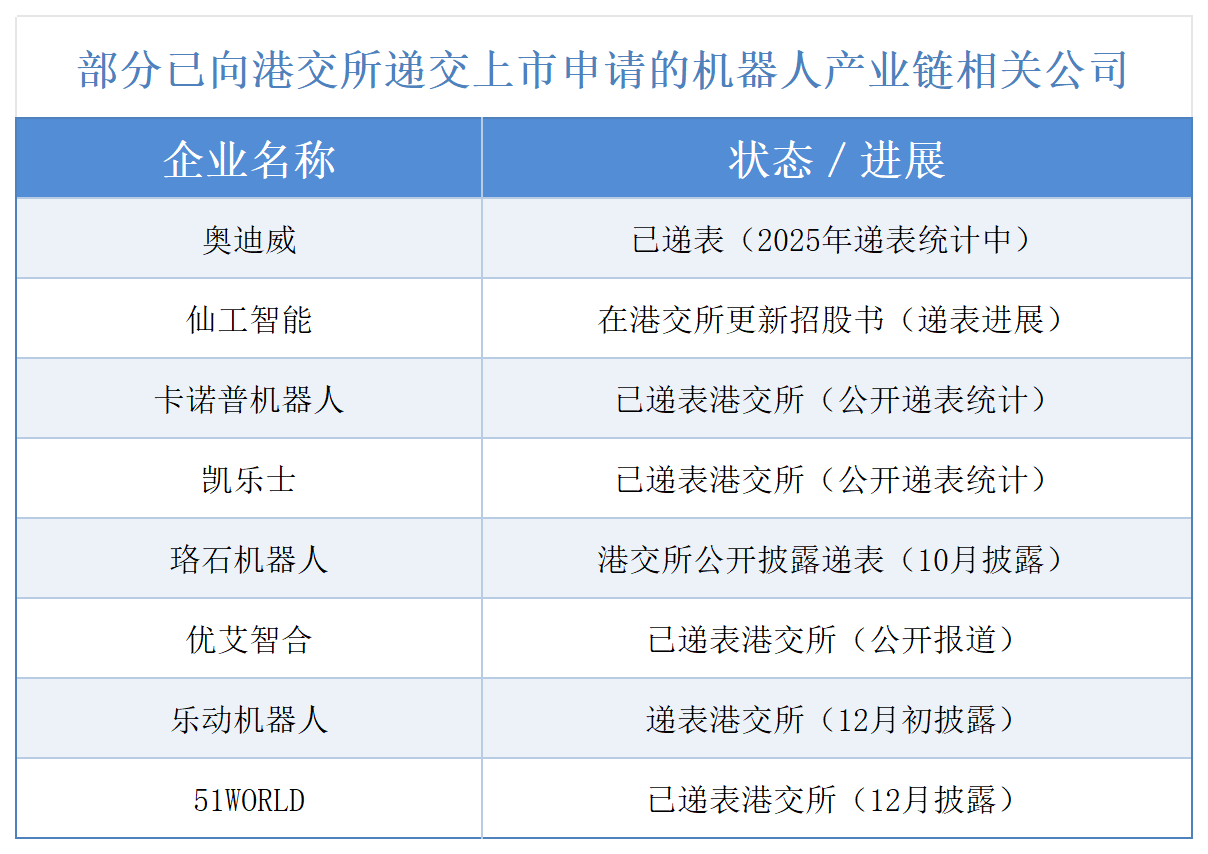
Core Viewpoint - Woan Robotics has officially listed on the Hong Kong Stock Exchange, becoming the first "AI embodied home robot" company, with a market capitalization exceeding HKD 16.4 billion as of midday trading [1]. Group 1: Company Overview - Woan Robotics is recognized as the largest provider of AI embodied home robot systems globally, according to Frost & Sullivan, based on retail revenue projections for 2024 [1]. - The company's core management team originates from Harbin Institute of Technology, with co-founders Li Zhichen and Pan Yang having a long-standing partnership since their university days [3]. - The company has attracted significant investment from top-tier institutions, with cornerstone investors contributing over HKD 700 million, accounting for more than 42% of the total offering [3]. Group 2: Financial Performance - Woan Robotics has achieved a compound annual growth rate (CAGR) of 49% in revenue over the past three years, significantly surpassing the industry average [4]. - The company is projected to generate revenue of HKD 610 million in 2024, with a gross margin of 51.7%, expected to rise to 54.2% in the first half of 2025 [4]. - The company has established a global sales network covering over 90 countries, with direct-to-consumer (DTC) channels accounting for nearly 50% of total revenue, growing at a CAGR of 73.3% [4]. Group 3: Technological Advancements - Woan Robotics has developed three core AI embodied technologies: AI machine vision control, robot positioning and environmental mapping, and distributed neural control networks [6]. - The company has invested heavily in R&D, with a CAGR of 34.7% from 2022 to 2024, and R&D expenditures representing approximately 20% of revenue [6]. - Woan Robotics holds 311 global registered patents, including 56 invention patents, and has been recognized as a national-level "specialized and innovative" enterprise [6]. Group 4: Product Development and Market Strategy - The company has created a diverse product portfolio, including enhanced execution robots and decision-making systems, covering various household scenarios [6][7]. - Woan Robotics is expanding into new market segments with innovative products like the AI tennis robot Acemate and the AI companion robot Kata Friends, which have received international recognition [7]. - The company plans to launch its first humanoid household robot, H1, in January 2026, targeting high-frequency household tasks [7]. Group 5: Future Growth and Funding Utilization - The funds raised from the IPO will primarily focus on enhancing R&D capabilities, with approximately 66.5% allocated to developing key technologies related to AI embodied home robots [9]. - Woan Robotics aims to deepen its dual-driven strategy of "technological innovation + scene cultivation," enhancing its product offerings and expanding its customer base [9].