Retail

Search documents
'Fast Money' traders talks the holiday shopping trade as countdown to Black Friday begins
Youtube· 2025-11-25 23:15
Consumer Spending Trends - The U.S. consumer's willingness to spend remains strong, with recent numbers supporting this trend [1][6] - There is a noticeable divide between high-performing and underperforming retailers, indicating a potential market shift [2][4] Retail Sector Insights - Walmart's stable pricing suggests a potential upward movement in stock prices, while TJ Maxx continues to show positive trends [2][3] - The XRT index indicates that consumer discretionary stocks are still below 2021 levels, reflecting ongoing challenges in the retail sector [5] Travel and Services Sector - There is optimism regarding travel stocks, particularly airlines that have invested in technology and improved operational efficiencies [7] - The overall consumer spending is shifting towards travel and services, which may indicate a recovery in these sectors [6][7] Brand Performance - Nike's stock performance is expected to improve due to upcoming major events like the Olympics and World Cup, despite mixed results from competitors like Foot Locker [10][12] - There is a growing discernment among investors regarding brand performance, with some brands like Best Buy performing well while others struggle [11][12]


US Stocks Climb for Third Day | Closing Bell
Youtube· 2025-11-25 22:23
Market Overview - The trading day ended with the Dow Jones Industrial Average up more than 600 points, a 1.4% increase, and the S&P 500 rising over 60 points, or 0.9% [6] - The Nasdaq composite finished higher by about 0.7%, with small and mid-cap stocks, particularly the Russell 2000, outperforming, up 2% [7] - Overall, 426 names in the S&P 500 gained ground, while only 74 declined, indicating strong market breadth [8] Company Performance - Alphabet shares have seen a significant year-to-date gain of approximately 70%, outperforming many competitors [5] - Autodesk reported a third-quarter EPS of $2.67, beating expectations of $2.50, with net revenue of $1.85 billion, slightly above the forecast of $1.81 billion [11] - Workday's after-hours share price increased by about 7% after it raised its full-year subscription revenue forecast, projecting fourth-quarter subscription revenue of $2.36 billion, above the estimate of $2.35 billion [13] - NetApp shares surged by 4% in after-hours trading after the company boosted its fiscal year adjusted EPS forecast and reported third-quarter net revenue expectations of $1.77 billion, exceeding estimates [15] - Urban Outfitters saw a significant increase in share price, up 9% in regular trading and 16% in after-hours, with third-quarter comp retail segment sales up 8%, surpassing the 5% estimate [25] Sector Insights - The technology sector experienced mixed results, with Alphabet hitting an all-time high while Nvidia shares fell by 2.6% [9][20] - Retailers showed strong performance, with Abercrombie and Fitch gaining about 36-37% after raising its 2026 net sales and EPS guidance [17] - Dell raised its full-year adjusted EPS outlook to $9.92, up from $9.55, and increased revenue guidance to a range of $11.2 billion to $12.2 billion [22][24]




Rate-Cut Hopes Bolster These Stocks. Two Top Buy Points.
Investors· 2025-11-25 21:36
Market Overview - The stock market experienced a rally, with consumer stocks leading the way, particularly in retail and travel sectors, as investors showed strong interest in these areas [1] - Despite disappointing economic data, there are rising hopes for another interest-rate cut, which may have contributed to the market's positive momentum [1] Sector Performance - Eight of the top twelve performing industry groups were from the retail sector, each showing an increase of more than 4%, indicating robust performance in this area [1] - Symbotic, a company in the robotics sector, exceeded fiscal Q4 earnings expectations, which may have influenced investor sentiment positively [2]


This $46 billion robotics stock is up 35% after a big win. Could more gains be in store?
MarketWatch· 2025-11-25 20:51
Core Insights - Symbotic has announced a new customer outside of the retail industry, which is a significant development given its heavy reliance on Walmart's business [1] Company Summary - The announcement of a new customer is positively received by Wall Street, indicating potential growth opportunities for Symbotic beyond its existing retail partnerships [1]


Lopsided action in the stock market as Big Tech stumbles while retail shares rise
CNBC· 2025-11-25 20:02
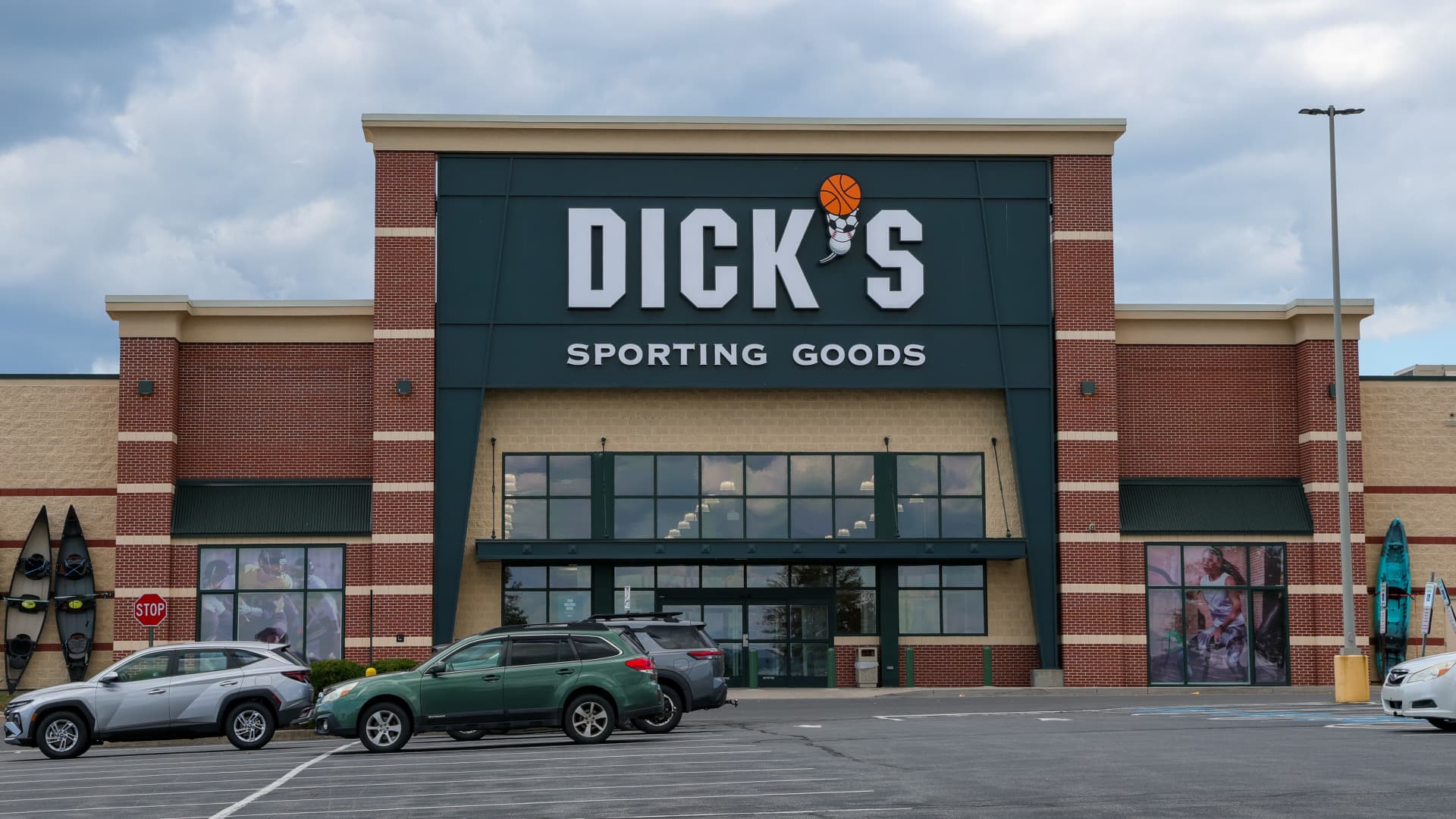
Market Update - Stocks are higher, with the S&P 500 extending its win streak to three days and a rebound of over 3% [1] - Mega-cap AI stocks like Nvidia, AMD, and Oracle are under pressure, impacting the Nasdaq [1] - Concerns arise that Meta Platforms may partner with Alphabet for tensor processing units, potentially affecting Nvidia's market share [1] Sector Performance - The healthcare sector is the top performer in Q4, closing in on industrials for fourth place this year [1] - Consumer discretionary sector shows strong performance after several retailers reported better-than-expected results and raised full-year outlooks [1] - Notable retailers like Dick's Sporting Goods, Abercrombie, Best Buy, and Kohl's posted solid results despite September retail sales missing estimates [1] Consumer Sentiment - Consumer confidence in November hit its lowest level since April, according to the Conference Board [1] - A reopened government and a potential rate cut in December could improve consumer sentiment in the coming months [1] Upcoming Earnings - Significant tech earnings are expected from Dell Technologies, HP Inc, Workday, Zscaler, and Ambarella [1] - Deere is scheduled to report earnings before the opening bell on Wednesday [1]
Walmart Vs. Target: 2 CEO Transitions, 2 Opposite Ratings (NYSE:WMT)
Seeking Alpha· 2025-11-25 18:27
Core Insights - Walmart Inc. and Target Corporation are leading players in the American retail sector, focusing on providing essential goods regardless of economic conditions [1] Company Overview - Walmart and Target are positioned at the top of the retail landscape in the U.S., emphasizing the sale of everyday items [1] Investment Focus - The analysis primarily targets small- to mid-cap companies, which are often overlooked by investors, while also occasionally reviewing large-cap companies to provide a comprehensive view of the equity markets [1]

Top small-cap plays for 2026
Youtube· 2025-11-25 18:24
Group 1: Market Trends and Stock Performance - Companies are benefiting from low feedstock prices and high demand for gasoline and distillates, leading to a wide crack spread that has allowed Wall Street firms to raise earnings expectations for the upcoming quarters [2] - Valero is highlighted as one of the best stocks expected to see earnings and sales acceleration in 2026 [1] - Dollar General's stock is up 39% year-to-date despite challenges faced by low-end consumers, indicating a better-than-expected performance [8] Group 2: Sector Insights - The life sciences sector is experiencing strong earnings and revenue growth due to increased capital investment in research, with several companies building positive momentum [5] - The industrial sector is anticipated to see more capital expenditures, with well-managed companies like Textron being recognized for their performance [4] - The electronic components industry is noted for steady earnings, with a focus on cyclical performance compared to larger-cap names [3] Group 3: Consumer Behavior - The low-end consumer is struggling due to inflation and rising gas prices, which is impacting companies like Dollar Tree and Dollar General, despite some stock performance improvements [7][9] - Same-store sales for low-end retailers remain muted, indicating ongoing challenges in the consumer market [9]

Trade Tracker: Stephanie Link buys Dick's Sporting Goods and buys more Starbucks
Youtube· 2025-11-25 18:00
分组1 - Dick Sporting Goods reported better-than-expected earnings, with a strong core business showing 5.7% comparable store sales growth, although shares fell due to the closure of some Foot Locker stores [1][3] - Retail sales data indicates a healthy consumer environment, with September retail sales up 5.7% year-over-year, an increase from 3.5% the previous month [2] - Johnson Redbook data shows retail sales up 6%, suggesting that consumer confidence may not be as dire as some reports indicate [3] 分组2 - Foot Locker is facing challenges, with expectations of a turnaround as management aims to improve operations and gain market share [4] - Other retail stocks such as Gap and Dollar General are experiencing positive movements, indicating a favorable day for retail overall [5] - The restaurant sector is also seeing gains, with companies like Brinker and Chipotle performing well, reflecting a positive trend in consumer discretionary spending [6] 分组3 - Starbucks is highlighted as a strong investment due to its management and ongoing turnaround efforts, with the company reporting its first positive comparable sales in two years [7][8] - The consumer market is exhibiting a K-shaped recovery, where luxury brands perform better than middle-class offerings, while lower-end companies find success [9][10] - Shack is noted as a growth story within the consumer discretionary space, with expectations for continued growth outpacing competitors [10]


Nasdaq Gains Over 100 Points; US Retail Sales Rise 0.2% In September
Benzinga· 2025-11-25 17:38
Market Performance - U.S. stocks experienced an upward trend, with the Dow increasing by 1.20% to 47,007.17, the NASDAQ rising by 0.48% to 22,980.75, and the S&P 500 gaining 0.74% to 6,754.86 [1] - Health care shares saw a significant increase of 2% on the same day, while energy stocks fell by 0.9% [1] Retail Sales and Economic Indicators - U.S. retail sales rose by 0.2% month-over-month in September, a decrease from the 0.6% gain observed in August [2][11] - The S&P CoreLogic Case-Shiller Home Price Index increased by 1.4% year-over-year in September, marking a slowdown for the eighth consecutive month [11] - U.S. producer prices gained 0.3% month-over-month in September, following a 0.1% decline in the previous month [11] - U.S. pending home sales increased by 1.9% month-over-month in October, following a revised 0.1% growth in the previous month [11] Commodity Market - In commodity news, oil prices decreased by 1.8% to $57.78, while gold prices increased by 0.9% to $4,129.50 [5] - Silver prices rose by 1% to $50.765, and copper prices increased by 2.8% to $5.1100 [5] Company-Specific Movements - Rubico Inc shares surged by 45% to $0.22 after announcing an extension of its tanker charters [9] - Clean Energy Technologies Inc shares increased by 67% to $1.79 following the securing of a $10 million battery energy storage project in New York [9] - Barnes & Noble Education Inc shares rose by 36% to $9.11 after announcing preliminary financial results for fiscal 2025 and year-to-date fiscal 2026 [9] - MingZhu Logistics Holdings Ltd shares plummeted by 85% to $0.16 after announcing an $8 million registered direct offering [9] - Zhihu Inc shares fell by 11% to $3.57 due to a year-over-year decrease in third-quarter financial results [9] - Burlington Stores Inc shares declined by 11% to $254.28 after reporting mixed third-quarter financial results and a significant drop in store traffic post back-to-school season [9]

Nasdaq Gains Over 100 Points; US Retail Sales Rise 0.2% In September - Burlington Stores (NYSE:BURL), Barnes & Noble Education (NYSE:BNED)
Benzinga· 2025-11-25 17:38
Market Performance - U.S. stocks experienced an upward trend, with the Dow increasing by 1.20% to 47,007.17, the NASDAQ rising by 0.48% to 22,980.75, and the S&P 500 gaining 0.74% to 6,754.86 [1] - Health care shares saw a significant increase of 2% on the same day, while energy stocks fell by 0.9% [1] Retail Sales - U.S. retail sales rose by 0.2% month-over-month in September, a decrease from the 0.6% gain observed in August [2] Commodity Prices - Oil prices decreased by 1.8% to $57.78, while gold prices increased by 0.9% to $4,129.50. Silver rose by 1% to $50.765, and copper saw a rise of 2.8% to $5.1100 [5] European Market Performance - European shares showed positive movement, with the eurozone's STOXX 600 rising by 0.69%, Spain's IBEX 35 Index increasing by 0.93%, London's FTSE 100 up by 0.57%, Germany's DAX 40 gaining 0.68%, and France's CAC 40 rising by 0.83% [6] Asian Market Performance - Asian markets closed mostly higher, with Japan's Nikkei gaining 0.07%, Hong Kong's Hang Seng up by 0.69%, China's Shanghai Composite increasing by 0.87%, while India's BSE Sensex declined by 0.37% [7] Company-Specific Movements - Rubico Inc shares surged by 45% to $0.22 after extending tanker charters [9] - Clean Energy Technologies Inc shares increased by 67% to $1.79 following a $10 million battery energy storage project in New York [9] - Barnes & Noble Education Inc shares rose by 36% to $9.11 after announcing preliminary financial results for fiscal 2025 and year-to-date fiscal 2026 [9] - MingZhu Logistics Holdings Ltd shares plummeted by 85% to $0.16 after announcing an $8 million registered direct offering [9] - Zhihu Inc shares fell by 11% to $3.57 due to a year-over-year decrease in third-quarter financial results [9] - Burlington Stores Inc shares dropped by 11% to $254.28 after reporting mixed third-quarter financial results and a significant decline in store traffic post back-to-school period [9] Housing Market Indicators - The S&P CoreLogic Case-Shiller Home Price Index increased by 1.4% year-over-year in September, marking a slowdown for the eighth consecutive month [11] - The FHFA house price index remained flat for September [11] - U.S. pending home sales rose by 1.9% month-over-month in October, following a revised 0.1% growth in the previous month [11]