
数字贸易

Search documents
全球数字贸易增长优势明显 应对AI重构挑战亟待政策协同
Xin Hua Cai Jing· 2025-09-30 07:12
Core Insights - The global digital trade is experiencing significant growth, with a projected increase in export scale from $4.59 trillion in 2020 to $7.23 trillion by 2024, reflecting an annual growth rate of 12.1%, surpassing the global trade growth rate of 9.7% during the same period [2][3] - The digital trade landscape is becoming more diversified, with major economies like the EU, the US, China, the UK, and India leading the way. China's digital trade exports reached $793.7 billion, marking a year-on-year growth of 10.7% [2][3] - Artificial intelligence (AI) is reshaping the infrastructure and business models of digital trade, with predictions that AI applications could drive global trade growth by nearly 40% and increase global GDP by 12% to 13% by 2040 [4][5] Digital Trade Growth - The report indicates that digital delivery trade, which includes remote services like financial services and online education, is becoming increasingly important in international trade [3] - Digital ordering trade is the fastest-growing segment, with an export scale of $2.62 trillion and an annual growth rate of 16.8% [2][3] Challenges and Opportunities - Developing countries face barriers in international trade, particularly for women, but digital trade offers flexible employment opportunities [3] - The need for cross-national policy collaboration is emphasized to enhance the scientific, stable, cooperative, and inclusive nature of digital trade policies [7][8] AI and Global Governance - AI is expected to evolve from an "efficiency tool" to an "ecosystem operating system," promoting intelligent, inclusive, and compliant global digital trade [5][6] - The governance of AI faces challenges such as data sovereignty disputes and fragmented regulatory standards, necessitating a collaborative approach among governments, businesses, and international organizations [5][6] Policy Recommendations - The report suggests exploring mechanisms for regulatory coordination and technical standard recognition to facilitate cross-border data flow while ensuring data sovereignty and privacy [7][8] - It advocates for a balanced strategy that prioritizes both development and security in digital trade, including the establishment of a cross-national data security governance framework [8]
数字技术与贸易深度融合
Jing Ji Ri Bao· 2025-09-29 22:22
Core Viewpoint - Digital trade is emerging as a strategic choice for countries amid global economic adjustments and increasing uncertainties, showcasing strong resilience and potential [1]. Group 1: Digital Trade Development - In the first half of this year, China's digitally deliverable service imports and exports reached 1.5 trillion yuan, while cross-border e-commerce imports and exports hit 1.3 trillion yuan, setting a historical record for the same period [1]. - China has become one of the most dynamic economies in global digital trade, contributing to domestic economic growth and the global digital trade landscape [2]. - The release of the "Opinions on the Reform and Innovation Development of Digital Trade" in 2024 outlines China's digital trade development goals and key tasks, emphasizing the importance of international cooperation and standardization [2]. Group 2: Data Cross-Border Flow - The National Data Bureau is working on building a multi-layered security system for data cross-border flow, enhancing mutual trust and regulatory alignment to facilitate compliant data export [2][3]. - There are challenges such as fragmented rules that hinder the facilitation of global digital trade, prompting calls for international collaboration to explore efficient data flow models [3]. Group 3: Silk Road E-commerce - The "Silk Road E-commerce" initiative has established e-commerce cooperation mechanisms with 36 countries and created over 120 online and offline national pavilions, promoting deep cooperation through various dimensions [4]. - In 2024, the import and export proportion between China and Belt and Road countries surpassed 50% for the first time, with "Silk Road E-commerce" driving innovation in logistics, payment, and technology [4]. - Companies from partner countries express strong interest in deepening cross-border e-commerce cooperation with China, aiming to leverage Chinese e-commerce development experiences [4]. Group 4: Institutional Opening and Innovation - China is steadily expanding institutional opening in the e-commerce sector, with the "Silk Road E-commerce" cooperation pilot zone creating 12 replicable experiences in areas like electronic bills and cross-border interoperability [5]. - Various regions are implementing differentiated institutional innovations to enhance e-commerce standards and facilitate international cooperation [5][6]. Group 5: Artificial Intelligence in Trade - AI technology is empowering the cross-border e-commerce industry, with the global market size in this field expected to reach $45.72 billion by 2032, driven by applications in customer service, personalized recommendations, and supply chain optimization [7]. - AI tools are significantly enhancing user experience and operational efficiency, with 78% of Chinese sellers using or considering AI-generated services [7][8]. - The integration of AI with live-streaming e-commerce is improving efficiency in product selection, data analysis, and compliance checks, enabling data-driven decision-making [8].

数贸会架起合作之桥 “中国方案”助力全球数字贸易
Sou Hu Cai Jing· 2025-09-29 22:16
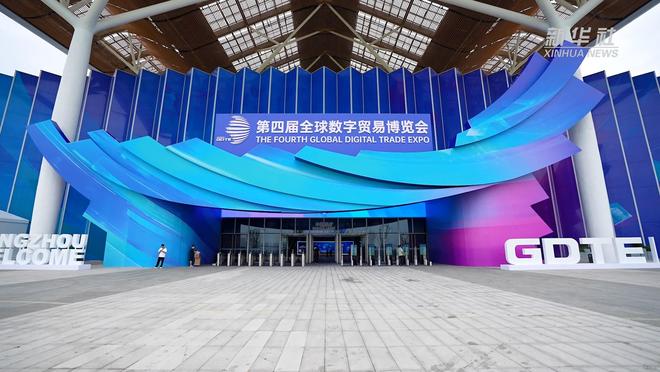
Group 1 - The fourth Global Digital Trade Expo concluded in Hangzhou, attracting over 11,000 international business guests and showcasing China's digital economy as a key player in global digital trade [1] - According to the "China Digital Trade Development Report 2025," by the first half of 2025, China's digitally deliverable service trade is expected to reach 1.5 trillion yuan, a year-on-year increase of 6%, while cross-border e-commerce imports and exports are projected to hit 1.32 trillion yuan, growing by 5.7% [1] - China's digital service trade growth rate significantly outpaces the global average, positioning it as the fastest-growing economy in this sector [1] Group 2 - Digital trade is enhancing economic and social development in Africa, with products like Ethiopian coffee and Kenyan tea entering the Chinese market through cross-border e-commerce [2] - The collaboration between China and Africa is evolving from mere goods exchange to integrating artificial intelligence, cloud ecosystems, and digital rule-making [2] - There is a pressing need for digital infrastructure in Africa, and China’s experience in digital technology development and application is seen as beneficial [2] Group 3 - Digital trade, as a new form of deep integration between digital technology and international trade, is a strategic choice for countries worldwide [3] - Despite the rapid development of digital trade, a significant digital divide persists globally, particularly in developing countries where internet penetration and information communication skills lag behind the global average [3] - China is leveraging digital trade to inject new momentum into its economy and is promoting initiatives like "Silk Road E-commerce" and "Digital Silk Road" to help developing countries benefit from the digital age and reduce the digital divide [3]
数贸会发布浙江省产业基金矩阵 助力培育新质生产力成果
Zhong Guo Xin Wen Wang· 2025-09-29 18:36
中新网杭州9月29日电(钱晨菲吴怡欣)近日,第四届全球数字贸易博览会(以下简称"数贸会")在杭州举 办,以"在数贸会看见创新未来"为主题,吸引了154个国家和地区的1800多家企业参展。 浙江省创新投资集团相关负责人表示,集团将持续优化基金布局,进一步提升基金体系的协同效率和投 资精准度;改革体制机制,探索更适应新质生产力发展规律的投融资模式;深化运营"创融桥""投贷联 动""重大项目库""民营企业融资直通车""全省产业基金一张网"等平台,优化赋能服务,提升企业价 值,为浙江培育新质生产力贡献更大的创投力量。(完) (文章来源:中国新闻网) 从具体领域布局来看,浙江省级发力方向精准且多元:前沿技术领域,精准投资宇树科技、云深处科 技、强脑科技、群核科技4家"杭州六小龙"企业;科技成果转化环节,与高校院所背景机构合作设立系 列基金,助力更多成果从"书架"走向"货架";新兴产业方面,瞄准高端芯片设计和制造设备"卡脖子"领 域,早期介入、投资支持摩尔线程、老鹰半导体等企业,积极推进高端芯片国产化替代进程。 数据显示,浙江省产业基金体系基金群规模已达千亿级,已累计投资浙江省内项目1684个,其中101家 企业成功上市 ...
记者观察:在数贸会上管窥“中国智慧”助益全球发展
Zheng Quan Shi Bao· 2025-09-29 14:36
Group 1 - The fourth Global Digital Trade Expo concluded in Hangzhou, attracting over 11,000 international business guests and showcasing China's digital economy as a significant global player [1] - The "China Digital Trade Development Report 2025" indicates that by mid-2025, China's digitally deliverable service trade is expected to reach 1.5 trillion yuan, a year-on-year increase of 6%, while cross-border e-commerce imports and exports are projected to hit 1.32 trillion yuan, growing by 5.7% [1] - China's digital service trade growth rate significantly outpaces the global average, establishing it as the fastest-growing economy in this sector [1] Group 2 - The digital trade between China and Africa is enhancing economic and social development on the continent, with African products like Ethiopian coffee and Kenyan tea entering the Chinese market through cross-border e-commerce [2] - There is a strong complementarity in digital fields between China and Africa, with vast cooperation potential in areas such as digital infrastructure and mobile payment systems [2] - Initiatives focusing on small and medium enterprises, digital infrastructure, and education are helping to bridge the digital divide in Africa, improving the quality of life for its citizens [2] Group 3 - Digital trade, as a new form of deep integration between digital technology and international trade, is becoming a common strategic choice for countries worldwide [3] - Despite the rapid development of digital trade, significant digital divides persist, particularly in developing countries where internet penetration and communication skills lag behind global averages [3] - China's initiatives like the "Silk Road E-commerce" and "Digital Silk Road" aim to provide developing countries with access to the benefits of the digital age, helping to narrow the digital divide and promote shared development [3]
记者观察:在数贸会上管窥“中国智慧”助益全球发展
证券时报· 2025-09-29 14:34
Core Viewpoint - Digital trade has become a significant aspect of China's economy, showcasing its potential for growth and international cooperation through events like the Global Digital Trade Expo [1][2]. Group 1: Digital Trade Growth - During the expo, the "China Digital Trade Development Report 2025" was released, indicating that by the first half of 2025, China's digitally deliverable service trade is expected to reach 1.5 trillion yuan, a year-on-year increase of 6% [2]. - Cross-border e-commerce imports and exports are projected to hit 1.32 trillion yuan, reflecting a year-on-year growth of 5.7%, marking a historical high for the same period [2]. - China's digital service trade growth rate significantly outpaces the global average, positioning it as the fastest-growing economy in this sector [2]. Group 2: Competitive Advantages - China's digital trade is supported by technological leadership, a vast market, and a complete industrial chain, which together form its core competitive advantages [2]. - The country advocates for multilateralism and has consistently rejected a zero-sum mindset, promoting global public goods through its digital solutions in areas like artificial intelligence and fintech [2]. Group 3: International Cooperation - The digital trade initiatives are enhancing economic and social development in Africa, with products like Ethiopian coffee and Kenyan tea entering the Chinese market through cross-border e-commerce [2]. - Cooperation between China and Africa focuses on key areas such as small and medium-sized enterprises, digital infrastructure, healthcare, and education, aiming to bridge the digital divide [3]. - China's initiatives like "Silk Road E-commerce" and "Digital Silk Road" are designed to inject new momentum into the economy and help developing countries benefit from the digital age [3].


杭州:2027年力争实现数字贸易额4400亿元
Xin Hua Cai Jing· 2025-09-29 13:53
Core Insights - The fourth Global Digital Trade Expo highlighted Hangzhou's ambition to leverage the expo's spillover effects to accelerate the transformation of results and establish a core area for global digital trade ports by 2027, targeting a digital trade volume of 440 billion yuan [1] Group 1: Digital Trade Development - Hangzhou aims to utilize its high digital trade volume, leading position in service outsourcing pilot cities, and being the first national cross-border e-commerce comprehensive pilot zone to develop a global digital trade port core area [1] - The city plans to strengthen its capabilities in bulk commodity futures, spot trading, entrusted funds, profitability, and professional talent, focusing on creating a smart trade hub for bulk commodities [1] Group 2: Industry Cluster and AI Initiatives - Hangzhou intends to cultivate 12 trillion-yuan-level industrial clusters in sectors such as energy chemicals, steel, and non-ferrous metals, positioning itself as the leading city for smart trade in bulk commodities [1] - As a region where the artificial intelligence industry accounts for 70% of Zhejiang province's total, Hangzhou seeks national support to pilot comprehensive reforms in the AI industry chain within its free trade zone and aims to establish an international cooperation service alliance for AI [1]
第四届全球数贸会掘金“新蓝海”
Zhong Guo Xin Wen Wang· 2025-09-29 11:51
Core Insights - The fourth Global Digital Trade Expo concluded in Hangzhou, attracting exhibitors and buyers from 154 countries to explore new trends and opportunities in digital trade [1][3]. Group 1: Event Highlights - The expo featured over 300 products making their debut in China, Asia, and globally, covering areas such as digital healthcare, artificial intelligence, and smart logistics [3]. - Yokogawa Electric Corporation showcased its latest Robot Management Core (RMC) platform, aiming to expand its influence in the Yangtze River Delta region [3]. - The Hong Kong Trade Development Council collaborated with local tech companies to create a "Hong Kong Pavilion," highlighting the potential for cooperation between Hong Kong's advanced technologies and mainland China's application scenarios [3]. Group 2: Participation and Economic Impact - The event saw participation from 11,000 international buyers, a 64% increase from the previous year [3]. - Indonesia's delegation brought procurement intentions exceeding 5 billion RMB, focusing on empowering the construction and digital transformation of its new capital [3][4]. Group 3: Reports and Future Outlook - The expo hosted themed events like "Silk Road E-commerce Day" and "Digital Trade Africa Day," resulting in a total investment and trade intention signing amounting to 161.98 billion RMB [5]. - The International Trade Centre (ITC) and the expo committee released the "Global Digital Trade Development Report 2025," indicating that global digital trade exports are projected to grow from $4.59 trillion in 2020 to $7.23 trillion by 2024, with an annual growth rate of 12.1% [5]. - The ITC called for collaboration among governments, businesses, and international organizations to ensure that the digital economy benefits everyone, especially small and medium-sized enterprises in developing countries [5].

科技点亮生活——数贸会上的“未来体验”
Xin Hua She· 2025-09-28 08:48
Core Insights - The Fourth Global Digital Trade Expo is being held from the 25th to the 29th in Hangzhou, Zhejiang [1] - The event showcases how digital technology is transforming life scenarios and presents diverse possibilities empowered by technology [3] Industry Highlights - Innovative applications such as robotic piano performances, intelligent humanoid combat, and AI-based traditional Chinese medicine diagnosis are prominently featured at the expo [4]
金观平:与世界共享数字贸易发展红利
Jing Ji Ri Bao· 2025-09-28 05:29
Core Insights - Digital trade is rapidly growing and has become a new trend in international trade and a new growth point for the world economy [1] - China's digital trade is vibrant and is the fastest-growing economy in global digital service trade [1][2] Group 1: Digital Trade Growth - The global digital trade export scale is projected to increase from $4.59 trillion in 2020 to $7.23 trillion by 2024, with an annual growth rate of 12.1%, surpassing the global trade total growth rate [1] - In the first half of this year, China's digitally deliverable service trade reached 1.5 trillion yuan, a year-on-year increase of 6% [1] - Cross-border e-commerce imports and exports in China amounted to 1.32 trillion yuan, with a year-on-year growth of 5.7%, setting a new historical high for the same period [1] Group 2: Challenges and Opportunities - Despite the growth, challenges remain, including insufficient competitiveness of business entities, low openness, and an incomplete governance system [1] - To support the development of digital trade, China aims to enhance digital product trade, optimize digital service trade, and promote high-quality development of data subscription trade [2] - China plans to improve its digital trade governance system and actively participate in the formulation of international rules for digital trade [2]