羚客系统

Search documents
谦寻控股董事长董海锋:重塑直播信任场
Jing Ji Guan Cha Wang· 2026-02-13 12:51
Group 1 - The core viewpoint of the articles highlights the transformation of the live e-commerce industry from rapid growth to deep integration with the real economy by 2025, focusing on value competition rather than mere traffic battles [1][2] - Qianxun has developed a mature business model for agricultural assistance, moving from simple sales in live broadcasts to a comprehensive approach that includes direct collaboration with high-quality agricultural bases across China [1] - The company has entered a 3.0 phase of agricultural assistance, emphasizing industry co-construction, where it not only sells products but also collaborates with agricultural universities to improve seed cultivation and provides full-scale purchasing to reduce dependency on single sales events [1] Group 2 - In 2025, Qianxun adopted a restrained approach to short dramas, focusing on building brand value rather than chasing fleeting traffic, integrating commercial content into storytelling to create emotional resonance during major promotional events [2] - The company accelerated its use of AI technology, enhancing operational efficiency and compliance in live e-commerce, with its Lingke system improving product selection efficiency by three times and identifying risks in real-time [2] - By 2026, the industry is expected to shift from traffic competition to deeper systemic capability competition, with emotional connections and value recognition becoming the true competitive barriers [2][3]
谦寻控股董事长董海锋:重塑直播信任场|2026商业新愿景
Jing Ji Guan Cha Bao· 2026-02-13 12:49
Group 1 - The live e-commerce industry is transitioning from a phase of rapid growth to deep integration with the real economy by 2025, focusing on value competition rather than mere traffic battles [2] - Qianxun has developed a mature business model for agricultural assistance, moving from simple sales in live broadcasts to a comprehensive approach that includes direct collaboration with high-quality agricultural bases [2] - The company has entered a 3.0 phase of agricultural assistance, emphasizing industry co-construction, such as collaborating with agricultural universities to improve seed cultivation and providing full-scale purchasing to reduce dependency on single sales events [2] Group 2 - In 2025, Qianxun adopted a restrained approach to short dramas, focusing on building brand value rather than chasing fleeting traffic, integrating commercial content into storytelling to create emotional resonance [3] - The company is accelerating its use of AI technology, with its Lingke system enhancing efficiency by three times in product selection for live broadcasts and identifying compliance risks in real-time [3] - As the industry enters a period of stock competition in 2026, the focus is shifting from traffic battles to deeper systemic capabilities, with emotional connections and value recognition becoming key competitive barriers [3][4]


“网红第一大楼”为何冷清了? 杭州直播电商产业在重构中新生
Zheng Quan Shi Bao· 2026-01-07 22:28
Core Viewpoint - The decline in rental prices and the reduction of tenants in the Regin International Center in Hangzhou, a symbol of the live-streaming economy, does not indicate the retreat of the live-streaming e-commerce industry but rather a transition from rapid growth to refined operations [1][3]. Industry Transition - The live-streaming e-commerce industry is moving from a phase of "barbaric growth" to a stage of "mature differentiation," driven by increased competition, stricter regulations, and the need for professionalization [3][4]. - The industry is experiencing a shift from a focus on traffic acquisition to refined operations, emphasizing efficiency and sustainability [5][6]. Market Dynamics - The rental prices in the Regin International Center have decreased by 500 to 1000 yuan per month, reflecting normal market adjustments rather than a decline in the industry [2][3]. - The number of businesses related to live-streaming in the Regin International Center has decreased, with only 25% of the tenants being involved in live-streaming-related activities [2]. Growth Projections - The live-streaming e-commerce market in China is projected to reach a transaction scale of 5.33 trillion yuan in 2024, with a year-on-year growth of 8.31%, and is expected to increase to 5.6 trillion yuan in 2025 [4]. Technological Advancements - The integration of AI and new technologies is becoming crucial in various aspects of the live-streaming e-commerce industry, including product selection, efficiency optimization, and content creation [5][6]. - Companies are investing heavily in technology to enhance operational efficiency, with some institutions developing comprehensive live-streaming service platforms [6]. Competitive Landscape - Hangzhou remains a vital hub for live-streaming e-commerce, housing the largest number of MCN institutions and live-streaming practitioners in China, which contributes to its unmatched industry concentration [7][8]. - The city has a complete ecosystem for live-streaming e-commerce, including upstream supply chains, midstream live-streaming institutions, and downstream e-commerce platforms [9]. Talent and Resource Availability - The availability of abundant resources and skilled personnel in Hangzhou continues to attract live-streaming e-commerce professionals, reinforcing the city's position as a leading center for the industry [7][8].
数字技术与贸易深度融合
Jing Ji Ri Bao· 2025-09-29 22:22
Core Viewpoint - Digital trade is emerging as a strategic choice for countries amid global economic adjustments and increasing uncertainties, showcasing strong resilience and potential [1]. Group 1: Digital Trade Development - In the first half of this year, China's digitally deliverable service imports and exports reached 1.5 trillion yuan, while cross-border e-commerce imports and exports hit 1.3 trillion yuan, setting a historical record for the same period [1]. - China has become one of the most dynamic economies in global digital trade, contributing to domestic economic growth and the global digital trade landscape [2]. - The release of the "Opinions on the Reform and Innovation Development of Digital Trade" in 2024 outlines China's digital trade development goals and key tasks, emphasizing the importance of international cooperation and standardization [2]. Group 2: Data Cross-Border Flow - The National Data Bureau is working on building a multi-layered security system for data cross-border flow, enhancing mutual trust and regulatory alignment to facilitate compliant data export [2][3]. - There are challenges such as fragmented rules that hinder the facilitation of global digital trade, prompting calls for international collaboration to explore efficient data flow models [3]. Group 3: Silk Road E-commerce - The "Silk Road E-commerce" initiative has established e-commerce cooperation mechanisms with 36 countries and created over 120 online and offline national pavilions, promoting deep cooperation through various dimensions [4]. - In 2024, the import and export proportion between China and Belt and Road countries surpassed 50% for the first time, with "Silk Road E-commerce" driving innovation in logistics, payment, and technology [4]. - Companies from partner countries express strong interest in deepening cross-border e-commerce cooperation with China, aiming to leverage Chinese e-commerce development experiences [4]. Group 4: Institutional Opening and Innovation - China is steadily expanding institutional opening in the e-commerce sector, with the "Silk Road E-commerce" cooperation pilot zone creating 12 replicable experiences in areas like electronic bills and cross-border interoperability [5]. - Various regions are implementing differentiated institutional innovations to enhance e-commerce standards and facilitate international cooperation [5][6]. Group 5: Artificial Intelligence in Trade - AI technology is empowering the cross-border e-commerce industry, with the global market size in this field expected to reach $45.72 billion by 2032, driven by applications in customer service, personalized recommendations, and supply chain optimization [7]. - AI tools are significantly enhancing user experience and operational efficiency, with 78% of Chinese sellers using or considering AI-generated services [7][8]. - The integration of AI with live-streaming e-commerce is improving efficiency in product selection, data analysis, and compliance checks, enabling data-driven decision-making [8].

四度赴约,谦寻在数贸会交出85亿元“县域经济”答卷
Jing Ji Wang· 2025-09-25 10:06
Core Insights - The fourth Global Digital Trade Expo, themed "Seeing the Innovative Future at the Digital Trade Expo," was held in Hangzhou, Zhejiang, showcasing new practices in county economy, agricultural assistance 3.0, and AI live streaming [1] Group 1: Agricultural Assistance Initiatives - Since 2016, the company has been leveraging innovative thinking and practical actions to support county development through live streaming, achieving over 8.5 billion yuan in sales of county specialty products, with a 176% increase in sales from 2023 to 2024 [3] - The company has developed a three-stage approach to agricultural assistance, starting with public welfare live streaming to enhance the visibility of local products and engaging deeply in the rural industrial chain [3] - The "Charming China Tour" initiative has visited 17 provinces and 22 sites, generating over 800 million yuan in transaction volume, promoting a replicable model for agricultural assistance [3] Group 2: Case Studies and Collaborations - In Gansu's Lixian County, the company has helped local businesses improve e-commerce capabilities through practical training, resulting in a hundredfold increase in sales for the local brand "Cool Qin" apple chips [4] - The launch of the "Qianxun Super Store" mini-program aims to provide consumers with high-quality products directly from the source, establishing a long-term procurement mechanism with a pomegranate planting base in Dali, Yunnan [4] - Collaborations with local agricultural technology institutions are being explored to integrate market, technology, and agriculture, enhancing the entire agricultural supply chain [4] Group 3: Technological Advancements in Live Streaming - The live streaming e-commerce industry is transitioning to a phase focused on compliance and efficiency, with the company investing in technology research and development to reshape the industry ecosystem [5] - The "Lingke System," launched in 2019, has evolved into a comprehensive "AI + Live Streaming" solution, significantly impacting product selection, data analysis, and compliance review [5] - Future developments of the Lingke System will focus on "AI Agent" technology to automate the entire process from product selection to live streaming, enhancing operational efficiency across the industry [5]
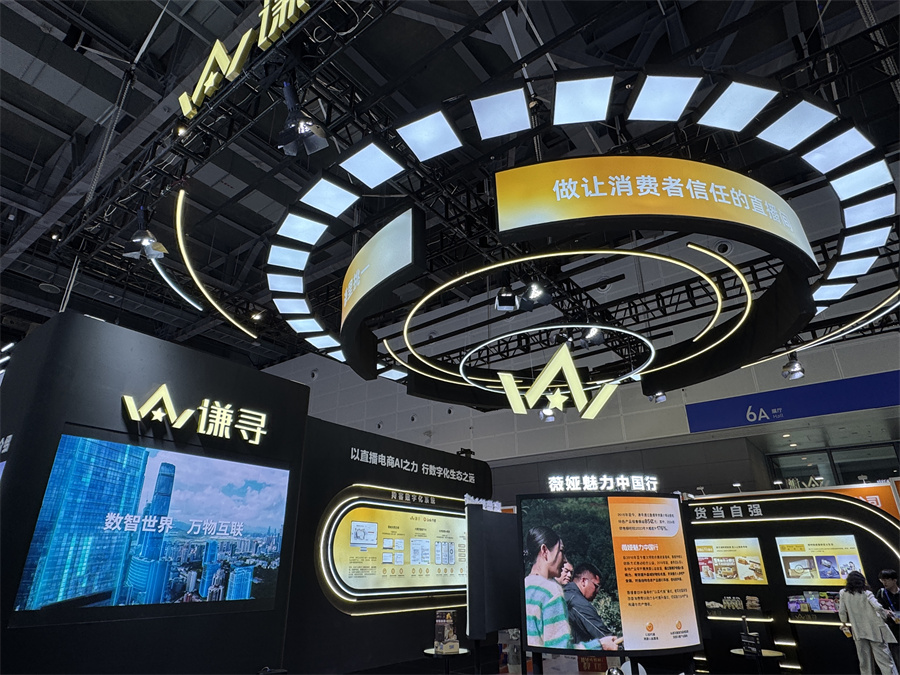
头部直播电商公司谦寻亮相数贸会 已累计成交85亿元“县域经济”订单
Zheng Quan Shi Bao Wang· 2025-09-25 09:54
Core Insights - The Fourth Global Digital Trade Expo opened in Hangzhou, with Qianxun participating for the fourth consecutive year, showcasing themes related to county economy and Silk Road e-commerce [1] - Qianxun's live-streaming sales have driven over 8.5 billion yuan in sales of county specialty products, with a 176% increase in sales from 2023 to 2024 [1] - Since 2019, Qianxun has engaged in source tracing public welfare live streaming to enhance the visibility of high-quality county products, deeply involving itself in the rural industrial chain [1] - The launch of the "Qianxun Super Store" mini-program in May 2023 aims to provide consumers with original products, further deepening the support for farmers [1] - The "Lingke System," the industry's first full-process live streaming service platform developed by Qianxun, was also showcased at the expo [1] Technology and Innovation - The Lingke System utilizes advanced AI technology to analyze vast historical sales data and real-time market trends for precise product selection, enhancing the competitiveness of products in live streaming [1] - The system has integrated with various channels, including the National Enterprise Credit Publicity System, to ensure compliance through diverse data sources [1] - Qianxun's next phase for the Lingke System will focus on "AI Agent" technology, aiming for full-process automation from product selection to final broadcast, thereby improving operational efficiency in the live-streaming e-commerce industry [2]
解决选品、直播内容生产等多环节合规痛点 AI技术助力直播电商监管
Zheng Quan Shi Bao Wang· 2025-08-19 14:06
Core Viewpoint - The implementation of AI technology in live commerce regulation is transforming the industry, enhancing compliance and operational efficiency while addressing regulatory challenges. Group 1: AI in Live Commerce Regulation - The "Live Commerce Full Process Smart Supervision System" launched in Shanghai's Changning District has monitored over 2,000 live sessions and identified more than 160 illegal clues within six months of operation [1] - The system utilizes generative large language model technology to conduct real-time monitoring across various platforms such as Douyin, Kuaishou, Taobao, Pinduoduo, and Xiaohongshu [1] - AI technology is becoming a key variable in driving transformation in the live commerce industry, improving efficiency and quality in core processes like product selection, data analysis, and compliance review [2] Group 2: Compliance and Efficiency Enhancements - The "Lingke System" developed by Qianxun Holdings integrates with national enterprise credit systems to enhance compliance checks during product selection, significantly shortening compliance review cycles [3] - AI has improved the efficiency of creating live broadcast scripts from 20-30 minutes to just 3 minutes, achieving nearly a tenfold increase in productivity while ensuring compliance by automatically filtering prohibited content [3] - The "Pengyou Cloud" platform has integrated the DeepSeek model to automate compliance checks across three dimensions: business qualifications, brand authorization, and product information, resulting in over a 30% increase in compliance rates [4] Group 3: Regulatory Framework and Future Developments - The National Market Supervision Administration has proposed a regulatory framework for live commerce, introducing a "blacklist" system and cross-platform constraints to address issues like false marketing and counterfeit goods [4][5] - The new regulations provide clear legal boundaries for innovative business models such as AI-driven live streaming and virtual hosts, promoting sustainable and high-quality development in the industry [5]
十年直播电商,薇娅和谦寻选择了另一条路
Sou Hu Cai Jing· 2025-08-06 09:53
Core Insights - The article discusses the evolution and challenges of live commerce in China, highlighting the significant role of key players like Viya and her company Qianxun in shaping the industry [3][5][21] - It emphasizes the need for the industry to transition from a focus on low prices and impulsive buying to a more sustainable and value-driven approach [9][15][21] Industry Evolution - Live commerce began in 2016, initially as a small-scale experiment with only a few hundred streamers [4] - The industry saw rapid growth around 2018, with top streamers like Viya driving significant sales and establishing a new retail narrative [4][5] - By 2020, the market surpassed 1 trillion yuan, with projections estimating it will reach 5.8 trillion yuan by 2024, accounting for over one-third of online retail [4][9] Challenges Faced - The industry has experienced issues such as price wars, false advertising, and poor after-sales service, leading to a trust crisis among consumers [6][7][8] - The rapid influx of unprofessional participants has exacerbated short-term thinking within the market [9][10] Transition Strategies - Key players are exploring new business models, such as virtual influencers and international expansion, to adapt to changing market dynamics [10][12] - Qianxun is focusing on system construction and data-driven decision-making to enhance product selection and reduce risks [12][14] Social Value and Long-term Goals - The industry must address its reputation by increasing transparency in supply chains and fostering long-term relationships with consumers [16][17] - Initiatives like the "Super Member" program aim to create sustainable consumer engagement beyond one-time purchases [15][17] - Qianxun's efforts in social responsibility, such as training programs for disabled students, illustrate a commitment to broader societal impact [18][21]

停播1300多天,薇娅未“隐入尘烟”
3 6 Ke· 2025-08-05 00:22
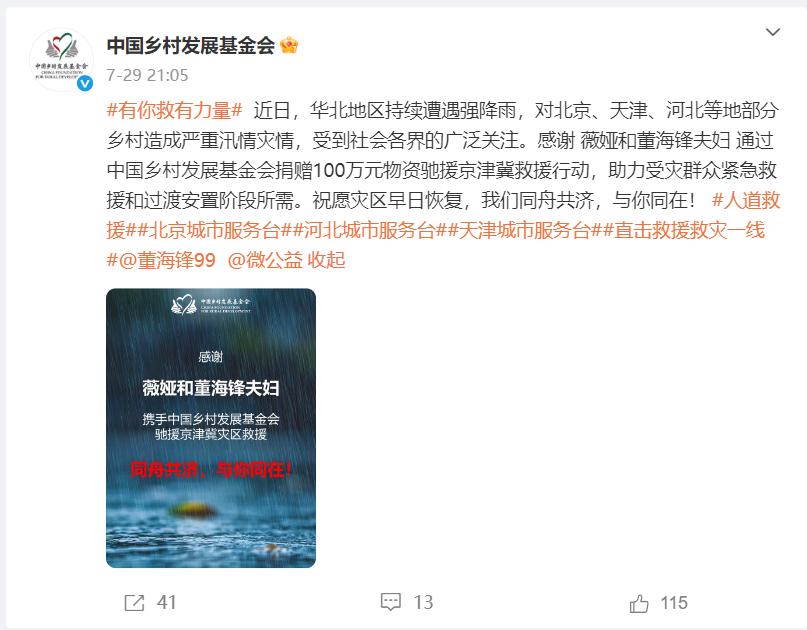
Core Viewpoint - After the tax evasion incident, Viya has shifted her focus towards philanthropy and business operations, while her husband, Dong Haifeng, has taken a more prominent role in the public eye, indicating a strategic pivot in their business model and public engagement [1][7]. Philanthropic Activities - In response to severe flooding in North China, Viya and her husband donated 1 million yuan worth of materials to aid disaster relief efforts in the Beijing-Tianjin-Hebei region [2]. - Prior to the tax incident, the couple was already active in philanthropy, donating 1 million yuan in cash and 3 million yuan worth of medical supplies during the COVID-19 outbreak in Wuhan [4]. - They continued their charitable efforts during various disasters, including donations of 2 million yuan during the Zhengzhou floods in 2021 and 1 million yuan for the Sichuan earthquake in 2022 [5]. Financial Contributions - From 2020 to the present, the couple's total donations have exceeded 32 million yuan, which has helped improve their public image post-tax scandal [6]. - Their philanthropic actions have provided tangible support to disaster-stricken areas and vulnerable groups, while also aiding in the recovery of their public reputation [6]. Business Developments - Viya has transitioned to a behind-the-scenes role, focusing on educational initiatives and business strategy, while Dong Haifeng has taken on more public-facing responsibilities [8]. - Dong Haifeng has been actively promoting their new business ventures, including the development of AI-driven systems to enhance e-commerce operations [8]. - The couple has also ventured into the short drama and food industries, with new companies established under their control [9]. Marketing Strategies - A new mini-program named "Qianxun Super Member" has been launched, which is indirectly associated with Viya, suggesting a strategy to leverage her past influence in a more subtle manner [10]. - Despite the ongoing negative impact from the tax evasion scandal, the couple is exploring various avenues to re-establish their market presence and engage with their audience [10].
AI+直播,其实是薇娅团队早就布好的局?
Sou Hu Cai Jing· 2025-07-31 17:41
Core Insights - The live commerce industry has transitioned from a chaotic phase to a mature and systematic one, with efficiency and compliance becoming the true competitive advantages in the "microsecond" competition era [1][3]. Group 1: Industry Evolution - The live commerce sector has evolved significantly, moving from a wild phase to a more structured and systematic approach [3]. - The influence of Viya, a prominent figure in live commerce, is pervasive even in discussions about the industry's future, highlighting her foundational role in establishing a technological base for live commerce [3][5]. Group 2: Technological Advancements - In 2019, Viya and Dong Haifeng launched the "Lingke System," an intelligent management platform designed to enhance the efficiency and accuracy of live commerce processes [5]. - The Lingke System has evolved to integrate AI technology, streamlining various aspects of the live commerce workflow, such as product selection, content planning, and data monitoring [5][7]. - Currently, the Lingke System serves over 40,000 merchants and has facilitated the collaboration of more than 40 million products, showcasing its significant impact on the industry [5]. Group 3: Strategic Insights - The success of Viya's team is attributed to their early recognition of the importance of efficiency and systematic approaches in the future of e-commerce, rather than relying solely on individual charisma [7]. - The legacy of Viya's strategies and technological insights continues to empower the company, transforming live commerce into a replicable and standardized process rather than a purely human-driven effort [7].