
新型显示

Search documents
新型显示产业高质量发展十大城市出炉 合肥、深圳、成都领跑
Zhong Guo Xin Wen Wang· 2025-11-03 17:02
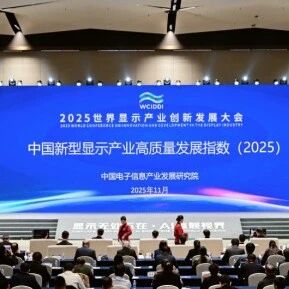
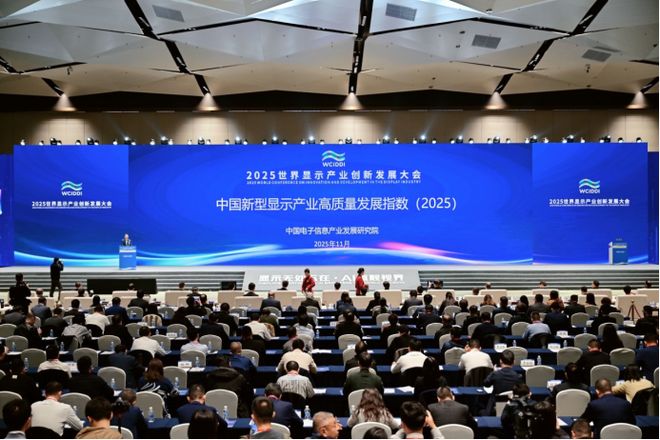
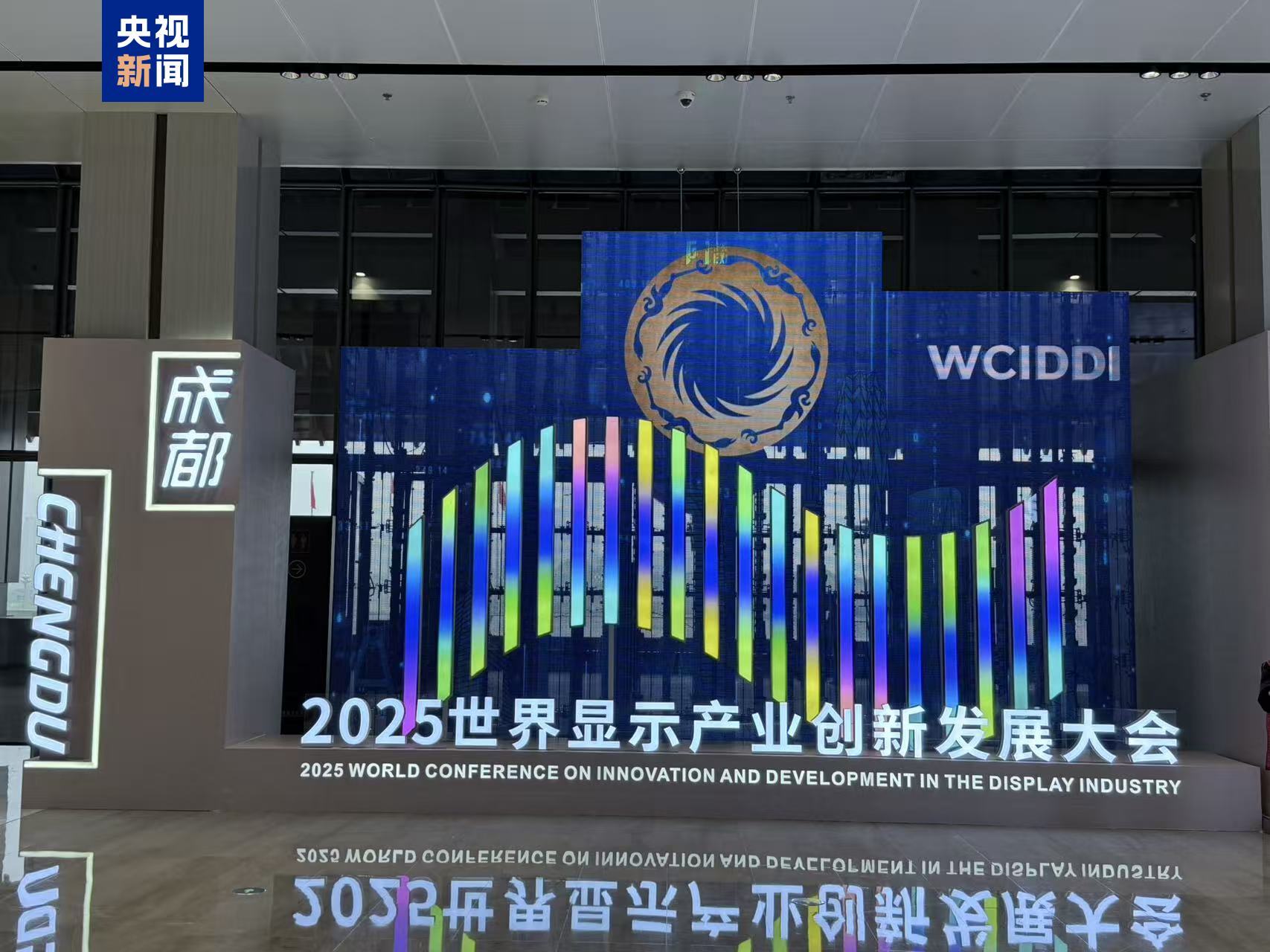
Core Insights - The 2025 World Display Industry Innovation Development Conference was held in Chengdu, where the China Electronic Information Industry Development Research Institute released the "China New Display Industry High-Quality Development Index (2025)" [1] - The index evaluates the high-quality development level of China's display industry, considering factors such as new industry developments, technological advancements, market applications, and AI integration [1] Summary by Categories High-Quality Development Index - The "Index (2025)" identifies the top ten cities for high-quality development in the display industry from 2024 to 2025, which are Hefei, Shenzhen, Chengdu, Guangzhou, Wuhan, Beijing, Xiamen, Suzhou, Chongqing, and Nanjing [1] - Hefei, Shenzhen, and Chengdu rank as the top three cities due to their advantages in industrial chain layout, technological innovation, and production capacity [1] Challenges in the Display Industry - The display industry faces several challenges, including insufficient original technology reserves, the need for stronger intellectual property construction, slower-than-expected market growth, and an incomplete industrial support system [2] Recommendations for Future Development - Suggestions for the future development of the display industry in key cities include: 1. Strengthening top-level design and planning for orderly industrial upgrades [2] 2. Building a balanced industrial ecosystem while focusing on regional supply chain development [2] 3. Promoting AI integration to enhance innovation applications within the display industry [2] 4. Encouraging collaborative openness both domestically and internationally to accelerate the flow and cooperation of new display industry elements [2]
四川:13个新型显示产业合作项目集中签约 总投资额157.4亿元
Xin Hua Cai Jing· 2025-11-03 13:59
Group 1 - The core viewpoint of the news is the signing of 13 new display industry cooperation projects in Chengdu, with a total investment of 15.74 billion yuan, covering various segments of the display industry chain [1][2] - The signed projects include significant initiatives such as the display and semiconductor target material R&D and manufacturing base, and the iQIYI film and television project, which aims to enhance regional industrial development through content creation [1] - The event attracted over 200 influential enterprises from the display industry, covering upstream and downstream sectors, and focusing on major global display technology innovations [1] Group 2 - Sichuan has successfully attracted and nurtured leading enterprises like BOE and Chengxin Optoelectronics, gathering over 150 companies in the display industry chain [2] - The completeness of the new display industry chain in Sichuan exceeds 70%, with an industry matching rate of over 45% [2] - As of the first half of 2025, there are 47 projects in the new display industry in Sichuan with investments exceeding 100 million yuan, representing a nearly 50% year-on-year increase [2]
新型显示产业十强城市出炉,合肥位居榜首
第一财经· 2025-11-03 12:51
Core Viewpoint - The article discusses the high-quality development of China's new display industry, highlighting its significant global market share and the integration of artificial intelligence into the sector, which is transitioning from hardware manufacturing to smart terminals and ecosystem applications [3][4]. Industry Overview - China's new display industry accounts for approximately 50% of the global market share, with a projected output value of 740 billion RMB in 2024, representing a 12% year-on-year growth [3][4]. - The market share for panels is expected to reach 55%, while the materials market share is anticipated to be 43%, both leading globally [3]. Key Cities for Development - The "High-Quality Development Index (2025)" identifies ten key cities for the future development of the display industry, including Hefei, Shenzhen, Chengdu, Guangzhou, Wuhan, Beijing, Xiamen, Suzhou, Chongqing, and Nanjing [4][5]. - Hefei, Shenzhen, and Chengdu are noted for their advantages in industrial chain layout, technological innovation, and production capacity [4]. Challenges Faced - The display industry faces several challenges, including insufficient original technology reserves, the need for stronger intellectual property construction, slower-than-expected market growth, and an incomplete industrial support system [4][5]. Recommendations for Future Development - The article suggests four key recommendations for enhancing the display industry's development: 1. Strengthening top-level design and orderly advancing industrial upgrades [5]. 2. Building a balanced industrial ecosystem while focusing on regional supply chains [5]. 3. Promoting AI integration to foster innovative applications within the display industry [5]. 4. Encouraging collaborative openness both domestically and internationally to enhance the flow and cooperation of development factors [5].

新型显示产业十强城市出炉,合肥位居榜首
Di Yi Cai Jing Zi Xun· 2025-11-03 11:13
Core Viewpoint - China's new display industry accounts for nearly half of the global market share, with significant regional concentration [1][3] Group 1: Industry Overview - The 2025 World Display Industry Innovation Development Conference was held in Chengdu, Sichuan Province, where the China Electronic Information Industry Development Research Institute released the "High-Quality Development Index of China's New Display Industry (2025)" [1][3] - The new display industry is projected to reach a value of 740 billion RMB in 2024, representing a 12% year-on-year growth, with a global market share exceeding 49% [3][4] - The panel market share is expected to reach 55%, and the materials market share is projected to be 43%, both leading globally [3][4] Group 2: Key Cities and Rankings - The top ten cities for high-quality development in the display industry for 2024-2025 include Hefei, Shenzhen, Chengdu, Guangzhou, Wuhan, Beijing, Xiamen, Suzhou, Chongqing, and Nanjing [3][5] - Hefei, Shenzhen, and Chengdu continue to lead the rankings due to their advantages in industrial chain layout, technological innovation, and production capacity [4] Group 3: Challenges and Recommendations - The display industry faces challenges such as insufficient original technology reserves, the need for stronger intellectual property construction, slower market growth, and an incomplete industrial ecosystem [4][5] - Recommendations for future development include strengthening top-level design, constructing a balanced industrial ecosystem, deepening AI integration, and promoting collaborative openness within and outside the region [5]
显示装备新突破!我国8.6代OLED量产线高端装备发布
Yang Shi Xin Wen· 2025-11-03 10:13
Group 1 - The core viewpoint of the news is that China has made significant advancements in the display equipment sector, particularly with the launch of three high-end devices for the mass production line of 8.6-generation large-sized OLED screens [1][3]. Group 2 - The three high-end display equipment launched include a multi-application inkjet film deposition platform, the first domestic large-area bonding equipment, and the first domestic EHD dispensing equipment, all aimed at enhancing the production of large-sized OLED screens [3]. - The introduction of these domestic display equipment is expected to facilitate the mass production of new display products that are larger, more efficient, and cost-effective, marking a new phase of domestic high-end manufacturing in the display industry [3]. Group 3 - China's new display industry has achieved a global market share of 55% in display panels and 43% in display materials, leading the world in both categories [5]. - The industry is projected to surpass $100 billion (approximately 740 billion RMB) in value by 2024, with a year-on-year growth of 12%, and is expected to exceed $110 billion (close to 800 billion RMB) by the end of 2025, with a growth rate of about 5% [5].
瞭望 | 投资之问看合肥
Xin Hua She· 2025-11-03 09:27
Core Insights - Hefei has emerged as a significant player in the innovation and technology sector, leveraging government-led investments to attract social capital and develop strategic emerging industries [1][2][5] Investment Strategy - Hefei's government employs a "lead investment" model to stimulate private investment, focusing on long-term growth and leveraging state capital to maximize impact [4][5] - The city has successfully created major industry clusters in new display technology, integrated circuits, and artificial intelligence, achieving a total investment exceeding 210 billion yuan in strategic emerging industries [5][10] Innovation Ecosystem - Hefei emphasizes early-stage investments in technology-driven small and medium enterprises, with over 10% of its annual fiscal budget allocated to scientific research [7][8] - The city has established a comprehensive funding ecosystem that includes various types of capital, from angel to venture capital, covering the entire lifecycle of enterprises [7][8] Industry Chain Development - The investment approach focuses on strengthening local industry chains by addressing gaps and leveraging local resources, such as investing in display technology to support the home appliance sector [9][10] - Hefei has identified 16 key industry chains, with government leadership ensuring coordinated development and resource allocation [10] Decision-Making Process - Hefei has developed a multi-faceted decision-making process that includes government, expert, and community input to enhance the scientific basis of investment decisions [11] - The city has successfully navigated challenges, such as the downturn of NIO's stock, by conducting thorough analyses and maintaining a long-term investment perspective [11] Scene Innovation - Hefei is creating an innovation ecosystem by matching advanced technologies with practical applications, exemplified by the development of a smart inspection system for public transportation [12] - The city has launched initiatives to foster a wide range of application scenarios, enhancing the visibility and utility of innovative technologies [12] Investment Cycle Management - Hefei is establishing a risk management and exit strategy for government investments, focusing on market-driven approaches and creating mechanisms for reinvestment [13] - The city encourages a culture of innovation and risk-taking, allowing for failures while ensuring that successful projects can generate returns for future investments [13][14]

维信诺:公司聚焦的AMOLED行业处于快速发展阶段
Zheng Quan Ri Bao Zhi Sheng· 2025-11-03 08:12
Core Viewpoint - The company, Visionox, emphasizes its focus on the rapidly developing AMOLED industry, which is a key technology in new display solutions and is supported as a strategic emerging industry by the government [1] Group 1: Company Operations - The company's financing activities are part of its normal operational needs [1] - An internal risk monitoring mechanism has been established to manage potential risks effectively [1] - Current risks are reported to be under effective control by the company [1]

加快推进现代化区域中心强市 建设再上新台阶——访安阳市委书记袁家健
He Nan Ri Bao· 2025-11-02 23:35
Core Viewpoint - The 20th Central Committee's Fourth Plenary Session is a significant meeting aimed at advancing the second centenary goal, with the passed "Suggestions" serving as a guiding document for achieving decisive progress in socialist modernization [1] Group 1: Economic Development - Anyang will focus on innovation-driven development, enhancing the integration of production and innovation, and leveraging high-level innovation platforms like the Blue Sky Laboratory and Anyang (Beijing) Science and Technology Innovation "Dual Centers" [1] - The city aims to develop strategic emerging industries such as low-altitude economy, rehabilitation equipment, new display technologies, and electronic new materials [2] - Anyang plans to strengthen cooperation with neighboring cities to create a "bridgehead" for connecting with the Beijing-Tianjin-Hebei region and serve as an important support point for inter-provincial collaborative development [2] Group 2: Governance and Social Management - The city will deepen the "Party Building + Grid + Big Data" governance model to optimize grassroots governance processes and enhance data-driven decision-making [2] - There will be a focus on digital regulation of electric welding equipment to improve management quality and prevent illegal financial activities, ensuring the safety of citizens' lives and property [2] Group 3: Cultural and Tourism Development - Anyang is committed to protecting the Yin Ruins site and enhancing the utilization of cultural relics, with plans to accelerate the construction of major projects like the Yin Ruins National Archaeological Park [2] - The city aims to create a world-class cultural landmark with the Yin Ruins oracle bone inscriptions and contribute to the development of a world-class tourism destination in the province [2] Group 4: Quality of Life Improvement - The city will prioritize employment, utilizing entrepreneurship guarantee loans and conducting large-scale skills training to promote high-quality employment [2] - There will be efforts to enhance the synergy in healthcare, reduce medical costs for citizens, and improve the capacity of elderly care services [2] - Urban renewal actions will be implemented to ensure more citizens have access to quality housing, thereby enhancing their sense of happiness and security [2]
四川眉山在北京举行央国企对接会 签约金额超500亿元
Xin Hua Cai Jing· 2025-10-31 13:55
Core Insights - The investment conference themed "'Jing' Colorful Appointment, Win-Win Meishan" was held in Beijing, resulting in the signing of 43 projects with a total contract value of 506.04 billion yuan [1] - Meishan City released an investment opportunity list featuring 238 quality projects across key industries and future tracks [1] - The local government aims to develop a leading industrial system centered on new energy and new materials, supported by electronic information, equipment manufacturing, and pharmaceutical food sectors [1] Group 1 - The conference showcased the strength of Meishan's manufacturing sector and its commitment to attracting investment [1] - Major companies such as China Railway Construction, General Consulting, and Xiexin Group signed 15 projects worth 341.81 billion yuan, focusing on various fields including new energy, electronic information, and agricultural processing [1] - Meishan's GDP growth rates for the first three quarters of the year were 7.6%, 7.5%, and 7.1%, respectively, leading the province [1] Group 2 - Meishan has prioritized industrial development and manufacturing, achieving significant results in the "1+3" leading industries [2] - In the new energy and new materials sector, Meishan focuses on lithium batteries, crystalline silicon photovoltaics, and high-end fine chemicals, with leading companies like Tongwei and Wanhua establishing a strong presence [2] - The electronic information industry has developed a new display production base, while the equipment manufacturing sector includes various production bases for transmission components and small compressors [2]
交通银行安徽省分行:金融活水为科创“充能”
Ren Min Wang· 2025-10-31 03:39
Core Insights - The new display industry in Anhui Province is projected to account for 10% of global capacity in 2024, with revenue reaching nearly 75 billion yuan in the first half of this year, marking a year-on-year growth of 9.8% and contributing nearly 30% to the electronic information manufacturing sector [1] Group 1: Industry Development - The new display industry has become a significant driver of high-quality development in Anhui Province [1] - Financial support from institutions like the Bank of Communications has been crucial in facilitating the growth of the new display industry through technology innovation and advanced manufacturing [1] Group 2: Company Case Study - Yingri Technology - Yingri Technology has increased its R&D investment, enhancing the purity of target materials and reducing production costs through technological upgrades [2] - The company has established stable partnerships with leading firms in the display sector, such as BOE, and is projected to achieve revenue exceeding 646 million yuan in 2024 [2] - Yingri Technology's growing scale has led to increased funding needs for raw materials, technological innovation, and equipment updates [2] Group 3: Financial Support Initiatives - The Bank of Communications provided a 40 million yuan unsecured comprehensive credit approval to Yingri Technology in early 2023, addressing the funding challenges faced by tech enterprises [3] - The bank has implemented an "active credit" model to support tech companies, offering products like "talent loans" and "R&D loans" to alleviate financing difficulties [3][4] - The bank aims to enhance its support for tech enterprises by establishing a network of specialized branches and implementing a full lifecycle service model [4] Group 4: Growth Partnerships - The Bank of Communications has signed growth partnership agreements with over 1,000 tech companies, issuing loans totaling nearly 6.7 billion yuan as of the first half of this year [5]
