Food Delivery

Search documents
X @Bloomberg
Bloomberg· 2025-12-09 11:14
Indian food delivery major Swiggy launches a new share offering for institutional investors to raise up to 100 billion rupees, just a year after its market debut https://t.co/IyJfXIv8Fo ...
印度消费:隧道尽头的曙光-尚未到来-India Consumer_ Light at the end of tunnel_ Not yet.
2025-12-08 00:41
Summary of Key Points from the Conference Call Industry Overview - The focus is on the Indian consumer market, particularly evaluating the anticipated recovery in consumption for the festive season of 3Q F26 [1][2]. - The analysis is based on three data points: UPI transaction data, app usage data for e-commerce, and management commentary from 2Q F26 conference calls [1]. Core Insights - **UPI Transaction Data**: - UPI transactions now account for approximately 39% of India's Private Final Consumption Expenditure (PFCE) [2][21]. - The growth in UPI transactions has been slowing, indicating that the increase is reflective of underlying category growth rather than merely a shift in payment methods [2]. - No consumption category is showing definitive festive momentum, with most categories experiencing lower YoY growth in October 2025 compared to 2Q F26 [3][28]. - **E-commerce and Quick Commerce Trends**: - Quick Commerce platforms like Blinkit, JioMart, and BigBasket are experiencing significant DAU growth of 70-200% during the festive period, while traditional e-commerce platforms like Amazon and Flipkart are seeing declines [4][58]. - Food delivery services have shown muted DAU growth, with Domino's being the strongest performer in the food services space [5][66]. - **Management Commentary**: - Mixed sentiments from management across sectors: - Food Services/QSRs reported better-than-expected trends but remain cautious due to a challenging demand environment [6][70]. - FMCG companies faced temporary disruptions due to GST changes but expect recovery in H2 [6][71]. - Fashion retail saw strong festive traction, with expectations of continued momentum into the wedding season [6][70]. - Jewellery companies reported record festive sales, indicating strong confidence in sustaining momentum [6][73]. - Alcohol brands are showing early signs of recovery, with October performing better than previous months [6][74]. Investment Implications - There is insufficient evidence to suggest a broad-based consumption revival in 3Q F26 despite government interventions [7]. - Categories such as jewellery, alcohol, and fast food are showing some festive growth momentum [7]. - Consumer preference for digital channels, particularly Quick Commerce, remains strong [7]. Additional Insights - **Category Performance**: - Essentials like grocery and general merchandise show stable growth, while discretionary categories like electronics and fashion retail are experiencing significant declines [28]. - Liquor and department stores are outperforming other categories, indicating a shift in consumer spending patterns [28]. - **DAU Trends**: - The analysis of DAU growth around Diwali indicates that Quick Commerce is becoming a structural consumption channel, while traditional e-commerce platforms are struggling [58][59]. - **Management Outlook**: - Companies across various sectors are cautiously optimistic about the upcoming months, with expectations of improved performance post-Diwali and during the wedding season [70][72]. This summary encapsulates the key points discussed in the conference call, highlighting the current state of the Indian consumer market, sector-specific insights, and management outlooks.
Should Stock Market Investors Buy Lyft Stock Instead of DoorDash Stock for 2026?
The Motley Fool· 2025-12-06 12:00
Consumers have demonstrated a willingness to pay for convenience, benefiting each of these two stocks.The food delivery and ride-share categories are growing in popularity as consumers appreciate the convenience.*Stock prices used were the afternoon prices of Dec. 2, 2025. The video was published on Dec. 4, 2025. ...



跟着新国标下的外卖骑手“跑单”:强制休息不影响跑单节奏,担心限速会影响单量和收入
Xin Lang Cai Jing· 2025-12-06 09:27
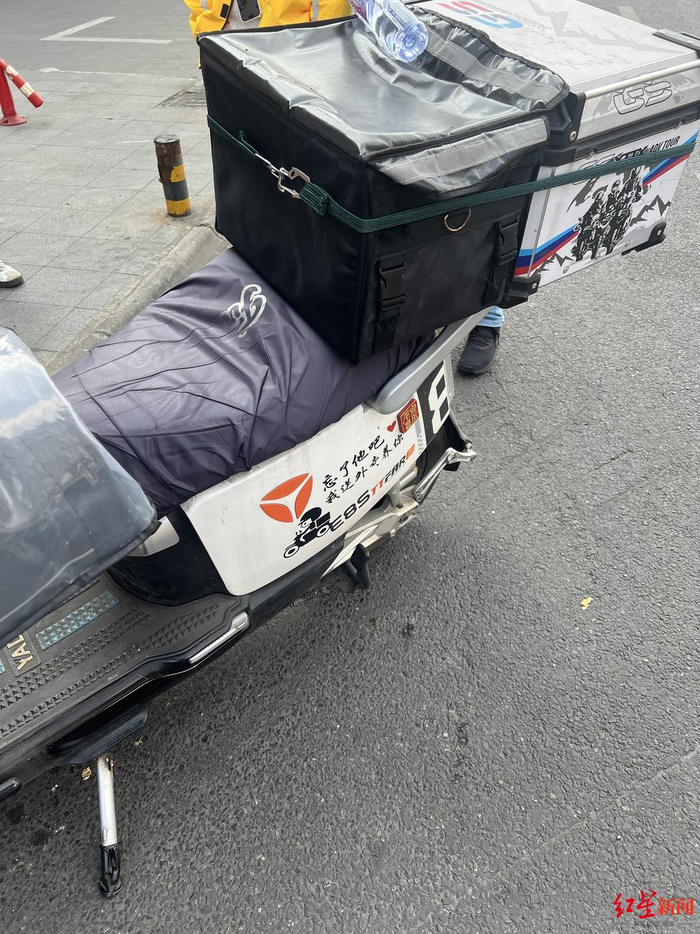
Core Viewpoint - The implementation of the new national standard for food delivery platforms aims to optimize management, improve service quality, and promote healthy competition within the industry, with specific regulations on delivery time and rider work hours [1][4]. Group 1: Work Hours and Fatigue Management - The new standard stipulates that delivery riders should not work more than 8 hours a day, and if they exceed this limit, they must confirm their willingness to continue [4][7]. - Platforms are required to issue fatigue alerts after 4 consecutive hours of work, mandating a 20-minute pause in order assignments [4][8]. - The majority of riders, like Lao Ran, find the new regulations align with their natural work rhythms, often taking breaks after 4-5 hours of work [7][9]. Group 2: Delivery Algorithms and Incentives - The new regulations prohibit platforms from using algorithms or incentives to force riders into overtime work [8]. - Riders have reported that delivery algorithms have improved, allowing for more efficient routing and reduced overtime incidents [8][10]. - Platforms now allow riders to choose the number of orders they take simultaneously, with options ranging from 2 to 12 orders, which helps manage workload and efficiency [8][11]. Group 3: Delivery Time and Speed Regulations - The new standard mandates that the average speed for electric bicycles during deliveries should not exceed 15 km/h [10][12]. - Riders have expressed concerns that longer delivery times could lead to lower pay per order, as they may opt to take on more orders to maintain earnings [11][12]. - Current practices show that riders typically operate at speeds of 35 to 40 km/h, which they believe allows them to manage multiple orders effectively [12].

Grab Holdings Limited (GRAB): A Bull Case Theory
Yahoo Finance· 2025-12-04 18:39
Core Thesis - Grab Holdings Limited is positioned as a leading super-app in Southeast Asia, focusing on ride-hailing, food delivery, and financial services, with a strong user base and network effects [2][3][4] Financial Performance - As of December 3rd, Grab's share price was $5.26, with trailing and forward P/E ratios of 263.50 and 58.82 respectively [1] - The company achieved positive group adjusted EBITDA in 2023, two quarters ahead of schedule, through cost control and operational efficiency [2][3] Growth Segments - Grab's mobility and delivery segments are experiencing steady growth, with improved take rates and rising contribution margins [3] - The fintech segment is expanding through digital banking and payments, benefiting from increasing financial inclusion in the region [3] Strategic Positioning - Management is committed to margin improvement and free cash flow generation, positioning Grab for long-term resilience despite macro challenges [3][4] - Grab's scale, ecosystem integration, and regional presence provide defensibility against competition and leverage to digital adoption trends [3] Valuation and Investment Case - Valuation remains attractive due to improving fundamentals and potential re-rating as profitability strengthens [4] - The investment case is supported by a solid balance sheet, growing transaction volume, and strong customer engagement, indicating significant upside potential [4] Historical Performance - The stock has appreciated approximately 10.97% since a previous bullish thesis in January 2025, reflecting improving fundamentals [5]

Uber says one stat shows how much room the company has to grow in the US
Business Insider· 2025-12-04 13:47
Core Insights - Uber's market penetration in the US is approximately 15%, indicating significant growth potential as many adults have yet to use the service [1][2] - Despite its prevalence in urban areas, many Americans do not use Uber frequently, suggesting a broader audience that remains untapped [2][3] - Uber is optimistic about growth opportunities, particularly in suburban and rural markets, where ride-hailing and delivery services are less utilized [3][4] Market Expansion - Uber aims to increase its user base in suburban areas, which currently account for about 20% of total trips [4] - The company is also focusing on rural areas, where longer distances for ride-hailing and delivery present new opportunities [4] Business Development - Uber Eats is expanding its delivery partnerships with more supermarket chains and retailers to enhance its service offerings [5] - The company is venturing into AI training, aiming to position itself as a broader "platform for work," as stated by CEO Dara Khosrowshahi [6]

DoorDash, Inc. (DASH): A Bull Case Theory
Yahoo Finance· 2025-12-04 13:35
Core Thesis - DoorDash, Inc. is transitioning from a cash-burning delivery platform to a profitable, cash-generating powerhouse, with significant growth in revenue and net income [2][5] Financial Performance - In Q3 2025, DoorDash reported $3.4 billion in revenue, a 27% increase year-over-year, and $244 million in GAAP net income, marking a 51% increase and the third consecutive profitable quarter [2] - The trailing and forward P/E ratios for DoorDash are 100.19 and 49.75 respectively [1] Market Position - DoorDash controls approximately 68% of the U.S. food delivery market and has a growing subscription base of 26 million DashPass and Wolt+ members [3] - The company's advertising business is high-margin and is scaling faster than marketplace gross order value, leading to net revenue margins of 13.8% [3] Strategic Initiatives - The stock's sell-off post-earnings call is attributed to concerns over a $1.2 billion spending plan for 2026, which includes integrating Wolt and Deliveroo, expanding into new high-margin verticals, and investing in autonomous delivery [4] - Management views these expenditures as strategic investments aimed at achieving global scale and long-term competitive advantage [4] Regulatory Environment - Regulatory risks regarding gig worker classification have eased at the federal level, with Proposition 22 upheld and the Department of Labor pausing enforcement of previous rules, although municipal challenges persist [5] Investment Opportunity - The market's 20% pullback is seen as undervaluing DoorDash's proven profitability and growth strategy, presenting a compelling opportunity for long-term investors to acquire a market leader [5]
Act Now: Earn a Bonus Worth $1,000+ With This Chase Business Card
The Motley Fool· 2025-12-04 13:09
Core Insights - The Ink Business Preferred® Credit Card has been refreshed with a more valuable welcome bonus and new perks for rideshare and food delivery services [1] Group 1: Card Features - Cardholders earn 3X points per $1 on the first $150,000 spent in combined purchases on various categories including travel, shipping, and advertising each account anniversary year [2] - Cardholders will earn 5X total points on Lyft rides through September 30, 2027 [3] - Complimentary membership to DashPass, valued at $96 annually, is now included with the card, effectively covering the $95 annual fee [3]

Uber Technologies (NYSE:UBER) 2025 Conference Transcript
2025-12-03 16:57
Summary of Uber Technologies (NYSE: UBER) 2025 Conference Call Company Overview - **Company**: Uber Technologies, Inc. - **Date**: December 03, 2025 - **Key Speaker**: Prashanth Mahendra-Rajah, CFO Key Points Industry and Market Performance - **Gross Bookings Growth**: Uber's delivery and mobility gross bookings grew 21% year-over-year, reaching a $50 billion run rate, surpassing previous projections of mid to high teens CAGR [9][12] - **Diversification**: Growth is broad-based across multiple products and geographies, indicating a strong and diversified business model [9][10] - **User Growth**: Global trips increased by 22%, with a 17% growth in monthly active users and a 4% increase in user frequency [16][17] Strategic Insights - **Market Penetration**: Only 15% of adults in Uber's top 10 countries use Uber services, indicating significant room for growth [12][17] - **Investment Focus**: Uber is investing profit dollars into long-term growth opportunities, particularly in under-penetrated markets and use cases [13][40] - **Insurance Cost Management**: Efforts to reduce insurance costs have been successful, leading to hundreds of millions in savings that will be reinvested into the U.S. market [20][25] Delivery Business Growth - **Accelerating Growth**: The delivery business has seen its fastest growth in nearly four years, driven by improved consumer experience and affordability initiatives [28][30] - **Merchant-Funded Offers**: Merchant-funded promotions have increased over 50% year-over-year, helping maintain affordability for consumers [31] - **Grocery and Retail Focus**: Significant growth in grocery delivery, with ongoing negotiations to add more key merchants to the platform [34][38] Competitive Landscape - **Market Dynamics**: Despite increased competition, Uber believes it is well-positioned due to its established user base and the ongoing behavioral shift towards delivery services [36][37] - **Behavioral Changes**: The shift in consumer behavior towards frequent grocery shopping and delivery is expected to continue, supporting long-term growth [38] Future Investments and Innovations - **Investment Areas**: Uber plans to invest in geographic expansion, product development, and cross-platform utilization to enhance user retention and spending [40][44] - **Robotaxi Strategy**: Uber is focused on integrating autonomous vehicles into its platform, with plans to operate in over 10 cities by the end of 2026 [48][50] - **Partnerships**: Collaborations with companies like Waymo have shown high utilization rates, indicating strong demand for autonomous services [51][52] Conclusion - **Long-Term Outlook**: Uber remains optimistic about its growth trajectory, with a focus on expanding market penetration, enhancing user experience, and leveraging technology to drive efficiencies and profitability [12][13][40]
Amazon starts testing ‘ultra-fast' 30-minute deliveries
TechCrunch· 2025-12-02 16:20
Core Insights - Amazon is launching a new "ultra-fast" delivery service that promises deliveries in 30 minutes or less in Seattle and Philadelphia to enhance its competitive edge against services like DoorDash, Uber Eats, and Instacart [1] Group 1: Service Details - Customers can order a variety of items including groceries, personal care products, and electronics, with Prime members paying a fee of $3.99 per order and non-Prime members paying $13.99 [2] - Orders under $15 will incur an additional small basket fee of $1.99 [2] - The service is accessible through the Amazon app and homepage, where customers can track their deliveries and tip drivers [3] Group 2: Operational Strategy - Amazon is utilizing smaller, strategically located facilities for efficient order fulfillment, which enhances employee safety and reduces delivery distances [4] - This new service follows Amazon's previous launch of a 15-minute delivery service in the UAE, where some customers received orders in as little as six minutes [4] Group 3: Market Positioning - The launch of this service is part of Amazon's broader strategy to expand its delivery options, following the discontinuation of its "Prime Now" one-hour delivery service in 2021 [7] - The company plans to invest over $4 billion to triple the size of its delivery network by 2026 [7]