
铁路运输

Search documents
京津冀首开环线高铁列车
Zhong Guo Xin Wen Wang· 2026-01-26 08:52
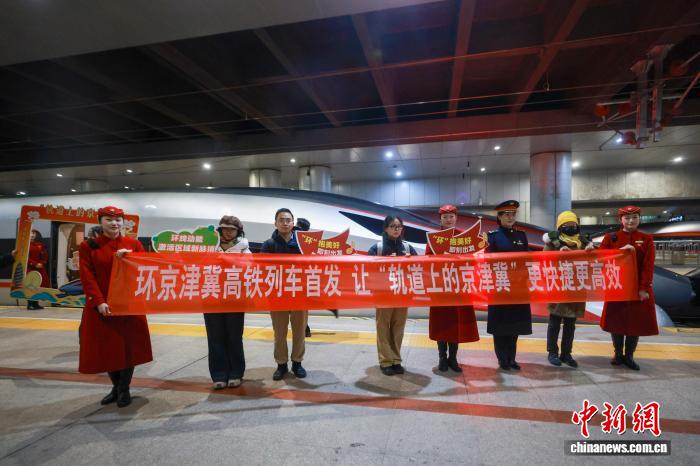
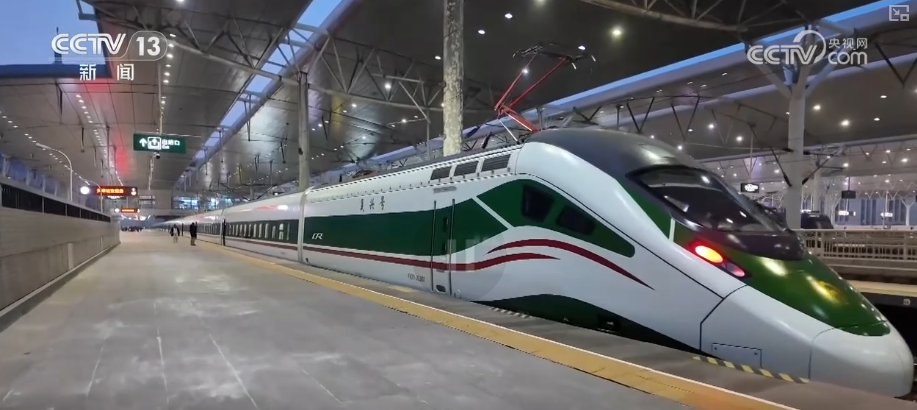
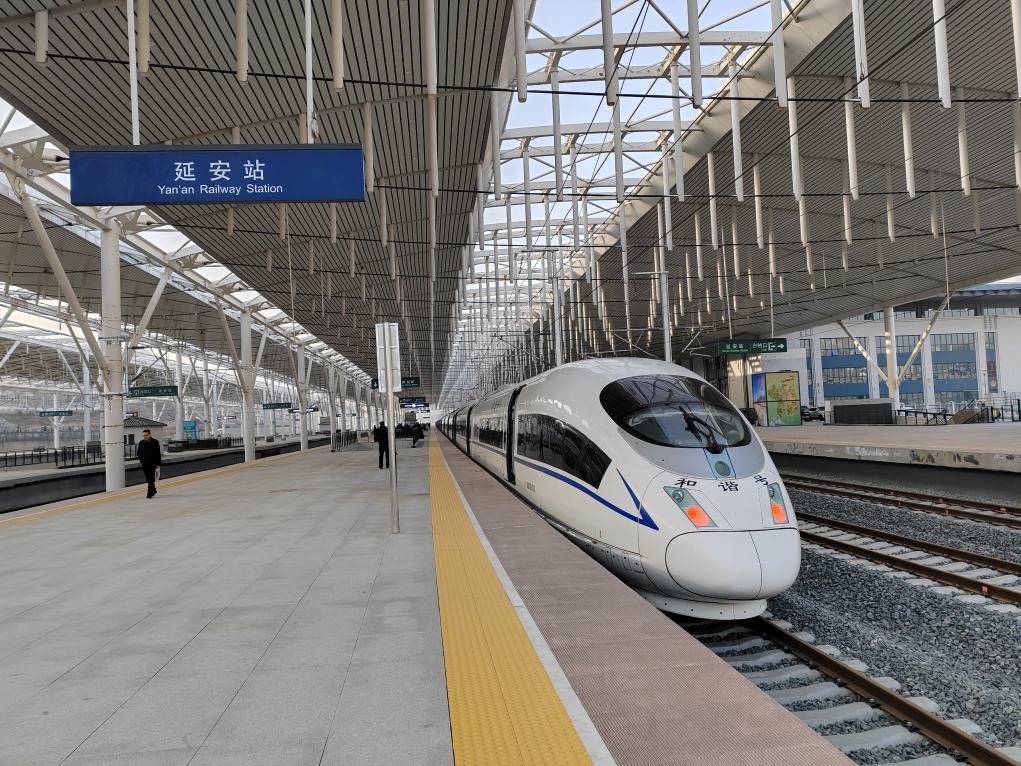
Group 1 - The first circular high-speed train in the Beijing-Tianjin-Hebei region commenced operation on January 26, 2023, starting from Beijing West Station at 6:48 AM [1] - The train connects key stations including Baoding East, Baiyangdian, and Tianjin West, significantly improving commuter travel times by over 30 minutes [2] - The new train service utilizes multiple rail lines, including the Beijing-Guangzhou High-Speed Railway and the Tianjin-Baoding Passenger Dedicated Line, to meet the commuting needs of passengers in the region [2] Group 2 - A new train schedule was implemented nationwide on January 26, 2023, with the first high-speed train from Beijing to Yan'an, G357, departing at 8:10 AM, reducing travel time to 5 hours and 44 minutes [2] - This development marks the beginning of a "five-hour traffic circle" era between Yan'an and Beijing, enhancing transportation efficiency [2] - The new high-speed connection is expected to boost Yan'an's red tourism industry and strengthen economic and cultural exchanges between Yan'an and Beijing [2]

全国铁路实行新的列车运行图 北京至延安首次开行高铁列车
Xin Hua She· 2026-01-26 08:11
Core Viewpoint - The new train operation schedule implemented by the China National Railway Group enhances connectivity, with the introduction of high-speed trains between Beijing and Yan'an, reducing travel time significantly [1] Group 1 - The new train operation schedule took effect at midnight on January 26 [1] - High-speed train services are now available for the first time between Beijing and Yan'an [1] - The fastest travel time from Yan'an to Beijing West is now 5 hours and 42 minutes [1]
运力再提升!京沪高铁最短发车间隔缩至3分钟
Xin Jing Bao· 2026-01-26 06:58
Core Viewpoint - The adjustment of the train operation schedule on January 26 aims to enhance the operational efficiency and capacity of the Beijing-Shanghai High-Speed Railway, with the minimum train departure interval reduced to 3 minutes, allowing for increased service frequency and improved passenger convenience [1] Group 1: Train Operation Adjustments - The new train operation schedule will see a total of 266.5 pairs of scheduled trains departing from Beijing South Station, with 168 pairs of the Beijing-Shanghai High-Speed Railway having their train numbers modified [1] - The minimum departure interval for the Beijing-Shanghai High-Speed Railway is now set at 3 minutes, with up to 3 trains operating within an hour during peak times, thereby enhancing the line's operational efficiency [1] Group 2: Increased Train Services - The adjustment includes the addition of 4 pairs of trains from Beijing South Station to various destinations, including Shanghai and Hangzhou, increasing the total number of scheduled trains on the Beijing-Shanghai High-Speed Railway to 140 pairs [1] - New trains are scheduled to cover peak travel times, with specific departure times such as G1 at 6:30 AM and G35 at 7:24 PM, facilitating easier travel for passengers between Beijing and Shanghai [1]

铁路调图提质增能 释放新线能力、优化结构客货运输能力双双提升
Yang Shi Wang· 2026-01-26 06:50
Core Viewpoint - The new railway operation schedule implemented on January 26 enhances both passenger and freight transport capabilities across the national railway network, utilizing newly opened lines to optimize transport structure [1]. Passenger Transport - The new schedule includes a total of 12,130 scheduled passenger trains, an increase of 243 trains compared to the previous schedule [4]. - Key highlights include the opening of the Baoyin High-speed Railway, which reduces travel time from Yinchuan to Beijing to 6 hours and 22 minutes, and the Xiyan High-speed Railway, connecting Yan'an to Beijing in 5 hours and 42 minutes [5]. - Yan'an is now integrated into the national high-speed rail network, significantly reducing travel times to major cities like Beijing, Shanghai, and Chongqing [5]. Freight Transport - The number of scheduled freight trains has increased to 23,748, up by 177 trains from the previous schedule [4]. - The new schedule enhances the efficiency of freight transport by increasing the number of freight trains and optimizing routes, particularly for key materials like coal, grain, and iron ore [12]. - A total of 473 cross-bureau freight trains are now scheduled, an increase of 20 trains, ensuring robust transportation of essential goods [12]. International Logistics - The international logistics service network has been expanded with the addition of 7 new scheduled China-Europe freight train routes from cities like Zhengzhou, Xi'an, and Jinan, along with 3 routes for the China-Laos railway [16]. - The railway department is enhancing international intermodal capabilities and efficiency, maintaining stable operations for the West Land-Sea New Corridor's iron-sea intermodal trains [16]. Logistics Product Development - The railway sector is focusing on diversifying logistics product offerings, including intercity express trains and cold chain trains, while promoting multimodal transport and railway logistics financial services to reduce overall logistics costs [18].

北京往返雄安更便捷了
Bei Jing Wan Bao· 2026-01-26 06:44
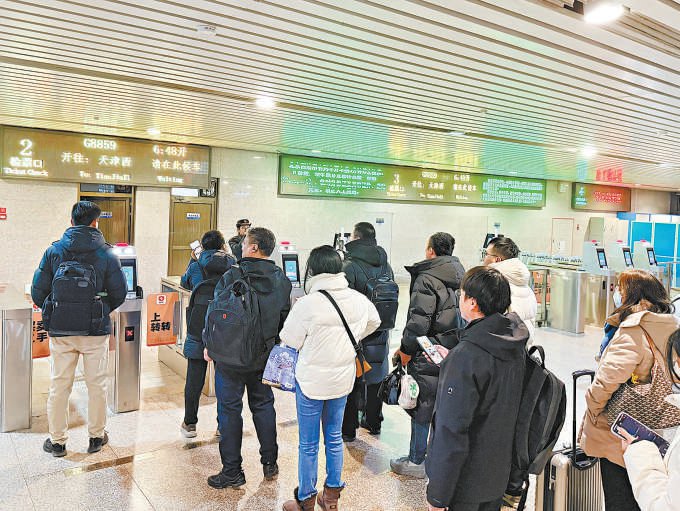
Core Insights - The launch of the G8859 high-speed train marks a significant improvement in connectivity within the Beijing-Tianjin-Hebei region, facilitating easier commuting for passengers [2][3] - The new train schedule has reduced travel times significantly, with the journey from Beijing West to Baiyangdian taking approximately 1 hour and 5 minutes, a reduction of over 30 minutes compared to previous options [3] - The implementation of a new train operation schedule nationwide has also led to a reduction in the interval between trains on the Beijing-Shanghai high-speed rail to as short as 3 minutes, enhancing travel convenience [4][5] Group 1: G8859 High-Speed Train Launch - The G8859 train operates a closed-loop route connecting Beijing West, Baoding East, Baiyangdian, and Tianjin West, catering primarily to commuters and business travelers [2][3] - Initial passenger numbers for the G8859 train were 138, with a significant portion traveling to Baiyangdian, indicating strong demand for cross-city commuting options [4] Group 2: Beijing-Shanghai High-Speed Rail Adjustments - The new train schedule at Beijing South Station has increased the number of scheduled trains to 266.5 pairs, with 140 pairs specifically for the Beijing-Shanghai route [4][5] - The introduction of additional services and amenities on the G9 train, such as mobile charging options and comfort items, reflects a focus on enhancing the travel experience for business passengers [5]
宁夏银川与北京铁路运行实现“半日往返”
Zhong Guo Xin Wen Wang· 2026-01-26 06:44
Core Viewpoint - The implementation of the new train schedule on January 26 has significantly reduced travel time between Yinchuan and Beijing to 6 hours and 22 minutes, facilitating a "half-day round trip" [1] Group 1: Train Schedule Changes - The new Yinchuan to Beijing North benchmark high-speed train service has reduced travel time by approximately 1 hour compared to previous routes [1] - The introduction of a new train service from Yinchuan to Datong South Station will take about 5 hours and 30 minutes, enhancing connectivity to northern Shanxi, western Hebei, and southern Inner Mongolia [1] Group 2: Increased Train Services - Following the schedule adjustment, Yinchuan Railway Station will operate a total of 103 pairs of trains, including 87 pairs of high-speed passenger trains and 16 pairs of conventional passenger trains, providing more travel options for passengers [1] Group 3: Regional Connectivity - The new schedule will strengthen the connection between the northwest region and the Beijing-Tianjin-Hebei area, with travel times from Hohhot to Yinchuan, Lanzhou West, and Xining being reduced to 3 hours and 34 minutes, 6 hours and 27 minutes, and 7 hours and 45 minutes respectively [1] - Travel times from Wuhai and Bayannur to Beijing have been reduced to 5 hours and 7 minutes and 4 hours and 20 minutes, respectively, compared to conventional trains, which is a reduction of 10 hours and 35 minutes and 8 hours and 31 minutes [1]
服务升级坐“动集列车”一路赏文化 “夕发朝至”满足百姓多元出行需求
Yang Shi Wang· 2026-01-26 06:42
Core Viewpoint - The first "concentrated power" train, known as "动集列车," has officially commenced operations from Tianjin to Changsha, enhancing travel options for passengers along the route [1]. Group 1: Train Features - The "动集列车" operates a daily service, covering nearly 1700 kilometers from Tianjin to Changsha, with a comfortable sleeping configuration and cultural elements from both northern and southern China [1][4]. - The train features upgraded sleeping arrangements, including a four-person compartment in first class with individual reading lights and dual USB charging ports, and a six-person open design in second class with safety enhancements [7]. - Noise reduction measures have been implemented, significantly lowering operational noise for a more pleasant overnight travel experience [9]. Group 2: Cultural Integration - The train incorporates cultural elements, with themed carriages showcasing regional art such as Tianjin's Yangliuqing New Year paintings, Beijing opera elements, and Hunan embroidery, enriching the travel experience [14]. Group 3: Technical Specifications - The "动集列车" is a type of "revival" concentrated power train, with its power systems located at the ends of the train, differing from the distributed power design of the CR400 series, which allows for faster acceleration and greater traction [17][19]. - The maximum operational speed of the concentrated power train is 160 kilometers per hour, making it suitable for electrified conventional railways and representing an upgrade from traditional passenger trains [21]. Group 4: Future Expansion - By the 2026 Spring Festival, a total of 770 "动集列车" will be operational across various routes, including upgrades from conventional passenger trains to concentrated power trains on routes such as Jinan to Changsha and Ningbo [23].
国开行2025年发放铁路贷款同比增长27.8%
Xin Hua Wang· 2026-01-26 05:48
Core Insights - The National Development Bank (NDB) is projected to issue over 200 billion yuan in railway loans by 2025, marking a year-on-year increase of 27.8%, with the total railway loan balance exceeding 1 trillion yuan for the first time [1]. Group 1: Loan Issuance and Growth - In 2025, NDB will leverage its long-term financing advantages to support the construction of major railway projects, including the Shanghai-Chongqing and Chongqing-Kunming high-speed rail lines [1]. - The total operating mileage of high-speed rail projects supported by NDB is expected to exceed 42,500 kilometers by the end of 2025, accounting for over 85% of the total mileage of the "Eight Vertical and Eight Horizontal" high-speed rail network [1]. Group 2: Strategic Focus and Future Plans - NDB aims to align with the goals of building a strong transportation nation, focusing on major railway engineering projects and enhancing the capacity of conventional railway lines [1]. - The bank plans to increase support for the main channels of the "Eight Vertical and Eight Horizontal" high-speed rail network, multimodal transport, digital upgrades, and the international expansion of high-speed rail [1].
革命圣地延安与遵义实现高铁直达
Xin Hua Wang· 2026-01-26 05:33
1月26日上午,随着G3351次高铁列车从延安站缓缓驶出,一路向遵义站驶去,标志着革命圣地延安与遵义首次实现高铁直连,两地开启互联互通 新时代。 延安与遵义,两座相隔约1230公里的革命圣地,承载着厚重的红色底蕴和光荣的革命历史。此次高铁直连,将两地的铁路运行时间从此前的16个 小时以上缩短至8个多小时。 这是准备发车的G3351次高铁列车。(中铁二十一局集团有限公司供图) 记者了解到,列车沿线串联起延安、西安、成都、重庆、遵义等多个城市,不仅构建起南北革命老区的快速通道,更成为连接成渝、黔中城市群 的重要纽带。 中国铁路西安局集团有限公司相关负责人表示,此次高铁直连既是全国铁路路网优化的关键举措,更是红色文旅与区域经济协同发展的新契机。 高铁的贯通将加速两地人员、物资、信息的高效流动,为革命老区高质量发展注入强劲动能。 0:00 未来,两地将依托高铁通道持续深化红色旅游资源联动,推出跨省红色旅游精品线路,让游客更便捷地重温革命历史、传承红色基因。同时,两 地还将在产业发展、乡村振兴、文化交流等领域开展深度合作,推动革命老区振兴发展迈向新阶段。(记者张斌、向定杰) ...
国家首次针对城际铁路出台文件,重点满足1至2小时通勤、休闲等
Jin Rong Jie· 2026-01-26 04:35
Core Viewpoint - The National Development and Reform Commission has issued guidelines to promote the healthy and sustainable development of intercity railways, aiming to create a well-structured, efficient, and economically viable intercity rail network to facilitate high-quality integration of urban agglomerations [1] Group 1: Intercity Railway Development - Intercity railways serve as the backbone passenger transport mode between key cities in urban agglomerations [1] - The intercity railway backbone network in the four major urban agglomerations—Beijing-Tianjin-Hebei, Yangtze River Delta, Guangdong-Hong Kong-Macau Greater Bay Area, and Chengdu-Chongqing Economic Circle—is rapidly forming, with a total length approaching 1,800 kilometers [1] - Operational efficiency is steadily improving, with major cities within these urban agglomerations achieving basic connectivity within 1 to 2 hours [1] Group 2: Functional Positioning of Intercity Railways - The guidelines clarify the functional positioning of intercity railways, which primarily connect central cities within urban agglomerations and large and medium-sized cities with a permanent population of over 500,000 [1] - The railways are designed to link important passenger flow distribution centers and densely populated areas along the routes [1] - A flexible transportation organization model featuring high density and small train sets is emphasized, focusing on meeting the travel needs for commuting, leisure, and business within 1 to 2 hours [1]