
高铁运输服务

Search documents
为了“团圆”的“离别”
Zhong Guo Jing Ji Wang· 2026-02-18 07:03
Core Viewpoint - The article highlights the dedication and sacrifices of railway workers during the Spring Festival travel rush, focusing on a couple who work in the railway industry and their commitment to ensuring passenger safety and service quality while managing family responsibilities [1][4]. Group 1: Personal Stories - The couple, Fu Xibing and Pang Lina, are both railway employees who have been working in the industry for 17 years, balancing their professional duties with family life [1]. - Their daughter, who is cared for by her grandmother during the busy Spring Festival period, represents the emotional toll of their demanding jobs [1][2]. - Communication between the couple is primarily through brief messages and video calls, reflecting the fragmented nature of their family interactions due to work commitments [3]. Group 2: Professional Responsibilities - Fu Xibing oversees the operation and safety of the Beijing-Xiong'an intercity railway, ensuring that train schedules and safety protocols are strictly followed [2]. - Pang Lina serves as a train conductor on the G177 high-speed train, where she actively engages with passengers to ensure their safety and comfort [3]. - Both individuals express a strong sense of duty and responsibility towards their roles in the railway industry, emphasizing the importance of service to passengers [4].
“高铁+普速”协同发力 广州白云站升级春运归途
Xin Lang Cai Jing· 2026-02-16 15:10
Core Viewpoint - The article highlights the operational efficiency and capacity management of Guangzhou Baiyun Station during the Spring Festival travel rush, emphasizing the importance of both high-speed and conventional rail services in accommodating passenger demand [1][3][5]. Group 1: Passenger Flow and Capacity Management - On the eve of the Spring Festival, Guangzhou Baiyun Station has implemented precise capacity planning, operating 314 trains to popular destinations such as Chongqing and Zhengzhou, ensuring robust support for the returning home crowd [3]. - The station has experienced a significant increase in passenger volume, reaching a record high of 152,000 passengers in a single day, showcasing its dual-network capability of high-speed and conventional rail services [1][3]. Group 2: Services for Passengers - Guangzhou Baiyun Station has introduced dedicated pre-check channels for conventional train passengers, particularly catering to the elderly and those with heavy luggage, offering services such as free luggage packing and blood pressure measurement [3]. - The station has launched a "love shuttle" service for vulnerable groups, providing personalized assistance from entry to boarding, ensuring a smooth travel experience for elderly, disabled, and pregnant passengers [3][5]. Group 3: Integration of Rail Services - The article emphasizes that conventional rail services are not secondary but play a crucial role in complementing high-speed rail, effectively managing long-distance passenger flows while high-speed trains cater to short-distance travel needs [5]. - There is a dynamic adjustment of train capacity based on real-time passenger flow, creating a synergistic transportation model that enhances regional connectivity and supports local economic development [5].

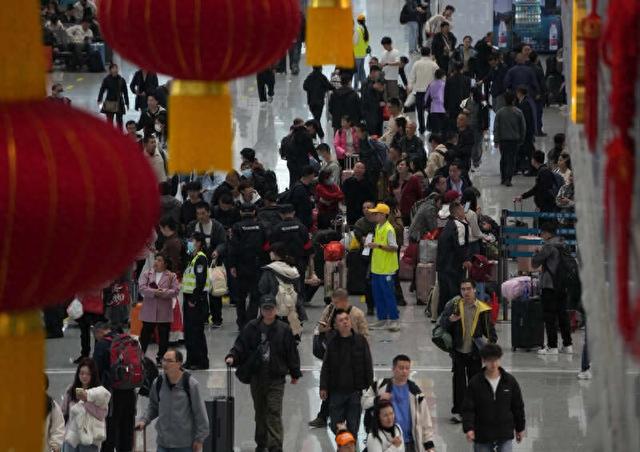
西部最忙高铁站里 三个“没想到”
Xin Lang Cai Jing· 2026-02-15 22:17
Core Insights - Chengdu East Station is a major hub in Western China, with a passenger volume of 149 million in the previous year, ranking second among high-speed rail stations in the country. During the Spring Festival travel season, it is expected to handle 245,000 passengers daily, equivalent to the population of a small county [1][2]. Group 1: Operations and Efficiency - The station's operations are highly efficient, with a control room that manages the scheduling of 750 trains daily, and during peak times, 6 trains are dispatched every minute. This is facilitated by a team of 7 staff members per shift [5][6]. - The control room, described as the "nerve center" of the station, utilizes 96 monitoring screens to coordinate various operational aspects, ensuring timely departures and arrivals [5][6]. Group 2: Lost and Found Services - Chengdu East Station has introduced a self-service machine for retrieving lost identification cards, significantly reducing the retrieval time from 3 minutes to 30 seconds. In peak periods, over 100 ID cards can be lost in a single day [7][8]. - The lost and found department reported over 74,000 items in 2025, with hundreds of items lost daily, highlighting the station's commitment to customer service [8]. Group 3: Maintenance and Safety - The Chengdu train maintenance facility operates at night, conducting thorough inspections of trains returning from service. Each train undergoes a detailed check, with over 65 sets of trains inspected in a single night [9][10]. - Ground maintenance staff walk over 30,000 steps during their shifts, ensuring that every detail of the trains is checked meticulously, contributing to a comprehensive safety network [10].
【新春走基层】-30℃,他们在月光下守护高铁平安
Xin Lang Cai Jing· 2026-02-12 21:36
Core Insights - The article highlights the critical role of contact network workers in ensuring the safe and efficient operation of high-speed trains during extreme winter conditions in China [1][10]. Group 1: Work Environment and Conditions - Contact network workers operate in harsh conditions, often at temperatures as low as -30°C, requiring them to perform inspections and repairs during the night when trains are not in operation [2][3]. - The work involves managing a contact network that carries 27,500 volts of electricity, which is essential for powering high-speed trains [2]. Group 2: Operational Procedures - The time when trains are not running is referred to as "window time," during which maintenance work is conducted. This is a critical period for ensuring the reliability of the contact network [3][4]. - Workers must meticulously check and account for all tools before and after their shifts, similar to a surgeon ensuring all instruments are accounted for after an operation [4]. Group 3: Team Coordination and Safety - The team is divided into groups for specific tasks, and safety is a paramount concern, especially when working at heights in freezing temperatures [3][9]. - Communication and vigilance are essential, with team members constantly monitoring each other to prevent accidents during high-altitude work [9][10]. Group 4: Impact on Transportation - The successful operation of the contact network has enabled the development of four high-speed rail lines in the Harbin Railway Bureau's jurisdiction, significantly enhancing regional connectivity and economic activity [10]. - The high-speed rail system has become a vital part of the local economy, facilitating tourism and travel across the region [10].
长沙南站迎来节前返乡客流高峰
Xin Lang Cai Jing· 2026-02-12 10:20
Core Insights - The peak travel period before the Spring Festival has led to a significant increase in passenger flow at Changsha South Station, with an expected arrival of 216,000 passengers on February 12, representing a 36.7% increase compared to the early Spring Festival period [1] Group 1: Passenger Services - To accommodate the surge in travelers, Changsha South Station has dynamically optimized train schedules, adding 35 high-speed trains for provincial return trips to various destinations [1] - The station has implemented a night-time waiting area at the west square, operational from 22:30 to 5:30, providing amenities such as seating, drinking water, and charging stations for travelers arriving late [1] - Special services for vulnerable groups, including the elderly and disabled, are available through the "Xiangyu Changnan Lei Feng Service Station," offering customized assistance such as wheelchair reservations and priority boarding [1] Group 2: Transportation Coordination - The station is working closely with local transportation departments to enhance connections between trains and city transport, including increased metro and bus services, and extended operating hours [1] - Real-time updates on additional metro services are prominently displayed at the station to assist late-night travelers in making seamless transfers [1] Group 3: Travel Advisory - Passengers are advised to plan their travel times carefully during the busy Spring Festival period to avoid delays, especially given the high traffic around Changsha South Station [2] - It is recommended that travelers use the metro lines 2 and 4 to reach the station, as road traffic is expected to be congested [2]
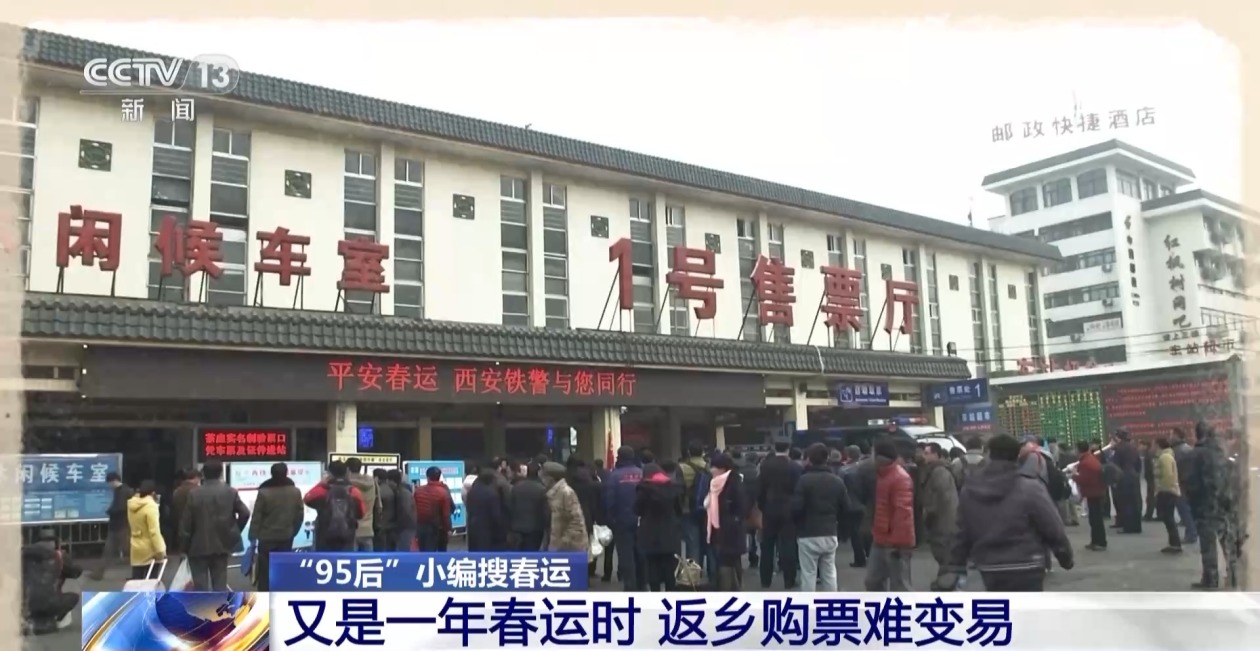
“地级市通”迈向“县县通” 春运返乡购票难变易
Xin Lang Cai Jing· 2026-02-11 01:13
Core Insights - The rapid development of China's railway construction is evident in the significant improvements in ticket purchasing experiences during the Spring Festival travel season compared to twelve years ago [1][10] Group 1: Railway Infrastructure Development - In 2014, during the last Year of the Horse, China's railway operating mileage surpassed 100,000 kilometers, a remarkable achievement at the time [3] - As of this year's Spring Festival, the national railway operating mileage has exceeded 165,000 kilometers, with high-speed rail mileage surpassing 50,000 kilometers, maintaining the world's leading position with an increase of over 10,000 kilometers since the last Year of the Horse [5] - More than 97% of cities with populations over 500,000 are now covered by high-speed rail, with many areas achieving "multiple stations in one city" [5] Group 2: Ticket Purchasing Experience - In 2014, the 12306 App was a new breakthrough for ticket purchasing, but many people still relied on phone bookings and queuing, with ticket buying often taking days [7] - Currently, the railway service has entered a "digital intelligence" era, allowing users to easily purchase tickets, select seats, and request refunds through the 12306 platform [9] - New features this year include telephone booking for seniors over 60 and free online refunds for incorrect ticket purchases within a specified time [9]
高铁上的小年别样热闹
Xin Lang Cai Jing· 2026-02-10 21:07
Core Viewpoint - The article highlights a unique initiative by the G3606 train service from Shenyang to Beijing, transforming the train into a festive space for travelers during the "Little New Year" celebration, creating a sense of warmth and community among passengers [1][2]. Group 1: Event Description - The G3606 train departed from Shenyang Station, decorated with festive items like window flowers and lucky character hangings, creating a "mobile hometown station" atmosphere [1]. - A lively "Little New Year" celebration was organized on the train, featuring music, dance, and interactive games, enhancing the travel experience for passengers [1][2]. Group 2: Passenger Experience - Passengers expressed joy and surprise at the festive atmosphere, with one traveler noting that the lively celebration made the journey feel like a homecoming despite being on the road [2]. - The train staff, dressed in traditional Northeast attire, performed various songs and dances, contributing to a vibrant and engaging environment for travelers [2]. Group 3: Staff Efforts - The train crew overcame challenges such as the busy Spring Festival travel period and cold weather to prepare for the event, aiming to provide warmth and a sense of family to the passengers [2]. - The celebration concluded with a collective singing of "Ode to the Motherland," symbolizing unity and shared joy among passengers and staff [2].
研报掘金丨中金:维持京沪高铁“跑赢行业”评级 目标价6.14元
Ge Long Hui A P P· 2026-02-09 07:26
Core Viewpoint - China International Capital Corporation (CICC) research report indicates that Beijing-Shanghai High-Speed Railway (Jinghu High-Speed Railway) has entered a value allocation range as a "cash cow" for high-speed rail, with potential upward catalysts in its fundamentals [1] Group 1: Business Growth Potential - Short to medium-term business growth is expected due to increased train frequency and the addition of benchmark trains following the schedule adjustment in the first quarter [1] - The upcoming opening of the Beijing-Xiong'an-Shanghai High-Speed Railway may bring additional business to the Jingfu-Anhui line [1] - Future operation of CR450 trains is anticipated to optimize train structure and unlock capacity limits [1] Group 2: Pricing Strategy - Structural price optimization is expected as the increase in benchmark trains may lead to a short-term rise in ticket prices [1] - The introduction of CR450 trains could further enhance the company's pricing power [1] Group 3: Financial Metrics - The company has abundant free cash flow, suggesting potential for increased dividends [1] - Current trading metrics show a P/E ratio of 17.5x and a P/B ratio of 1.12x for 2026, both of which are below the mean values for P/E and P/B since 2023 by two standard deviations, indicating a historically low valuation [1] - The company maintains an "outperform industry" rating with a target price of 6.14 yuan per share [1]

反向过年机票预订量猛增84%,多地铁路客流创新高
21世纪经济报道· 2026-02-08 03:49
Core Viewpoint - The article highlights the significant increase in travel demand during the 2026 Spring Festival, particularly the rise in "reverse New Year" ticket bookings, which grew by 84% compared to the previous year, indicating a robust recovery in travel activity post-pandemic [1]. Group 1: Travel Demand and Trends - The "reverse New Year" ticket bookings saw an 84% year-on-year increase, with first-tier and new first-tier cities being the most popular destinations [1]. - The total inter-regional population flow during this year's Spring Festival is expected to reach 9.5 billion people, setting a new historical record [1]. - The railway passenger volume for 2025 was reported at 4.255 billion, reflecting a 4.2% increase year-on-year, with peak daily passenger volume reaching 23.132 million [5]. Group 2: Railway Infrastructure and Services - Major railway stations, such as Guangzhou and Shenzhen, have undergone significant upgrades to enhance passenger experience, including improved security checks and AI integration for customer service [7][9]. - The Shanghai Railway Bureau anticipates sending over 100 million passengers during the Spring Festival, marking a 4% increase from the previous year [8]. - The Beijing area expects to send 41.47 million passengers, a 2.5% increase from 2025, with specific stations implementing advanced technologies for smoother operations [9]. Group 3: Regional Economic Impact - The integration of high-speed rail networks is enhancing regional economic collaboration, particularly in the Yangtze River Delta and Guangdong-Hong Kong-Macau Greater Bay Area, facilitating faster travel and economic interactions [11]. - The opening of new high-speed rail lines, such as the G5132, has significantly reduced travel times between cities, promoting tourism and local economies [11][12]. - The cumulative passenger volume for the Guangzhou-Shenzhen-Hong Kong high-speed rail reached 35.794 million in 2025, a 17.8% increase, indicating strong demand for cross-border travel [12]. Group 4: Cultural and Tourism Development - The high-speed rail is driving the development of cultural and tourism industries, with increased visitor numbers to attractions like the Hong Kong cross-border tourism trains [12][14]. - The launch of tourism-focused train services, such as the "Leisure Travel" trains, is creating new consumption scenarios that leverage the advantages of high-speed rail [14]. - The synergy between high-speed rail and local tourism is evident, with significant increases in visitor numbers to cultural sites and events, enhancing the overall economic landscape [14].
双向奔赴,开放型经济活力足
Xin Lang Cai Jing· 2026-02-07 22:52
Core Insights - The total number of inbound and outbound travelers in China reached 697 million in 2025, marking a 14.2% year-on-year increase, the highest in history [1] - The growth in inbound tourism is driven by policies such as visa exemptions and temporary entry permits, which have significantly boosted foreign visitor numbers [2][3] Group 1: Inbound Tourism Growth - In 2025, Beijing's ports recorded over 21.4 million inbound and outbound travelers, a 17.4% increase year-on-year, the highest since 2020 [2] - The number of foreign visitors benefiting from visa exemptions exceeded 2 million, 1.9 times that of the previous year, contributing to the surge in inbound traffic [2] - The implementation of new visa policies, including the addition of Indonesia to the 240-hour transit visa exemption list, has facilitated increased foreign tourism [2][3] Group 2: Cross-Border Movement - The total number of foreign travelers entering and exiting China reached 82.04 million in 2025, a 26.4% increase year-on-year, with visa-exempt entries rising by 49.5% to 30.08 million [3] - Measures to streamline border inspection processes, such as expanding the number of ports with 24-hour transit visa exemptions, have improved efficiency [3] - The "dual-channel inspection" model at Beijing Capital International Airport has enhanced the efficiency of foreign traveler processing by approximately 30% during peak times [3] Group 3: Regional Connectivity - The movement between mainland China and Hong Kong, Macau, and Taiwan has intensified, with 279 million entries and exits recorded, a 10.1% increase year-on-year [4] - The introduction of new high-speed rail routes connecting Hong Kong to various mainland cities reflects the growing demand for cross-border travel [4] - Policies to facilitate talent movement and streamline visa processes for residents traveling between regions have been well received, enhancing cross-border collaboration [4][5] Group 4: Efficient Cargo Flow - In 2025, the number of inbound and outbound aircraft, trains, ships, and vehicles increased significantly, with aircraft movements rising by 14.5% and cargo ships by 4.9% [6] - Jiangsu province reported a notable increase in cargo inspections, with a 73.6% rise in cargo aircraft movements, indicating robust export activity [6] - The implementation of expedited customs processes at various ports has improved cargo transit times, supporting national and regional economic strategies [6][7]