
保险业

Search documents
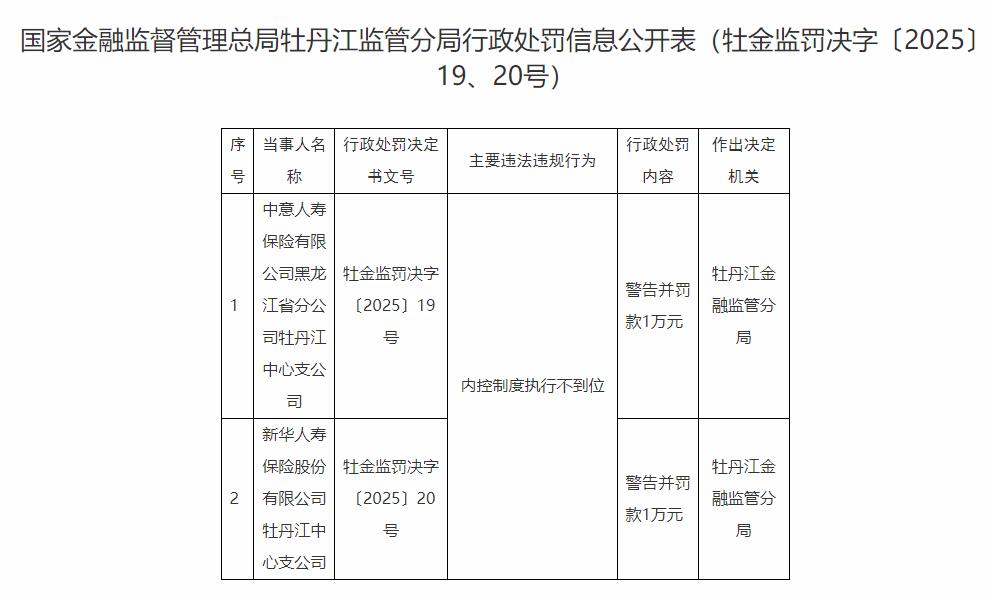
新华保险牡丹江中心支公司被罚 内控制度执行不到位
Zhong Guo Jing Ji Wang· 2025-08-08 07:26
中国经济网北京4月29日讯 国家金融监督管理总局网站近日发布的国家金融监督管理总局牡丹江监管分局行政处罚信息公开表(牡金监 罚决字〔2025〕20号)显示,新华人寿保险股份有限公司牡丹江中心支公司内控制度执行不到位,被警告并罚款1万元。 | 序 | 当事人名 | 行政处罚决定 | 主要违法违规行为 | 行政处罚 | 作出决定 | | --- | --- | --- | --- | --- | --- | | 름 | 称 | 书文号 | | 内容 | 机关 | | 1 | 中意人寿 保险有限 | | 内控制度执行不到位 | 警告并罚 款1万元 | | | | 公司黑龙 | 牡金监罚决字 | | | #1564# | | | 江省分公 | (2025) 19 | | | 融监管分 | | | 司材丹江 | 글 | | | 局 | | | 中心支公 | | | | | | | 司 | | | | | | 2 | 新华人寿 保险股份 有限公司 | 牡金监罚决字 (2025) 20 | | | #1500# 融监管分 | | | | | | 警告并罚 | | | | | | | 款1万元 | | | | #母江中 | ...


筑牢万亿元防灾屏障 巨灾保险覆盖纵深待突破
Zhong Guo Zheng Quan Bao· 2025-08-08 07:25
Core Insights - The increasing frequency and severity of natural disasters due to climate change necessitate the importance of catastrophe insurance as a risk management tool, providing over 20 trillion yuan in risk coverage for residents in 2024 [1][3] - The development of catastrophe insurance in China is supported by government policies aimed at expanding coverage and improving the insurance system [7][8] Group 1: Importance of Catastrophe Insurance - Catastrophe insurance plays a crucial role in disaster risk management and economic stability, with over 70% of cities and more than 50% of the population located in disaster-prone areas [3] - In 2024, the catastrophe insurance community provided 22.36 trillion yuan in risk coverage to 64.39 million households [3] Group 2: Current Challenges - The coverage of catastrophe insurance is limited, with voluntary participation leading to low awareness and willingness to pay among residents, resulting in varying coverage rates across regions [4] - The insurance industry in China only covers about 10% of losses from major disasters, compared to the global average of 40% [5] Group 3: Technological and Structural Improvements - There is a need for improved data sharing and risk assessment models, as current systems are fragmented across various government departments, hindering effective risk evaluation [6] - The establishment of a national catastrophe data sharing platform and investment in high-precision catastrophe risk models are recommended to enhance the effectiveness of catastrophe insurance [8] Group 4: Future Development - Recent policy initiatives, such as the "National Ten Articles" and the "National Emergency Response Plan," emphasize the expansion of catastrophe insurance coverage and the integration of commercial insurance into disaster management [7] - The insurance industry is encouraged to adopt flexible product designs and learn from successful international models to broaden the scope of coverage [7][8]
太平人寿推出专属普惠新产品“温暖前行”
Zhong Guo Jing Ji Wang· 2025-08-08 07:25
Core Viewpoint - Taiping Life Insurance has launched a new inclusive product, "Warm Forward," aimed at providing accident insurance for specific industries that employ a large number of new citizens, thereby enhancing risk protection for this demographic [1][4]. Group 1: Product Features - "Warm Forward" targets five specific industries: manufacturing, construction, wholesale and retail, transportation and warehousing, and residential services [2]. - The product includes coverage for occupational risks specific to new citizens, such as accidental death, disability, and medical expenses [2]. - High-risk occupations, including high-altitude workers and heavy truck drivers, are now included in the coverage, expanding the reach of inclusive insurance products [2]. Group 2: Pricing and Flexibility - The product adheres to inclusive principles with reasonable premium settings to ensure accessibility for more new citizens [2]. - It offers three different coverage plans based on varying insurance amounts and provides flexible insurance periods ranging from one month to one year [2]. Group 3: Strategic Direction - Taiping Life Insurance is committed to enhancing its inclusive insurance offerings, focusing on underserved populations and providing multi-layered insurance coverage [3]. - The company plans to continue expanding the "Warm Series" of products to meet the diverse needs of key demographics, including the elderly and children [3].
LPR年内首降后保险预定利率下调箭在弦上:险企已储备新品 长期险保费将迎新一轮上涨
Zhong Guo Jing Ji Wang· 2025-08-08 07:25
Group 1 - The recent LPR (Loan Prime Rate) adjustment has led to a decrease in both the 1-year and 5-year LPR by 10 basis points, now standing at 3.0% and 3.5% respectively, which is expected to impact various sectors including the insurance industry [1][3] - The decline in LPR is anticipated to push the predetermined interest rates for life insurance products to historical lows, with the industry expected to see a dynamic adjustment mechanism triggered in the third quarter [1][3] - As of May 15, the 10-year government bond yield has decreased to 1.69%, which, along with the LPR and fixed deposit rates, will influence the pricing and sales strategies of life insurance products [3] Group 2 - The insurance industry is preparing for a potential adjustment in the predetermined interest rates, with the first quarter's research value reported at 2.13%, down 0.21 percentage points from the previous value [3][4] - If the second quarter's research value remains below 2.25%, it will necessitate a reduction in the maximum predetermined interest rates for ordinary life insurance products, potentially leading to a further decline to around 2% [4] - The industry is facing increased business pressure due to the narrowing interest margin between life insurance products and other financial products, contributing to a decline in premium income [6] Group 3 - Regulatory bodies have conducted thorough research on the product switching cycle for life insurance companies to ensure a smooth transition amid the interest rate adjustments [5] - Many insurance companies have proactively prepared new products to adapt to the changing market conditions, with some companies already having new products ready for launch [6] - The industry is advised to enhance asset-liability management and focus on balancing various financial risks while also improving investment capabilities [8] Group 4 - The insurance sector is encouraged to leverage its unique risk management capabilities to provide comprehensive solutions that meet the diverse needs of clients, especially in health, retirement, and wealth management [9]
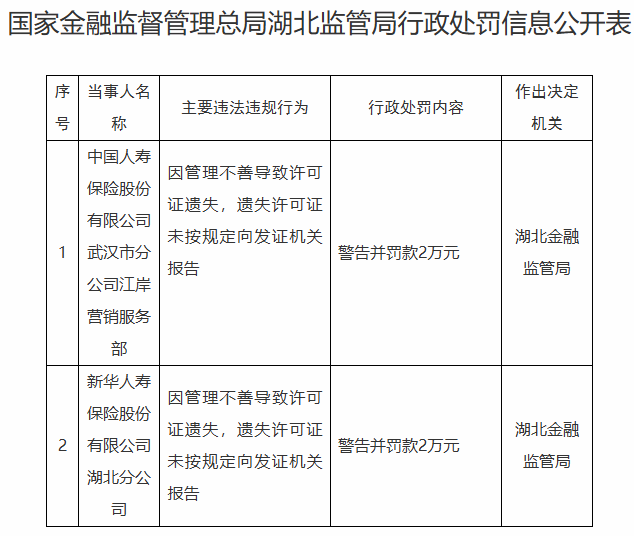
新华人寿湖北分公司被罚 遗失许可证未按规定报告
Zhong Guo Jing Ji Wang· 2025-08-08 07:25
中国经济网北京6月9日讯 近日,国家金融监督管理总局湖北监管局披露的行政处罚信息公开表显 示,新华人寿保险股份有限公司湖北分公司因管理不善导致许可证遗失,遗失许可证未按规定向发证机 关报告,被湖北金融监管局警告并罚款2万元。 (责任编辑:李荣) | 序 | 当事人名 | 主要违法违规行为 | 行政处罚内容 | 作出决定 | | --- | --- | --- | --- | --- | | 를 | 称 中国人寿 | | | 机关 | | 1 | 保险股份 | 因管理不善导致许可 未按规定向发证机关 报告 | | 湖北金融 监管局 | | | | 证遗失,遗失许可证 | | | | | 有限公司 | | | | | | 武汉市分 | | 警告并罚款2万元 | | | | 公司江岸 | | | | | | 营销服务 | | | | | | 場 | | | | | 2 | 新华人寿 保险股份 | 因管理不善导致许可 证遗失,遗失许可证 | 警告并罚款2万元 | 湖北金融 | | | 有限公司 | | | | | | | 未按规定向发证机关 | | 监管局 | | | 湖北分公 | 报告 | | | | | 司 | ...
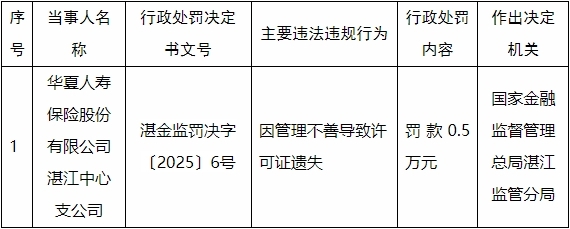
华夏人寿湛江中支管理不善遗失许可证 现更名瑞众人寿
Zhong Guo Jing Ji Wang· 2025-08-08 07:25
中国经济网北京6月17日讯 国家金融监督管理总局网站近日公布的湛江监管分局行政处罚信息公开表 (2025年6号)显示,华夏人寿保险股份有限公司湛江中心支公司因管理不善导致许可证遗失。 2023年7月3日,国家金融监督管理总局官网公布批文,已于同年6月28日批复同意瑞众人寿保险有限责 任公司(以下简称"瑞众人寿")开业,并接受北京银保监局的属地监督管理。瑞众人寿将依法受让华夏 人寿资产负债,承接机构网点及人员,全面履行保险合同义务,切实保护保险消费者及各有关方面合法 权益。 以下为原文: (责任编辑:马先震) | 序 | 当事人名 | 行政处罚决定 | 主要违法违规行为 | 行政处罚 | 作出决定 | | --- | --- | --- | --- | --- | --- | | 름 | 称 | 书文号 | | 内容 | 机关 | | 1 | 华夏人寿 有限公司 | | | | 国家金融 监督管理 | | | 保险股份 | | | | | | | | 湛金监罚决字 | 因管理不善导致许 | 罚款 0.5 | | | | | (2025) 6号 | 可证遗失 | 万元 | 总局演工 | | | 湛江中心 | | ...
“中试”保险护航科技成果从“实验室”走向“生产线”
Jin Rong Shi Bao· 2025-08-08 07:25
Core Insights - The "pilot test" phase is crucial for transforming scientific research into practical applications, acting as a barrier between laboratory development and mass production [1] - The emergence of pilot test insurance is a response to the challenges faced by tech companies in this phase, characterized by high complexity, significant funding requirements, and uncertain outcomes [1] - Recent government policies have increasingly emphasized the importance of technology innovation, creating a supportive environment for the development of pilot test insurance [2] Group 1: Development of Pilot Test Insurance - Pilot test insurance is transitioning from pilot programs to large-scale development, driven by the integration of policies, market needs, and technological advancements [1][5] - Financial regulatory authorities are formulating specialized policies to enhance the role of insurance in mitigating risks and leveraging funds during the pilot test phase [2] - Insurance companies are innovating their practices by aligning with local industry characteristics and technological development needs [2] Group 2: Insurance Products and Services - New insurance products, such as "Pilot Test Worry-Free" insurance, provide comprehensive risk coverage for companies during the pilot phase, including compensation for failed tests and legal support [3] - Customized insurance solutions are being developed to cover various stages of technology activities, from concept validation to industrial promotion [4] - The insurance sector is increasingly offering tailored solutions that include research cost loss insurance and intellectual property infringement coverage [4] Group 3: Challenges and Opportunities - Despite the progress, pilot test insurance faces challenges such as difficulty in risk identification and pricing due to the unique nature of each project [6] - The current range of pilot test insurance products is relatively narrow, primarily focusing on research cost loss and product liability, which may not fully meet the diverse needs of tech companies [6] - There is a need to enhance awareness among tech companies regarding the benefits of pilot test insurance, as some perceive it as an additional cost rather than a risk mitigation tool [6] Group 4: Future Prospects - The role of pilot test insurance is expected to grow as part of the broader innovation-driven development strategy, contributing significantly to the transformation of scientific achievements into marketable products [7] - Insurance companies are encouraged to innovate their product offerings and improve service depth to better support the technology industry [7]
董责险规模扩张“保单价值”进阶
Zheng Quan Ri Bao· 2025-08-08 07:24
Core Viewpoint - The D&O insurance market in China is experiencing significant growth, evolving from a simple risk transfer tool to an important corporate governance mechanism, yet it still faces challenges such as low market penetration and insufficient awareness [1][2][3]. Group 1: Market Growth and Trends - The D&O insurance market has expanded significantly since the implementation of the new Company Law, with 1,397 listed companies purchasing D&O insurance in 2024, marking a historical high and a 5 percentage point increase from 2023 [2][3]. - The proportion of listed companies with an A-level information disclosure rating that have purchased D&O insurance is 42.8%, significantly higher than the market average of 28.4%, with state-owned enterprises reaching a rate of 60.6% [5][6]. Group 2: Factors Driving Adoption - Three main factors are driving the increase in D&O insurance adoption: heightened risk awareness due to major litigation cases, the role of D&O insurance in enhancing corporate governance and risk management, and regulatory encouragement for independent directors to be insured [3][4]. - Investor awareness and the legal framework have also contributed to the growth of the D&O insurance market, with the new Company Law explicitly allowing companies to purchase insurance for directors against liabilities incurred during their tenure [2][3]. Group 3: Challenges and Recommendations - Despite the growth, the D&O insurance market faces challenges such as low overall market size, price competition leading to insufficient rates, and a lack of transparency in information disclosure [7][8]. - Recommendations for market improvement include establishing mandatory information disclosure systems and enhancing talent development within the industry [7][8]. Group 4: Value Proposition of D&O Insurance - D&O insurance is increasingly recognized for its multi-dimensional value, including covering legal costs and liabilities, attracting talent by providing risk protection, and enhancing corporate image by signaling a commitment to risk management and compliance [5][6]. - The introduction of D&O insurance can also improve investor confidence by providing a mechanism for compensation in the event of securities litigation, thereby mitigating potential stock price volatility [6][8]. Group 5: Future Outlook - The market penetration of D&O insurance is expected to continue rising as new securities and company laws are implemented, with D&O insurance playing a more significant role in corporate governance frameworks [9].
保险业全面赋能科技创新跑出加速度
Jin Rong Shi Bao· 2025-08-08 07:24
Core Insights - The implementation of technology finance policies is significantly accelerating the development of technology insurance, enhancing the insurance industry's ability to support the real economy [1][2][4] Group 1: Policy Developments - The Chinese government has introduced a series of policies aimed at enriching technology insurance products and optimizing technology insurance services, with a focus on supporting innovation and mitigating risks [1][2] - The "Implementation Plan" emphasizes the role of technology insurance as a stabilizer for innovation, encouraging the insurance industry to innovate products and services [1][3] Group 2: Product Innovations - New insurance products are emerging to cover the entire process of technology activities, including research and development, results transformation, and intellectual property protection [2][3] - The first comprehensive insurance for technology research and development transformation was launched in Sichuan, providing risk coverage for R&D expenses [3] - The first knowledge property insurance in Hunan was issued, covering core patents with a total insured amount of 1.6 million yuan, enhancing protection for technology companies [3] Group 3: Risk Management Mechanisms - The insurance industry is focusing on creating risk dispersion mechanisms for major technology projects, including the establishment of a commercial space insurance consortium to share risks among multiple insurers [7] - The first specialized operational liability insurance for low-altitude economy operators was launched, addressing specific risks in this emerging sector [6][7] Group 4: Investment Reforms - Insurance funds are increasingly directed towards technology innovation, with policies allowing insurance companies to invest in private equity funds and unlisted enterprises [8][9] - The total amount of pilot projects for long-term investment by insurance funds has reached 222 billion yuan, facilitating substantial capital flow into the technology sector [8] Group 5: Collaboration and Market Trends - Major insurance companies are seizing opportunities from long-term investment policies, with significant capital raised for private equity funds targeting technology sectors [9][10] - The collaboration between insurance companies and industry funds is creating new investment models, enhancing support for strategic emerging industries [10]
七部门:加快构建科技金融体制
Zhong Guo Zheng Quan Bao· 2025-08-08 07:24
Core Viewpoint - The "Policy Measures" focus on addressing issues and breakthroughs in supporting national major technology strategies, aiming to build a technology finance system that aligns with technological innovation, enhancing financial support for major national technology tasks and technology-oriented SMEs [1][2][3] Group 1: Key Financial Support Mechanisms - The measures emphasize the role of venture capital in supporting technological innovation, including the "National Venture Capital Guidance Fund" and encouraging the development of private equity secondary market funds (S funds) [1][2] - Monetary credit is highlighted as a crucial support for technological innovation, with structural monetary policy tools like re-loans for technological innovation and encouraging banks to explore long-term performance assessment schemes for innovation loans [1][2] - The capital market is identified as a key hub for supporting technological innovation, prioritizing the listing and financing of technology-oriented enterprises that achieve breakthroughs in core technologies [2][3] Group 2: Insurance and Fiscal Policies - Technology insurance is positioned as a stabilizing force for innovation, with plans to develop high-quality technology insurance and explore risk-sharing mechanisms in key areas [2] - Fiscal policies are set to guide and support technology finance, utilizing tools like loan interest subsidies and risk compensation to support enterprise innovation [2][3] - The measures advocate for central-local collaboration to promote national technology finance work and encourage regional innovation practices [2] Group 3: Overall Impact - The introduction of these measures is expected to effectively coordinate various technology finance tools, directing more financial resources into the technology innovation sector and addressing existing challenges in financial support for technological innovation [3]