
自动驾驶

Search documents
小马智行-W与三一重卡、东风柳汽达成合作,将联合打造第四代自动驾驶卡车家族
Zhi Tong Cai Jing· 2025-11-19 00:09
Core Insights - The company announced a collaboration with SANY Heavy Truck and Dongfeng Liuzhou Motor to develop a fourth-generation autonomous truck family [1][2] - The fourth-generation autonomous truck system features a platform-based design with strong adaptability for various vehicle models, aiming for mass production of two initial models by 2026 [1] - The new autonomous truck suite will utilize 100% automotive-grade components, significantly reducing the bill of materials (BOM) cost by approximately 70% compared to the previous generation [1] Cost and Efficiency - The "1+4" platooning autonomous driving scheme is projected to reduce freight costs by 29% per kilometer compared to traditional freight, while increasing freight profit by 195% [1] - The mass production of these trucks is expected to facilitate a leap in the industry towards large-scale unmanned commercial operations [1] Safety and Reliability - The fourth-generation autonomous trucks will incorporate a fully redundant design and safety standards, enhancing the safety and reliability of autonomous freight logistics [2] - The system is designed for a lifespan of 20,000 hours and can support up to 1 million kilometers of freight operations [2] - The trucks will undergo rigorous testing to ensure performance in complex road conditions and adverse weather, further improving safety in autonomous freight operations [2] Market Context - China is the largest long-distance truck freight market globally and is accelerating the transformation towards intelligent logistics [2] - Since 2018, the company has been developing autonomous truck technology, currently operating around 200 autonomous trucks with a freight volume exceeding 10 billion ton-kilometers [2]
自动驾驶之心企业服务与咨询正式推出啦!
自动驾驶之心· 2025-11-19 00:03
Core Insights - The article highlights the launch of enterprise services by the company "Automated Driving Heart," which has transitioned from focusing on the consumer market to addressing business needs in the autonomous driving sector [1][2]. Group 1: Company Services - The company has developed nearly 50 courses related to autonomous driving and embodied technology over the past two years, providing resources for learning, job seeking, and work [1]. - The newly launched enterprise services include brand promotion, industry consulting, technical training, and team upgrades [5]. - The company has accumulated nearly three years of industry consulting and training experience, along with a substantial expert talent pool and a fan base of nearly 400,000 across platforms [1]. Group 2: Partnerships and Collaborations - The company has established partnerships with various domestic universities, vocational colleges, Tier 1 suppliers, OEMs, and embodied robotics companies, aiming to reach more companies in need of upgrades [2].

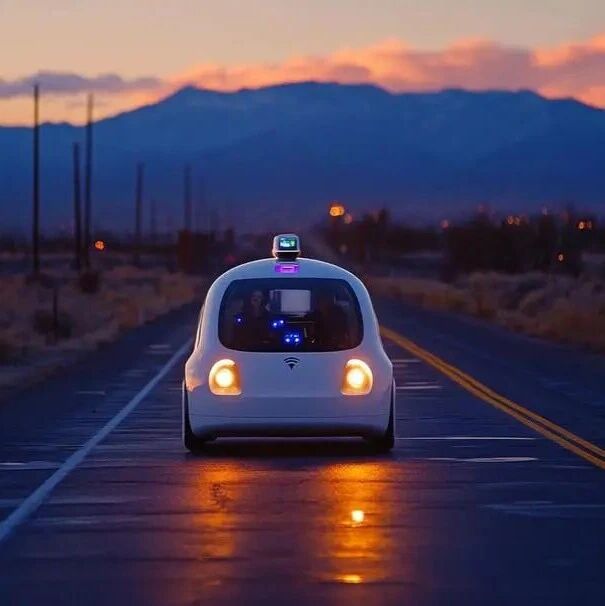
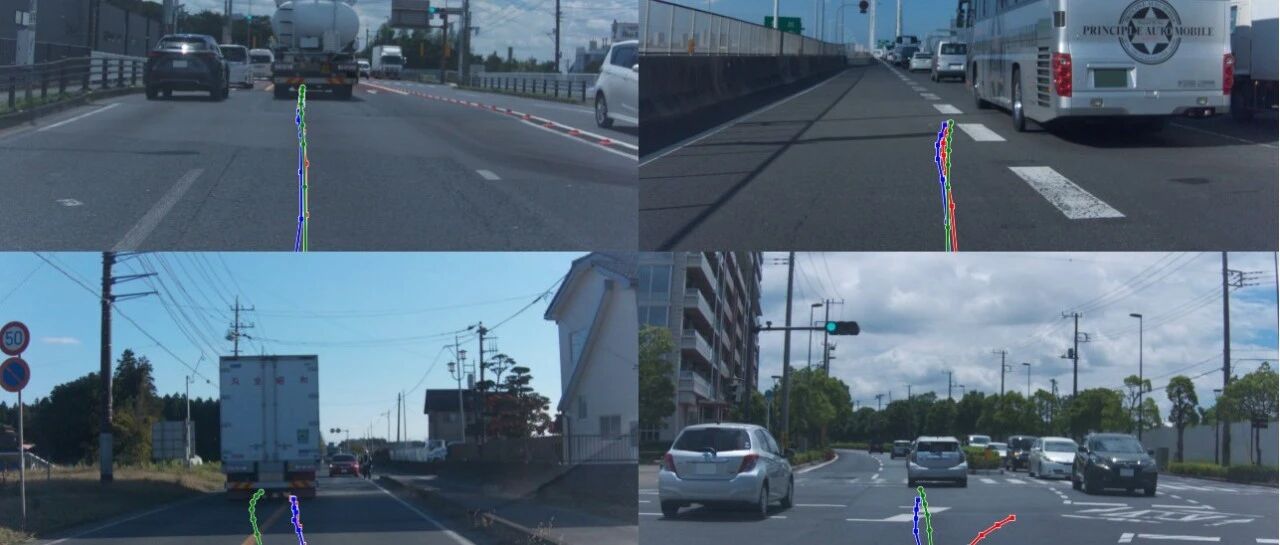
做自动驾驶VLA的这一年
自动驾驶之心· 2025-11-19 00:03
Core Viewpoint - The article discusses the emergence and significance of Vision-Language-Action (VLA) models in the autonomous driving industry, highlighting their potential to unify perception, reasoning, and action in a single framework, thus addressing the limitations of previous models [3][10][11]. Summary by Sections What is VLA? - VLA models are described as multimodal systems that integrate vision, language, and actions, allowing for a more comprehensive understanding and interaction with the environment [4][7]. - The concept originated from robotics and was popularized in the autonomous driving sector due to its potential to enhance interpretability and decision-making capabilities [3][9]. Why VLA Emerged? - The evolution of autonomous driving can be categorized into several phases: modular systems, end-to-end models, and Vision-Language Models (VLM), each with its own limitations [9][10]. - VLA models emerged as a solution to the shortcomings of previous approaches, providing a unified framework that enhances both understanding and action execution [10][11]. VLA Architecture Breakdown - The VLA model architecture consists of three main components: input (multimodal data), processing (integration of inputs), and output (action generation) [12][16]. - Inputs include visual data from cameras, sensor data from LiDAR and RADAR, and language inputs for navigation and interaction [13][14]. - The processing layer integrates these inputs to generate driving decisions, while the output layer produces control commands and trajectory planning [18][20]. Development History of VLA - The article outlines the historical context of VLA development, emphasizing its role in advancing autonomous driving technology by addressing the need for better interpretability and action alignment [21][22]. Key Innovations in VLA Models - Recent models like LINGO-1 and LINGO-2 focus on integrating natural language understanding with driving actions, allowing for more interactive and responsive driving systems [22][35]. - Innovations include the ability to explain driving decisions in natural language and to follow complex verbal instructions, enhancing user trust and system transparency [23][36]. Future Directions - The article raises questions about the necessity of language in future VLA models, suggesting that as technology advances, the role of language may evolve or diminish [70]. - It emphasizes the importance of continuous learning and innovation in the field to keep pace with technological advancements and user expectations [70].

广州把科研干到全球第六,你还在说它只有早茶和收租?
Sou Hu Cai Jing· 2025-11-18 18:39
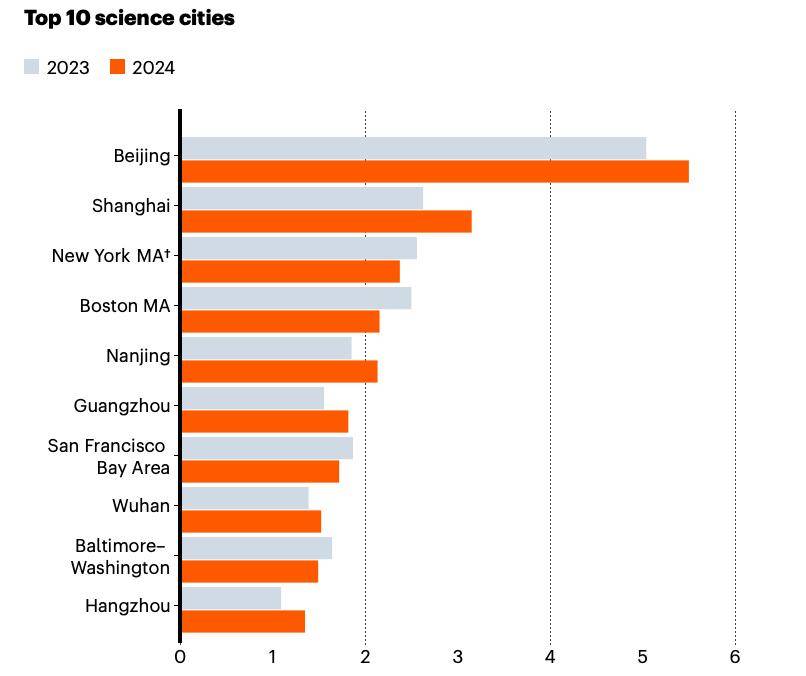
Core Insights - Guangzhou has achieved the rank of the sixth global research city, surpassing cities like Hong Kong, Shenzhen, and Hangzhou, and notably outpacing the San Francisco Bay Area [1][2][7] - The ranking is based on the "Nature Index" published by Springer Nature, which tracks contributions to high-quality scientific journals [8][9] Ranking Overview - The top ten global research cities are Beijing, Shanghai, New York metropolitan area, Boston metropolitan area, Nanjing, Guangzhou, San Francisco Bay Area, Wuhan, Baltimore-Washington, and Hangzhou [2][6] - Guangzhou's ranking improved from eighth to sixth, with a significant increase in its contribution score from 1558.1 to 1820.05 [2][7] Research Output - Guangzhou's research output includes 3,966 papers, ranking fourth in China and sixth globally [7] - The city has shown consistent improvement over the past decade, moving from 42nd place in 2015 to 6th in 2024, overtaking 36 cities [11] Academic Performance - In the five major scientific disciplines tracked by the Nature Index, Guangzhou ranks as follows: sixth in physical sciences, ninth in life sciences, fourth in chemistry, third in earth and environmental sciences, and tenth in health sciences [11] Calculation Methodology - The Nature Index uses a "share" metric to assess contributions, which allocates a paper's contribution based on the proportion of authors affiliated with a specific institution or region [12][13] Institutional Support - Guangzhou is recognized for its strong academic infrastructure, with 84 universities and over 160,000 students, contributing significantly to its research output [16] - The city has established a robust "2+2+N" technology innovation platform, housing national laboratories and major scientific facilities [17][18] Corporate Contributions - In 2023, Guangzhou's R&D expenditure exceeded 100 billion yuan, with corporate R&D accounting for 65.8% of the total [19] - The number of high-tech enterprises in Guangzhou has grown to 13,500, contributing nearly 50% of industrial output [20] Unicorn Companies - By 2025, Guangzhou is projected to have 24 unicorn companies, ranking fourth among Chinese cities and eleventh globally [21]
百度Q3财报:AI业务增长超50%,萝卜快跑季度单量增长212%
市值风云· 2025-11-18 10:58
Core Insights - Baidu's Q3 revenue reached RMB 31.2 billion (USD 4.38 billion), with core revenue at RMB 24.7 billion (USD 3.46 billion) [1] - AI business revenue was disclosed for the first time, showing over 50% year-on-year growth, reaching approximately RMB 10 billion [1] - AI cloud infrastructure revenue grew by 33% to RMB 4.2 billion, while AI application revenue was RMB 2.6 billion, and AI native marketing service revenue surged by 262% to RMB 2.8 billion [1][4] AI Business Performance - AI cloud maintained robust growth, with AI high-performance computing subscription revenue increasing by 128% [4] - Baidu's AI applications generated RMB 2.6 billion in Q3, focusing on products like Baidu Wenku and Baidu Wangpan, utilizing a high-retention subscription model [4] - The AI native marketing service revenue reached RMB 2.8 billion, driven by increasing market recognition and demand for AI solutions [6] Global Expansion and Innovations - The autonomous driving service "LuoBo Kuaipao" recorded 3.1 million service instances in Q3, a 212% year-on-year increase, with a total of over 17 million global service instances [6] - Baidu's autonomous driving service has expanded to 22 cities globally, achieving over 1.4 billion kilometers in autonomous driving mileage [6] - The launch of the Wenxin large model 5.0 and the introduction of new Kunlun chips M100 and M300 are set for 2026 and 2027, respectively [7]

Robotaxi海外被撞引热议:看似“无妄之灾”,实则是自动驾驶的必经之路
Jin Tou Wang· 2025-11-18 09:30
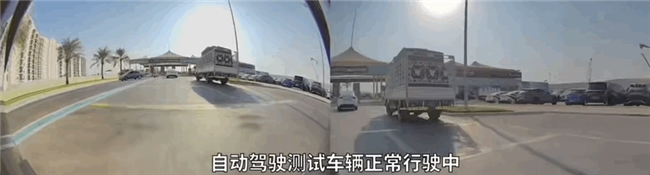
碰撞的背后:自动驾驶与人类驾驶的"混行阵痛" 这并非个例。不久前武汉发生的无人车碰瓷案中,人类司机蓄意多次挑衅碰撞,最终被交管部门取证追 责,全额赔偿损失并缴纳罚款。从蓄意碰瓷到无意违规,类似的碰撞事故未来只会越来越多,背后是双 重趋势的必然叠加。 近期,中国Robotaxi出海首撞,引起了各界的广泛关注~ 实际上这并非第一起人类司机与自动驾驶车辆发生碰撞,前段时间武汉还发生了一起碰瓷自动驾驶车辆 的事件,结果是人类司机被判全责。 这一次,事发阿布扎比的文远知行Robotaxi碰撞事故同样是如此,本次事故过程非常简单:人类司机驾 驶的某社会车辆违规强行变道,冲进文远知行Robotaxi所在的车道发生碰撞。Robotaxi 侧面受损、侧方 传感器脱落、后视镜掉落,但无任何人员伤亡。 随后,阿布扎比执法部门迅速介入调查,最终出具的结论清晰明确:无人车全程合规无过错,社会车辆 承担全部责任,各方均无异议。 | Accident Report تقرير هادت شركة ساعد للانظمة المرورية | SAAED is Lus | | --- | --- | | 0245 111 1610 SAA ...
文远知行港股上市累跌32%创新低 募24亿港元首日破发
Zhong Guo Jing Ji Wang· 2025-11-18 09:24
Core Viewpoint - The stock of WeRide (00800.HK) has reached an all-time low since its listing, indicating significant market challenges and a decline in investor confidence [1] Group 1: Stock Performance - WeRide's stock closed at HKD 18.48 today, reflecting a decline of 6.05% and marking the lowest price since its listing [1] - The stock has experienced a cumulative drop of 31.81% since its initial public offering (IPO) [1] - The stock opened at HKD 24.98 on November 6, 2025, and closed at HKD 24.40, showing a decrease of 9.96% on the first trading day [1] Group 2: IPO Details - WeRide's offering price was set at HKD 27.1, raising a total of HKD 2,391.58 million [1] - After deducting estimated listing expenses of HKD 127.24 million, the net proceeds amounted to HKD 2,264.34 million [1] - The total number of shares offered was 88,250,000, with 17,650,000 shares allocated for public offering in Hong Kong and 70,600,000 shares for international offering [1]
小马智行港股上市累跌34%创新低 募67亿港元首日破发
Zhong Guo Jing Ji Wang· 2025-11-18 09:23
公司港股最终发售价为139.00港元,所得款项总额为67.07亿港元,所得款项净额64.54亿港元。 小马智行全球发售的发售股份数目为48,249,000股发售股份(经计及发售量调整权获悉数行使及视乎超额 配股权行使与否而定,其中香港发售股份数目为4,195,600股发售股份,国际发售股份数目为44,053,400 股发售股份(经计及发售量调整权获悉数行使及视乎超额配股权行使与否而定)。 公司的基石投资者Eastspring Investments(Singapore)Limited、Ghisallo Fund Master Ltd、Athos Capital Limited、Hel Ved Master Fund、Ocean Arete Limited获分配的发售股份数分别为1,117,800股、2,794,600 股、1,397,300股、838,400股、558,900股。 中国经济网北京11月18日讯小马智行(02026.HK)港股今日收报92.00港元,跌幅6.122%,今日盘中最低 价91.20港元,创上市以来最低价。目前该股处于破发状态,上市以来累计跌幅33.81%。 小马智行2025年11月6 ...
又一重磅企业迈进无人物流车赛道 轻舟智航“有话说”
Zhong Guo Jing Ji Wang· 2025-11-18 03:20
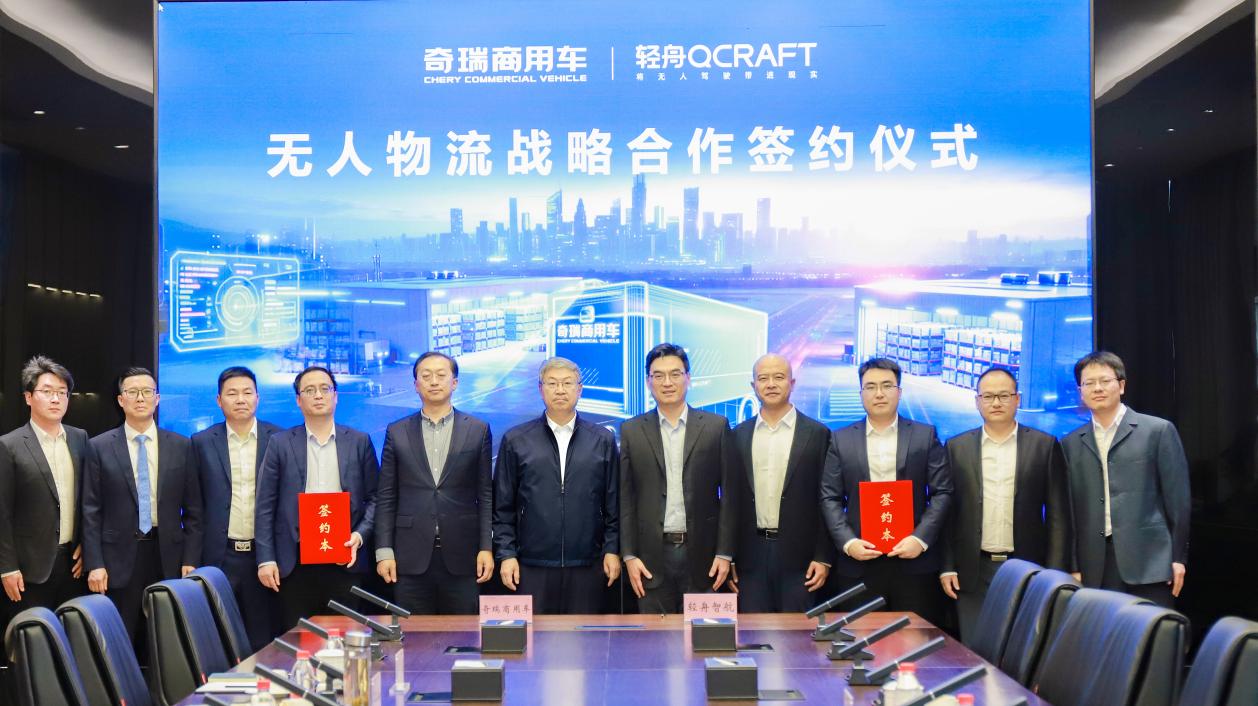
此次轻舟智航与奇瑞商用车在无人物流领域正式签约,双方将携手打造全球领先的车规级无人驾驶 商用车平台,形成三大行业优势: 11月15日,轻舟智航与奇瑞商用车达成无人物流战略合作,双方将携手打造行业全新的量产级L4 物流产品,整合各自在自动驾驶技术、整车量产制造及全球市场资源等领域的优势,推动无人物流车在 城市配送全场景的规模化应用。 目前,双方联合打造的首款无人物流车已陆续在苏州、金华、芜湖等城市投入运营,未来将逐步推 广至全国核心城配区域乃至全球市场。 轻舟智航联合创始人、CEO于骞博士表示:"奇瑞是中国汽车工业的技术标杆与全球化典范。轻舟 智航的使命是将无人驾驶带进现实。此次我们与奇瑞商用车的合作,标志着轻舟智航形成了'出行+物 流'双线商业化落地布局。" "我们将把经过大规模量产验证的领先技术与数据闭环能力,高效赋能无人物流车的开发,携手奇 瑞商用车打造为量产而生的行业顶尖L4无人物流产品,以技术创新助力全球物流行业新升级。"于骞 说。 奇瑞商用车总经理巩月琼表示:"与轻舟智航达成战略合作是奇瑞商用车加速推进智能化、全球化 发展的重要一步,无人物流车更是全业务布局的关键一环。奇瑞商用车的整车研发、生产、供 ...
财通证券:自动驾驶出租车在全球范围推进 关注已有成熟经验及即将入局标的
Zhi Tong Cai Jing· 2025-11-18 03:09
Group 1 - Domestic companies are continuously advancing in the Robotaxi sector, with new entrants emerging and announcing their future plans, including major manufacturers, ride-hailing platforms, and intelligent driving suppliers [1] - Key players in the domestic Robotaxi market include Luobo Kuaipao, Pony.ai, and WeRide, with significant increases in revenue and orders expected by 2024: Pony.ai's passenger fare revenue is projected to increase by over 300% year-on-year by Q2 2025, while WeRide's Robotaxi-related revenue is expected to rise by 364% in the first half of 2025, and Luobo Kuaipao's order volume is anticipated to exceed 2.2 million by Q2 2025, a year-on-year increase of 148% [1] - New entrants in the domestic market include XPeng, Momenta, Qianli Technology, Didi, Hello, and Cao Cao Mobility, all of which have publicized their future plans [1] Group 2 - In the U.S., Tesla and Waymo are accelerating their progress, with Tesla planning to operate in Austin by June 2025 and expand to Nevada, Florida, and Arizona by the end of 2025, aiming for a fleet of 1,500 vehicles by the end of 2025 and starting mass production of Cybercab in Q2 2026; Waymo's fleet size and weekly order volume are expected to double in 2025, with ongoing updates on city openings for 2026 [2] - Uber has announced its entry into the Robotaxi market, partnering with Lucid, Stellantis, NVIDIA, and Nuro, while U.S. government policies are gradually relaxing, including simplified exemption procedures [2] Group 3 - Robotaxi participants are also accelerating deployments in the Middle East, Europe, and parts of Asia, with specific locations including the UAE, Saudi Arabia, Switzerland, Luxembourg, Germany, the UK, Singapore, Japan, and South Korea; Abu Dhabi has allowed manufacturers to conduct commercial operations without a driver [3] - WeRide plans to increase its fleet in the Middle East to 1,000 vehicles by 2026, with a target of several thousand by 2030 [3]


