
Payments

Search documents
Visa Is One of the Largest Financial Companies by Market Cap. But Is It a Buy?
The Motley Fool· 2025-06-16 10:20
Core Insights - The global GDP is approximately $110 trillion, indicating a robust economic environment that enhances the value of financial services companies [1] - Visa, with a market capitalization of $725 billion, has seen its stock price increase by 36% over the past year, raising questions about its current investment attractiveness [2] Financial Performance - Visa reported a 9% year-over-year revenue growth in Q2 of fiscal 2025, driven by strong cross-border transaction volumes [5] - The company maintains a high net profit margin of 48% in Q2, averaging 52% over the past five years, showcasing its profitability [6] - Visa processed $3.9 trillion in payment volume in the most recent fiscal quarter, reflecting its significant role in the payments industry [7] Competitive Landscape - Despite the emergence of fintech companies like PayPal and Block, Visa's entrenched position in global commerce remains strong, as these companies often drive more usage of Visa's platform [8][9] - Visa's extensive network, with over 150 million merchants and 4.8 billion cards in circulation, creates a powerful network effect that solidifies its competitive advantage [10] Future Outlook - The company is expected to continue benefiting from the increasing adoption of digital payments as cash usage declines [6] - Visa's leadership in the payments landscape is likely to persist unless a significantly superior system emerges [11] Investment Considerations - Over the past decade, Visa has outperformed the S&P 500 with a total return of nearly 500%, but future outperformance may be hindered by its size [12] - The stock trades at a price-to-earnings ratio of 37.4, which is above its historical averages, suggesting that potential investors may want to wait for a price correction before entering [13]



Crypto Legislation ‘GENIUS Act’ Nears Passage
Bloomberg Technology· 2025-06-13 18:18
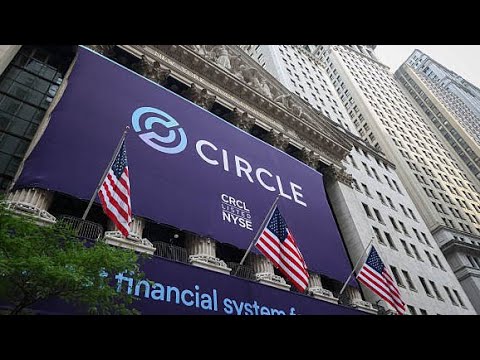
Stablecoin Adoption and Potential Impact - Major technology, commerce, and financial institutions are paying attention to stablecoin money as a new form of electronic money, especially with legal certainty [1] - Stablecoins are viewed as the new money layer of the Internet, offering innovation beyond traditional money and providing benefits to firms' bottom lines [2] - Circle sees tremendous opportunities to collaborate with major technology firms, payments companies, and financial institutions [4] - Shopify is making USDC payments a default option for every merchant on their platform in the US (1 million merchants in Europe), offering merchants 0.5% cash back [5][6] Regulatory Landscape and Future Legislation - The Genius Act has passed a critical cloture vote and is set to pass the Senate, providing legal certainty for stablecoin utilization at scale [2][7] - The Clarity Act is essential for providing legal clarity on digital assets and blockchains, including how they can be offered and used [10] - The combination of the Genius Act and the Clarity Act could create a rules-based system in the United States, fostering a competitive environment and making the US a hub for technology innovation [11] Circle's Position and Strategy - Circle operates the world's largest regulated stablecoin network and aims to work with everyone to leverage stablecoin technology [6][7] - Circle does not compete for consumers, merchants, or businesses, positioning itself as a market-neutral infrastructure provider [7] - Becoming a public company enhances trust, transparency, compliance, and good governance, which is beneficial for working with leading institutions [13][14]
Visa's Fintech Expansion: A New Era of Scalable Digital Payments?
ZACKS· 2025-06-13 17:41
Core Insights - Visa Inc. is enhancing its position in the digital payments sector through strategic fintech partnerships, acquisitions, and platform development, transitioning from a card network to a key technology partner in the payments landscape [1][4] Financial Performance - In fiscal 2023, Visa's payment volume increased by 9% year over year on a constant-dollar basis, followed by an 8% growth in fiscal 2024 and an 8% increase in Q2 of fiscal 2025. Processed transactions also grew by 9% year over year in the same quarter [2][8] - The Zacks Consensus Estimate for Visa's fiscal 2025 earnings indicates a 12.9% increase compared to the previous year, with 11 upward estimate revisions in the last 60 days [10] Strategic Initiatives - Visa has extended its partnership with TabaPay, which serves over 6,500 fintechs and businesses, and introduced new features in Visa Direct, including push-to-account and wallet options [3][8] - The launch of the Visa Commercial Integrated Partners program aims to enhance connectivity between fintechs and Visa's commercial products [3][8] Competitive Landscape - Competitors such as Mastercard and PayPal are also active in the fintech payments space, with Mastercard reporting a 15% year-over-year increase in cross-border volumes and PayPal experiencing a 3% increase in total payment volume [5][6] Stock Performance and Valuation - Visa's shares have increased by 12.3% year-to-date, outperforming the industry growth of 8.5% [7] - Visa trades at a forward price-to-earnings ratio of 30.1, which is above the industry average of 23.7, and carries a Value Score of D [9]

5 Stocks With Recent Price Strength Amid Wall Street Rally
ZACKS· 2025-06-12 12:10
Market Overview - U.S. stock markets are experiencing a positive trend after recent volatility, with the S&P 500 near its all-time high, and both the Nasdaq Composite and Dow showing positive year-to-date performance [1] - Factors contributing to this market sentiment include ongoing U.S.-China trade negotiations, stability in the U.S. labor market, and a declining inflation rate, which have encouraged investment in equities [2] Stock Performance - A selection of stocks has demonstrated significant price strength, particularly those on a bull run, indicating potential for continued momentum [2][3] - Five highlighted stocks include Sezzle Inc. (SEZL), Dycom Industries Inc. (DY), Tutor Perini Corp. (TPC), Limbach Holdings Inc. (LMB), and Northrim BanCorp Inc. (NRIM) [3] Screening Parameters - Stocks were screened based on several criteria, including: - Percentage Change in Price (4 Weeks) greater than zero, indicating recent upward movement [5] - Percentage Change Price (12 Weeks) greater than 10%, suggesting sustained momentum over three months [5] - Zacks Rank 1, indicating a strong buy rating with historical outperformance [6] - Average Broker Rating of 1, reflecting positive broker sentiment [6] - Current Price above $5, ensuring stocks are trading at a reasonable level [6] - Current Price/52-Week High-Low Range greater than 85%, indicating strong price performance [7] Individual Stock Highlights - **Sezzle Inc. (SEZL)**: Stock price surged 35.7% in four weeks, with expected earnings growth of 76.1% for the current year [8][9] - **Dycom Industries Inc. (DY)**: Stock price increased 20.3% in four weeks, with a revenue outlook raised for fiscal 2026 after strong Q1 results, and expected earnings growth of 13.2% [10][12] - **Tutor Perini Corp. (TPC)**: Stock price rose 12.8% in four weeks, with expected earnings growth exceeding 100% for the current year [16] - **Limbach Holdings Inc. (LMB)**: Stock price advanced 10.8% in four weeks, with expected earnings growth of 21.9% [18] - **Northrim BanCorp Inc. (NRIM)**: Stock price increased 4.9% in four weeks, with expected earnings growth of 45.9% [20]






Evolution: The Ideal Replacement To British American Tobacco
Seeking Alpha· 2025-06-12 11:18
Core Insights - The investment strategy focuses on acquiring strong businesses when they are undervalued, emphasizing a concentrated portfolio approach in various industries including telecom, banking, and technology [1] - The current emphasis is on high-quality businesses, particularly in the technology sector, which have large user bases and content libraries, highlighting the potential for cross-selling opportunities [1] - The valuation method prioritizes EBIT plus R&D investments, reflecting a belief in the long-term potential of certain R&D initiatives [1] Performance Metrics - The annual return from February 2019 to October 2024 is reported at 11.4% CAGR, which is below the market's 15.18% CAGR during the same period [1] - The investment philosophy aims to minimize portfolio turnover, suggesting that most profits will come from holding existing investments rather than frequent trading [1] Investment Philosophy - The approach does not endorse traditional "Buy" and "Sell" recommendations, instead categorizing stocks into "Strong Buy" and "Strong Sell" based on their valuation relative to exceptional business quality [1] - A "Hold" position may be initiated for high-quality businesses if their pricing is deemed unfavorable, indicating a flexible approach to investment decisions [1]


Paysafe (PSFE) Conference Transcript
2025-06-10 19:40
Paysafe (PSFE) Conference Summary - June 10, 2025 Company Overview - Paysafe generates approximately $1.7 billion in revenue, with a revenue split of about 55% from merchant solutions and 45% from digital wallet services [3][4] - The digital wallet segment primarily serves consumers, with products like Skrill and eCash facilitating transactions in gambling and gaming [4][5] - The merchant solutions segment focuses on traditional merchant acquiring, with a significant presence in North America [4][6] Core Business Segments Digital Wallet - The wallet business includes solutions for cash-to-digital transactions, such as Pago Effectivo in Latin America [5][51] - The company has evolved its wallet solutions to include bank account funding options, enhancing its distribution capabilities [5] Merchant Solutions - The merchant solutions segment has been built through acquisitions, including notable names like iPayment [6] - The business model includes both direct sales and independent sales organizations (ISOs) [7] Market Trends and Consumer Behavior - Consumer spending trends have remained stable, with no significant changes in transaction sizes or purchasing behaviors noted [9][10] - The demand environment for merchants has also been stable, with efforts to reduce sales cycle times [12][13] Strategic Partnerships - A new partnership with Fiserv, particularly with Clover, aims to enhance product offerings and customer stickiness [15][16] - The partnership is expected to provide access to Fiserv's customer base, enhancing the business wallet solution [16][17] Growth Projections - The company anticipates organic growth of 8% to 10% in the second half of 2025, driven by effective enterprise sales efforts and new product introductions [19][20] - The focus on small and medium-sized businesses (SMBs) is being refined to optimize lead generation and marketing strategies [20][33] Product Initiatives and Market Expansion - New product launches, such as the Hago Effectiva Wallet, are expected to contribute to revenue growth, although significant impacts may not be seen until 2026 [23][49] - The company is exploring opportunities in Latin America, which currently accounts for about 7% of revenue but is expected to grow faster than other regions [51][52] Financial Performance and Margins - The gross profit profile of the wallet business is significantly higher than that of the merchant solutions segment, impacting overall profitability [26] - The company aims to maintain an EBITDA margin of around 30% by the end of the year, despite some noise from divestitures [28][66] Investment Priorities - Key investment priorities include building product capabilities, driving double-digit revenue from recently launched products, and reducing debt levels [60][61] - The focus remains on achieving operating leverage and controlling operating expenses while continuing to grow high-margin product lines [61][62] Conclusion - Paysafe is positioned for continued organic growth, with a strong emphasis on optimizing its sales force and product offerings [66] - The company is focused on leveraging partnerships and expanding into new markets, particularly in Latin America, to drive future growth [50][52]

Mastercard (MA) Conference Transcript
2025-06-10 17:10
Mastercard (MA) Conference Summary - June 10, 2025 Company Overview - **Company**: Mastercard (MA) - **Conference Date**: June 10, 2025 - **Revenue from Services**: $11 billion, representing 38% of total corporate revenue [11][24] Key Industry Insights - **Services Growth**: Services account for 35% to 38% of the company, generating approximately 50% of growth [9] - **Market Opportunity**: Total addressable market (TAM) for services is nearly $500 billion, with a serviceable addressable market (SAM) of about $165 billion [24][25] - **Underpenetration**: Mastercard is only 2% penetrated in the TAM and less than 7% in the SAM, indicating significant growth potential [25][26] Core Business Areas 1. **Consumer Acquisition and Engagement**: Focus on marketing services and loyalty capabilities to enhance consumer relationships [12] 2. **Business and Market Insights**: Consulting services leveraging extensive data for performance optimization and risk management [13] 3. **Security Solutions**: Evolving from fraud management to identity and cybersecurity solutions, utilizing advanced data analytics [14][16] Competitive Differentiation - **Data Utilization**: Mastercard processes 160 billion transactions annually, providing extensive data for insights and fraud detection [32] - **Technology and Network Reach**: Global network with 150 million merchants and extensive customer relationships [31] - **Expertise**: Over 3,000 consultants and data scientists enhancing service delivery and implementation [37] Mergers and Acquisitions - **Strategic Focus**: M&A is used to deepen capabilities in key areas rather than broadening the portfolio [40] - **Recorded Future Acquisition**: Enhances cybersecurity capabilities and integrates threat intelligence into existing services [42][43] AI Integration - **AI in Services**: AI powers one in three of Mastercard's service products, enhancing fraud detection, personalization, and operational efficiency [50][51] - **AgenTic Commerce**: Represents the evolution of commerce, allowing agents to shop on behalf of consumers, potentially increasing transaction volume [54][55] Future Outlook - **Digitization Trends**: Continued digitization and data availability are expected to drive growth in payments and services [59] - **Growth Runways**: Strong growth potential in services, particularly in areas aligned with digital transformation and AI advancements [60] Additional Insights - **Cybersecurity Importance**: Emphasis on cybersecurity as a critical component of service differentiation and customer trust [38] - **Personalization Opportunities**: The role of AI in enhancing consumer experiences and enabling personalized commerce [56][57]

Alphabet: Non-Search Businesses Worth More Than Current Market Cap
Seeking Alpha· 2025-06-10 13:28
Core Insights - The investment strategy focuses on acquiring strong businesses when they are undervalued, emphasizing the importance of quality and price in investment decisions [1] - The portfolio has evolved through various industries, including technology, banking, and emerging markets, with a current emphasis on high-quality businesses and their competitive advantages [1] - The investment philosophy is influenced by notable investors and CEOs, highlighting the significance of learning from successful figures in the industry [1] Investment Strategy - The approach prioritizes large tech companies with extensive user bases and content libraries, recognizing the potential for cross-selling opportunities [1] - Valuation is conducted at the EBIT plus R&D level, reflecting a belief in the potential of certain R&D investments [1] - The investment performance from February 2019 to October 2024 shows an annual return of 11.4% CAGR, which is below the market's 15.18% CAGR, but there is confidence in future outperformance due to expanded knowledge [1] Portfolio Management - The strategy aims to minimize portfolio turnover, with a focus on holding existing companies rather than frequent trading [1] - The investment philosophy rejects traditional "Buy" and "Sell" recommendations, advocating for a "Strong Buy" threshold for exceptional businesses and categorizing others as "Strong Sell" to generate cash for future investments [1] - A "Hold" position may be initiated for high-quality businesses if their pricing is not favorable [1]


哈佛老徐:稳定币爆火,它到底有什么影响
老徐抓AI趋势· 2025-06-10 11:29
Core Viewpoint - Stablecoins represent a significant innovation at the intersection of blockchain technology and traditional finance, with a market size of $250 billion projected by May 2025, highlighting their rapid development and potential to reshape payment systems [5][6]. Group 1: Comparison of Stablecoins and Traditional Payment Systems - Stablecoins utilize distributed ledger technology for peer-to-peer transactions, offering features such as programmability and faster transaction speeds, completing transactions in seconds compared to traditional systems that may take 1-3 business days [6][7]. - The cost structure of stablecoins is significantly lower, with transaction fees for USDT on the Solana chain as low as $0.0001, while bank wire transfers average 1‰ plus additional fees [7][8]. - Stablecoins operate 24/7 without the limitations of traditional banking hours, enhancing accessibility and efficiency in financial transactions [8]. Group 2: Risk Characteristics - Stablecoins face unique risks, including credit risk from issuer defaults, liquidity risk during redemption, operational risks from smart contract vulnerabilities, and legal risks from regulatory changes [10]. - Traditional payment systems also carry risks, such as credit risk from bank failures and operational risks from human errors [10]. Group 3: Regulatory Framework Differences - The U.S. is advancing a federal regulatory framework through the GENIUS Act, mandating that stablecoin issuers maintain reserves in cash or short-term U.S. Treasury securities, with monthly disclosures [11][20]. - In contrast, Hong Kong's Stablecoin Ordinance requires a minimum capital of HKD 25 million for stablecoin issuers and emphasizes a regulatory framework that allows for multi-currency stablecoins [11][24]. Group 4: Market Acceptance and Future Trends - Stablecoins are increasingly integrated into various applications, with 65% of stablecoin transaction volume attributed to crypto trading and projected B2B payments reaching 1.2 trillion RMB by 2024 [15][18]. - The market for stablecoins is expected to grow significantly, with optimistic estimates suggesting a market cap of $3-6 trillion by 2030, while conservative estimates predict a growth to over $500 billion by 2027 [17][18]. Group 5: Geopolitical Financial Implications - The U.S. aims to maintain the dollar's global reserve currency status through stablecoin regulation, while Hong Kong seeks to establish itself as a bridge for offshore RMB stablecoins, enhancing its role in international trade [23][33]. - The regulatory landscape is evolving, with the potential for stablecoins to impact cross-border payments significantly, as evidenced by a 320% increase in cross-border payment orders using stablecoins in the Middle East [13][36].

BERNSTEIN:稳定币 -它们是大事吗
2025-06-10 07:30
Summary of Stablecoins Conference Call Industry Overview - The stablecoin market cap has surged to approximately $250 billion, reflecting an increase of over 80% compared to 2023 [2][24] - Stablecoin legislation is nearing passage in Congress, which could stimulate innovation and participation from traditional financial services firms [2][46] Key Companies Involved - **Stripe**: Acquired stablecoin infrastructure firm Bridge for $1.1 billion, emphasizing stablecoins as "room-temperature superconductors" for financial services [2][65] - **Visa**: Partnered with Stripe for stablecoin-linked cards, focusing initially on Latin America, and has developed capabilities for settling transactions in stablecoins [3][47] - **Mastercard**: Similar partnerships with MoonPay and others for stablecoin-linked cards, and has launched its Multi-Token Network for digital asset transactions [3][58] - **PayPal**: Launched PYUSD stablecoin in August 2023, offering yields to drive adoption as regulatory clarity emerges [4][56] Core Insights and Arguments - **Disruption Potential**: While stablecoins are seen as a potential disruptor in payments, most current activity is concentrated in crypto capital markets rather than retail payments [6][32] - **Retail Payments**: Stablecoins are viewed as a solution looking for a problem in developed markets due to existing cheaper alternatives like ACH and RTP [7][70] - **Cross-Border Payments**: Retail cross-border payments remain challenging to disrupt due to established consumer behavior and infrastructure [9][72] - **Emerging Markets**: In volatile currency environments, stablecoins are gaining traction for payments and fintech use cases, with Visa and Mastercard already partnering with stablecoin infrastructure companies [11][77] Additional Important Points - **Transaction Volumes**: Although stablecoin transaction volumes appear high, adjusted volumes indicate that a significant portion is driven by high-frequency trading rather than actual payment use [35][38] - **Regulatory Framework**: The GENIUS Act aims to create a federal framework for stablecoin regulation, balancing consumer protection and financial innovation [50][46] - **Market Dynamics**: 99% of stablecoins are US dollar-denominated, reinforcing the dollar's dominance in the global on-chain economy [18][101] - **Long-Term Optionality**: Stablecoins may play a role in AI-driven payments and other innovative financial solutions, although existing infrastructure poses challenges [15][79] Conclusion The stablecoin landscape is rapidly evolving, with significant interest from major financial players and potential regulatory changes on the horizon. While challenges remain in retail and cross-border payments, emerging markets and innovative use cases present opportunities for growth and integration into existing financial systems.
