加密货币

Search documents
特朗普家族支持的加密货币上线!暴富捷径还是骗局?
Sou Hu Cai Jing· 2025-09-01 15:12
Core Viewpoint - The WLFI token, associated with World Liberty Financial, has officially launched for trading, attracting significant market attention due to its ties to the Trump family and its governance role in the company's decentralized finance (DeFi) strategy [1][2]. Group 1: Token Launch and Market Performance - WLFI was initially launched as a governance token, allowing holders to vote on the company's direction, but was not publicly tradable until recently [2]. - The token's sales accelerated following Trump's promotion on social media, with a total of $550 million raised, including $250 million in the second round [2]. - WLFI's total supply is 33 billion tokens, with a small portion available for trading at launch, while early investors face restrictions on selling [3]. - WLFI derivatives saw a significant increase in trading activity, with open interest reaching nearly $950 million before dropping to $887 million, marking a 45% increase from the previous day [3]. - The token's price fluctuated around $0.34, with a fully diluted market cap potentially reaching $34 billion, positioning it as the ninth largest cryptocurrency by market cap [3]. Group 2: Exchange Listings and Trading Dynamics - Major exchanges like Binance and Upbit have listed WLFI, enhancing its global trading presence [4]. - Binance dominated the trading volume for WLFI, accounting for approximately 50% of the total with $2.22 billion in 24-hour trading volume [4]. Group 3: Controversies and Market Concerns - The WLFI token's launch has sparked debates regarding its true value and potential market manipulation due to its complex economic structure and political connections [5]. - Concerns have been raised about the token's liquidity and the risk of significant price volatility, especially with a concentrated ownership structure among early investors [6]. - Investigations revealed a potentially manipulative "circular trading" scheme involving Trump family-controlled entities, raising alarms about market integrity [7].
“加密总统”家族业务东扩!特朗普次子现身为日本“比特币大户”Metaplanet站台
智通财经网· 2025-09-01 11:05
智通财经APP获悉,周一,美国总统唐纳德·特朗普的次子埃里克·特朗普(Eric Trump)在东京的一场活动 中现身并发表了讲话,表示支持日本比特币资产管理公司Metaplanet。与此同时,特朗普家族正在将其 加密货币业务拓展至国际领域。 埃里克·特朗普于今年3月被任命为Metaplanet的顾问。该公司持有超过 20 亿美元的比特币。在出席该公 司特别股东大会之前,他上周还在香港的"比特币亚洲"大会上亮相。 Metaplanet公司召开会议,以批准一项计划,该计划将允许其向海外出售多达 5.5 亿股新股,所得资金 达 1303 亿日元(约合 8.8441 亿美元),其中大部分资金将用于购买更多比特币。在东京市中心涩谷区举 行的这次会议结束后,三位参会人员表示该融资计划已获批准。 在活动开始前,该公司拒绝就埃里克·特朗普是否参与此次会议发表评论。随后,该公司也未回复寻求 对融资投票结果发表评论的电子邮件。埃里克·特朗普的代表也未回应置评请求。 特朗普曾承诺要成为"加密货币总统",他表示支持这一资产类别,因为这能够改善银行体系并增强美元 的主导地位。 特朗普在加密货币等领域的部分业务为其积累了巨额财富,但这些 ...

特朗普家族代币WLFI上线,总统品牌能否撑起加密新霸主?
Jin Shi Shu Ju· 2025-09-01 10:15
9月1日是美国的劳动节,美股等关键市场将休市。但是,加密货币交易者首次有机会买卖与美国总统特 朗普家族相关的WLFI代币。 WLFI是一种由世界自由金融(World Liberty Financial)发行的治理代币,最初设计用于就改进协议的 想法进行投票,于9月1日开始交易。早期投资者(不包括唐纳德·小特朗普和埃里克·特朗普等创始人) 最多只能出售其持有量的20%,其余部分仍不可交易。 这次市场亮相将成为一项关键测试,看"特朗普"这个名字,能在多大程度上推高这一拥有1000亿枚代 币、仅有一年历史的项目的价值。 Messari分析师迪伦·班恩(Dylan Bane)称,20%的出售限制是"一种常见的流通管理策略"。他说,通 过限制早期流动性,项目减少了短期的抛压并让价格更稳定,同时也提升了市场观感。 数据显示,该代币在大多数交易所的交易价格约为34美分,较一周前超过40美分的峰值有所下跌。 如果WLFI的交易价格持续在34美分左右,那么基于其1000亿枚代币的总供应量,该代币的完全稀释市 值可能达到340亿美元,使其成为第九大加密货币,取代波场(TRX)并将狗狗币(DOGE)挤出前十 名。 创始人持有的代币 ...
特朗普支持的WLFI代币9月1日将公开交易,投资价值和风险何在?
第一财经· 2025-09-01 10:11
Core Viewpoint - The WLFI token, supported by the Trump family, is set to begin trading on major cryptocurrency exchanges, aiming to combine DeFi architecture with governance mechanisms and personal branding to create a functional and topical token [3][6][7]. Group 1: Token Distribution and Governance - WLFI will be distributed through a system called "Lockbox," with only 20% of the tokens available for early investors to unlock and sell, while 80% will remain locked under community governance [6][10]. - The total supply of WLFI is 100 billion tokens, with a significant portion held by major stakeholders, including a Trump family-associated entity that owns 38% of WLF [8][9]. - The governance structure allows token holders to vote, but limits each wallet to a maximum of 5% voting power to prevent concentration [7][10]. Group 2: Market Valuation and Trading Dynamics - WLFI's fully diluted valuation (FDV) has surpassed $40 billion, with early trading prices in the futures market ranging from $0.20 to $0.30, significantly above its initial sale prices [8][9]. - The project has raised $5.5 billion through two rounds of token sales, indicating strong market interest and potential for high trading activity [8][9]. - The design of limited liquidity aims to stabilize prices and create a favorable trading atmosphere, although it poses long-term risks if unlocking mechanisms are not transparent [10]. Group 3: Trump Family Involvement and Broader Strategy - The Trump family plays a central role in the WLF project, with Donald Trump listed as a key figure and his sons acting as ambassadors for the initiative [12][13]. - The family has launched various crypto-related products and has been involved in regulatory efforts to promote a favorable environment for cryptocurrency, including the establishment of a government-backed Bitcoin reserve [13][14]. - This involvement has raised ethical and legal concerns regarding potential conflicts of interest, as the family stands to benefit financially from the regulatory decisions they influence [14].

特朗普支持的WLFI代币9月1日将公开交易 投资价值和风险何在?
Di Yi Cai Jing· 2025-09-01 09:00
Core Viewpoint - The WLFI token, supported by the Trump family, is set to begin trading on September 1, 2023, aiming to combine DeFi architecture with governance mechanisms and personal branding to create a functional and topical cryptocurrency [1][3]. Token Distribution and Valuation - WLFI has a total supply of 100 billion tokens, with 80% locked and only 20% available for early investors to unlock and sell, which may lead to potential market volatility [2][6]. - The token's estimated valuation has reached $40 billion, with a futures price range of $0.20 to $0.30, significantly higher than its initial sale prices of $0.015 and $0.05 [4][5]. Governance and Market Dynamics - WLFI emphasizes governance-driven value, granting token holders voting rights while limiting each wallet to a maximum of 5% voting power to prevent concentration [3][6]. - The project aims to stabilize the market by managing liquidity and creating a sense of scarcity, although the long-term implications of the locked tokens remain uncertain [6][7]. Involvement of the Trump Family - The Trump family plays a central role in the WLFI project, having raised over $5.5 billion through private placements and maintaining significant control over the project [5][8]. - The family's involvement in various cryptocurrency initiatives, including stablecoins and Bitcoin mining, raises ethical and legal concerns regarding potential conflicts of interest in regulatory oversight [9][10].
机构:热情减退叠加加密货币兴趣上升 韩国投资者正卖出特斯拉股票
Ge Long Hui A P P· 2025-09-01 06:01
Core Viewpoint - Korean retail investors are losing confidence in Tesla, leading to significant sell-offs in August, while interest in cryptocurrencies is rising [1] Group 1: Tesla Stock Performance - In August, Korean individual investors net sold $657 million worth of Tesla stock, marking the largest outflow since the beginning of 2023 [1] - The enthusiasm for Tesla, which previously drove a rebound in its stock price, is waning among its most loyal retail investor base in Korea [1] Group 2: Shift in Investment Preferences - Investors are increasingly favoring more volatile investments, such as Bitmine Immersion Technologies Inc., which is associated with Ethereum, attracting a net inflow of $253 million [1] - This shift indicates a broader trend where Korean traders, who have historically been drawn to well-known U.S. tech companies like Tesla, are reallocating their funds to other opportunities [1]

从“比特币飞轮策略”到华尔街背书 “持币大户”Strategy(MSTR.US)即将重拾狂野涨势?
Zhi Tong Cai Jing· 2025-09-01 04:52
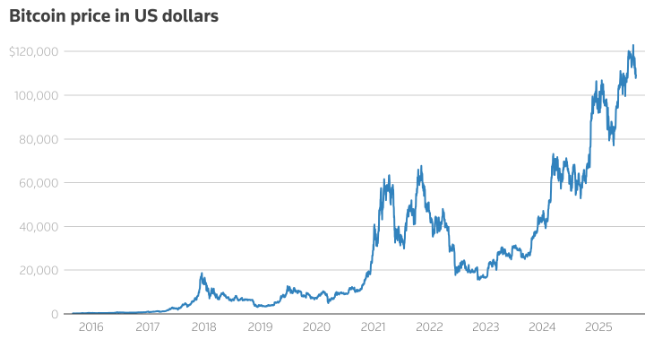
Core Viewpoint - Canaccord Genuity maintains a "buy" rating for Strategy (MSTR.US) with a target price of $464, indicating a potential upside of nearly 40% from its current price of $334.41 [1][2] Company Performance - Strategy has raised over $6 billion through preferred stock sales this year, marking it as one of the most successful fundraising cases in U.S. capital market history [1] - The company holds 632,457 Bitcoins, with a significant increase in holdings noted recently [3][4] - Since Michael Saylor began investing the company's cash into Bitcoin in 2020, Strategy's stock price has surged approximately 2,350%, while Bitcoin's price has increased about 700% [3] Market Position - Strategy is recognized as the largest corporate holder of Bitcoin, surpassing other mining companies and public funds [4] - The company's stock financing strategy allows it to acquire more Bitcoin, effectively acting as a leveraged long position on Bitcoin [4][5] Investment Strategy - The company employs a "flywheel" strategy, utilizing its capital structure to amplify exposure to Bitcoin, which enhances its market valuation relative to Bitcoin holdings [5] - Analysts predict that as long as there is a premium, the management may continue to issue shares at high valuations to acquire more Bitcoin [5] Market Outlook - There is optimism regarding the continuation of the Bitcoin bull market, with predictions that Bitcoin could reach $200,000 by the end of the year [7] - Standard Chartered forecasts Bitcoin prices could soar to $200,000 by the end of 2025 and potentially reach $500,000 by 2029 [7]

就在今天 币圈盛事:特朗普家族“核心代币”开始交易
Hua Er Jie Jian Wen· 2025-09-01 03:55
作者:叶桢,华尔街见闻 一个与特朗普家族深度绑定的加密项目正将其代币推向公开市场,这不仅是加密世界的一场大事,更是 对特朗普在金融科技领域影响力的终极测试。 就在今天(9月1日),由特朗普家族公开支持的World Liberty Financial项目,其治理代币WLFI将正式 开始交易。世界标准时间中午12点,代币生成事件(TGE)将启动,早期投资者能够解锁并出售其所持 代币总量的20%,这部分代币约占总供应量的5%。 此次首次亮相将在币安、Coinbase等主流加密货币交易所进行,市场对此高度关注。按当前0.20至0.30 美元的期货价格计算,WLFI的完全稀释估值已超400亿美元,足以跻身市值排名前45的加密货币之 列。 据估算,仅特朗普本人通过关联实体持有的代币价值就可能超过60亿美元,超过了此前《福布斯》对其 净资产的估算。 这一系列动作正值特朗普家族在加密领域影响力日益增长之际。自特朗普重返白宫以来,他已签署稳定 币法案,其子也深度参与加密业务。WLFI的交易启动,将是市场对这一带有浓厚政治色彩的金融创新 产品的首次全面检验。 WLFI究竟是什么? WLFI是去中心化金融项目World Liber ...
特朗普家族“核心代币”开始交易,谁是大玩家?
Hu Xiu· 2025-09-01 03:33
这一系列动作正值特朗普家族在加密领域影响力日益增长之际。自特朗普重返白宫以来,他已签署稳定 币法案,其子也深度参与加密业务。WLFI的交易启动,将是市场对这一带有浓厚政治色彩的金融创新 产品的首次全面检验。 一、WLFI究竟是什么? WLFI是去中心化金融项目World Liberty Financial的治理代币,总供应量为1000亿枚。该项目于去年9月 由房地产巨头Steve Witkoff及其儿子Zach指导创立,联合创始人包括加密领域的活跃人士Chase Herro和 Zak Folkman。 一个与特朗普家族深度绑定的加密项目正将其代币推向公开市场,这不仅是加密世界的一场大事,更是 对特朗普在金融科技领域影响力的终极测试。 就在今天(9月1日),由特朗普家族公开支持的World Liberty Financial项目,其治理代币WLFI将正式 开始交易。世界标准时间中午12点,代币生成事件(TGE)将启动,早期投资者能够解锁并出售其所持 代币总量的20%,这部分代币约占总供应量的5%。 此次首次亮相将在币安、Coinbase等主流加密货币交易所进行,市场对此高度关注。按当前0.20至0.30 美元的 ...
以太坊生态系统发展新高度 XBIT打造最优交易体验
Sou Hu Cai Jing· 2025-09-01 02:26
Core Insights - Ethereum ecosystem has reached a significant milestone with over 2.5 million active addresses and daily transaction volume exceeding 16 million, indicating robust growth and potential for ETH price to challenge historical highs by year-end [1][3] - Institutional interest in Ethereum is rising, with over $3.2 billion net inflow into Ethereum ETFs over the past nine weeks, and major investment firms raising their price targets for ETH [3][8] - The DeFi sector is a key growth driver, with decentralized exchange (DEX) trading volume reaching $85 billion and lending protocols' total locked value increasing by 52% to $42 billion [4][6] Ethereum Ecosystem Growth - Layer 2 solutions have seen a total locked value surpassing $32 billion, a 42% increase from the previous month, enhancing transaction efficiency and reducing costs [1][3] - The NFT market has shown a resurgence with a 24-hour trading volume increase of 83%, and blue-chip NFT projects experiencing floor price increases of 25-40% [1][6] User Demographics and Market Maturity - The proportion of institutional users in Ethereum holdings has risen from 22% to 36%, indicating a shift towards a more mature market with increased long-term holders [8] - The total number of Ethereum wallet addresses has surpassed 130 million, reflecting a 42% year-over-year growth in retail investor participation [8] Technical Analysis and Price Outlook - Recent price movements show ETH breaking the $6,200 mark, with technical indicators suggesting a potential challenge to historical highs, possibly reaching the $8,000 region [8][9] - The relative strength index (RSI) indicates a healthy upward trend without overbought signals, supporting bullish sentiment among technical analysts [8] Future Prospects - The Ethereum ecosystem is expected to continue expanding driven by technological innovations and institutional adoption, with Layer 2 solutions enhancing network performance [9] - XBIT platform is positioned as a decentralized trading solution, focusing on security, transparency, and user experience to cater to the growing Ethereum user base [9]