医疗保险

Search documents
“三字经”推进医保收缴 群众健康有“医”靠
Zhong Guo Fa Zhan Wang· 2025-10-29 05:13
Core Points - The article emphasizes the importance of the 2026 urban and rural residents' basic medical insurance payment work in Xigu District, aiming to reduce the medical burden on residents and ensure timely access to insurance policies [1][2] Group 1: Organizational Foundation - The local government held a meeting to communicate the payment standards, insurance tasks, and deadlines for the 2026 medical insurance collection, ensuring accountability in the collection process [1] - Training sessions were organized for village staff to enhance their understanding of payment policies and operational procedures, improving their professional capabilities [1] Group 2: Policy Promotion - A dual approach of online and offline promotion was adopted to create a strong awareness of the insurance collection policies among residents [2] - Offline efforts included banners and home visits by volunteers to inform villagers about the medical insurance collection policies [2] - Online strategies involved using WeChat groups to disseminate information about reimbursement scope, ratios, and methods, making the policies widely known [2] Group 3: Service Optimization - The collection process was streamlined by allowing residents to complete their insurance payments online, minimizing the need for them to travel [2] - For residents without smartphones or those with mobility issues, staff provided home assistance for payment [2] - Outreach efforts included phone calls to migrant workers, reminding them to use online platforms for payments and collecting insurance certificates [2] - The local government committed to ongoing promotional activities to address residents' concerns regarding medical insurance [2]
医保服务举措多 群众办事更便捷
Nei Meng Gu Ri Bao· 2025-10-25 00:45
Core Insights - The implementation of the "immediate registration and cancellation" policy for urban and rural residents' medical insurance has received positive feedback from participants, streamlining the registration process [1] - The Inner Mongolia region has introduced a direct subsidy system for low-income individuals, simplifying the payment process for medical insurance [2] - As of September 2023, the number of participants in the basic medical insurance program in Inner Mongolia reached 21.73 million, exceeding the annual target ahead of schedule due to innovative incentive mechanisms [3] Group 1 - The "immediate registration and cancellation" policy allows residents to register for medical insurance in a new area without needing to cancel their previous registration first, enhancing convenience [1] - The new system for low-income individuals allows for direct payment of their personal contributions, reducing the administrative burden compared to previous methods [2] - The continuous participation incentive policy encourages residents to maintain their insurance coverage by increasing the maximum payment limit for serious illness insurance after four years of continuous participation [3] Group 2 - The medical insurance department aims to alleviate the financial burden on low-income individuals by providing immediate access to subsidies upon verification of their identity [2] - The collective payment of medical insurance fees by village collectives has been implemented, benefiting over 1,200 individuals and totaling 300,000 yuan in contributions since 2022 [2] - The medical insurance department is committed to ensuring universal coverage and improving the accessibility of insurance services for all residents [3]
全市参保人数达277万人 “六走进”宣讲算好参保账
Zhen Jiang Ri Bao· 2025-10-22 23:50
Core Insights - The article highlights the ongoing efforts in Zhenjiang to enhance the multi-tiered medical insurance system, with a focus on increasing public awareness and participation in health insurance programs [1][2] Group 1: Insurance Participation and Financials - As of September 2023, Zhenjiang has achieved a basic medical insurance enrollment of 2.77 million people, with total insurance fund income of 6.459 billion yuan and total expenditure of 6 billion yuan from January to September, indicating a stable and sustainable fund operation [1] - A personal story shared during the event illustrates the financial relief provided by the insurance system, where a resident's father underwent surgery costing 53,000 yuan, with the insurance fund covering 37,000 yuan [1] Group 2: Public Awareness Campaigns - The city is conducting a month-long promotional campaign themed "China's Medical Insurance, Lifelong Protection," involving multiple departments to target various demographics including newborns, students, flexible workers, and the elderly [2] - The campaign includes community outreach, policy explanations, and distribution of promotional materials to foster a better understanding of medical insurance policies and encourage enrollment [2] - The city aims to provide personalized services and communication strategies to ensure that insurance policies are effectively conveyed to the public, thereby promoting universal participation in health insurance [2]
怎么缴?何时缴?缴多少?
Xi An Ri Bao· 2025-10-22 02:43
Core Points - The article discusses the 2025 urban and rural residents' medical insurance payment period in Xi'an, which runs from October to December 25, 2025, with a total funding standard of 1,100 yuan per person, including a government subsidy of 700 yuan and a personal contribution of 400 yuan [1][2] Group 1: Payment Standards and Subsidies - The personal payment standard for 2025 is set at 400 yuan per person per year, in line with the national minimum standard [2] - The government subsidy for residents' medical insurance has increased by 30 yuan from the previous year, reaching a minimum of 700 yuan per person per year [2] Group 2: Coverage and Eligibility - The medical insurance covers all urban and rural residents, excluding those already participating in employee insurance or other medical coverage [3] - Special provisions allow out-of-town students and preschool children to enroll in their place of residence, while university students are encouraged to enroll at their school location [3] Group 3: Treatment Enjoyment Periods - Individuals who meet continuous payment conditions can enjoy medical insurance benefits from January 1 to December 31, 2026, after paying during the concentrated payment period [4] - Those who do not meet continuous payment conditions will face a three-month waiting period for benefits, starting from April 1, 2026 [4][5] Group 4: Special Groups and Green Channels - Special groups, such as the extremely poor and orphans, can receive full subsidies, while low-income individuals may only need to pay 110 yuan [6] - Certain groups, including military veterans and low-income individuals, can enroll through a "green channel" after the concentrated payment period and start enjoying benefits the following month [7] Group 5: Policy Optimizations - The policy allows for the transfer of employee insurance benefits to residents' insurance without interruption if the break in coverage is less than three months [9] - New payment channels have been introduced, allowing family members to pay for each other's insurance online, enhancing convenience [10]
2026居民医保个人缴费维持400元,分娩报销比例100%
Qi Lu Wan Bao Wang· 2025-10-17 07:20
Core Points - The Linyi City government has announced the funding standard for urban and rural residents' basic medical insurance for 2026, set at 1100 yuan per person, with a 30 yuan increase in government subsidies to 700 yuan, while individual contributions remain unchanged at 400 yuan [1] - The centralized payment period for the 2026 urban and rural residents' medical insurance is from October 10, 2025, to December 31, 2025, with multiple payment channels available for residents [1] Group 1 - The city aims to enhance maternity medical insurance coverage, increasing hospital delivery reimbursement to 3000 yuan and raising the reimbursement rate for insured employees to 100% [2] - Eligible unemployed individuals will have their maternity insurance fees covered by the unemployment insurance fund, allowing them to enjoy the same maternity medical expenses and benefits as insured employees [2] - From April 1, 2024, assisted reproductive medical services will be included in the medical insurance fund payment scope, with reimbursement for eligible treatments at designated medical institutions [2] Group 2 - Starting July 1, 2025, Linyi will implement direct settlement services for maternity hospitalization expenses across the province, allowing for seamless reimbursement for childbirth in designated medical institutions [2] - This service will cover various childbirth scenarios, including single and multiple births, ensuring convenience for both local and out-of-town insured women [2]
我国将全面推进医保基金即时结算
Xin Hua She· 2025-10-16 13:10
Core Points - The National Healthcare Security Administration (NHSA) aims to alleviate the financial burden on medical institutions by implementing real-time settlement across all coordinated areas by the end of 2025 [1] - By the end of 2026, it is expected that real-time settlement funds will account for over 80% of the monthly settlement funds of local healthcare insurance funds [1] - The initiative will cover various medical expenses, including outpatient services, chronic disease treatments, hospitalizations, maternity care, and pharmacy purchases, with plans to gradually include cross-regional medical expenses [1] Group 1 - The NHSA has issued a notice to promote the comprehensive advancement of real-time settlement reform, aiming for all coordinated areas to implement this by the end of 2025 [1] - By the end of 2026, at least 80% of designated medical institutions should be able to provide real-time settlement services [1] - The initiative encourages the inclusion of retail pharmacies in the real-time settlement framework [1] Group 2 - The notice mandates the standardization of fund disbursement mechanisms, requiring provincial healthcare departments to guide designated medical institutions to report medical expenses by the 10th of the following month [2] - Localities are encouraged to enhance the efficiency of real-time settlement processes through information technology, aiming to reduce the settlement cycle [2] - Funds should be disbursed within 20 working days after the reporting deadline, with a goal of completing payments by the end of the following month [2]
广东省医保局公开征集本省医保基金管理突出问题专项整治“百日行动”线索
Zheng Quan Shi Bao Wang· 2025-10-14 13:39
Core Viewpoint - The Guangdong Provincial Medical Insurance Bureau has initiated a public solicitation for clues regarding prominent issues in the management of medical insurance funds, as part of a "Hundred-Day Action" aimed at rectifying these problems [1] Group 1: Issues Being Addressed - The solicitation focuses on several key issues, including the resale of medical insurance "return drugs," excessive prescription of medications, and fraudulent claims related to maternity benefits [1] Group 2: Reporting and Rewards - The National Medical Insurance Administration and the Ministry of Finance have established a reward system for reporting violations, offering financial incentives to whistleblowers based on the value of the case, with rewards ranging from a minimum of 200 yuan to a maximum of 200,000 yuan [1]
多地启动新一年居民医保征缴,个人缴费维持400元不变
Di Yi Cai Jing· 2025-10-13 09:35
Core Points - The personal payment standard for urban and rural residents' basic medical insurance (residents' medical insurance) will remain unchanged at 400 yuan for the first time since the establishment of the system, with total funding rising to 1100 yuan per person due to government subsidies [1][2] - The decision to freeze the payment standard aligns with the slowing growth of wages and income, reflecting the economic purchasing power of insured individuals [1][3] - Various provinces, including Henan, Guizhou, and Hunan, have announced their payment standards, with many regions adopting the minimum standard set by the central government [1][2] Funding Structure - The funding for residents' medical insurance consists of two parts: personal payments and government subsidies, with the latter determined at the beginning of the year [2][3] - The central government has increased the average subsidy per person to no less than 700 yuan for 2025, which is a 30 yuan increase from the previous year [3] Regional Variations - Different regions may adjust their payment standards based on local economic conditions, with some areas implementing higher standards than the minimum [7] - For example, Suzhou has raised its subsidy by 90 yuan per person, while other cities like Zhanjiang and Zhongshan have maintained their payment standards at 400 yuan and 809.76 yuan, respectively [7] Payment Innovations - Some provinces are introducing new payment channels, such as allowing employees to use their personal medical accounts to pay for family members' insurance [8] - In Hunan, newborns whose parents are insured will be exempt from the 2026 insurance fee, ensuring coverage from birth [8] Impact on Medical Institutions - The freeze on personal payments is expected to reduce the insurance fund's income by approximately 20 billion yuan, but this amount is relatively small compared to the total annual medical insurance fund expenditure of nearly 3 trillion yuan [8]

大病住院最多可报55万元 湖南启动2026年度医保参保动员
Zhong Guo Xin Wen Wang· 2025-10-11 10:11
Core Points - The core message of the news is the launch of the 2026 annual medical insurance enrollment campaign in Hunan Province, emphasizing the importance of universal coverage and enhanced benefits for residents [1][2]. Group 1: Enrollment and Payment - The personal payment standard for the 2026 annual urban and rural residents' medical insurance is set at 400 yuan per person, with a centralized payment period ending on January 31, 2026 [1]. - The Hunan tax department and medical insurance department have introduced an upgraded service for "payment and enrollment together," allowing new enrollees to complete their registration and payment simultaneously through the "Xiang Tax Social Security" app [3]. Group 2: Benefits and Coverage - The medical insurance system in Hunan provides significant financial support, with a maximum reimbursement of 550,000 yuan for major hospitalizations, while common ailments can be reimbursed over 400 yuan at primary care facilities [3]. - In 2024, the total income for Hunan residents' medical insurance is projected to be 59.6 billion yuan, with expenditures of 54.9 billion yuan, resulting in a surplus of 4.6 billion yuan [4]. - Over 180,000 residents have received reimbursements exceeding 50,000 yuan, with more than 40,000 receiving over 100,000 yuan, and around 10,000 receiving over 200,000 yuan [4]. Group 3: Policy Initiatives - The Hunan Medical Insurance Bureau has implemented measures to simplify processes, enhance benefits, optimize services, and strengthen supervision, aiming to improve the overall experience for insured residents [2]. - The policy changes include eliminating upfront payments for outpatient medications for chronic and special diseases, expanding the range of drugs available at the grassroots level, and increasing reimbursement rates for certain projects to 90% after reforms [2].
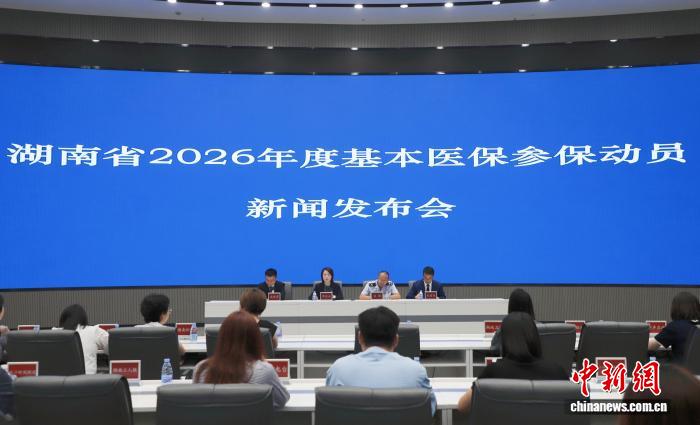
告别“多头跑” 迎来“智慧办” 广州医保改革让民生服务有速度更有温度
Yang Shi Wang· 2025-10-11 10:10
Core Viewpoint - Guangzhou's healthcare reform initiatives have significantly improved accessibility and convenience for residents, transforming policy benefits into tangible experiences of happiness and satisfaction for the public [1] Group 1: Mechanism and Service Optimization - The introduction of "citywide handling" allows residents to access healthcare services at any district window with standardized materials and processes, enhancing convenience [2] - A standardized service system was established in 2015, incorporating 120 business work standards for comprehensive management of all service items [2] - The optimization of service details includes the creation of 220 SMS templates and 26 business sample forms, along with user-friendly guides and explanatory videos to simplify the process [3] Group 2: Digital Empowerment - The launch of AI services in December 2024 enables precise consultations and real-time service entry notifications, facilitating a "question-and-answer" approach to healthcare services [5] - The "no-sense payment service" allows insured individuals to confirm payment with medical institutions, eliminating the need for queuing or mobile payment operations [5] - Over 355 million users have signed up for the service, demonstrating the widespread adoption of smart healthcare solutions [5] Group 3: Community and Accessibility - The "15-minute healthcare service circle" initiative has brought services closer to residents, with healthcare services now available at 177 street towns and over 930 village health stations [6] - The "Suihao Ban" app allows residents to handle all healthcare matters online, with real-time tracking of processing progress [6] - The implementation of "immediate enjoyment" for retirees and the simplification of high-frequency business processes have significantly reduced the burden on the elderly [6] Group 4: Special Considerations for Vulnerable Groups - Special services for the elderly and residents from Hong Kong and Macau have been introduced, including simplified processes and dedicated service windows [7] - Average waiting times at service windows have been reduced by 39.1% year-on-year, enhancing the overall experience for users [7] - The establishment of support areas for complaints and assistance ensures that all residents receive the necessary help during their interactions with the healthcare system [7]