低空经济

Search documents
广西上半年招商引资超4900亿元
Guang Xi Ri Bao· 2025-07-27 02:24
Group 1 - In the first half of 2025, Guangxi achieved significant results in attracting investment, with over 1,500 new signed projects and a total investment exceeding 490 billion yuan, representing a year-on-year increase of 24.6% and completing 60% of the annual target [1] - The manufacturing sector accounted for 78% of the total investment, indicating a strong focus on industrial development [1] - The completed investment from landed projects reached over 180 billion yuan, marking an 18.1% year-on-year growth and fulfilling 54% of the annual goal [1] Group 2 - The local government has implemented a series of policies to enhance investment attraction, including the issuance of the "2025 Guangxi Major District Investment Promotion Implementation Plan" and the "Management Measures for Cross-Regional Industrial Cooperation Investment Promotion" [2] - The leadership has actively engaged with key enterprises in sectors such as artificial intelligence and critical metals, conducting extensive research to improve investment attraction efforts [2] - A total of 94 new "Artificial Intelligence +" projects were signed in the first half of the year, with a total investment exceeding 48 billion yuan [2] Group 3 - Innovative investment attraction methods have been adopted, focusing on both regional and industrial chain investments, particularly in low-altitude economy, biomedicine, and new metal materials [3] - The Guangxi Investment Promotion Center organized approximately 50 investment promotion events, resulting in the signing of 18 projects, including a green aviation fuel project worth about 8 billion yuan [3] - Regular assessments and meetings are held to monitor investment attraction progress, ensuring effective implementation of targeted measures to enhance investment efficiency [3]
万丰集团董事局主席陈爱莲:实业为根,资本赋能,共绘低空经济新质生产力蓝图
Xin Lang Cai Jing· 2025-07-26 13:25
Group 1: Core Concepts - The rise of new economic forces is reshaping China's economic landscape through a productivity revolution driven by technology, particularly in AI, quantum computing, and green technology [1][2] - The concept of "new quality productivity" was first introduced in 2023 and has since been emphasized in government reports as a critical focus for future development [6][7] - The low-altitude economy is recognized as a key representative of new quality productivity and is projected to become a trillion-level industry [9][10] Group 2: Industry Insights - The low-altitude economy's market size surpassed 506 billion yuan in 2023, with a growth rate of 33%, and is expected to reach over 700 billion yuan in 2024 [9][10] - By 2025, the number of companies in the low-altitude economy is projected to increase significantly, with a year-on-year growth of 224% in the first quarter [11] - Government policies are actively promoting the integration of low-altitude economy with consumption and tourism, indicating a strong commitment to its development [8] Group 3: Company Practices - WanFeng Group has leveraged 30 years of manufacturing experience and significant international acquisitions to establish a comprehensive low-altitude economy industry chain [13][15] - The company has developed three core advantages in the low-altitude economy: strong technology through substantial investment and international acquisitions, a complete industry chain, and practical application scenarios [15][16][17] - WanFeng's investment of 10 billion yuan over ten years has highlighted the integration of capital and industry, addressing common challenges faced by the sector [18] Group 4: Future Outlook - The low-altitude economy is positioned as a core track for future industries, with ongoing policy support and a growing market [20] - There is a significant opportunity for equity investment in the low-altitude economy, as it is currently in a critical growth phase [22] - The collaboration between industry and capital is essential for the successful development of the low-altitude economy, emphasizing the need for focused investment strategies [22]
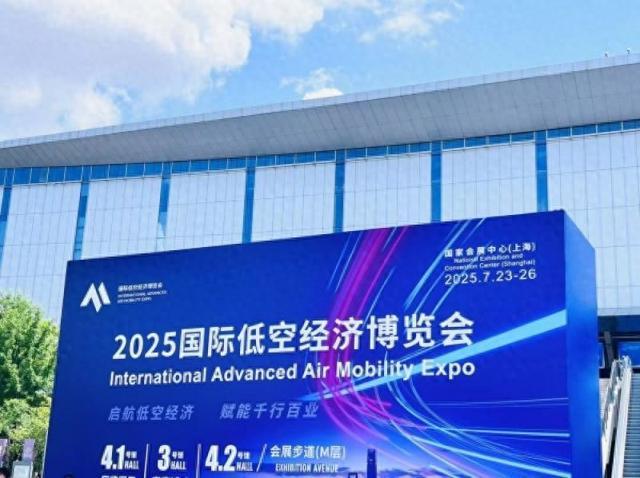
2025国际低空经济博览会:赋能产业腾飞、筑牢安全底座
Zhong Guo Xin Wen Wang· 2025-07-26 12:03
Core Viewpoint - The 2025 International Low Altitude Economy Expo held in Shanghai showcased nearly 300 companies and emphasized the theme of empowering various industries through the development of the low altitude economy [1][2]. Group 1: Industry Development - The low altitude economy has been included in China's government work report for two consecutive years, indicating its growing importance [2]. - The expo featured over 19 global and 25 national product launches, including the world's first 7-seat, 3-ton eVTOL aircraft and a flying car platform, highlighting significant technological advancements [2]. - The low altitude economy is transitioning from a conceptual phase to a practical stage focused on effective implementation and cost control, driven by policy support, market demand, and technological breakthroughs [2][5]. Group 2: Market Potential - Predictions suggest that the market size of China's low altitude economy could reach 3.5 trillion RMB by 2035, indicating substantial growth potential [5]. - The expansion of market demand is expected to foster technological innovation and product iteration, accelerating the commercialization process and attracting more enterprises and capital [2][5]. Group 3: Safety and Infrastructure - The expo introduced the "Low Altitude Economy Infrastructure Framework Guidelines (2025 Edition)," which emphasizes the need for low altitude air traffic management infrastructure, including monitoring and security facilities [6]. - A new "East China Low Altitude Economy Industry Alliance" was established to facilitate collaboration across the industry, focusing on policy research, standard formulation, and technology cooperation [6].

LP周报丨本周,VC/PE都来成都了
投中网· 2025-07-26 04:35
Core Viewpoint - Sichuan province has introduced 21 policy measures to promote high-quality development of venture capital, aiming to establish itself as a national hub for private equity and venture capital by 2030 [4][5]. Group 1: Policy Measures and Goals - The policy measures include a quantitative KPI to achieve 500 private equity and venture capital management institutions, 2000 funds, and a management scale of 400 billion yuan by the end of 2030 [4]. - Chengdu is highlighted as the core city for venture capital in Sichuan, with plans to strengthen the concentration of venture capital institutions [5]. Group 2: Fund Launches and Investments - Chengdu has launched a future industry fund with a total scale exceeding 100 billion yuan, focusing on sectors like humanoid robots, flying cars, and next-generation mobile communications [6][9]. - The Guangxi Industrial Venture Capital Fund has been established with a total scale of 5 billion yuan, targeting early-stage and growth-stage technology companies in the industrial sector [10][11]. - A new digital investment partnership has been set up in Jinan with a capital contribution of 200 million yuan, focusing on private equity and venture capital management [12]. - The Henan Cultural Tourism Integration Fund has been established with a capital of 1.5 billion yuan, aimed at boosting the cultural tourism industry [13]. - The Jiangxi-Ganzhou Industrial Fund has been set up with a target scale of 5 billion yuan, focusing on strategic emerging industries [16]. - The Hunan Low-altitude Economy Industry Investment Fund has been established with a capital of 1 billion yuan, aimed at enhancing the local low-altitude economy [19]. - The Shanghai Baoshan Zhongying Fund has been launched with a total scale of 500 million yuan, marking the entry of bank capital into the primary market [21]. - The Fujian Provincial Biopharmaceutical Industry Fund has been initiated with a target scale of 2 billion yuan, focusing on innovative drugs and medical devices [22]. Group 3: Fund Management and GP Recruitment - The Zhongjin Yaosheng Fund is seeking GP partners for its 5 billion yuan fund, focusing on semiconductor, new materials, and advanced manufacturing industries [24][25][26].

闵行低空测试基地项目启动,测试空域不少于200平方公里
Sou Hu Cai Jing· 2025-07-26 02:26
Core Insights - The article discusses the development of the low-altitude economy in Shanghai, highlighting the launch of the "Shanghai Plan" and the establishment of the Minhang Low-altitude Testing Base as a key initiative [1][2] - The Minhang Low-altitude Testing Base is positioned as a "panoramic laboratory" for urban low-altitude flight, addressing the challenges of testing flying vehicles in complex urban environments [1] - Shanghai Low-altitude Company aims to create a comprehensive innovation chain by collaborating with top research institutions and leading enterprises [1][2] Group 1 - The Minhang Low-altitude Testing Base covers an area of no less than 200 square kilometers, providing a unique testing ground for low-altitude economic activities [1] - The base will facilitate multi-type, multi-entity, and cross-scenario flight tests, contributing to the establishment of air traffic rules [1] - Shanghai Low-altitude Company has established partnerships with leading enterprises and research institutions to form a complete innovation chain from technology research and development to product validation [1][2] Group 2 - The annual key initiatives of Shanghai Low-altitude Company include building an innovative ecosystem for the low-altitude industry, establishing a standard system, and creating a city-level low-altitude flight service center [2] - The company plans to develop a differentiated testing scene matrix covering various scenarios, including urban, industrial drones, and smart agriculture [2] - Established in December last year, Shanghai Low-altitude Company is one of the earliest provincial state-owned platforms for low-altitude economy in China, responsible for building and operating the low-altitude infrastructure network [2]
低空博览会首发展品 剧透未来空中交通
Zheng Quan Shi Bao· 2025-07-25 18:07
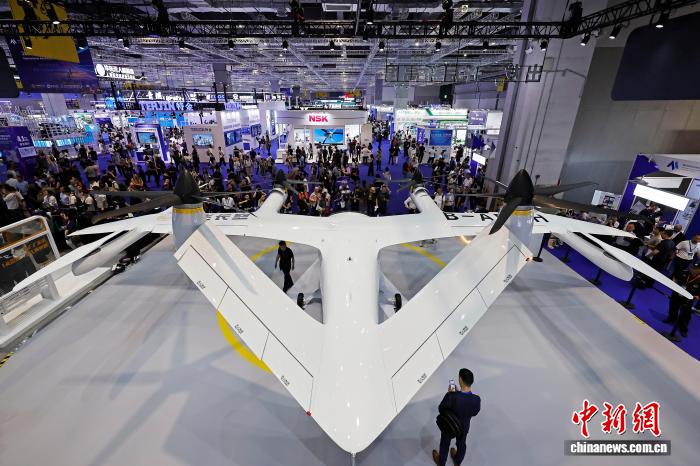
Group 1 - The 2025 International Low Altitude Economy Expo was held in Shanghai from July 23 to July 26, showcasing nearly 300 exhibitors from the low altitude industry chain, with over 19 products making their global debut and 25 being domestic firsts [1] - The Vector5 eVTOL, developed by Weixin Aerospace, is the world's first 7-seat, 3-ton class commercial eVTOL designed for medical rescue and search operations, with a maximum payload of 680 kg and a range of 300 km [1] - The eVTOL industry is seeing a trend towards complete domestic production, with significant advancements in technology that are now globally competitive [1] Group 2 - Shanghai Hangzhao Technology Co., Ltd. presented a vertical manned aircraft intelligent take-off and landing platform, which serves as a "charging station" and "service area" for low altitude aircraft, featuring 21 integrated systems and a pre-sale order volume exceeding 8 billion yuan [2] - The commercialization of eVTOLs is accelerating, leading to a growing demand for low altitude pilots, indicating a significant opportunity in pilot training [2] Group 3 - Shanghai Aimed Aviation Technology Co., Ltd. introduced the Qianmi No.1 eVTOL flight simulator, which utilizes virtual and mixed reality technologies for low altitude flight training, significantly reducing training time by approximately 70% [3] - The Qianmi No.1 simulator is the first of its kind in China, capable of replicating all operations and states of eVTOL flights, thus lowering the cost of training pilots by about 70% [3] Group 4 - The core elements of low altitude economic development include industry, ecology, and scenarios, with the industry serving as the foundation, ecology supporting the environment, and scenarios driving demand [4] - The expo facilitated in-depth analysis of industry trends through exhibitions, forums, and demonstrations, aiming to enhance ecological element configuration and accelerate practical applications [4]
特金智能姜化京:全要素赋能低空产业腾飞 长三角力量筑牢安全底座
Xin Hua Cai Jing· 2025-07-25 14:06
新华财经上海7月25日电(记者胡洁菲)2025国际低空经济博览会正在上海举行。动议于"低空经济元 年",启幕于蓬勃发展期,这场为期四天的展会,集中展示低空技术革命性突破,深度呈现低空基础设 施、制造与配套服务等低空经济腾飞的关键要素。首次参展的上海特金信息科技有限公司董事长姜化京 认为,各方对低空经济全要素的重视,恰恰反映了低空经济的新趋势,技术创新水平有所提升,保障技 术创新可持续健康发展的政策措施、技术手段、基础设施正齐头并进。 在开幕式上,《低空经济基础设施框架指引(2025版)》正式发布。框架指引明确了低空经济基础设施 是以无人驾驶航空器基础设施为主,同时兼顾了传统通用航空基础设施构建的原则,指出应构建包含低 空监视及低空安防设施在内的低空空管基础设施。 作为无人机管控及低空安全解决方案提供商,特金此次携多款无人机侦测管控设备及端到端一体化低空 安全解决方案参展。姜化京认为:"随着低空经济快速发展,低空安全作为行业发展的关键要素,不仅 获得政策重视,也成为市场的必然选择。"日前,上海特金推出"多模态技术融合构建低空安全监管体 系",以5G-A、TDOA、RID(报文识别技术)、视觉光电等多种技术实现低 ...
上海冲刺低空经济之都
Zhong Guo Xin Wen Wang· 2025-07-25 13:16
Core Insights - The low-altitude economy is emerging as a significant driver for high-quality economic development in China, with Shanghai positioning itself as a leading hub in this sector [1] - The low-altitude economy encompasses a long industrial chain, including aircraft R&D, infrastructure construction, and flight service guarantees, with a projected market size of 505.95 billion yuan in 2023, growing at a rate of 33.8% [1] - By 2026, the low-altitude economy in China is expected to exceed 1 trillion yuan, with Shanghai aiming to establish a complete industrial system by 2027 [1] Industry Development - Shanghai has over 300 approved drone companies, forming a complete industrial chain that includes manufacturing, systems, components, applications, R&D, and services [4] - Leading eVTOL companies, such as Volant Aerotech and Yufeng Future, are based in Shanghai, with plans to achieve airworthiness certification by 2026 [4] - The first International Low Altitude Economy Expo was held in Shanghai, showcasing the city's commitment to this emerging industry [3] Strategic Collaborations - Yufeng Future has formed a strategic partnership with Shanghai Low Altitude Economy Development Co., focusing on infrastructure standards, flight testing systems, and talent development [5] - Volant Aerotech signed a significant agreement for 500 eVTOL aircraft with a total value of 1.75 billion USD, marking the largest international order for high-grade passenger eVTOLs in China [5] Regional Initiatives - Jinshan District initiated low-altitude economic development as early as 2017, establishing the first platform for multi-scenario drone testing in China [6] - Yangpu District benefits from a concentration of educational resources, fostering innovation in flight control and software, with companies like Meituan Drone and Shanghai New Sky driving the sector forward [6] Economic Potential - The Shanghai Academy of Social Sciences highlights the city's talent pool and demand-driven approach as key advantages for the low-altitude economy, positioning Shanghai as a leader in the Yangtze River Delta region [6] - The balance between innovation and regulation is crucial for sustainable development in the low-altitude economy, presenting challenges that major cities must navigate [6]

国家发改委为何强调低空经济安全?专家称低空比高空更具挑战
Nan Fang Du Shi Bao· 2025-07-25 10:50
Group 1 - The core focus of the low-altitude economy is on safety, with multiple experts emphasizing that low-altitude operations present more challenges than high-altitude ones, highlighting the mantra "no safety, no low-altitude" [1][3] - In 2023, the government has prioritized the safe and healthy development of the low-altitude economy, as indicated in the government work report and subsequent statements from the National Development and Reform Commission (NDRC) [1][2] - The NDRC has outlined principles for low-altitude consumption development, including "cargo first, then passengers; isolation before integration; and rural areas before urban areas" [1][2] Group 2 - The challenges of low-altitude flight include strong convective phenomena below 1000 meters, urban heat sources causing turbulent airflows, and complex wind patterns created by tall buildings [2][3] - Establishing safety standards is crucial for the scale-up of the low-altitude economy, which requires extensive research, development, and data support [3] - The NDRC's emphasis on safety in low-altitude economic development suggests that infrastructure is currently insufficient, and a coordinated approach is necessary to avoid chaotic growth in the sector [3][4] Group 3 - Capital investment in the low-altitude economy should not only provide funding but also facilitate policy, technology, and local government connections to help leading companies secure substantial orders and achieve industry scale [4]
上海eVTOL“四小龙”搅动天空,低空经济叩响万亿元市场
Hua Xia Shi Bao· 2025-07-25 10:22
Core Insights - The low-altitude economy is increasingly penetrating various sectors, including emergency rescue, agricultural protection, and logistics delivery, showcasing its versatility and potential for efficiency improvements [2][3][5]. Group 1: Industry Developments - The first International Low Altitude Economy Expo highlighted over 19 global product launches and 25 domestic product debuts, featuring innovations like eVTOLs and flying cars [2]. - The eVTOL models showcased can significantly reduce travel time, with one model capable of shortening a 2-3 hour car journey to just 15-30 minutes, targeting urban commuting and intercity travel [3]. - The introduction of hydrogen-powered drones, such as the H100, represents a shift towards more sustainable aviation solutions, with a 60% weight reduction in battery systems compared to lithium batteries [7][8]. Group 2: Infrastructure and Regulatory Framework - The development of low-altitude infrastructure is crucial for the growth of the low-altitude economy, yet significant gaps remain, including inflexible airspace management and insufficient takeoff/landing sites [10][11]. - The "Low Altitude Economic Infrastructure Framework Guideline (2025 Edition)" was released to provide a structured approach to infrastructure planning, focusing on drone and eVTOL needs [11]. - The guideline includes a multi-tiered indicator system to enhance the efficiency and safety of low-altitude operations, emphasizing the integration of AI and safety measures [11]. Group 3: Strategic Collaborations - Several Shanghai-based companies formed strategic partnerships during the expo, including a notable agreement where a company procured 500 eVTOLs for short-distance transport and emergency services, amounting to a total order value of $1.75 billion [12][13]. - Collaborations aim to leverage each partner's strengths in infrastructure development and operational efficiency, with a vision to enhance air travel services across multiple cities by 2030 [13][14]. Group 4: Safety and Regulatory Considerations - The low-altitude economy is projected to reach a market size of 1.5 trillion yuan by 2025 and 3.5 trillion yuan by 2035, highlighting its growth potential [15]. - Safety remains a top priority, with regulatory bodies emphasizing a phased approach to low-altitude operations, prioritizing cargo transport before passenger services [15][16]. - The industry is encouraged to adopt rigorous safety management practices to ensure sustainable growth and prevent inefficient competition [16][17].