
人工智能+

Search documents
上海给未来五年加了什么buff?5个指标提前剧透
第一财经· 2026-02-06 00:49
Core Viewpoint - Shanghai aims for an average GDP growth rate of 5% over the next five years, a slight increase from the previous 4.9% during the "14th Five-Year Plan" period, indicating significant potential for growth despite a challenging external environment [3][4]. Group 1: Economic Growth Targets - The GDP is projected to exceed 7 trillion yuan by 2030, positioning Shanghai among the top three global cities, following New York and Los Angeles [4]. - Key indicators for the "15th Five-Year Plan" include an average annual growth rate of 10% for the three leading industries, a labor productivity exceeding 520,000 yuan per person, and a digital economy's core industry value-added accounting for over 20% of GDP by 2030 [4][5]. Group 2: Strategic Development Plans - Shanghai's "15th Five-Year Plan" outlines a modern industrial system characterized by "2+3+6+6," focusing on advanced manufacturing and the development of world-class high-end industrial clusters [5][6]. - The three leading industries—integrated circuits, biomedicine, and artificial intelligence—are expected to drive significant economic growth, with a focus on enhancing equipment capabilities and fostering innovation [6][11]. Group 3: Innovation and R&D - In 2025, R&D expenditure as a percentage of GDP reached approximately 4.5%, with a target of 12% for basic research investment intensity [6][13]. - The plan emphasizes the importance of enhancing labor productivity through talent development, technological innovation, and systemic reforms to create a conducive business environment [15][16]. Group 4: Future Industry Focus - The "15th Five-Year Plan" identifies six emerging pillar industries, including new-generation electronic information and intelligent connected vehicles, alongside six future industries such as quantum technology and brain-computer interfaces [11]. - The strategy aims to establish a dynamic adjustment mechanism to accelerate the development of future industries and ensure alignment with global technological advancements [11].

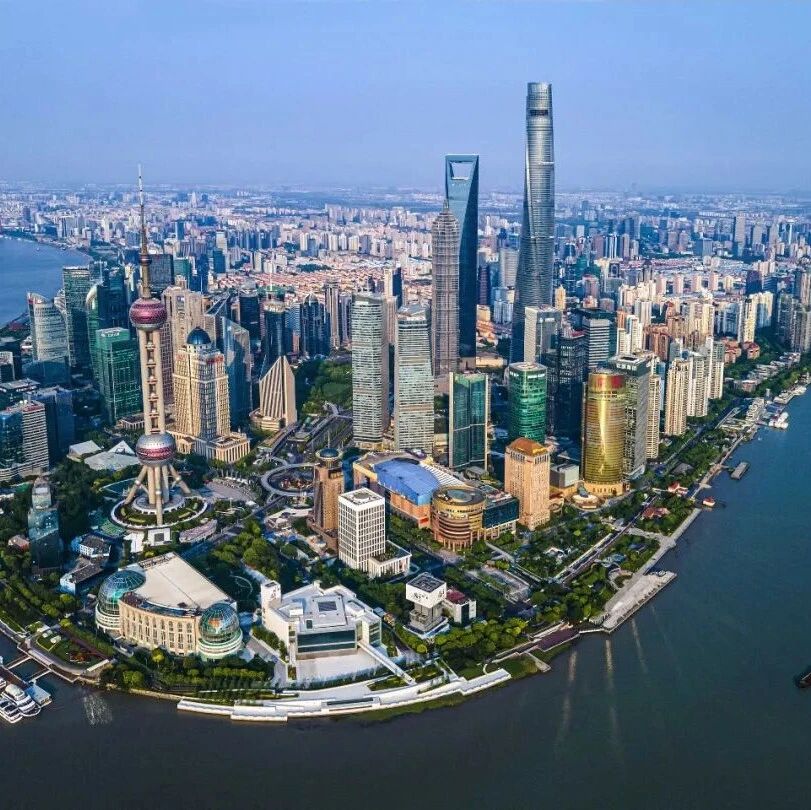
上海给未来五年 加了什么“燃料”? 5个指标提前剧透
Xin Lang Cai Jing· 2026-02-05 17:13
Group 1 - Shanghai's GDP is projected to grow at an average annual rate of 5% over the next five years, up from 4.9% during the "14th Five-Year Plan" period, indicating significant progress despite a seemingly small increase [1][3] - The achievement of this growth target relies on three key factors: stronger support from new drivers, greater release of core functions from five centers, and substantial backing from major projects, particularly in emerging industries [1][4] - By 2030, if the 5% growth rate is maintained, Shanghai's GDP is expected to exceed 7 trillion yuan, positioning it among the top three global cities, following New York and Los Angeles [1] Group 2 - The three leading industries in Shanghai are expected to maintain an average annual growth rate of over 10% during the "15th Five-Year Plan" period [2][3] - Key indicators for Shanghai's economic development include labor productivity exceeding 520,000 yuan per person, digital economy core industries accounting for over 20% of GDP, and R&D expenditure reaching over 5% of GDP by 2030 [2] Group 3 - The "15th Five-Year Plan" outlines a modern industrial system characterized by "2+3+6+6," focusing on advanced manufacturing and the establishment of world-class high-end industrial clusters [3][5] - The plan emphasizes the digital and green transformation of traditional industries and the acceleration of the three leading industries, which include integrated circuits, biomedicine, and artificial intelligence [4][5] Group 4 - The three leading industries have a significant driving effect on Shanghai's economy, with their combined scale surpassing 2 trillion yuan [4] - Specific strategies for the three leading industries include enhancing the capabilities of the integrated circuit sector, accelerating drug development in biomedicine, and advancing AI technologies [4][6] Group 5 - Shanghai aims to maintain a reasonable industrial proportion while focusing on enhancing quality and competitiveness in manufacturing, which is crucial for supporting technological innovation and the construction of five centers [5][6] - The city plans to solidify its industrial system and leverage existing industrial foundations to foster new growth engines and optimize resource allocation [5][6] Group 6 - The "15th Five-Year Plan" proposes the development of six emerging pillar industry clusters and anticipates six future industries, including advanced materials and quantum technology [7] - The focus on future industries includes areas such as brain-computer interfaces, controlled nuclear fusion, and biomanufacturing, which are expected to have high growth potential [7] Group 7 - Labor productivity is a key indicator for economic and social development, with a continued emphasis on improving productivity during the "15th Five-Year Plan" [9][10] - Enhancing labor productivity will depend on talent development, technological innovation, and systemic reforms to create a favorable business environment [10]
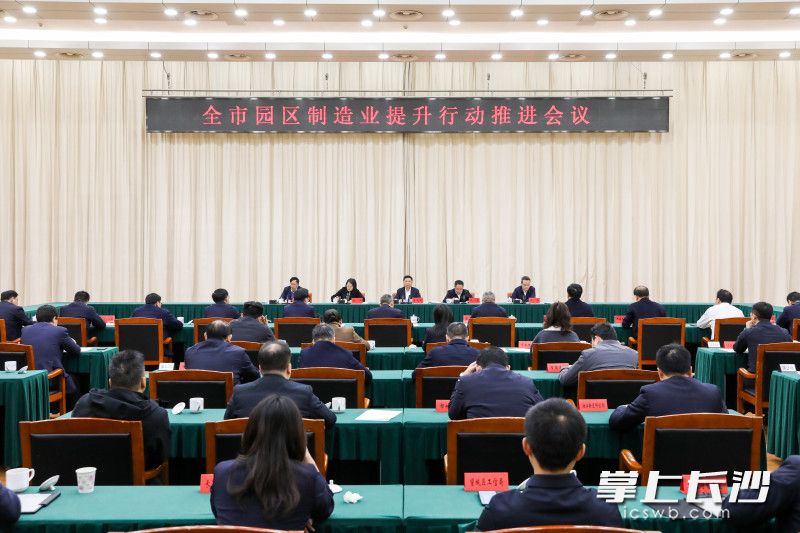
全市园区制造业提升行动推进会议召开 陈博彰出席
Chang Sha Wan Bao· 2026-01-15 02:37
Core Viewpoint - The meeting emphasized the importance of advancing the manufacturing sector in the city, aligning with national strategies to enhance project construction, industrial development, and economic efficiency, aiming for a strong start to the 14th Five-Year Plan [1][2]. Group 1: Project and Economic Growth - In 2025, the city expects a 59% increase in signed and landed projects, a 14% increase in new projects started, and a 36% increase in new projects put into operation [2]. - The city has positioned its parks as the main engine for building a significant advanced manufacturing hub, focusing on project execution, industrial growth, and economic competition [2]. Group 2: Strategic Initiatives - The city aims to enhance investment, project initiation, and quality improvement through a coordinated project construction system, emphasizing the simultaneous growth of investment volume, project volume, and physical volume [3]. - There is a focus on optimizing and integrating 17 industrial chains, fostering enterprise development, and improving the business environment to support companies throughout their lifecycle [3]. Group 3: Policy and Governance - The meeting highlighted the need to refine the park's governance structure and activate its resources, establishing a precise evaluation system to foster a proactive and high-performance atmosphere [3].
三年行动攻关“人工智能+”
Xin Lang Cai Jing· 2026-01-03 22:19
Core Viewpoint - Sichuan Province has launched a three-year action plan to empower new industrialization with artificial intelligence, aiming for comprehensive digital transformation of large-scale industrial enterprises by 2027, along with the establishment of over 50 digital industrial parks and the cultivation of more than 90 national manufacturing champions in the AI sector [1][2]. Group 1: Goals and Objectives - By 2027, all large-scale industrial enterprises in Sichuan will achieve full digital transformation, with the creation of over 50 digital industrial parks and the nurturing of more than 90 AI-related national manufacturing champions and specialized "little giant" enterprises [1][2]. - The action plan outlines five key tasks, including strengthening technological innovation, product iteration, application scenarios, governance mechanisms, and industrial ecosystem development, which are further divided into 18 sub-tasks [2]. Group 2: Funding and Support - Sichuan will provide annual support for high-level intelligent software and hardware technology research, offering up to 50% funding of project total investment, capped at 10 million yuan [2]. - Key areas of focus for technological breakthroughs include pre-trained large models and high-performance computing chips [2]. Group 3: Infrastructure Development - The province will enhance the "computing power-network-data" infrastructure, accelerating the construction of a national integrated computing power network hub in Chengdu, ensuring that provincial industrial parks achieve full coverage of 10-gigabit optical networks [3].
10月我国新质生产力持续壮大
Sou Hu Cai Jing· 2025-11-25 21:28
Core Insights - The data from the National Taxation Administration indicates that in October, China's new productive forces continue to grow, with high-end manufacturing, innovative industries, and the integration of digital and physical sectors showing robust growth, injecting new vitality into economic development [1][2] Group 1: High-end Manufacturing - In October, sales revenue in the equipment manufacturing sector increased by 7.3% year-on-year, consistently surpassing the average level of the manufacturing industry this year, accounting for nearly half of the manufacturing sector [1] Group 2: Innovative Industries - The sales revenue of high-tech industries grew by 13.6% year-on-year in October, maintaining a rapid growth rate in double digits. Specifically, high-tech service industry sales revenue increased by 16.1%, while high-tech manufacturing sales revenue rose by 10.1%. The "Artificial Intelligence +" initiative has accelerated the growth of integrated circuits, industrial robots, and drone manufacturing, with sales revenues increasing by 32.5%, 41.7%, and 38.4% respectively [1] Group 3: Digital Economy - In October, the sales revenue of core industries in the digital economy increased by 8.5%, and the amount spent by enterprises on digital technologies rose by 9.6%, reflecting the ongoing advancement of digital industrialization and industrial digitalization [1]
经济日报:人工智能重塑中国制造新优势
Qi Lu Wan Bao· 2025-08-22 01:06
Core Insights - The recent State Council meeting approved the "Artificial Intelligence +" action plan, emphasizing the importance of AI as a core national development strategy and a key driver for economic and social advancement [1] - AI is recognized for its ability to lead technological revolutions and industrial transformations, enhancing efficiency, catalyzing innovation, and creating new industrial forms [1] Group 1: AI in Manufacturing - AI can address traditional shortcomings in manufacturing, such as reliance on manual scheduling and subjective judgment, leading to inefficiencies and slow supply chain responses [2] - The integration of AI across the manufacturing value chain—from production to supply chain management—can resolve issues of low efficiency and high costs, promoting a shift from experience-driven to data-driven growth [2] - China's robust manufacturing sector, with a complete industrial system and large market scale, provides fertile ground for AI development, facilitating a virtuous cycle of innovation and application [2] Group 2: Challenges and Solutions - There exists a significant gap between the technical feasibility of AI and its large-scale application in manufacturing, primarily due to the opaque nature of AI decision-making and the high costs associated with integrating AI into existing systems [3] - To bridge this gap, an application-oriented approach is essential, focusing on real-world scenarios to validate AI effectiveness and drive iterative improvements [3] - Leading companies can facilitate the sharing of data and technology solutions, while the "AI as a Service" model can help reduce upfront costs for small and medium-sized enterprises [3] Group 3: Strategic Implications - The "Artificial Intelligence +" initiative aims to leverage multiplier effects by breaking down data silos, lowering application barriers, and addressing technical challenges, ultimately enhancing China's position in the global value chain [4]
广西上半年招商引资超4900亿元
Guang Xi Ri Bao· 2025-07-27 02:24
Group 1 - In the first half of 2025, Guangxi achieved significant results in attracting investment, with over 1,500 new signed projects and a total investment exceeding 490 billion yuan, representing a year-on-year increase of 24.6% and completing 60% of the annual target [1] - The manufacturing sector accounted for 78% of the total investment, indicating a strong focus on industrial development [1] - The completed investment from landed projects reached over 180 billion yuan, marking an 18.1% year-on-year growth and fulfilling 54% of the annual goal [1] Group 2 - The local government has implemented a series of policies to enhance investment attraction, including the issuance of the "2025 Guangxi Major District Investment Promotion Implementation Plan" and the "Management Measures for Cross-Regional Industrial Cooperation Investment Promotion" [2] - The leadership has actively engaged with key enterprises in sectors such as artificial intelligence and critical metals, conducting extensive research to improve investment attraction efforts [2] - A total of 94 new "Artificial Intelligence +" projects were signed in the first half of the year, with a total investment exceeding 48 billion yuan [2] Group 3 - Innovative investment attraction methods have been adopted, focusing on both regional and industrial chain investments, particularly in low-altitude economy, biomedicine, and new metal materials [3] - The Guangxi Investment Promotion Center organized approximately 50 investment promotion events, resulting in the signing of 18 projects, including a green aviation fuel project worth about 8 billion yuan [3] - Regular assessments and meetings are held to monitor investment attraction progress, ensuring effective implementation of targeted measures to enhance investment efficiency [3]